


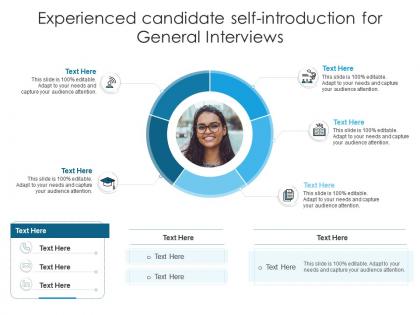
Experienced candidate self introduction for general interviews infographic template




Try Before you Buy Download Free Sample Product
 Impress Your
 Audience
 100%
100% Editable
 Save Hours
 of Time


This Experienced Candidate Self Introduction For General Interviews Infographic Template is a professionally drafted slide that can be deployed by managers, executives, owners, consultants, and other individuals to make their presentation more visually appealing. This layout helps the viewers gain quality information in less amount of time, thus conveying your message in the best possible manner. It reinforces the topics presented and makes their explanation more simplified, which is why this infographic template will suit any professional domain. Its vivid colors, graphics, design, etc., not only increases the aesthetics of the slideshows but also initiates immediate action. One of the advantages of downloading this PowerPoint design is that it can be reproduced as PNGs, JPGs, and PDFs that can be stored for further application. Hence, without indulging in a vigorous brainstorming session, download this layout now.
People who downloaded this PowerPoint presentation also viewed the following :
Experienced candidate self introduction for general interviews infographic template with all 2 slides:
Use our Experienced Candidate Self Introduction For General Interviews Infographic Template to effectively help you save your valuable time. They are readymade to fit into any presentation structure.
FAQs for Experienced candidate self introduction for general
Okay so for self-intros, you wanna cover your name/role, experience that actually matters to whoever's listening, and why you're presenting to them specifically. Under 60 seconds or people zone out. Throw in one solid example or win that makes you sound legit - but honestly, don't just list accomplishments like a robot. Connect it back to what you're gonna give them today. Skip the "I love hiking" stuff unless it's somehow relevant. And practice saying it out loud! Nothing worse than sounding like you memorized a script word for word.
Honestly, you gotta speak their language if you want people to actually connect with you. A job interview calls for totally different details than some random networking thing, you know? I always keep like 3-4 versions ready - one for industry people, another for potential clients, recruiters, whatever. You can just swap out the relevant experience bits depending on who you're talking to. It's way better than sounding like every other person with their cookie-cutter elevator pitch. People notice when you're actually tailoring what you say to them specifically. Grabs attention so much faster than going generic.
Honestly, stories are what make people actually remember you instead of forgetting you 5 minutes later. Facts just don't stick - like nobody cares that you're "detail-oriented" but they'll totally remember "I caught a $50k accounting error because one number looked weird to me." It's weird how our brains work that way. Stories also show your personality instead of just listing boring credentials. You want one solid example that shows who you are at work, then build everything around that. Way more effective than the usual "I'm experienced in..." nonsense everyone does.
Dude, visuals are everything for intros! Photo timelines work great - show those career highlights instead of just talking about them. Screenshots of your actual work hit different than bullet points, trust me. Before/after project shots are solid too, or just film a quick video intro if you're feeling it. I mean, literally anything's better than another boring text slide, right? Just don't go crazy with flashy stuff - people should focus on what you're saying, not get distracted by rainbow animations or whatever. Keep each visual tied to your story though, not just random decoration.
Honestly, the worst thing you can do is stick to your template like it's set in stone. You'll sound like a robot reading a script - super awkward. Don't dump your entire life story either, people zone out fast. Here's the thing though - you gotta switch it up depending on the situation. What works at a networking happy hour is totally different from a formal job interview. And for the love of god, don't memorize it word for word! That's painful to watch. Just use your template as a rough guide, then tweak the vibe based on who you're talking to.
Oh definitely! Western cultures? You can totally brag about your achievements right off the bat - they actually expect it. But Asian cultures are way more humble - start with your team or company first. Some places care more about who you know than what you've done, so lead with connections instead of that fancy resume. Honestly, I always research the audience beforehand just to be safe. When in doubt though, go formal and humble first. Then just watch how everyone else introduces themselves and adjust from there. Works every time!
Look, having a game plan just makes everything smoother - you won't blank out or ramble about random stuff. I learned this the hard way after totally bombing a few intros where I forgot to mention like, my actual job title lol. People can follow along better when there's some kind of flow too. Sure, winging it might feel more natural and personal, but you're gambling on whether you'll remember the important bits about your background. Honestly though, I think the sweet spot is having a loose template you can adjust based on who you're talking to. Way less stressful than going in completely unprepared.
Okay so basically having a self-intro template saves you from that awful moment when someone says "tell me about yourself" and your mind just... nothing. You know? You can tweak it depending who you're talking to - maybe play up your tech skills for one crowd, your leadership stuff for another. Trust me, it's clutch at networking events where everyone's kind of awkward anyway. The structure keeps you from rambling (I'm so guilty of this) or blanking on important stuff. Just practice it out loud a few times so you don't sound like you're reciting a script.
Ditch boring verbs like "work on" - say you "spearhead" or "develop" stuff instead. Numbers are your friend here. "Increased sales by 30%" sounds way better than just claiming you're good at sales, you know? Connect what you've done to what they actually need. Maybe throw in a quick story about yourself since people remember those way more than job titles. Oh, and definitely mention why you're genuinely excited about their company specifically. The whole thing is about being confident but not annoying about it.
Yeah, you definitely need to practice with that template! I've seen so many people sound super robotic because they just memorize it word-for-word. The template's great for structure, but you gotta make it flow naturally when you speak. Run through it out loud a bunch of times - that's honestly the only way to catch weird parts that don't sound right. I'd try it with different types of people in mind too. Oh, and find those spots where you naturally want to punch certain words. You want it to feel like you're just starting a normal conversation, not giving some rehearsed pitch.
Start with something that makes people go "wait, what?" A weird fact about yourself works perfect - like accidentally ordering 500 pizzas or learning Spanish through soap operas. Your biggest work win could work too. Literally anything's better than "Hi, I'm John from accounting." I mean, you want them thinking "tell me more" instead of zoning out completely. Pick whatever feels like actually you, then practice it so you're not stumbling over words. Quirky hobbies that somehow tie to your job are gold too.
Throw in something goofy about yourself or poke fun at your own career path. Like "I'm Sarah and yeah, I genuinely love spreadsheets – my friends are worried about me." Just don't try too hard with the jokes because we've all seen those crash and burn. Keep it stuff people can relate to. Skip anything controversial or super niche that'll confuse them about what you actually do. Honestly? Run it by a friend first – if they actually smile instead of doing that polite laugh thing, you're good to go.
Skip the generic stuff - nobody cares that you're "passionate about marketing." Tell them you boosted email opens by 40% with better subject lines instead. Share a quick story that actually shows your personality. Honestly, most people bomb this part. Throw in something unexpected but still professional - maybe you brainstorm while hiking or you've lived in four countries. That's what sticks. End with something they can respond to, like a project you're working on. You want them remembering you as a person, not just another resume.
Having other people listen to your pitch is honestly a game-changer. You get so tunnel-visioned working on your own stuff that you can't tell when you're being confusing or boring. Your friends will catch the weird phrasing you don't even notice anymore. They'll also tell you if you sound too corporate-y or if you're missing something obvious. I'd grab 2-3 people and ask them super specific stuff like "what part made no sense?" or "did I lose you anywhere?" Oh, and they might have way better examples than whatever you came up with. Then just fix the stuff they flagged.
Honestly, your body language matters way more than whatever words you use. I've watched people completely nail their intro but still seem super awkward because they're slouching or have their arms crossed the whole time. Stand up straight, make eye contact, keep your gestures open - sounds basic but it works. Your template gives you the foundation, but how you carry yourself is what makes people actually want to remember you. Oh, and definitely practice in front of a mirror first. You'll spot the weird stuff right away and can fix it before it matters.
-
Great experience, I would definitely use your services further.
-
Graphics are very appealing to eyes.
-
I discovered this website through a google search, the services matched my needs perfectly and the pricing was very reasonable. I was thrilled with the product and the customer service. I will definitely use their slides again for my presentations and recommend them to other colleagues.