


Five Phases Of Digital Marketing Evolution Timeline




Try Before you Buy Download Free Sample Product
 Impress Your
 Audience
 100%
100% Editable
 Save Hours
 of Time


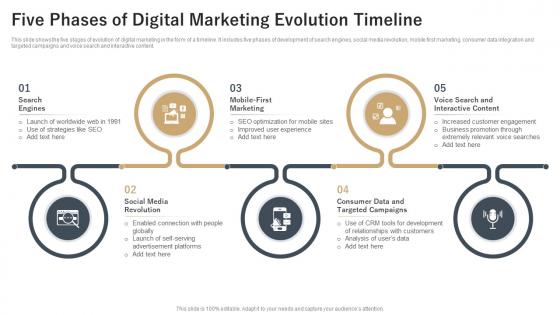
This slide shows the five stages of evolution of digital marketing in the form of a timeline. It includes five phases of development of search engines, social media revolution, mobile first marketing, consumer data integration and targeted campaigns and voice search and interactive content.
People who downloaded this PowerPoint presentation also viewed the following :
Five Phases Of Digital Marketing Evolution Timeline with all 6 slides:
Use our Five Phases Of Digital Marketing Evolution Timeline to effectively help you save your valuable time. They are readymade to fit into any presentation structure.





FAQs for Five Phases Of Digital
Honestly, mobile changed everything first - like, you couldn't just shrink your desktop site anymore, you had to completely rethink how people navigate on phones. Then social media let brands talk directly to customers instead of hoping they'd see a billboard or whatever. Programmatic ads automated all the buying stuff and got crazy good at targeting. Now AI's doing personalization at massive scale and actually predicting what people want before they know it themselves. Pretty wild if you think about it. But yeah, just stay flexible because whatever's next is probably being built in someone's basement right now.
Honestly, social media totally changed everything. You can't just blast ads at people anymore - they want real conversations and responses. Yeah, it's kinda exhausting keeping up with all the platforms and personalized content they expect. But here's the thing - when you actually engage with people instead of just broadcasting, you build these genuine communities around your brand. The feedback is instant too, which is pretty cool. My advice? Don't spread yourself thin across every platform. Pick like 2-3 where your people actually are and focus on quality interactions there. Listen more than you talk.
Honestly, data analytics is like having a window into what your customers are actually doing instead of guessing. You can see everything - how they move through your site, what they buy, when they bounce. Real-time testing is clutch because you can switch things up fast when campaigns aren't hitting. Way better than just burning through your budget hoping something works, you know? Pick one metric you really want to boost and start there. I swear you'll find patterns you never expected - sometimes the weird stuff is what actually converts best.
So you know how AI can crunch through tons of customer data super fast? It's crazy good at figuring out what each person wants to buy before they even know it. You can target people based on their actual behavior instead of just guessing with those broad demographic groups. The system basically runs itself - picks the right content, timing, all that stuff automatically. Honestly saves me so much time not having to tweak campaigns every five minutes. My advice? Start simple with something like email subject lines or product suggestions and just let it do its thing from there.
Honestly, just figure out what your people are actually googling first. Then write about that stuff - but don't be weird about jamming keywords everywhere because Google's pretty smart now. Answer the real questions your customers have (this part's actually fun once you get into it). Use headings, link to your other posts, write decent meta descriptions. The goal is letting SEO guide your topics while still sounding like a normal human. Nobody wants to read robot content, you know?
Honestly, mobile marketing did this huge flip from those annoying pop-ups nobody clicked on to actually useful stuff. Location targeting is where it's at now - plus all that interactive content on social media where people actually hang out. Users want instant, relevant info that makes sense for whatever they're doing. Shopping? Commuting? The content needs to match that vibe. I still can't believe how many brands mess this up though. Your best bet is diving into those mobile analytics and optimizing for those split-second moments when people make quick decisions on their phones.
Honestly, just be straight up about what data you're collecting and why. Get real consent, not that sneaky pre-checked box nonsense. Nobody wants those creepy ads that make you wonder if your phone's been eavesdropping on your conversations. Skip the dark patterns too - like when companies make it impossible to cancel subscriptions (looking at you, gym memberships). Building trust beats trying to trick people every time. I'd do a quick audit of what you're doing now. Simple test: would you be cool with another company doing this stuff to you?
Honestly? Brand loyalty is way more fragile now but also more rewarding when you actually get it right. Before, companies just blasted ads at people - now customers can talk back AND talk to each other about your brand (terrifying, I know). You're fighting against literally everything else on the internet for attention. But here's the thing - digital tools let you actually get personal with people. Build real relationships through social, email, whatever works. Just don't try to fake it because people can spot BS instantly. Focus on being genuine instead of just shoving ads at them.
Honestly, focus on AI personalization and voice search first - that's where things are heading. Interactive stuff like polls and AR are working really well too. Social commerce is insane right now, people literally buy through Instagram without leaving the app. Third-party cookies are finally dying (thank god), so privacy-first marketing isn't optional anymore. Short videos still crush it, but the messy, authentic ones beat polished content every time. Oh and don't try doing everything - pick one trend per quarter or you'll burn out. Way easier to actually see what moves the needle.
Honestly, influencer partnerships can totally make or break you. The trick is finding people who actually align with your brand values - not just whoever has the most followers. When it's authentic and they genuinely use your stuff, consumers trust it way more. But man, one sketchy partnership can destroy everything if that influencer gets cancelled or the whole thing feels super fake. I'd definitely dig into their past collabs first and check engagement rates. Oh, and don't micromanage their content too much - their audience follows them for a reason, you know?
Focus on conversion rate, CAC, and ROAS first - those are the ones that actually matter for your bottom line. Click-through rates look pretty but won't tell you if you're making money (learned that the hard way). Track lifetime value too so you know what customers are really worth long-term. Attribution data shows which channels work and which don't. Bounce rate and time on page help with content stuff. Oh, and don't get overwhelmed trying to track everything at once. Start with these basics, then add more based on what you're trying to accomplish.
Oh totally! Some of my scrappiest campaigns actually worked best tbh. Start with just one social platform where your people actually are - don't spread yourself thin. Email marketing is still ridiculously effective and costs almost nothing. Google My Business is free but so many people ignore it (huge mistake for local stuff). Partner up with other businesses nearby for cross-promotion. Content consistency beats fancy production every time. Once you've got one thing working really well, then think about expanding. I always tell people to master one channel first rather than being mediocre everywhere.
Honestly, GDPR and CCPA are making everything way more complicated. You can't just track people everywhere anymore - explicit consent is required for basically everything now. Third-party data? Pretty much unreliable at this point. I'd focus on building direct relationships instead. Email lists are your best friend right now, plus surveys and maybe some kind of loyalty program. The targeting we're all used to is getting chopped down piece by piece. Better to start collecting your own data now than panic later when they roll out even stricter rules.
So these tools basically take care of all the boring repetitive tasks - email sequences, audience segmentation, that kind of stuff. The AI optimization part is pretty wild actually, I've seen it bump ROI by like 20-30% without you doing anything. Your data gets way cleaner too since it tracks everything automatically. Oh, and they're running 24/7 which is nice because leads don't sleep, right? I'd definitely start with email automation first - it's super straightforward and you'll probably see results in a few weeks. Way easier than jumping into the complex ad stuff right away.
Here's what I've learned from running cross-channel campaigns - you want to meet people where they already hang out online. So instead of just doing Facebook ads or email (which honestly feels kinda limited these days), you're hitting multiple spots. Your Instagram ad gets their attention, then boom - they see your display ad later that day. Email follows up the next week. The magic happens when everything feels connected and your branding looks the same everywhere. Otherwise people won't even realize it's the same company! It's like having multiple chances to make the same first impression.
-
Great combination of visuals and information. Glad I purchased your subscription.
-
I discovered this website through a google search, the services matched my needs perfectly and the pricing was very reasonable. I was thrilled with the product and the customer service. I will definitely use their slides again for my presentations and recommend them to other colleagues.