


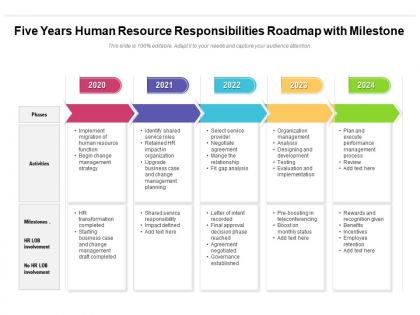
Five years human resource responsibilities roadmap with milestone




Try Before you Buy Download Free Sample Product
 Impress Your
 Audience
 100%
100% Editable
 Save Hours
 of Time


Utilize our pre build Five Years Human Resource Responsibilities Roadmap With Milestone to present your plan of action in the most effective way. Reduce the paperwork and showcase how different activities are linked to each other by incorporating this attention grabbing PowerPoint theme. This completely editable roadmap PPT layout is suitable to fit all your needs and to have a structured outline of the entire process flow using color coding. Provide guidelines to your teammates about the progression process by employing our PPT theme. Team members can easily be designated into teams by accessing the work milestones to be accomplished within the timeframe. You can easily modify the PowerPoint slide according to real time situations. Download our stunning Five Years Human Resource Responsibilities Roadmap With Milestone, and you are good to go to prove your expertise in strategic planning.
People who downloaded this PowerPoint presentation also viewed the following :
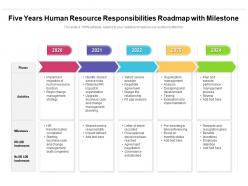
Five years human resource responsibilities roadmap with milestone with all 2 slides:
Use our Five Years Human Resource Responsibilities Roadmap With Milestone to effectively help you save your valuable time. They are readymade to fit into any presentation structure.
FAQs for Five years human resource responsibilities
Honestly, just start by figuring out where you're at now and what's missing. From there, map out what you actually want to achieve based on what the business needs. Build your roadmap with realistic timelines - and I mean realistic, not aspirational. Implementation's where it gets tricky, so schedule regular check-ins to catch issues early. Oh, and definitely plan for constant tweaks because stuff never works out exactly how you think it will. My advice? Pick one or two things to focus on first. Don't try to fix everything simultaneously - that's a recipe for chaos.
Honestly, you've gotta get real with leadership first. Sit down and dig into what they actually want to achieve - skip the fluffy mission statement BS. Once you know their true goals, connect every HR move back to those objectives. Expanding into new markets? Your hiring and training should fuel that growth. Here's the thing though - you need to track the same numbers they care about or you'll be speaking different languages. I'd also build in regular check-ins since priorities shift constantly. Bottom line: if you can't explain how an HR decision drives business results, don't do it.
Honestly, HR runs on tech now. AI screens resumes, chatbots handle basic employee questions, and analytics track turnover rates plus engagement scores. Your HRIS becomes the go-to for all employee data. Communication tools like Slack keep everyone connected too. I literally can't picture doing this job without these systems anymore! Performance reviews, recruitment - it's all automated now. The trick is choosing tools that actually fix your problems instead of just grabbing whatever's trendy. Some companies go overboard with fancy software they don't even need.
Honestly, data analytics is a game-changer for HR stuff. Instead of just guessing who to hire, you can actually look at what's worked before. It helps you figure out who might quit before they do, catch pay gaps early, and see if your training is worth anything (spoiler: half of it probably isn't). You can even track which job boards actually bring in good people vs. just warm bodies. My advice? Don't go crazy trying to measure everything at once. Pick whatever's been bugging you most - maybe turnover or bad hires - and start there. Once you see the patterns, you'll wonder how you ever made decisions without it.
Honestly, speed is everything right now - good people disappear within days. Start building your talent pipeline way before you actually need to hire anyone. Employee referrals are absolute gold, so don't sleep on those. Make your application process ridiculously simple too. Skip the typical job boards and hunt where your dream candidates actually spend time - niche forums, random social platforms, wherever. Your Glassdoor reviews better not be terrifying people away either. Oh, and streamline your interviews to move fast but still be thorough enough to actually assess people properly.
Mix up your approach - surveys are good but don't rely on them alone. I'd do pulse surveys every few months instead of those useless yearly ones. Employee Net Promoter Score is trendy but actually works well for comparing against other companies. Focus groups tell you way more though - like why people are actually unhappy instead of just that they are. Track stuff like turnover and who's getting promoted internally. Oh and exit interviews, obviously. Don't go crazy with too many methods at once or you'll burn out trying to analyze everything.
Honestly, start with figuring out what you'll actually need in 6-12 months - like real headcount and skills based on your business goals. Do a quick audit of who you've got now so you can spot the gaps. Succession planning is critical, especially for those roles that would be a total disaster if someone left tomorrow (we've all seen that happen). Build your talent pipelines early, not when you're panicking. Oh, and definitely look at your turnover data - that stuff's surprisingly helpful. Don't treat this like a yearly checkbox thing either. Focus on your most critical roles first.
Honestly, start with your recruiting - cast a wider net to reach people who wouldn't normally apply. Bias training for managers is clutch, plus mentorship programs linking diverse hires with leadership really work. Pay equity audits will blow your mind... I've seen companies discover massive gaps they had no clue about. Here's the thing though - your performance reviews need to actually track whether people are being inclusive, not just hitting their numbers. Don't try to fix everything at once. Pick one area, get it right, then move on to the next.
Honestly, everyone's obsessed with personalized learning right now - AI platforms that actually adapt to how people learn instead of forcing everyone through the same boring modules. Microlearning is everywhere too, which makes sense because who has time for day-long training sessions? Break stuff into bite-sized pieces people can squeeze in between meetings. Remote learning obviously took off (thank god, no more stuffy conference rooms). The whole approach shifted from traditional role training to skills-based development. Continuous upskilling is the name of the game, especially tech and soft skills. I'd definitely look at chopping up your current programs into smaller, on-demand chunks.
Ditch those yearly reviews - they're basically useless. Instead, do monthly or quarterly check-ins where you're actually coaching people. Goals need to be super clear and tied to real business stuff, because when they're vague nobody cares. Let employees help set their own goals too - they'll actually give a damn that way. Honestly, most managers suck at giving feedback that doesn't make people want to quit. Train them on how to have real conversations about growth instead of just pointing out what went wrong. Make it about helping people get better, not judging them.
Ugh, change management is such a pain. People automatically resist anything new because they're scared it'll mess with their jobs - totally normal but so frustrating. Getting everyone on the same page with messaging is probably the worst part though. Leadership doesn't always have your back either, which makes everything harder. Oh and you're usually doing this with basically no budget or time, obviously. Here's what actually works: find those employees everyone listens to and get them excited about the changes first. They'll do half the work for you honestly.
Look, you gotta speak money to these people. Don't tell them you "improved engagement" - show them you cut turnover 15% and saved $200K in hiring costs. Business leaders honestly don't give a damn about HR processes, they want results. Build dashboards connecting your work to actual revenue and productivity numbers. When your leadership program gets 3 internal promotions instead of costly external hires? That's gold - share that stuff in quarterly reviews. I'd focus on tracking metrics the C-suite actually cares about and present them regularly. It feels awkward at first but it works.
Dude, employer branding is basically your company's rep as a workplace. Good employer brand means people actually want to work for you instead of running away. Makes sense, right? Like would you apply somewhere with awful Glassdoor reviews when there's a company known for treating people well? Your brand shows up everywhere too - social media posts, what employees say about you, even how you handle interviews. Honestly, the whole hiring game gets way easier when people already think you're legit. Start simple: ask your current team what they actually love about the job, then share those stories online.
Honestly, you've gotta juggle three main things. Stay updated on legal changes - I subscribe to SHRM newsletters and our state labor updates because laws shift constantly. Document literally everything. Hiring choices, disciplinary stuff, all of it - trust me, when things get messy, those records save your butt. Also do quarterly policy reviews to catch issues early. Oh, and here's something most people skip: make friends with employment lawyers before you actually need them. Sounds weird but having someone to text when you hit a gray area? Total game changer for avoiding expensive screwups.
First thing - map out which roles would totally screw you over if they went empty (and yeah, not just the obvious executive spots). Then take a hard look at who you've actually got internally. What skills are missing? Build some development programs around those gaps. Oh, and mentoring is huge - get your rising stars paired up with the veterans. Honestly, the hardest part is keeping everything current since people change their minds about career stuff all the time. You've gotta review this at least once a year or it becomes useless paperwork.
No Reviews