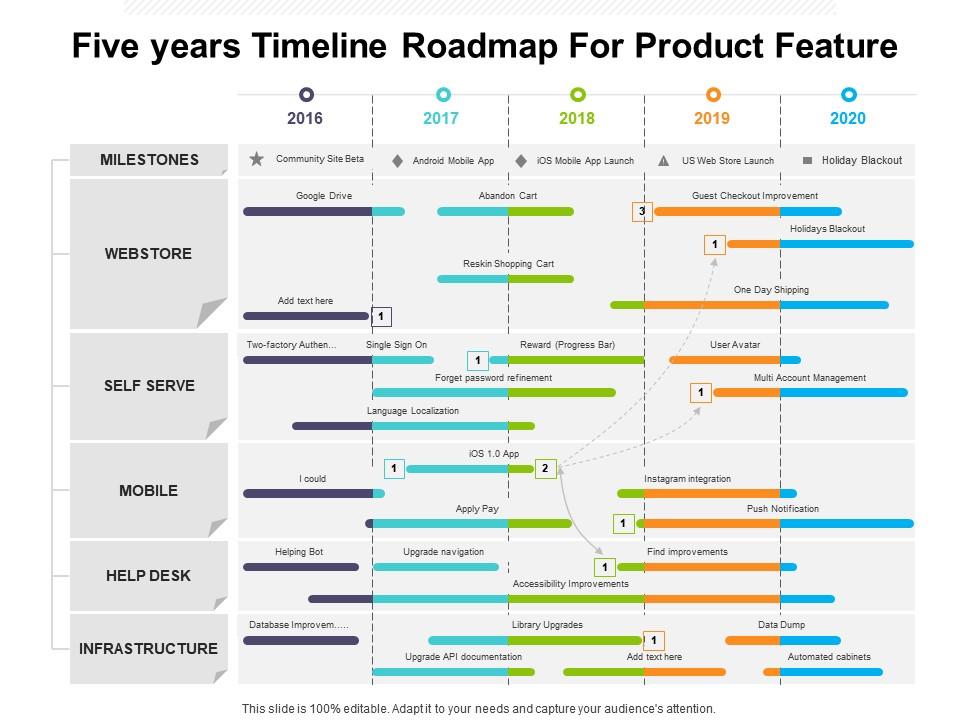
Five years timeline roadmap for product feature
Try Before you Buy Download Free Sample Product
Audience
Editable
of Time
The success rate of business plans is hugely dependent on the plan of action, and this editable Five Years Timeline Roadmap For Product Feature rightly serves the purpose. Encapsulate all the information related to the project in a well structured manner to obtain maximum efficiency by incorporating our stunning PowerPoint theme. State the critical deliverable, steps involved, time frame, workforce allocation, and lots more in an easy to understand manner by utilizing this pre designed roadmap PowerPoint layout. You can also prioritize your tasks and discuss the problem areas with your colleagues by incorporating this tailor made PPT layout. Empower your work plan by employing this professionally designed PPT theme. Entrepreneurs can download Five Years Timeline Roadmap For Product Feature as a beneficial communication tool that facilitates in collaborating with different tasks and achieve targets.
People who downloaded this PowerPoint presentation also viewed the following :
Five years timeline roadmap for product feature with all 2 slides:
Use our Five Years Timeline Roadmap For Product Feature to effectively help you save your valuable time. They are readymade to fit into any presentation structure.
FAQs for Five years timeline roadmap
You need clear objectives, prioritized features, realistic timelines, and success metrics. But here's the thing - your roadmap should tell people WHY you're building stuff, not just what's on the list. I've seen way too many that look like fancy to-do lists. Map your current features to business goals first, then work backward from your target outcomes. Don't forget dependencies between features and who's actually doing the work. Oh, and build in review points so you're not just blindly following it. Keep next quarter detailed but stay flexible beyond that - things change fast.
So I usually look at three things: customer impact, business value, and how hard it'll be to actually build. Score each feature against those and map them out. Sales and support teams are gold mines for this stuff - they hear all the complaints. Then check revenue potential and whether it fits your company strategy. Development effort matters too, obviously. Honestly, the magic happens when you find high-impact features that won't take forever to ship. Oh and definitely revisit this every quarter because priorities shift constantly. Sometimes what seemed urgent in January is totally irrelevant by April.
Honestly, customer feedback drives everything we build. Support tickets, user interviews, survey responses - that's where the good stuff comes from. The product team sorts through all of it and prioritizes based on how many people are screaming about something (and how loudly). We're not just collecting feedback to feel good about ourselves - it actually shapes our roadmap. Quick tip: always funnel your customer convos back through our feedback tracker. The product folks need to see patterns, not just random complaints. Makes their job way easier.
Get everyone together from day one - seriously, don't build this thing alone then ask for thoughts after. Engineering, design, marketing, sales, support... they all know different customer headaches you'll miss otherwise. Half the roadmaps I've watched fail? Someone didn't talk to the right people early enough. Regular syncs help, but honestly the bigger thing is making sure people get WHY you're prioritizing stuff, not just what's happening. Maybe try running a cross-functional workshop next quarter to kick things off properly.
Honestly, I'd just start with whatever tool you're already using for project stuff and see how it goes. Productboard and Roadmunk are built specifically for roadmaps though - they're really good at keeping stakeholders in the loop. Miro's surprisingly solid for this too, plus your team probably already knows how to use it. Aha! has tons of features but might be way more than you need right now. Notion works but it's... well, it's Notion, so kinda clunky sometimes. The main thing is picking something people will actually check regularly instead of just ignoring.
Quarterly updates work for most people, but honestly it depends on your industry. Tech moves fast, so maybe monthly makes more sense there. The main thing is keeping stakeholders from losing trust - outdated stuff just sitting there for months looks terrible. Major pivots or big customer feedback? Update immediately, don't wait for your scheduled time. I'd probably set a recurring reminder though, even if you end up writing "nothing changed" some quarters. Better than forgetting entirely and scrambling later when someone asks about it.
Honestly, the two big mistakes I see all the time: getting way too specific about stuff that's months out, and making promises before you've actually validated anything. That second one will bite you hard. Don't just build whatever your loudest customer screams about either – I've watched that derail so many teams. Focus on solving actual problems instead of just shipping features. Keep things loose beyond next quarter since you'll learn stuff that changes everything. Oh, and treat your roadmap like it's alive – it should evolve as you figure out what actually works, not be some contract written in stone.
Look, I'd split your roadmap like 60-70% for quick wins that actually move the needle, then save the rest for bigger bets. Map your short-term stuff to quarterly goals, but give those strategic projects annual milestones - they need breathing room. Here's the thing though: make sure those quick wins aren't just random feature requests. They should actually build toward your 2-3 year vision, otherwise you're stuck in feature factory mode forever (been there, it sucks). Set up quarterly reviews to rebalance this mix. Markets shift and sometimes you'll need to adjust the ratio.
Track both outcome and output stuff - that's the key. Outcomes mean user engagement, customer satisfaction, revenue from features you shipped. Output is delivery speed, scope creep, hitting milestones. Most teams get obsessed with how fast they're moving but totally ignore if users actually give a damn about what they built. Don't do that! Also survey stakeholders regularly since their buy-in matters way more than people think. I'd set up a monthly dashboard with these metrics so you can catch problems early. Short sentences work better than cramming everything together, trust me.
So for execs, stick to the big picture stuff - business impact, quarterly wins, that kind of thing. Your dev team needs the nitty gritty though. Sprint planning, standups, technical dependencies. Everyone else? Visual roadmaps work great. People are weirdly into colorful timelines, I swear. Main thing is making it interactive - ask questions, get their input, be upfront when things might change. Oh and always explain the reasoning behind your priorities. Nobody likes feeling like decisions just happened to them, you know?
So B2B roadmaps are all about those big, chunky features that take forever to build - we're talking quarterly or yearly cycles here. Enterprise clients have complex needs and honestly, your biggest customers will probably try to hijack your roadmap (been there). B2C is the complete opposite. You're pushing out updates weekly or monthly, doing tons of small tweaks based on user data and A/B tests. It's way more reactive. Think of it this way: B2B wants deep, powerful stuff that solves real business problems. B2C just wants you to keep users hooked and coming back.
Honestly, you've gotta let market trends and competitive stuff drive your roadmap timing. Spot trends early and you can ride the wave instead of scrambling later. I've watched entire teams blow up their Q3 plans because a competitor dropped something huge - it's brutal but it happens. Competitive analysis shows you where to differentiate and what features are basically required now. The trick is building flex into your roadmap so you're not totally screwed when things shift. Oh, and set up regular check-ins for tracking competitors and trends. Makes those quarterly planning sessions way less stressful.
Honestly, you've gotta stay flexible but keep everyone in the loop. Hit a roadblock? Tell people right away what's changing and why - nobody likes surprises. Some features will get pushed or axed completely (harsh but true). I always try to bake extra time into my initial plans because something always goes wrong. Document everything so you're not scrambling later trying to remember why you made certain calls. Set up regular check-ins with your team so changes don't come out of nowhere. Focus on what you're actually trying to achieve, not just hitting dates.
Honestly, just stop treating your roadmap like it's carved in stone. Make it way more flexible - think quarterly check-ins instead of some massive year-long plan that'll be outdated by February. Focus on bigger themes and what you're trying to achieve rather than getting hung up on exact features and dates. Regular sprint reviews are your friend here. User feedback changes everything, so build in time to actually pivot when you learn stuff. I swear, half the roadmaps I've seen just collect dust because teams don't adapt. Keep your planning windows shorter and always leave buffer room for those "oh wait, we learned something totally different" moments.
Honestly, the biggest thing is tying everything back to actual business goals - not just features that sound cool. Map your initiatives to real objectives like revenue or retention. I've watched teams build amazing stuff that users loved but didn't help the bottom line at all. Meet with leadership regularly so you catch any drift before it's too late. Focus on business metrics, not just product ones. And here's the thing - be ready to pivot when priorities change. Your roadmap isn't some sacred document carved in stone, it's gotta flex with whatever strategy shifts come up.
No Reviews