

Four levels restaurant org chart position staff roles




Try Before you Buy Download Free Sample Product
 Impress Your
 Audience
 100%
100% Editable
 Save Hours
 of Time


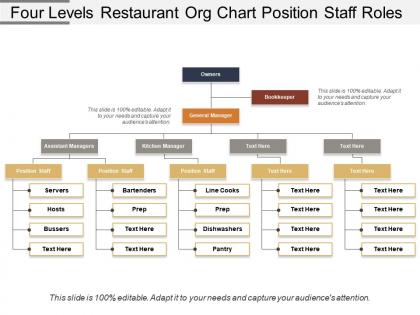
Show different hierarchy levels in the restaurant with our four levels restaurant org chart position staff roles Presentation design. To make you understand how a restaurant works, we have designed this PPT slide for your reference. In restaurants, General Manager is the in-charge of the unit who ensures the smooth functioning of the unit. From managing restaurant performance to hiring, training, food budget, menu design, financial planning, customer service and infrastructure management all comes under his jurisdiction. With our PowerPoint template, you can communicate this information in the easy way among your audience who can be the newly hired team member or someone who wants to know about the process. General Manager is usually assisted by 2 assistant managers and a Kitchen Manager who helps to run the outlet in the effective way. So let our four levels Restaurant org chart Presentation diagram defines the staff member roles in the organized way using this creative and impressive looking PowerPoint slide. You can search our website for more org chart related designs. Our Four Levels Restaurant Org Chart Position Staff Roles ensure they are content with their explanation. They allow you to give heed to their demands.
People who downloaded this PowerPoint presentation also viewed the following :
Four levels restaurant org chart position staff roles with all 5 slides:
Acquire a firm footing with our Four Levels Restaurant Org Chart Position Staff Roles. They enable you to gain a lot of ground.

FAQs for Four levels restaurant org chart
So front-of-house is basically everyone customers see - servers, bartenders, hosts who take orders and deal with people all day. Back-of-house? That's your kitchen team. Chefs, line cooks, prep people, dishwashers - they're cranking out food behind the scenes. Honestly, it's like some people are natural performers who love the customer chaos, while others just want to focus on cooking without having to smile and make small talk. When you're hiring, definitely think about personality fit. The worst thing is sticking someone who hates people in a server role.
Dude, good communication is literally everything in restaurants. Your servers and kitchen need to be on the same page or it's chaos - I've watched places completely melt down over this. Clear ticket systems help a ton. Also those quick huddles during shifts? Game changer. When everyone's talking, orders don't get screwed up, customers aren't sitting there forever wondering about their food, and your team can actually back each other up when it gets slammed. Honestly, it's the difference between smooth service and total disaster. Customers pick up on that energy immediately.
Honestly, you've gotta nail the people side first - your team needs to actually like working for you or they'll bail during busy shifts. Money stuff is constant too, like tracking what you're spending and making sure inventory doesn't disappear. Problem-solving is huge because trust me, the worst things always happen right when it's packed. Customer complaints are inevitable, so you need thick skin for that. Oh, and you'll be doing like five things at once - schedules, orders, random health inspector visits. Best advice? Shadow someone who's been doing it for years. You'll learn way more watching than reading about it.
Definitely rotate your staff through different stations - keeps things interesting and you'll get way better coverage when people call out sick. Our dishwasher actually came up with one of our most popular appetizers, so don't sleep on getting everyone involved in brainstorming sessions. Set up a recipe testing schedule where multiple people can mess around with new dishes together. The best ideas honestly come from those random conversations during prep work. Oh, and start a group chat where everyone can drop photos of cool stuff they see at other restaurants or farmers markets. Sometimes outside inspiration is exactly what you need.
Your servers literally make or break the whole experience. I can't tell you how many times I've watched incredible food get ruined by crappy service. They're setting the vibe from minute one - reading the room, timing everything right, handling weird requests without rolling their eyes. A good server doesn't just take orders, they actually connect with people and create those moments that make customers want to come back. Oh, and honestly? Don't hire someone just because they need the job. Find people who genuinely like talking to strangers.
Dude, you're totally right to focus on training. Places with decent programs see like 50-70% less turnover than spots that just wing it. People quit when they're confused and frustrated, you know? But when someone actually shows them the ropes properly, they stick around way longer. It's honestly pretty obvious when you think about it - nobody wants to feel clueless at work. Yeah, training takes time upfront, but you won't be hiring new people every other week. I'd start tracking your training hours against turnover. The connection becomes super clear once you see the numbers.
Honestly, most bar problems are pretty standard - crazy rushes, demanding customers, keeping track of inventory. But the worst part? Drunk people who turn into complete jerks. Cross-train everyone so they can help during busy times, and get a solid POS system to track orders better. The biggest thing though is having clear policies for cutting off drunk customers AND actually backing up your staff when they enforce them. Your bartenders need to know they won't get thrown under the bus by management for doing their job right.
Dude, your host is literally the first person customers see, so they set the whole vibe. A good one greets people warmly and reads the room - like, they know when to be energetic vs chill based on your restaurant's style. They handle seating flow and wait times so people don't get cranky (trust me, hangry customers are the worst). Plus they make people feel welcome instead of like an inconvenience. It's crazy how much they impact the entire experience. Honestly? Train them well because they're representing your whole brand from minute one.
Dude, restaurant tech is wild right now. POS systems do everything - orders, inventory, you name it. Servers carry tablets now instead of notepads, which honestly looks way cooler. Those kitchen display screens finally killed off the chaotic paper ticket system (hallelujah). Your staff can process payments anywhere with mobile readers, and there's apps for scheduling that actually make sense. The whole vibe has shifted though. You're not hiring order-takers anymore - you need people who can juggle multiple systems without losing their minds. When you're interviewing, definitely test their comfort level with tech stuff first.
Honestly, when your team actually gets along, people don't dread coming to work. Morale goes up, and those crazy rush periods become way more manageable. Everyone knows what they're doing, so orders run smoother and you're not constantly dealing with dumb mistakes. Staff turnover drops too - which is huge because training newbies every few weeks gets old fast. I'd start with something simple like weekly check-ins where people can actually speak up about issues. You know how small problems turn into disasters if nobody talks about them? Those little conversations prevent so much drama later.
Dude, being a chef is way more than just cooking. Menu planning and food costs will eat up your mornings. You're also doing inventory, scheduling staff, training line cooks - basically everything. Quality control too since every plate is on you. Working with front-of-house staff to time everything right during service is crucial. Don't even get me started on suppliers - they can be such a pain, honestly worse than a crazy dinner rush sometimes! If you're serious about this, shadow a chef during their admin time, not just when they're cooking.
Yeah, so the style you pick basically dictates everything your staff does. Fine dining means you'll need specialists - sommeliers, food runners, servers who memorize every single ingredient (which honestly sounds exhausting). Casual spots are way more chill. Servers bus tables, bartenders jump in with food orders, everyone just helps out. Fast food's different though - it's pure efficiency mode. Your team has to bounce between register, fryer, drive-thru, whatever needs doing. The fancier you go, the more specialized everyone gets. Figure out your vibe first, then structure your team around that.
So basically, set up rotation schedules where people can shadow different roles - like servers spending time in the kitchen or bussers picking up bartending basics. Most people actually dig learning new stuff once they get going. Match newbies with experienced staff as mentors. Maybe throw in some perks like extra pay or better scheduling for people who nail multiple positions? The trick is framing it as career growth, not just more work dumped on them. I'd start with two departments first and see how it goes before expanding everywhere.
Dude, a sommelier completely changes the game. Instead of just handing over a wine list, they actually talk to your customers - figure out what they like, suggest pairings, make wine less scary for people who don't know much about it. Honestly, some of them are pretty entertaining too with all their vineyard stories. Your average check goes way up because people trust their recommendations. Just make sure your servers work with them as a team rather than competing. When that clicks, you'll see way better reviews and guests coming back more often.
Stay curious, honestly that's huge. I read food blogs and pay attention to what customers want - plus don't be shy about asking when someone orders something weird you've never heard of. People actually love explaining their diet stuff if you seem interested. Learn the basics of common allergens and trendy diets like keto or plant-based so you can actually help people. Your menu won't change tomorrow but your knowledge can. I'd pick one new diet trend each month to really understand - makes you way more useful and managers notice that kind of thing.
No Reviews