


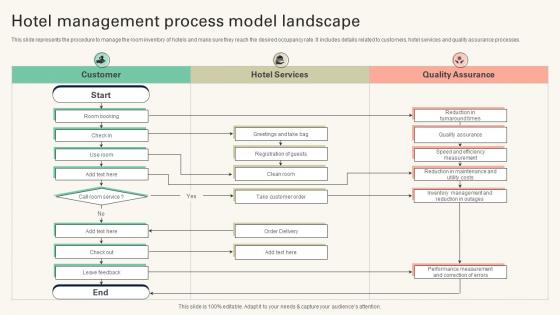
Hotel Management Process Model Landscape




Try Before you Buy Download Free Sample Product
 Impress Your
 Audience
 100%
100% Editable
 Save Hours
 of Time


This slide represents the procedure to manage the room inventory of hotels and make sure they reach the desired occupancy rate. It includes details related to customers, hotel services and quality assurance processes.
People who downloaded this PowerPoint presentation also viewed the following :
Hotel Management Process Model Landscape with all 6 slides:
Use our Hotel Management Process Model Landscape to effectively help you save your valuable time. They are readymade to fit into any presentation structure.





FAQs for Hotel Management
The key components of the hotel management process model include front office operations, housekeeping management, food and beverage services, revenue optimization, and guest experience coordination. These integrated systems streamline operations by automating check-ins, optimizing room inventory, and enhancing service delivery, with many hospitality organizations finding that this comprehensive approach ultimately delivers improved operational efficiency and superior guest satisfaction.
Technology enhances hotel management by automating reservations, streamlining check-in processes, optimizing housekeeping schedules, and enabling real-time inventory tracking across multiple properties. Through cloud-based systems and mobile applications, hotels deliver faster guest services, reduce operational costs, and improve customer experiences, with many hospitality chains finding that integrated technology platforms ultimately provide significant competitive advantages in an increasingly digital marketplace.
Customer feedback serves as a critical strategic compass for hotel management, directly informing service improvements, operational adjustments, pricing strategies, and guest experience enhancements. Through systematic analysis of reviews, surveys, and direct comments, hotels streamline everything from housekeeping protocols to dining services, while identifying emerging trends and preferences that ultimately deliver higher satisfaction rates, increased loyalty, and competitive advantage in an increasingly experience-driven hospitality landscape.
Different hotel categories significantly influence management processes through varying service standards, staffing models, technology requirements, and operational complexity. Luxury hotels emphasize personalized guest experiences with higher staff-to-guest ratios and premium amenities, while budget properties streamline operations for efficiency and cost control, and boutique hotels focus on unique positioning and niche market strategies, ultimately delivering category-appropriate experiences and competitive positioning.
**INPUT**: What are the best practices for effective staff training in hotel management? **OUTPUT**: Effective hotel staff training includes comprehensive onboarding programs, role-specific skill development, customer service excellence training, cross-departmental exposure, and continuous performance feedback systems. These practices enhance operational efficiency by improving service consistency, reducing staff turnover, and increasing guest satisfaction scores, with many hospitality organizations finding that strategic training investments ultimately deliver competitive advantages and stronger revenue performance. [Word count: 58 words]
Data analytics improves hotel operational efficiency by optimizing room pricing, predicting maintenance needs, streamlining staff scheduling, and personalizing guest services through predictive insights. Hotels leverage real-time occupancy data, guest preference analytics, and resource utilization patterns to reduce costs, minimize waste, and enhance guest experiences, ultimately delivering higher profitability and competitive advantage in hospitality markets.
Seasonal demand significantly impacts hotel management through fluctuating staffing requirements, dynamic pricing strategies, inventory adjustments, and resource allocation modifications. Hotels adapt by implementing flexible workforce models, automated revenue management systems, and strategic partnerships with suppliers, while many hospitality organizations find that predictive analytics and cross-training programs ultimately deliver operational efficiency and sustained profitability during peak and off-seasons.
Sustainability practices integrate into hotel management models through energy-efficient systems, waste reduction programs, sustainable sourcing protocols, water conservation measures, and green certification standards. These initiatives enhance operational efficiency by reducing utility costs, improving brand reputation, and meeting increasingly eco-conscious guest expectations, with many hotels finding that sustainable practices ultimately deliver competitive advantage and long-term profitability.
Hotel managers face challenges including demand forecasting complexities, dynamic pricing optimization, inventory allocation across channels, competitor rate monitoring, and seasonal fluctuation management. These revenue management obstacles require strategic technology integration and data analytics expertise, with many hospitality organizations finding that automated pricing systems and predictive analytics ultimately streamline operations while maximizing profitability.
Hotels can optimize their supply chain processes through automated inventory management, vendor consolidation, demand forecasting technology, centralized procurement systems, and real-time tracking platforms. These approaches streamline operations by reducing costs, minimizing waste, and ensuring consistent availability, with many hospitality groups finding that strategic supplier partnerships and data-driven ordering ultimately deliver enhanced guest experiences and improved profit margins.
Essential hotel performance metrics include occupancy rate, average daily rate (ADR), revenue per available room (RevPAR), guest satisfaction scores, and operational efficiency ratios. These metrics enable hotels to optimize pricing strategies, enhance guest experiences, and streamline operations, with many hospitality organizations finding that integrated performance dashboards ultimately deliver improved profitability and competitive positioning.
The hotel management process model adapts to online booking platforms by integrating real-time inventory management, automated pricing algorithms, and multi-channel distribution systems that synchronize availability across platforms like Booking.com and Expedia. These technologies streamline operations by reducing manual reservations, optimizing revenue through dynamic pricing, and enhancing guest experiences with instant confirmations, ultimately delivering increased occupancy rates and operational efficiency.
Guest experience serves as the central organizing principle for hotel management workflows, influencing everything from reservation systems and housekeeping schedules to staff training protocols and quality assurance measures. Through integrated guest journey mapping, hotels streamline check-in processes, personalize service delivery, and anticipate needs across touchpoints, with many hospitality organizations finding that experience-focused workflows ultimately deliver higher satisfaction scores, increased loyalty, and stronger competitive positioning in an increasingly crowded marketplace.
Crisis management can be incorporated through comprehensive contingency planning, staff training protocols, communication systems, guest safety procedures, and financial reserves allocation. Hotels integrate these strategies by developing scenario-specific response plans, cross-training employees for operational flexibility, and establishing partnerships with emergency services, ultimately ensuring business continuity and guest confidence during disruptions.
Emerging trends transforming hotel management processes include AI-powered personalization, contactless service technologies, sustainability integration, revenue optimization platforms, and mobile-first guest experiences. These innovations streamline operations by automating check-ins, predicting guest preferences, and optimizing resource allocation, with many hotels finding that strategic technology adoption delivers enhanced guest satisfaction and operational efficiency.
-
Fantastic collection of visually appealing PowerPoint templates. They certainly uplift the look of the presentation.
-
It saves your time and decrease your efforts in half.