


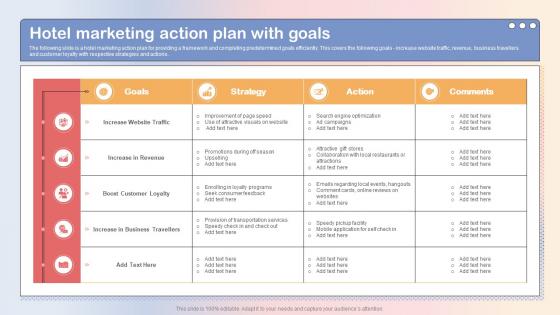
Hotel Marketing Action Plan With Goals




Try Before you Buy Download Free Sample Product
 Impress Your
 Audience
 100%
100% Editable
 Save Hours
 of Time


The following slide is a hotel marketing action plan for providing a framework and completing predetermined goals efficiently.This covers the following goals increase website traffic, revenue, business travellers and customer loyalty with respective strategies and actions.
People who downloaded this PowerPoint presentation also viewed the following :
Hotel Marketing Action Plan With Goals with all 6 slides:
Use our Hotel Marketing Action Plan With Goals to effectively help you save your valuable time. They are readymade to fit into any presentation structure.





FAQs for Hotel Marketing Action
Honestly, you gotta know who you're targeting first - that's everything. Your website and socials need to be on point, plus local SEO is huge since everyone searches "hotels near me" anyway. Get some killer photos of your property up there. Pricing strategy will make or break you though, so spend time on that. Email marketing works great for getting people back, and yeah, you'll want to be on Booking.com and Expedia even if their fees suck. I'd audit what you're doing now and fix whatever's the messiest first.
Hotels are seriously perfect for social media - you've got gorgeous rooms and real guest experiences to work with. Focus on visual storytelling but mix it up. Don't just spam promotional stuff because honestly, that's annoying as hell. Behind-the-scenes content works great, and definitely get guests to tag you in their posts. That user-generated stuff is pure gold for credibility. Oh, and actually respond to comments personally - makes a huge difference. Pick maybe 2-3 platforms where your guests actually spend time and stay consistent there. Quality over quantity always wins.
Look, SEO is just how people find your hotel when they're googling stuff like "hotels near downtown Seattle" or whatever. You show up higher in search results, get more clicks - pretty straightforward. What's cool is these people are already planning to book somewhere, so they actually convert way better than random social media traffic. Nobody's clicking past the first page of Google anyway, let's be real. Start with local SEO first - grab your Google Business Profile and work on those location keywords. Oh, and make sure your website doesn't take forever to load because that kills everything.
Okay so first thing - dig into your guest data and group people by how they book, demographics, previous stays, that stuff. Most hotels are sitting on goldmines of info they never actually use, which is honestly crazy to me. Create different campaigns for each group with personalized emails and room offers that make sense for them. Timing matters too. Send anniversary deals around when they stayed last year, or pitch weekend packages to your business travelers. Don't go overboard initially though - start with maybe 2-3 segments, test what works, then build from there.
So business travelers are totally different beasts - they're on LinkedIn and Google searching super specific work stuff with actual urgency. Partner with corporate platforms like Concur or hit up company email lists. Leisure folks though? They're scrolling Instagram dreaming about beaches, not actively hunting for flights. Facebook, travel deal sites, maybe some influencer collabs work way better there. Business = intent and deadlines. Leisure = inspiration and FOMO, honestly. I'd start by checking where your current bookings actually come from first - that'll show you what's already working before you throw money at new channels.
Yeah definitely plaster those reviews everywhere - website, social media, emails, even brochures if you're old school like that. Pick the detailed ones though, like "perfect spot for client dinners" beats generic "great place" any day. Honestly the 5-stars are nice but sometimes the 4-star reviews with specifics hit different, you know? Don't forget to actually reply to reviews, especially the cranky ones - people totally read your responses. Oh and bug your happy guests for reviews right after they check out while they're still in a good mood. Basically treat reviews like free ads and use them everywhere.
Honestly, influencer marketing works way better than regular ads for hotels. People trust these creators they follow, so when they post about your place, it doesn't feel like spam. The photos they take are usually amazing too - way more authentic than those generic stock images everyone uses. Local micro-influencers are where I'd start though. They're cheaper and their followers actually engage with their content, unlike those massive accounts where comments get lost in the void. The ROI has been pretty decent from what I've seen since you're hitting people who are already into travel stuff. Worth trying for sure.
Honestly, seasonal campaigns work so well because you're hitting people when they're already thinking about travel. Beach trips get booked in spring, holiday stuff in fall - you know the drill. Instead of random promotions year-round, time your campaigns about 2-3 months before busy seasons hit. Make your offers match what people actually want during those times too. Like, don't push spa weekends when families are hunting for summer vacation deals. It's way easier than trying to create demand out of nowhere. You'll see occupancy rates jump when you work with natural booking patterns instead of against them.
Honestly, start with direct bookings - they're your money makers since you're not paying commission to booking sites. RevPAR and your booking conversion rates from different channels (email, social, paid ads) will show you where to spend your budget. Customer acquisition cost vs lifetime value is huge too. I'd ignore vanity metrics like Instagram followers though - they don't actually translate to revenue most of the time. Track your average daily rate and how many guests come back. Website traffic is obvious but focus on who's actually converting. Once you nail these basics, then you can get fancy with attribution tracking and all that.
Definitely start with guest checkout - nobody wants to create accounts just to book something. Your site better load fast too because people will literally click away in seconds. Show all pricing upfront, no hidden fees at the last second (that's the worst). Make it mobile-friendly since everyone books on their phone now. Oh, and add progress bars so they know they're almost done. Multiple payment options help - Apple Pay, Google Pay, whatever. The big thing though? Send those abandoned cart emails within an hour with a direct link back. Works every time.
Chatbots are probably your best bet to start - they handle guest questions 24/7 and you'll see results fast. AR room tours are getting big now, lets people "walk through" before booking. Dynamic pricing software automatically adjusts your rates based on demand, which is honestly a game-changer. Don't sleep on voice search optimization either since everyone's asking Alexa to find hotels these days. Personalization engines customize your site for each visitor, and social listening catches mentions you'd otherwise miss. Oh, geofencing is kinda sneaky but works - sends offers when people are near competitor hotels. Start simple though, chatbots first.
Honestly, getting involved with your local community is like having a secret marketing weapon. When you partner with nearby businesses or sponsor local events, people start talking about your hotel naturally - and that beats any Facebook ad. Your neighbors become walking billboards when their friends visit from out of town. Guests eat this stuff up too because they want to experience the "real" place, not just the touristy spots. I'd say pick 2-3 local partnerships to focus on this quarter. Could be anything really - a brewery, art gallery, whatever fits your vibe. Track how it affects your bookings.
Honestly, it's all about making people feel special when they stay with you. Get a loyalty program going - but make it actually worthwhile, not those garbage point systems that expire before you can blink. Track what guests like in your system so you can wow them next time with their favorite room or extra pillows. Personal touches work way better than generic stuff. Follow up after their stay with a real thank-you, not some template email. Social media's good too, but nothing beats remembering someone's name and preferences. That's what gets people booking again.
Here's what I'd do - start with 2-3 countries you actually want to target. Don't try to be everywhere at once, it's a mess. Partner with the big players like Booking.com, but also hit up regional ones. Ctrip's huge in China, MakeMyTrip dominates India. Your website needs multiple languages and local payment options (people abandon carts when they can't pay how they want). Social media's different everywhere though - what works in the US won't work in Japan. Google Ads with geo-targeting gets quick results. Honestly, the biggest thing is showing you actually get their culture. Mention nearby temples, local food, international breakfast. Makes a huge difference.
Honestly, hotels are going crazy with personalization right now - AI's helping them customize emails and room suggestions based on what you've booked before. Sustainability messaging is everywhere too. Direct bookings are huge since hotels don't want to pay those commission fees to Expedia and stuff. Oh, and people are literally booking rooms through Instagram stories now, which is wild but apparently works. Voice search is becoming a thing since everyone's asking Alexa about travel. Guests basically expect everything to feel tailored to them. I'd start by looking at what personalization you're already doing and find some easy improvements.
-
Understandable and informative presentation.
-
Impressive templates. Designing a presentation is fun now!