

So erreichen Sie die Iso 27001-Zertifizierung Powerpoint-Präsentationsfolien





Try Before you Buy Download Free Sample Product
 Impress Your
Audience
 100%
Editable
 Save Hours
of Time


Vertrauliche Informationen über die Organisation, Kunden und die persönlichen Daten wertvoller Mitarbeiter zu bewahren, ist keine leichte Aufgabe. Um den oben genannten Zweck zu erreichen, verlassen sich Organisationen auf das Informationssicherheits-Managementsystem. Hier ist eine professionell gestaltete Vorlage zum Erreichen der ISO 27001-Zertifizierung, die für Organisationen hilfreich sein wird, die das Informationssicherheits-Managementsystem einführen und verwalten möchten. Die Organisation kann ihre zukünftigen Ziele durch den Abschnitt „Unsere Ziele und Ziele für das Geschäftswachstum“ veranschaulichen. Organisationen können ihren Weg zum Erreichen der Zertifizierung mit Hilfe des Abschnitts "Was wird unser Zertifizierungsweg sein" anzeigen. Die Einführung von ISMS in der Organisation und deren Verwaltung, um den Zertifizierungsabschnitt zu erhalten, wird der Organisation helfen, die Einbeziehung des ISMS-Rahmenwerks in ihre Unternehmenskontrolle zu zeigen. Die Planung gemäß Abschnitt 6 kann von der Organisation durch die Anwendbarkeitserklärung erfüllt werden. Das interne ISMS-Auditprogramm und die Aktivitäten und Leistungsindikatoren sowie Abschnitte des Bewertungs-Dashboards können der Organisation helfen, Abschnitt 9 Leistungsbewertung zu erfüllen. Schließlich hilft der Abschnitt Minderungsplan zur Behebung aufgetretener Risikoereignisse der Organisation, die Verbesserung in Abschnitt 10 einzuhalten. Passen Sie diese zu 100 Prozent bearbeitbare Vorlage jetzt an.
People who downloaded this PowerPoint presentation also viewed the following :
Inhalt dieser Powerpoint-Präsentation
Folie 1 : Diese Folie stellt vor, wie man die ISO 27001-Zertifizierung erreicht. Geben Sie Ihren Firmennamen an und beginnen Sie.
Folie 2 : Dies ist eine Agenda-Folie. Geben Sie hier Ihre Agenden an.
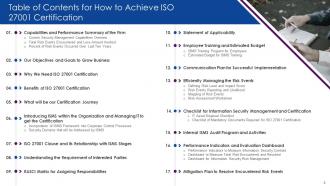
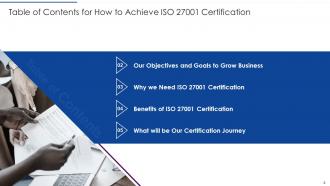
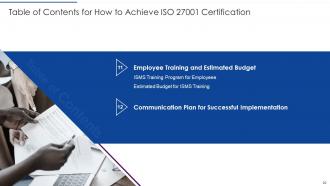
Folie 3 : Diese Folie zeigt das Inhaltsverzeichnis für die Präsentation.
Folie 4 : Diese Folie zeigt Titel für Themen, die als nächstes in der Vorlage behandelt werden sollen.
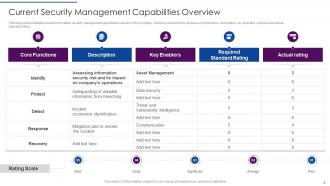
Folie 5 : Diese Folie präsentiert die aktuellen Sicherheitsverwaltungsfunktionen im Überblick.
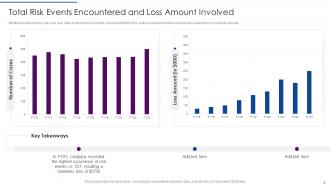
Folie 6 : Diese Folie zeigt die Gesamtzahl der aufgetretenen Risikoereignisse und die damit verbundene Schadenshöhe.
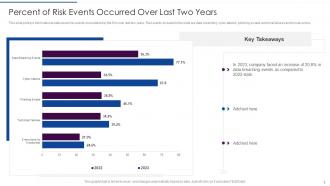
Folie 7 : Diese Folie stellt den Prozentsatz der Risikoereignisse dar, die in den letzten zwei Jahren aufgetreten sind.
Folie 8 : Diese Folie zeigt Titel für Themen, die als nächstes in der Vorlage behandelt werden sollen.
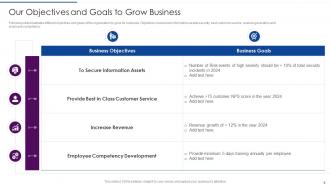
Folie 9 : Diese Folie zeigt unsere Zielsetzungen und Ziele zur Geschäftsausweitung.
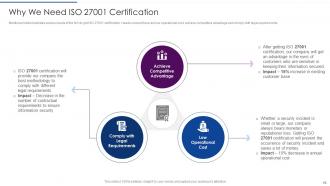
Folie 10 : Diese Folie stellt verschiedene Anforderungen des Unternehmens dar, um eine ISO 27001-Zertifizierung zu erhalten.
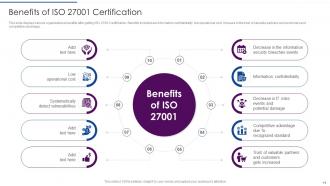
Folie 11 : Diese Folie zeigt verschiedene organisatorische Vorteile nach Erhalt der ISO 27001-Zertifizierung.
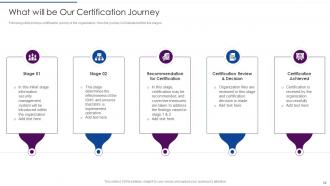
Folie 12 : Diese Folie repräsentiert den Zertifizierungsweg der Organisation.
Folie 13 : Diese Folie zeigt Titel für Themen, die als nächstes in der Vorlage behandelt werden sollen.
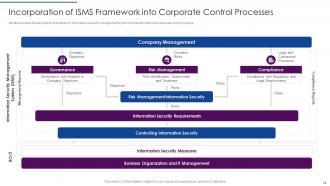
Folie 14 : Diese Folie zeigt die Einbindung des ISMS-Frameworks in die Unternehmenskontrollprozesse.
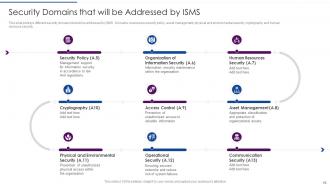
Folie 15 : Diese Folie stellt verschiedene Sicherheitsdomänen dar, die von ISMS angesprochen werden.
Folie 16 : Diese Folie zeigt Titel für Themen, die als nächstes in der Vorlage behandelt werden sollen.
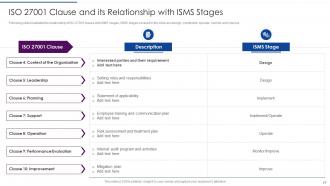
Folie 17 : Die folgende Folie veranschaulicht die Beziehung der ISO 27001-Klausel zu den ISMS-Stufen.
Folie 18 : Diese Folie zeigt Titel für Themen, die als nächstes in der Vorlage behandelt werden sollen.
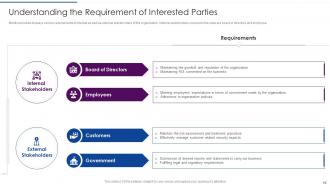
Folie 19 : Diese Folie zeigt das Verstehen der Anforderungen interessierter Parteien.
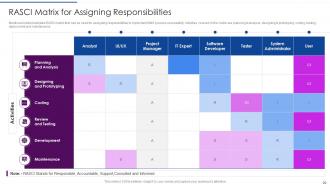
Folie 20 : Diese Folie zeigt die RASCI-Matrix, die für die Zuweisung von Verantwortlichkeiten zur erfolgreichen Implementierung des ISMS-Prozesses verwendet werden kann.
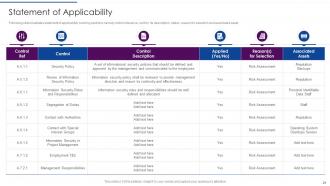
Folie 21 : Diese Folie stellt die Erklärung zur Anwendbarkeit dar, die Abschnitte umfasst, nämlich Kontrollreferenz, Kontrolle, ihre Beschreibung usw.
Folie 22 : Diese Folie zeigt Titel für Themen, die als nächstes in der Vorlage behandelt werden sollen.
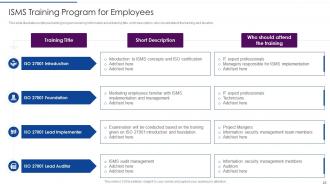
Folie 23 : Diese Folie veranschaulicht das Schulungsprogramm für Mitarbeiter mit Informationen zu Schulungstitel, Kurzbeschreibung usw.
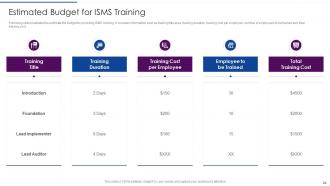
Folie 24 : Diese Folie zeigt die Schätzung des Budgets für die Bereitstellung von ISMS-Schulungen.
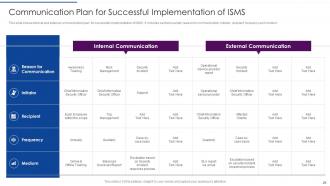
Folie 25 : Diese Folie zeigt den internen und externen Kommunikationsplan für eine erfolgreiche Implementierung von ISMS.
Folie 26 : Diese Folie zeigt Titel für Themen, die als nächstes in der Vorlage behandelt werden sollen.
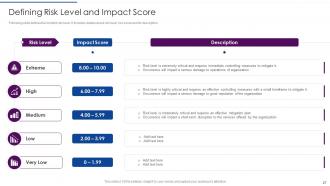
Folie 27 : Die folgende Folie definiert die Risikostufe des Vorfalls. Es enthält Details zur Risikostufe, Risikobewertung und deren Beschreibung.
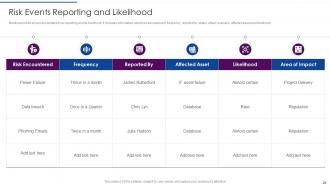
Folie 28 : Diese Folie stellt die Meldung von aufgetretenen Risiken und ihre Wahrscheinlichkeit dar.
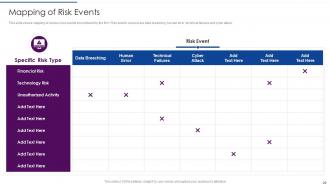
Folie 29 : Diese Folie zeigt eine Kartierung verschiedener Risikoereignisse, denen die Firma begegnet ist.
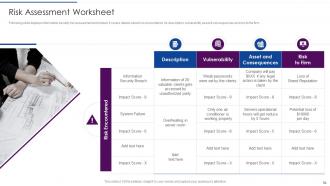
Folie 30 : Die folgende Folie zeigt das Arbeitsblatt zur Risikobewertung der Informationssicherheit.
Folie 31 : Diese Folie zeigt Titel für Themen, die als nächstes in der Vorlage behandelt werden sollen.
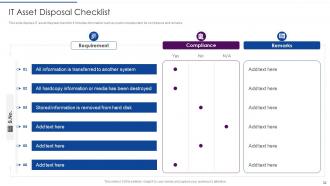
Folie 32 : Diese Folie zeigt die Checkliste für die Entsorgung von IT-Ressourcen mit Informationen wie Systemanforderungen, deren Konformität und Anmerkungen.
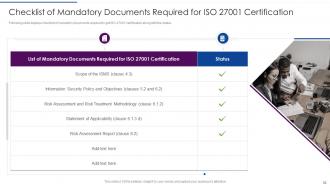
Folie 33 : Diese Folie zeigt die Checkliste der obligatorischen Dokumente, die für die ISO 27001-Zertifizierung erforderlich sind.
Folie 34 : Diese Folie zeigt Titel für Themen, die als nächstes in der Vorlage behandelt werden sollen.
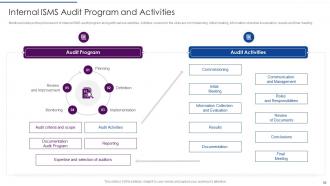
Folie 35 : Die erwähnte Folie zeigt den Rahmen des internen ISMS-Auditprogramms zusammen mit verschiedenen Aktivitäten.
Folie 36 : Diese Folie zeigt Titel für Themen, die als nächstes in der Vorlage behandelt werden sollen.
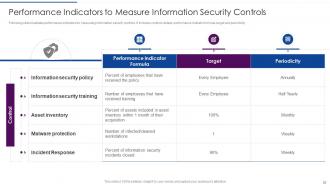
Folie 37 : Diese Folie zeigt Leistungsindikatoren zur Messung von Informationssicherheitskontrollen.
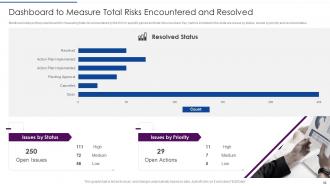
Folie 38 : Diese Folie stellt das Dashboard dar, um die Gesamtzahl der aufgetretenen und gelösten Risiken zu messen.
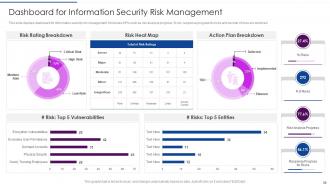
Folie 39 : Diese Folie zeigt das Dashboard für das Management von Informationssicherheitsrisiken.
Folie 40 : Diese Folie zeigt Titel für Themen, die als nächstes in der Vorlage behandelt werden sollen.
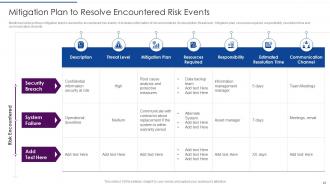
Folie 41 : Diese Folie zeigt den Minderungsplan zur Behebung von aufgetretenen Risikoereignissen.
Folie 42 : Diese Folie zeigt Symbole zum Erreichen der ISO 27001-Zertifizierung.
Folie 43 : Diese Folie trägt den Titel „Zusätzliche Folien“, um voranzukommen.
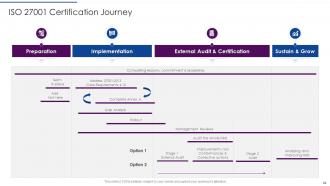
Folie 44 : Diese Folie zeigt den Weg der ISO 27001-Zertifizierung.
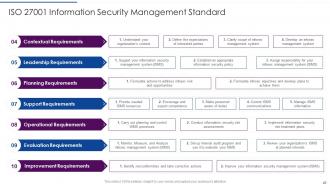
Folie 45 : Diese Folie stellt den ISO 27001-Informationssicherheits-Managementstandard vor.
Folie 46 : Dies ist die Folie „Über uns“, um Unternehmensspezifikationen usw. anzuzeigen.
Folie 47 : Dies ist unsere Missionsfolie mit zugehörigen Bildern und Texten.
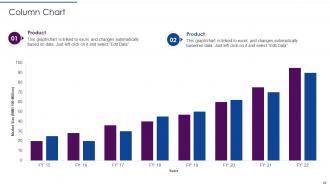
Folie 48 : Diese Folie zeigt ein Säulendiagramm mit zwei Produktvergleichen.
Folie 49 : Diese Folie enthält einen 30 60 90-Tage-Plan mit Textfeldern.
Folie 50 : Dies ist eine Timeline-Folie. Zeigen Sie hier Daten zu Zeitintervallen an.
Folie 51 : Diese Folie zeigt eine Lupe, um Informationen, Spezifikationen usw. hervorzuheben.
Folie 52 : Diese Folie zeigt Haftnotizen. Posten Sie hier Ihre wichtigen Notizen.
Folie 53 : Diese Folie enthält ein Puzzle mit zugehörigen Symbolen und Text.
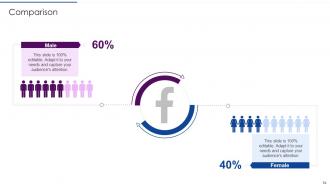
Folie 54 : Dies ist eine Vergleichsfolie zum Vergleich zwischen Waren, Unternehmen usw.
Folie 55 : Dies ist eine Dankeschön-Folie mit Adresse, Kontaktnummern und E-Mail-Adresse.
So erreichen Sie die ISO 27001-Zertifizierung PowerPoint-Präsentationsfolien mit allen 60 Folien:
Verwenden Sie unsere Powerpoint-Präsentationsfolien zum Erreichen der ISO 27001-Zertifizierung, um effektiv dabei zu helfen, wertvolle Zeit zu sparen. Sie sind gebrauchsfertig und passen in jede Präsentationsstruktur.







FAQs for How To Achieve Iso 27001 Certification
Honestly, ISO 27001 is pretty worth it. Your data protection gets way better, and clients actually trust you more - especially in finance and healthcare where they basically require it now. The whole process forces you to find security gaps you didn't even know about, which is kinda scary but super helpful. Plus it gives you a real edge when you're competing for contracts. Your incident response improves too, and everything becomes more organized across the board. I'd probably start with a gap analysis first though - helps you figure out realistic timelines and what you're actually getting into budget-wise.
Honestly, ISO 27001 is worth it if you're handling any sensitive data. Clients see it and immediately know you're not messing around with security. A lot of companies won't even work with vendors who don't have it anymore - I've seen RFPs where it's basically mandatory. The whole thing shows you've got proper security controls in place and you're getting audited regularly to keep them up. Your stakeholders feel way more confident their data's protected. Can definitely help you win new business too. Takes some work to get certified but the trust factor alone makes it worthwhile.
So basically you need to set up your ISMS first, then do a risk assessment to figure out what actually needs protection. Document everything (ugh, I know, so much paperwork but it's unavoidable). Implement your security controls based on what you found. The certification audit happens in two stages - they check your docs first, then see if you're actually doing what you say you're doing. Pass that and you're certified for three years with yearly check-ins. Honestly though, start by just mapping out what info you have - makes the whole thing way less overwhelming later.
First, grab the actual ISO 27001 standard and map what you're already doing against those 93 controls in Annex A. Go department by department - they know their stuff better than anyone. Document everything you find, even the messy bits. Here's the thing though: be honest about what actually happens vs. what's supposed to happen on paper. I've seen too many companies fool themselves here. Once you've got your gaps identified, rank them by risk and how hard they'll be to fix. Don't try to tackle everything at once. Build a roadmap that won't kill your team.
Okay so risk assessment is literally the foundation of ISO 27001 - no way around it. You've gotta map out all your info assets first, then figure out what threats they face and how bad it'd be if things went sideways. Honestly, once you dive in it's not as scary as it sounds. Document everything (I know, boring but necessary), implement controls to bring risks down to acceptable levels, and review regularly. Oh and pro tip - start with your most critical data first. That's where you'll see the biggest impact when you're planning treatments. The whole process just becomes second nature after a while.
Look, the standard just says "planned intervals" but most places I've seen do it way more than once a year. Quarterly reviews work well for the big stuff. Monthly check-ins for critical components aren't overkill either. Your cert body's gonna audit you annually anyway, plus that big recertification every three years - so yeah, stay on top of it. Major business changes or new threats? Review immediately. Honestly though, whatever schedule your team can actually stick to is better than some perfect plan you'll abandon. Oh, and those surveillance audits always seem to come faster than expected.
Look, the money thing's gonna be your biggest headache - leadership sees it as expensive paperwork and nothing more. People hate new processes at first too, which is normal but still annoying. Gap analysis will probably surprise you since most companies think they're closer to ISO standards than they actually are. Oh, and the documentation part? It's absolutely brutal. Takes forever. Here's what actually works: get an executive champion early and put someone dedicated on project management. Otherwise you'll have this half-dead project limping along for years. Trust me on that one.
So here's the thing - ISO 27001 and GDPR work together surprisingly well. Your ISO controls already handle most of what GDPR wants anyway (access management, incident response, all that stuff). NIST is more like a toolkit you can use to actually implement ISO rather than something separate. Honestly, I'd start with ISO 27001 first since it gives you solid groundwork. Once that's in place, you'll find GDPR compliance comes way easier, and mapping everything to NIST guidelines is pretty straightforward. It's way less overwhelming than trying to tackle all three from scratch.
So you're gonna need a bunch of different docs for ISO 27001. Start with your ISMS stuff - security policy, risk assessment procedures, statement of applicability. That's your foundation right there. Then grab all your evidence docs like risk registers, incident logs, audit records. Oh, and don't skip the procedural stuff for access control, business continuity, supplier management. The paperwork's honestly pretty intense at first - I won't lie about that. But here's the thing: you're basically just proving you actually do what you claim. Map out what you've already documented first. You might be way closer than you realize.
Dude, your ISMS isn't some static document you file away and forget about. Do quarterly health checks - way better than scrambling before recertification hits. Internal audits will save your butt by catching issues early. Annual management reviews are non-negotiable for updating risk assessments when your business shifts. Honestly, most companies totally blow it on staff training, which is wild because it's so critical. Track your security incidents and near-misses, then actually use those insights to tweak your policies. Oh, and make improvement part of your normal routine instead of this big stressful event.
Your management team has to be all-in on ISO 27001, seriously. They can't just approve the budget and vanish - auditors will call that out instantly. The standard actually demands proof of their involvement: policy sign-offs, resource decisions, ongoing reviews. I've seen companies tank their certification because leadership treated it like a checkbox exercise. Short sentences work here. Your executives need to get their hands dirty and stay engaged throughout the process, or you're basically throwing money away on a failed audit.
Look, internal audits are your safety net for ISO 27001 compliance. They catch problems before the real auditors show up and make your life miserable. You'll need to do them at least once a year to check if your security management system actually works. It's like doing practice rounds before the big game, honestly. Document everything you find - gaps, control failures, whatever comes up. Then actually fix the stuff you discover (this part's crucial). My advice? Get a solid audit schedule going now instead of panicking when recertification rolls around. Trust me on this one.
Honestly, there's a bunch of stuff out there to help with ISO 27001. Gap analysis tools are clutch for figuring out what you're missing right now. Free templates exist - I'd grab one of those first and see where you stack up against the 114 controls. Risk assessment software makes documenting everything way easier, though some of the consulting firm toolkits can get expensive fast. ISO publishes their own guidance docs too. Project management platforms work great for tracking your progress through all the controls. Oh, and there are implementation frameworks floating around online that'll save you time. Start with mapping your current setup - it's eye-opening how much you might already have covered.
Training your people is huge for ISO 27001 compliance - it's literally required. Your team needs to know the security policies inside and out, spot phishing emails, handle data correctly, all that stuff. I've seen companies with amazing tech setups get wrecked because employees clicked the wrong link. Start with training that's specific to what each department actually does, then hit them with refreshers every few months. Security awareness sessions really do help make it part of how people think at work. Without proper training, even your best controls won't save you.
Honestly? Budget around $15k-$50k for getting certified initially - that's your gap analysis, docs, maybe a consultant, plus the actual audit. Annual check-ins are cheaper, like $5k-$15k. Then every three years you're back to that big number for full recertification. The real pain though is internal time. We're talking months of your team's life here. I'd honestly call around to different certification bodies first since their prices are all over the place. And yeah, figure out early if you'll need outside help or can handle it internally.
-
Top Quality presentations that are easily editable.
-
The ease of modifying templates is just superb! Also, the vast collection offers plenty of options to choose from.