

HR Recruitment And Hiring Sop For Employee Management




Try Before you Buy Download Free Sample Product
 Impress Your
 Audience
 100%
100% Editable
 Save Hours
 of Time


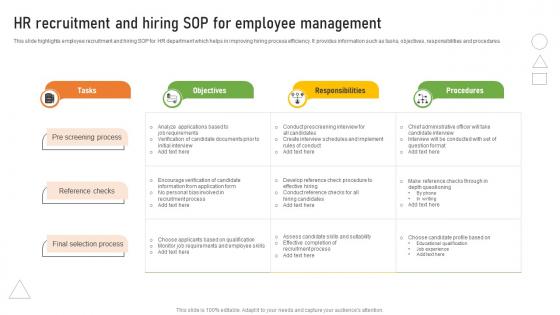
This slide highlights employee recruitment and hiring SOP for HR department which helps in improving hiring process efficiency. It provides information such as tasks, objectives, responsibilities and procedures.
People who downloaded this PowerPoint presentation also viewed the following :
HR Recruitment And Hiring Sop For Employee Management with all 6 slides:
Use our HR Recruitment And Hiring Sop For Employee Management to effectively help you save your valuable time. They are readymade to fit into any presentation structure.





FAQs for HR Recruitment And Hiring Sop
So first thing - map out what you're already doing, then figure out where the holes are. You'll need job requirements nailed down, plus a solid interview structure with the same questions for everyone. Honestly, the scoring rubrics are probably the most important part because otherwise different interviewers will just pick whoever they vibe with. Don't forget the boring but necessary compliance stuff and your sourcing strategy. Timeline expectations help too - candidates hate being left hanging. Oh, and plan the handoff to onboarding since that's technically still part of your process.
So basically an HR Recruitment SOP keeps your candidates from feeling lost in the void - you know how annoying that is when you're job hunting! It standardizes everything so people get consistent communication and know what to expect timeline-wise. No more ghosting after final rounds (seriously, why do companies still do that?). Your whole team follows the same process, which means every candidate gets treated fairly regardless of who handles their stuff. You can actually track where things go wrong and fix them when everything's documented. I'd start by looking at your current process and seeing where people usually bail or get frustrated.
Honestly, just pick one tool that fixes your biggest headache first - don't try to revolutionize everything overnight. ATS systems handle the boring stuff like screening resumes and tracking candidates through your pipeline. AI is getting weirdly good at spotting top talent from massive application piles, plus it'll help you write job descriptions that don't suck. Video interviews save you from that annoying email ping-pong trying to coordinate schedules. The whole point is automating the tedious parts so you can actually talk to people instead of drowning in paperwork.
Okay so first thing - get your legal team involved to figure out what laws actually apply to you. Equal opportunity stuff, wage transparency, background checks, plus whatever weird local rules your city has. Build these into your hiring process as actual requirements, not just nice-to-haves. Interview training for managers is huge - they need to know what questions are off-limits. Create templated job posts and interview guides that legal has already signed off on. This stuff changes constantly (seriously, it's annoying), so set up quarterly check-ins to catch any updates. Way easier than scrambling when you realize you've been doing something wrong for months.
Honestly, start with the basics - time-to-fill, cost-per-hire, and quality of hire. Those are your bread and butter. But also check candidate satisfaction and offer acceptance rates because if people are bailing on you, that's a red flag. Source effectiveness is huge too - like, why waste money on job boards that don't work? I'd also track hiring manager satisfaction since they're stuck with whoever you bring them. Oh, and set up some kind of monthly dashboard thing. Makes it way easier to see what's actually broken vs what's working. Trust me, patterns become super obvious once you're looking at the data regularly.
So here's what's worked for me - build your bias checks right into the process from day one. Same interview questions for everyone, blind resume reviews (no names/photos), and definitely get diverse people on your panels. Bias training is... fine, I guess, but honestly the real difference comes from standardizing everything. Score candidates instead of going with your gut, write down why you made each decision. Oh and track your hiring numbers by demographics - you'd be surprised what patterns show up. Short version: create these systems now before you're scrambling later.
Legal compliance training is a must - anti-discrimination laws, GDPR, all that fun stuff. Honestly the legal parts are boring but you really don't want to mess that up. Your team needs hands-on time with whatever recruitment system you're using too. Structured interviewing techniques are huge, plus unconscious bias training (which is actually more useful than I expected). Start with solid onboarding for new hires. Job description writing should be part of it - making them inclusive without sounding weird. Quarterly check-ins work well to keep everyone current with new regulations.
Honestly, I'd check it every 6 months instead of the typical yearly thing - hiring changes so damn fast these days. Big stuff like new employment laws or tech rollouts are obvious triggers for updates. But here's what people miss: review it right after any recruiting headaches too. Those moments when everything goes sideways? That's where you find the best improvements. Oh, and definitely put a recurring reminder on someone's calendar with their name on it. Otherwise it'll just sit there getting more useless by the month. Trust me, I've seen it happen way too often.
Honestly, you gotta build it into the whole process from day one - can't just slap it on later and expect miracles. Ditch those cringey "rockstar developer" job posts and use normal language people actually relate to. Post everywhere, not just the usual spots. Partner with groups that actually reach different communities. Here's what really matters though: structure your interviews the same way for everyone. Same questions, same format - otherwise bias sneaks in without you realizing. Oh, and get different people on your interview panels if you can. The whole thing needs to be intentional, because it definitely won't just happen by accident.
Honestly, candidate feedback is pure gold for fixing your recruiting mess. Send surveys after interviews - even to people you reject, since they'll be brutally honest about what sucked. I always check for patterns. Like, are multiple people saying your job descriptions are confusing? Or that scheduling interviews was impossible? You'd be surprised how often the same complaints pop up. Communication blackouts are huge - nobody wants to wait weeks wondering if they're still in the running. Once you spot these trends, actually fix your process. Maybe do a quarterly check-in to see what's still broken. It's basically free consulting from people who lived through your system.
Look, the main thing is don't overcomplicate it - I've seen teams create these insane 15-step processes that nobody follows. Get your hiring managers involved early since they're stuck using whatever you build. Also be realistic about what you can actually pull off with your current resources. I always tell people to test it first with a couple hires before rolling it out company-wide. You'll catch the stuff that seems smart but is totally impractical. Oh, and build in some flexibility - you don't want something so rigid it breaks the second you need to move fast on a great candidate.
Your employer brand needs to show up everywhere in recruiting - job posts, interviews, even rejection emails (seriously, those generic ones are the worst). Weave your company's story into every touchpoint. What makes you different from competitors? That message should be crystal clear from the job description all the way through onboarding. Train your whole recruiting team to nail the pitch about why someone should pick you. It's not some separate thing you tack on later - it's baked into your entire process. Even when you're saying no to candidates, do it in a way that reflects who you are as a company.
Get yourself an ATS first - it'll track candidates and show you where things get stuck. Most HR people I know also use recruitment dashboards for stuff like time-to-hire metrics. Don't laugh, but I still use spreadsheets sometimes for quick tracking (old habits die hard). The whole point is figuring out which job boards actually work so you're not wasting money everywhere. Set up automated reports from the start. Trust me, you'll need those numbers later when someone asks if this whole thing's worth it. Analytics help you double down on what's bringing in good people.
So basically, keep your main HR process but tweak it for different roles. Technical jobs? Add coding tests and peer reviews. Sales people need role-playing stuff - you know, seeing how they handle difficult clients. Leadership positions are totally different from entry-level though. Like, you're testing strategic thinking versus just teachability. Mix up your interview panels depending on the department too. And honestly, where you source candidates should probably change based on what you're hiring for. The whole point is staying consistent with your core process while actually making it work for each specific role.
Honestly, time for a reality check on your whole process. Start by figuring out where things are actually falling apart - not enough people applying, or are the good ones bailing halfway through? Your job posts might be boring as hell, or maybe you're taking three weeks to get back to people (which is brutal). Also, if you're just throwing everything on Indeed and calling it a day, you're missing tons of talent. Ask your recent hires what almost made them ghost you - their answers will surprise you. Then fix the worst problem first and test one thing at a time.
-
One-stop solution for all presentation needs. Great products with easy customization.
-
I discovered this website through a google search, the services matched my needs perfectly and the pricing was very reasonable. I was thrilled with the product and the customer service. I will definitely use their slides again for my presentations and recommend them to other colleagues.