


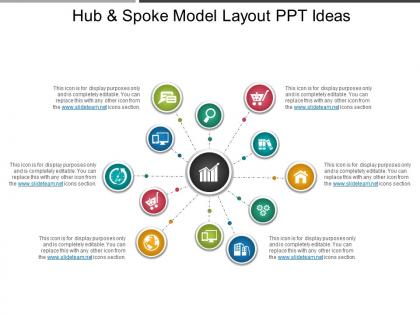
Hub and spoke model layout ppt ideas




Try Before you Buy Download Free Sample Product
 Impress Your
 Audience
 100%
100% Editable
 Save Hours
 of Time


Our Hub And Spoke Model Layout Ppt Ideas facilitate comparison of benefits. They convert browsers into buyers.
People who downloaded this PowerPoint presentation also viewed the following :
Hub and spoke model layout ppt ideas with all 5 slides:
Dark clouds float away due to our Hub And Spoke Model Layout Ppt Ideas. The horizon appears bright and clear again.




FAQs for Hub and spoke model
Honestly, the cost savings are huge - you're storing everything in one place instead of scattered warehouses, so inventory gets way simpler to manage. Routes work better too since everything flows through that central hub. Airlines basically do the same thing, which is smart. Quality control becomes easier when it's all coordinated from one spot, and you can pivot faster when demand shifts. But here's the thing - you're basically betting everything on that one location. So definitely pick somewhere with rock-solid infrastructure and have backup plans ready. Don't want to get burned if something goes wrong there.
So basically the hub and spoke thing works because passengers can reach way more cities without you needing direct flights everywhere. You're funneling everyone through your main hub, which means those key routes stay full instead of running empty planes all over the place. More frequent flights on the popular routes too since you're combining all that demand. Yeah, layovers suck and people complain about them. But honestly? Most travelers will deal with it if the price is right and they can actually get where they need to go. Just make sure your connections aren't a total nightmare and you're golden.
Dude, airlines are the perfect example - Delta runs everything through Atlanta, United does the same with Chicago. They funnel people from smaller cities through these massive hubs, then shoot them off to wherever they're actually going. FedEx basically copied this playbook and made Memphis their center of the universe. Banks pull the same move too, though they're less obvious about it - they'll have their main operations in places like New York but still need local branches everywhere. Once you notice this pattern, you'll see it literally everywhere. For your thing, I'd probably start by figuring out where most of your volume naturally flows and build around that.
Look, you really can't run hub and spoke without solid tech - it's like trying to coordinate a dinner party blindfolded. Real-time tracking shows you where everything is, which honestly saves your sanity. Analytics help predict demand and optimize routes too. Start with warehouse management software and route optimization tools - biggest impact for the money. The tracking keeps your hub inventory under control and coordinates shipments between spokes. Plus analytics spot bottlenecks early before they mess up your whole operation. Trust me on the WMS investment, it's worth it.
So the main thing is people hate change - your teams will probably push back hard because they're used to having stuff right there. Redesigning all your workflows is a pain too since everything has to go through that central spot now. Honestly, capacity planning becomes super critical or you'll create these awful bottlenecks. Oh, and if the hub crashes? Yeah, everything just stops. I'd definitely test it with just one department first - way easier to fix problems when it's small scale before you mess up everyone's day.
Your website should be your main hub. Then branch out with social media, email lists, guest posts - basically anything that sends people back to your site. I do this with content too. My blog is home base, but I'll post snippets on LinkedIn, write for Medium, maybe hop on a podcast. All roads lead back to the main thing, you know? Each platform hits different audiences but keeps the same vibe. The whole point is giving people multiple ways to find you. Works way better than just sitting on one channel hoping people stumble across it.
So basically you're putting all your inventory in one central spot instead of spreading it around everywhere. Way more efficient - you can actually carry less total stock but still keep customers happy. Routes get simpler when everything's going out from the same place, plus your warehouse team isn't dealing with weird shipment sizes all over the map. The scary part? If that main hub breaks down, you're screwed until it's fixed. But honestly, most companies think it's worth the risk because you save money on safety stock and get way better visibility into what you actually have. I'd crunch the numbers first though - compare what you're spending now versus potential hub savings.
Honestly, the hub and spoke thing is kinda complicated environmentally. Yeah, it cuts fuel use because they're cramming more stuff into fuller trucks between hubs instead of running a bunch of half-empty direct routes. Makes sense, right? But your package probably zigzags way more than it needs to. The real carbon impact depends on how efficiently they run those hubs and pack their vehicles. I'd actually ask logistics companies for their load factor numbers and routing data if you want the truth about their environmental impact - some are way better than others at this stuff.
Hub and spoke is basically the sweet spot between direct shipping and going fully decentralized. Direct shipping gets you speed but costs a fortune - every single route needs its own setup. Decentralized sounds good on paper with all that redundancy, but coordinating it is honestly a mess and service gets inconsistent fast. So hub and spoke lets you consolidate at central points to cut costs while keeping delivery times decent. Pretty solid compromise if you ask me. I'd start by looking at your shipping volumes first, then figure out where hubs would actually make sense geographically.
Honestly, start with the basics - cost per delivery and how long stuff takes to move between your spokes and main hub. Customer satisfaction is probably your best tell though, because if people are pissed about late deliveries, you know something's off. Hub capacity is critical too - once that gets maxed out, everything else falls apart. I'd throw together a simple dashboard to check these weekly (nothing fancy, just something you'll actually look at). Network utilization rates are worth tracking once you get the hang of monitoring the other stuff. Trust me, catching problems early beats scrambling to fix a mess later.
Dude, hub placement is everything - seriously can make or break your whole setup. Poor positioning = crazy long routes and your costs go through the roof. I learned this the hard way on a project last year. You want hubs where they cut down total travel time for your actual shipping patterns. Geography's nice and all, but honestly? Demand density wins every time. Don't just plop them in the geographic center - that's amateur hour. Put hubs close to where you're actually sending/receiving the most stuff. Map out your real shipment flows first, then build around those patterns instead of guessing.
Honestly? You gotta spread things out geographically - don't put everything through one hub. Set up backup locations so when (not if) something breaks, traffic just flows somewhere else automatically. Real-time monitoring is clutch too because it'll catch problems fast and kick in your backups. I made this mistake before and wow, learned that lesson during all the supply chain madness we had. The trick is having this stuff ready to go ahead of time. Nobody wants to be figuring out Plan B while everything's on fire, you know?
Focus on three things: consolidate traffic at your hub for better economies of scale, use dynamic routing that adapts to demand changes, and add more hubs if your network grows too big. Most people screw this up by trying to optimize everything simultaneously - honestly, just pick one thing first. Start by looking at your traffic patterns to spot peak flows. Then adjust spoke schedules so they feed into hub departures efficiently. For high-volume spoke pairs, consider direct bypass routes too. Oh, and definitely check your current utilization rates before doing anything else.
So basically with hub and spoke, you avoid that nightmare where everything connects to everything else. New locations just plug into your main hub instead of trying to talk to every single other spot. Way simpler math - one connection per new place vs like 20+. Think of it as having one receptionist handling all calls rather than everyone calling each other directly (which honestly sounds chaotic). You can set up standard procedures at the hub too. Makes growing your business way more predictable since you're not reinventing the wheel every time.
Yeah, collaboration totally transforms hub and spoke setups. Your hub can actually coordinate with all the spoke locations instead of everyone just doing their own thing. Better demand forecasting, smoother inventory - all that good stuff. Problem-solving gets way faster too. Here's what most companies miss though: spokes should be sharing best practices with each other through the hub. Happens so rarely it's almost laughable. Set up regular communication first - maybe weekly calls where locations can share what's working and what isn't. Just make sure your hub facilitates instead of barking orders at everyone.
-
Enough space for editing and adding your own content.
-
Commendable slides with attractive designs. Extremely pleased with the fact that they are easy to modify. Great work!