


Human Resource Technology SWOT Analysis Matrix




Try Before you Buy Download Free Sample Product
 Impress Your
 Audience
 100%
100% Editable
 Save Hours
 of Time


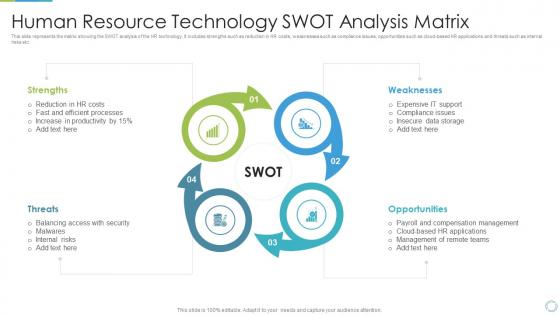
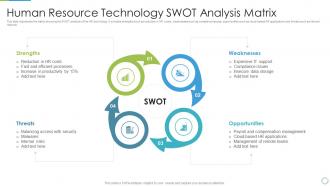
This slide represents the matrix showing the SWOT analysis of the HR technology. It includes strengths such as reduction in HR costs, weaknesses such as compliance issues, opportunities such as cloud-based HR applications and threats such as internal risks etc.
People who downloaded this PowerPoint presentation also viewed the following :
Human Resource Technology SWOT Analysis Matrix with all 6 slides:
Use our Human Resource Technology SWOT Analysis Matrix to effectively help you save your valuable time. They are readymade to fit into any presentation structure.





FAQs for Human Resource Technology
Key HR technologies transforming talent acquisition include AI-powered applicant tracking systems, predictive analytics platforms, chatbot screening tools, video interview software, and social media recruiting platforms. These technologies streamline hiring processes by automating candidate sourcing, enhancing screening accuracy, and reducing time-to-hire, with many organizations finding that strategic implementation delivers faster placements and improved candidate experiences.
AI improves employee engagement by personalizing career development paths, automating routine administrative tasks, and providing real-time feedback through intelligent performance management systems. Through predictive analytics and sentiment analysis, organizations can identify engagement risks early, customize benefits packages, and streamline communication processes, ultimately delivering higher retention rates and enhanced workplace satisfaction across diverse teams.
Data analytics transforms HR decision-making by enabling evidence-based talent strategies, predictive workforce planning, performance optimization, and strategic resource allocation. Through advanced analytics platforms, organizations streamline recruitment processes, enhance employee retention programs, and identify skill gaps proactively, with many companies finding that data-driven HR approaches deliver measurable competitive advantages and improved organizational outcomes.
HR technology streamlines onboarding by automating paperwork completion, centralizing document management, facilitating digital task workflows, and enabling seamless system integrations across departments. Through cloud-based platforms and mobile applications, organizations accelerate administrative processing, enhance new hire engagement, and reduce manual coordination efforts, with many companies finding significantly faster onboarding cycles and improved employee experiences.
Integrating new HR software presents both challenges and opportunities, including data migration complexities, employee resistance to change, system compatibility issues, training requirements, and potential workflow disruptions. While many organizations initially experience temporary productivity dips, strategic implementation with comprehensive change management ultimately delivers streamlined operations, enhanced data accuracy, and improved employee experiences across departments.
Cloud-based HR technology enhances remote workforce management by centralizing employee data, automating payroll and benefits administration, and enabling real-time performance tracking across distributed teams. These platforms streamline onboarding, facilitate seamless communication, and provide analytics-driven insights that help organizations maintain productivity, ensure compliance, and deliver consistent employee experiences regardless of location, ultimately reducing operational costs while improving workforce engagement.
Ethical considerations in HR technology include data privacy protection, algorithmic bias prevention, transparency in decision-making processes, employee consent management, and equitable access to opportunities. These safeguards enhance trust and compliance by ensuring fair hiring practices, protecting sensitive information, and maintaining transparency, with many organizations finding that ethical AI implementations ultimately deliver better employee experiences and reduced legal risks.
Organizations measure HR tech ROI by tracking key metrics including reduced administrative costs, faster hiring times, improved employee retention rates, decreased compliance risks, and enhanced productivity levels. Through comprehensive analytics dashboards, companies can quantify cost savings from automated processes, reduced turnover expenses, and streamlined operations, with many finding that strategic HR technology investments deliver measurable returns within 12-18 months.
Companies should look for features including applicant tracking and recruitment tools, payroll and benefits administration, performance management modules, employee self-service portals, and analytics dashboards. These integrated capabilities streamline operations by automating routine tasks, reducing administrative overhead, and enhancing employee experiences, with many organizations finding that comprehensive systems deliver significant cost savings while enabling strategic workforce planning.
HR technology supports diversity and inclusion by automating bias-free recruitment processes, providing analytics to track representation across departments, and delivering personalized training programs on unconscious bias. Through AI-powered screening tools and data dashboards, organizations streamline equitable hiring practices, monitor pay equity transparently, and create inclusive workplace cultures, ultimately enhancing employee satisfaction and competitive advantage.
Best practices for ensuring data security in HR tech include implementing multi-factor authentication, encrypting sensitive employee data, conducting regular security audits, establishing role-based access controls, and maintaining compliance with regulations like GDPR. These security measures streamline protection by minimizing breach risks, enhancing employee trust, and ensuring regulatory compliance, with many organizations finding that comprehensive security frameworks ultimately deliver competitive advantage and operational confidence.
Mobile HR applications enhance employee experience by providing convenient self-service access to payroll, benefits, time tracking, and performance management from anywhere. These platforms streamline routine HR interactions, reduce administrative delays, and enable real-time communication between employees and HR teams, with many organizations finding that mobile accessibility significantly improves employee satisfaction and operational efficiency.
HR professionals should monitor AI-powered talent analytics, employee experience platforms, predictive workforce planning tools, virtual reality training systems, and blockchain-based credential verification. These emerging technologies streamline recruitment processes, enhance personalized learning experiences, and improve retention strategies, with many organizations finding that strategic technology adoption delivers significant competitive advantages in talent acquisition and employee engagement.
Gamification in HR apps drives employee motivation by incorporating point systems, leaderboards, achievement badges, and progress tracking that tap into competitive instincts and recognition desires. These interactive elements transform routine training modules and performance goals into engaging experiences, with many organizations finding that gamified learning increases completion rates, knowledge retention, and employee participation while delivering measurable improvements in skill development.
Employee self-service technology significantly streamlines HR operations by automating routine tasks, reducing administrative workload, and enabling faster processing of employee requests and updates. Through digital portals and mobile applications, organizations minimize manual paperwork, accelerate benefits enrollment and time-off approvals, while freeing HR teams to focus on strategic initiatives, ultimately delivering improved operational efficiency and enhanced employee experiences.
-
They guys always go the extra mile to meet the expectations of their customers. Almost a year has been associated with them.
-
SlideTeam is my one-stop destination for templates. Highly recommended!