


Identifying the workplace hazard biological ppt powerpoint presentation layouts files




Try Before you Buy Download Free Sample Product
 Impress Your
 Audience
 100%
100% Editable
 Save Hours
 of Time


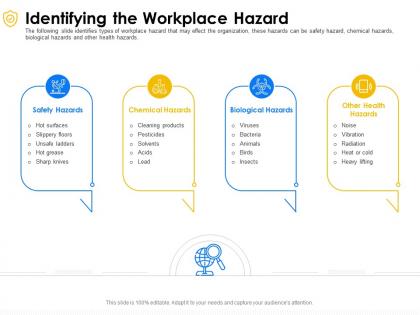
The following slide identifies types of workplace hazard that may effect the organization, these hazards can be safety hazard, chemical hazards, biological hazards and other health hazards.
People who downloaded this PowerPoint presentation also viewed the following :
Content of this Powerpoint Presentation
Description:
The PowerPoint slide titled "Identifying the Workplace Hazard" is designed for presentations focusing on occupational safety and health. It is structured into four distinct sections, each represented by an icon and a unique color. These sections serve to summarize various types of workplace hazards that could pose risks to employees and their well-being. The slide's purpose is to raise awareness about these hazards and facilitate hazard identification and mitigation efforts. Here's a breakdown of the key elements:
1. Safety Hazards:
Icon: Safety helmet
Color: Yellow
Description: This section highlights safety hazards, including hot surfaces, slippery floors, unsafe ladders, hot grease, and sharp knives. It emphasizes physical conditions or practices that have the potential to cause injuries or accidents in the workplace.
2. Chemical Hazards:
Icon: Chemical flask
Color: Green
Description: The chemical hazards section identifies potential risks associated with substances such as cleaning products, pesticides, solvents, acids, and lead. These hazards can lead to health issues if employees are exposed to them.
3. Biological Hazards:
Icon: Microscope
Color: Blue
Description: Biological hazards encompass viruses, bacteria, animals, birds, and insects. This section draws attention to the risk of infections, illnesses, or injuries caused by living organisms present in the workplace.
4. Other Health Hazards:
Icon: Noise-cancelling headphones
Color: Red
Description: The category of other health hazards covers factors such as noise, vibration, radiation, extreme temperatures (heat or cold), and heavy lifting. These hazards may contribute to long-term health problems and necessitate preventive measures.
The slide concludes by stating that it is "100% editable," allowing presenters to customize it to suit their specific presentation needs and engage the audience effectively.
Use Cases:
This versatile slide can be valuable in various industries where occupational safety and health are paramount concerns. Here are seven industries and potential use cases where this slide could be particularly relevant:
1. Construction:
Use: Safety training for onsite workers
Presenter: Safety officer
Audience: Construction workers
2. Healthcare:
Use: Education on hospital safety protocols
Presenter: Hospital administrator
Audience: Medical staff
3. Manufacturing:
Use: Hazard communication and preventive measures briefing
Presenter: Operations manager
Audience: Factory employees
4. Agriculture:
Use: Training on safe handling of pesticides and farm equipment
Presenter: Farm supervisor
Audience: Farm laborers
5. Chemical Industry:
Use: Chemical safety and handling workshop
Presenter: Chemical safety engineer
Audience: Laboratory technicians and plant workers
6. Food Service:
Use: Kitchen safety and hygiene seminar
Presenter: Head chef or kitchen manager
Audience: Kitchen staff and servers
7. Education:
Use: Staff training on classroom and laboratory safety
Presenter: School safety coordinator
Audience: Teachers and support staff
Identifying the workplace hazard biological ppt powerpoint presentation layouts files with all 2 slides:
Use our Identifying The Workplace Hazard Biological Ppt Powerpoint Presentation Layouts Files to effectively help you save your valuable time. They are readymade to fit into any presentation structure.

FAQs for Identifying the workplace hazard biological ppt powerpoint
Biological hazards in the workplace encompass various agents that can pose a threat to employee health, including bacteria, viruses, fungi, and parasites. These hazards can be transmitted through contact with contaminated surfaces, inhalation of airborne particles, or exposure to bodily fluids. Industries such as healthcare, laboratories, agriculture, and waste management are particularly susceptible to biological hazards, with healthcare settings frequently encountering pathogens like MRSA and influenza viruses. Understanding and mitigating these risks is crucial for safeguarding employee well-being and ensuring a safe working environment.
Exposure to biological hazards in the workplace can significantly impact employee health and productivity by causing a range of illnesses, from mild infections to severe diseases. These hazards, such as bacteria, viruses, and fungi, can lead to respiratory problems, skin irritations, and even life-threatening conditions, resulting in absenteeism, reduced work capacity, and increased healthcare costs for both employees and employers. Many industries, including healthcare, agriculture, and research labs, face this risk, highlighting the need for robust safety protocols and preventative measures.
Industries handling biological materials, such as healthcare, agriculture, and research laboratories, are more prone to biological hazards due to the inherent nature of their work. Healthcare facilities, for instance, constantly deal with infectious agents, while agriculture involves exposure to animal pathogens and plant diseases. Research labs, on the other hand, often work with genetically modified organisms or hazardous biological samples, presenting unique risks. These industries must prioritize stringent safety protocols, proper training, and robust personal protective equipment to minimize the risk of exposure and outbreaks.
Employers can mitigate biological hazards by implementing a comprehensive risk assessment, conducting regular environmental monitoring, and providing employee training. These measures involve identifying potential sources of biological agents like contaminated materials, pests, or bodily fluids, analyzing workplace practices for exposure risks, and educating employees on safe handling procedures, personal protective equipment, and emergency response protocols. Ultimately, this proactive approach helps ensure a safer and healthier work environment for all.
Recognizing and reporting biological hazards is crucial for maintaining a safe work environment; employees can effectively do this by being vigilant about potential sources, understanding common symptoms, and utilizing established reporting procedures. In healthcare settings, for example, employees should immediately report any spills of bodily fluids, while in laboratories, suspicious samples should be flagged and quarantined according to protocols, ultimately minimizing the risk of exposure and outbreaks.
Personal protective equipment (PPE) plays a crucial role in mitigating biological hazards by creating a barrier between workers and potentially infectious agents. This includes items like gloves, lab coats, respirators, and eye protection, which prevent contact with bodily fluids, airborne pathogens, and contaminated surfaces. In healthcare settings, for instance, proper PPE use significantly reduces the risk of healthcare-associated infections, while in laboratories, it safeguards researchers from exposure to dangerous microorganisms. Ultimately, PPE is a vital component of a comprehensive biological safety program, enabling workers to perform their tasks safely and minimizing the risk of infection and disease transmission.
The presence of biological hazards significantly influences workplace safety regulations and standards by requiring specific protocols and precautions. These hazards necessitate the implementation of engineering controls, such as ventilation systems and biosafety cabinets, to minimize exposure risks. Furthermore, strict personal protective equipment (PPE) requirements, including respirators and gloves, are often mandated in industries like healthcare and laboratories. These regulations ultimately protect employees, minimize the spread of infections, and ensure a safe and healthy work environment.
Training programs that effectively reduce biological hazards in the workplace encompass a range of topics, including identification of potential hazards, safe handling procedures for biological materials, proper use of personal protective equipment (PPE), emergency response protocols, and waste disposal guidelines. These programs often incorporate hands-on simulations and scenario-based training to ensure employees are prepared to handle real-world situations, ultimately minimizing the risk of exposure and promoting a safer work environment for everyone.
Fostering a culture of safety regarding biological hazards involves proactive training, robust protocols, and a commitment to open communication. Organizations can achieve this by implementing comprehensive training programs that educate employees on identifying, handling, and reporting potential biological hazards, establishing clear protocols for decontamination and waste disposal, and encouraging employees to voice concerns without fear of reprisal. This creates a proactive environment where safety is prioritized, minimizing risks and protecting employee well-being, ultimately contributing to a more productive and secure workplace.
Best practices for cleaning and disinfecting areas prone to biological hazards involve a multi-pronged approach, including using appropriate personal protective equipment (PPE), pre-cleaning to remove debris, and then applying EPA-registered disinfectants effective against the specific hazards present. In healthcare settings, for example, meticulous adherence to these practices minimizes the risk of hospital-acquired infections, while in manufacturing facilities, it safeguards worker health and prevents contamination of products. Ultimately, these protocols deliver a safer and healthier work environment, minimizing risks and promoting operational efficiency.
Exposure to biological hazards in the workplace can lead to long-term health issues such as chronic respiratory illnesses, autoimmune disorders, and even certain types of cancers. While these hazards can pose significant risks, proactive measures like robust safety protocols, employee training, and regular health monitoring can significantly mitigate these risks, ultimately protecting employee well-being and ensuring a healthier work environment.
Newer technologies can significantly enhance biological hazard management and monitoring in the workplace by automating processes, providing real-time data, and enabling proactive risk assessment. Technologies like biosensors and air quality monitors can detect the presence of pathogens or hazardous substances in real-time, alerting personnel to potential threats and enabling immediate response. Furthermore, these technologies can be integrated with data analytics platforms, providing valuable insights into exposure patterns and trends, allowing organizations to implement targeted control measures and optimize safety protocols, ultimately minimizing the risk of outbreaks and ensuring a healthier work environment.
Vaccinations play a crucial role in safeguarding employees from biological hazards by providing immunity against specific infectious diseases. These vaccines help prevent the spread of illnesses like influenza, hepatitis B, and measles, which can significantly impact workplace productivity and pose serious health risks to employees. In industries like healthcare and food service, where exposure to pathogens is heightened, widespread vaccination programs are essential for maintaining a safe and healthy work environment.
Collaboration between management and employees is crucial for effective biological hazard prevention. Management can provide comprehensive training programs, safety protocols, and necessary resources, while employees play a vital role in adhering to these protocols, reporting potential hazards, and participating in safety audits. This collaborative approach minimizes risks, ensures a safe work environment, and ultimately protects both employee well-being and organizational productivity.
Businesses that fail to address biological hazards in the workplace can face significant legal implications, including fines, lawsuits, and damage to their reputation. These hazards present both challenges and opportunities, as organizations must comply with OSHA regulations while also protecting employee health and safety. By implementing robust safety protocols, providing proper training, and maintaining a clean and sanitized work environment, businesses can mitigate these risks and demonstrate a commitment to employee well-being, ultimately enhancing their brand image and ensuring operational continuity.
No Reviews