


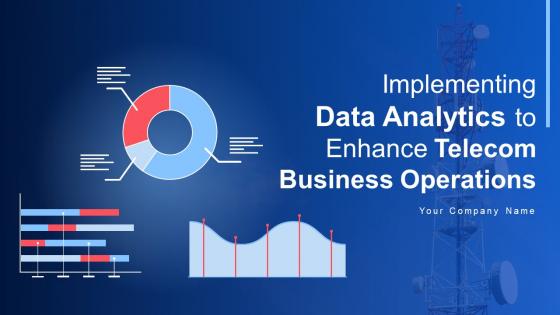
Implementing Data Analytics To Enhance Telecom Business Operations Data Analytics CD




Try Before you Buy Download Free Sample Product
 Impress Your
 Audience
 100%
100% Editable
 Save Hours
 of Time


Telecom analytics analyzes telecommunication data to drive valuable business insights and enhance core operations and revenue generation prospects. Get our professionally made PowerPoint presentation on Implementing data analytics to enhance telecom business operations. This PPT provides a comprehensive overview of how companies can deploy telecom analytics to enhance customer experience and drive data-driven predictions. It includes understanding the basic fundamentals of telecom analytics, its benefits, roles in enhancing business performance, telecom data collection sources, and big data framework. It provides information regarding telecom analytics solutions market overview with prevailing trends. Moreover, the Telecom analytics PPT templates discuss various techniques used in telecom analytics. These include descriptive, diagnostic, predictive, and prescriptive analytics, with key focus areas for implementation, which are network optimization, predicting customer churn, fraud detection, improving customer experience, and product development. It also provides information regarding major telecom analytics tools such as Reveal embedded analytics, SAS Telecom, Altair, etc. Furthermore, the Data Analytics Tools and Techniques PPT slides discuss the impact of successfully leveraging telecom analytics on business and network performance. Lastly, it provides future opportunities for investment in telecom technologies such as 5G networks, IoT, and AI ML with case studies. Download Now.
People who downloaded this PowerPoint presentation also viewed the following :
Content of this Powerpoint Presentation
Slide 1: Implementing Data Analytics to Enhance Telecom Business Operations
Slide 2: This is an Agenda slide. State your agendas here.
Slide 3: This slide shows Table of Content for the presentation.
Slide 4: This slide continues showing Table of Content for the presentation.
Slide 5: This slide shows title for topics that are to be covered next in the template.
Slide 6: This slide provides an overview of implementing data analytics techniques in telecommunication sector which helps in streamlining business operations.
Slide 7: This slide showcases impact to implementing big data analytics in telecommunication sector which helps in decision making.
Slide 8: This slide displays role of data analytics in telecommunication industry which helps in improving business processes.
Slide 9: This slide showcases various steps involved in leveraging data analytics in telecom industry. It provides information regarding data collection, data storage, processing etc.
Slide 10: This slide presents various phases of data maturity at different telecom service provider companies. It includes elements such as data silos, data validation, ad hoc assessment etc.
Slide 11: This side showcases framework for implementing big data analytics in telecom sector which helps in improving customer experience and company operations.
Slide 12: This slide displays various types of telecom data collected for effective assessment and developing accurate business insights.
Slide 13: This slide showcases major data sources used to collect telecom operator information which helps in enhancing customer experiences.
Slide 14: This slide shows title for topics that are to be covered next in the template.
Slide 15: This slide highlights global telecom analytics market overview which helps in making informed investment decisions.
Slide 16: This slide showcases various stats related to telecom analytics which helps in identifying growth prospects for investment.
Slide 17: This slide presents major software providers for telecom analytics based on market revenue. It provides information regarding companies regarding IBM , Microsoft, SAS etc.
Slide 18: This slide showcases most recent technological development seen in telecom analytics market which are contributing in transforming company operations.
Slide 19: This slide presents various growth drivers for telecom analytics market which helps in develop valuable business insights.
Slide 20: This slide shows title for topics that are to be covered next in the template.
Slide 21: This slide showcases increase in adoption of connected IoT devices worldwide which helps in optimizing network operator performance.
Slide 22: This slide presents emerging trend of increasing adoption of network analytics in telecom industry to enhance network performance.
Slide 23: This slide showcases emerging trend of increase in spending on deployment of 5G network infrastructure in telecom companies.
Slide 24: This slide shows title for topics that are to be covered next in the template.
Slide 25: This slide highlights various data analytics techniques used in telecom industry which helps in optimizing business operations and improve company performance.
Slide 26: This slide showcases various use cases of descriptive analytics in telecom industry which helps in optimizing call center operations and generate revenue.
Slide 27: This slide displays use cases of diagnostic analytics in telecom industry which helps in improving service quality.
Slide 28: This slide showcases use cases of predictive analytics in telecom industry which helps in analyzing and improve network performance.
Slide 29: This slide presents various use cases of prescriptive analytics in telecom industry which helps in data driven forecasting and enhancing business operations.
Slide 30: This slide highlights comparative assessment between various data analytics techniques used in telecommunication sector.
Slide 31: This slide shows title for topics that are to be covered next in the template.
Slide 32: This slide showcases telecom analytics tools used for tracking performance inefficiencies and analyzing huge datasets.
Slide 33: This slide presents telecommunication embedded analytics software used to develop valuable insights to solve customer issues.
Slide 34: This slide showcases features of telecom analytics software used for network capacity planning and optimizing operations.
Slide 35: This slide displays comparison and selection of data analytics tools used for effective tracking an monitoring of telecom operations.
Slide 36: This slide provides an company overview of SAS institute which helps in enhancing business operations through their AI and analytics capabilities.
Slide 37: This slide shows title for topics that are to be covered next in the template.
Slide 38: This slide showcases key focus areas of leveraging data analytics in telecom industry. It provides information regarding network performance, customer churn, fraud detection etc.
Slide 39: This slide shows title for topics that are to be covered next in the template.
Slide 40: This slide provides an overview of leveraging data analytics techniques in telecommunication industry for network optimization.
Slide 41: This slide showcases various ways in which data analytics can enhance network capacity management. It provides information regarding network planning, automated management etc.
Slide 42: This slide presents impact to implementing data analytics in telecom industry which helps in effective network performance management.
Slide 43: This slide showcases various steps to enhance network performance using data analytics, ML techniques and graph algorithms.
Slide 44: This slide presents effective network lifecycle management process which helps in network planning and resource allocation.
Slide 45: This slide showcases dashboard used to monitor and rack network traffic and bandwidth usage data. It includes elements such as real time bandwidth usage monitoring, customized reports etc.
Slide 46: This slide displays various tips to optimize network bandwidth and performance which helps in optimal network usage.
Slide 47: This slide shows title for topics that are to be covered next in the template.
Slide 48: This slide provides an overview of leveraging data analytics technique for predicting customer churn in telecom industry.
Slide 49: This slide showcases various data sources and types of information gathered to develop important data insights for telecom business.
Slide 50: This slide displays tech stack for predictive customer churn model which helps in analyzing attrition rates and identify reasons for high churn.
Slide 51: This slide showcases dashboard for tracking customer attrition rate in telecom business and identify reasons for high churn.
Slide 52: This slide presents various actors which contribute to high customer churn rate in telecom businesses. It includes elements such as service quality issues, pricing issues etc.
Slide 53: This slide showcases various tips which can be used by telecom businesses to improve customer retention rates.
Slide 54: This slide shows title for topics that are to be covered next in the template.
Slide 55: This slide provides an overview of leveraging data analytics in telecom industry to identify fraudulent activities and anomalies.
Slide 56: This slide showcases different types of frauds taking place in telecommunication sector which effect business growth.
Slide 57: This slide displays using fraud management system to reduce anomalies faced by telecom company and enhance customer data security.
Slide 58: This slide showcases layers approach to implement data analytics for identifying potential frauds which helps in developing mitigation strategies.
Slide 59: This slide displays various tips which telecom companies can use to decrease fraudulent activities and optimize business performance.
Slide 60: This slide shows title for topics that are to be covered next in the template.
Slide 61: This slide provides an overview of using data analytics to improve customer experience and satisfaction with telecom operations.
Slide 62: This slide showcases guiding principles to enhance customer experiences in telecom industry. It provides information regarding core product/service quality, personalization etc.
Slide 63: This slide highlights type of telecom social media engagement models which helps in generate high return on investments and improve customer acquisition rates.
Slide 64: This slide showcases key benefits of leveraging social media analytics to improve telecom customer experience. It includes elements such as customer base, direct marketing etc.
Slide 65: This slide displays key benefits of implementing social media analytics in telecom business to enhance B2B lifecycles. It includes information such as brand positioning, new revenue streams etc.
Slide 66: This slide shows title for topics that are to be covered next in the template.
Slide 67: This slide showcases need of data analytics in successful product development and innovation which helps in offering more personalized products and services.
Slide 68: This slide presents step aby step telecom product development activities for quick product time to market and improving staff productivity.
Slide 69: This slide showcases challenges faced in telecom product development wit solutions to overcome these barriers.
Slide 70: This slide shows title for topics that are to be covered next in the template.
Slide 71: This slide showcases key benefits of implementing data analytics solutions to optimize telecom company operations.
Slide 72: This slide presents key benefits of leveraging data analytics for network optimization and improving telecom operations.
Slide 73: This slide displays key benefits of implementing analytics solutions to transform telecom company operations across multiple channels.
Slide 74: This slide shows title for topics that are to be covered next in the template.
Slide 75: This slide showcases various trends seen in data analytics market which helps in improving telecom industry growth.
Slide 76: This slide presents trend of 5G network expansion which would help telecom companies to offer more advanced services.
Slide 77: This slide showcases trend of rise in investment in technologies for increasing adoption of connected IoT devices.
Slide 78: This slide displays trend of adoption of artificial intelligence solutions in telecom industry which helps in improving customer experience and drive innovation.
Slide 79: This slide shows title for topics that are to be covered next in the template.
Slide 80: This slide showcases case study showing development and effective implementation of real time data processing system to improve data analytics operations in telecom industry.
Slide 81: This slide shows title for topics that are to be covered next in the template.
Slide 82: This slide provides an overview of telecommunication company investing in data analytics solutions to overcome business challenges.
Slide 83: This slide showcases various data analytics solutions provided to overcome company barriers. It includes information regarding data formatting, data management etc.
Slide 84: This slide presents various tools and techniques used for enhance telecom companies operational efficiency and increase customer engagement.
Slide 85: This slide showcases key benefits of leveraging data analytics in business which helps in enhancing operational efficiency.
Slide 86: This slide shows all the icons included in the presentation.
Slide 87: This slide is titled as Additional Slides for moving forward.
Slide 88: This slide showcases various pain points faced in implementing data analytics in telecom with solutions to overcome these barriers.
Slide 89: This slide presents various technological advancements seen in market which can be used in telecommunication industry to enhance operations.
Slide 90: This is a Thank You slide with address, contact numbers and email address.
Implementing Data Analytics To Enhance Telecom Business Operations Data Analytics CD with all 98 slides:
Use our Implementing Data Analytics To Enhance Telecom Business Operations Data Analytics CD to effectively help you save your valuable time. They are readymade to fit into any presentation structure.










FAQs for Implementing Data Analytics To Enhance Telecom Business Operations
So you'll mainly deal with network performance stuff - call records, traffic patterns, quality metrics. Customer data too like billing and usage habits. Device logs are huge. Social media sentiment is actually gold for predicting churn, weirdly enough. Third-party data helps - census info, what competitors are doing. Honestly the hardest part isn't finding data, it's getting everything to play nice together since formats are all over the place. Some update hourly, others monthly. Figure out what matches your specific project first, then tackle the messy integration work.
So basically you're looking at customer data to catch the ones about to bail before they actually do. Usage drops, complaints spike - those are your red flags. Way smarter than just waiting for cancellation calls, which honestly feels like playing defense the whole game. Build some kind of scoring system that ranks customers by how likely they are to leave. Then hit your riskiest segments with targeted retention stuff. Pull together billing history, support tickets, usage patterns - whatever you've got. Look for what happened before people canceled in the past. That's your roadmap right there.
So you asked about real-time analytics - honestly, it's way better than waiting for those stupid batch reports we used to rely on. You'll catch network problems right when they start instead of hearing about it from angry customers later. Traffic spikes, latency issues, equipment going down - you can actually fix stuff before your SLAs go to hell. The monitoring happens constantly across bandwidth, packet loss, connection quality, all that stuff. Oh and definitely set up automated alerts for your critical thresholds first. Trust me, you don't want to be glued to dashboards all day.
Oh, ML is perfect for catching telecom fraud! It chews through tons of call data and user patterns to find the weird stuff - like someone suddenly making 50 international calls at 3am (sus, right?). The system learns what's normal for each customer, so it'll flag anything sketchy in real-time. You can set it to automatically block suspicious activity before it drains your budget. Pretty neat how it gets better over time too, picking up on new scam tactics and unusual data spikes that would fly right past human reviewers.
Honestly, customer segmentation is a game changer for this stuff. Break your users into groups based on how they actually behave - like heavy data users vs people who barely touch their phones. Then hit each group with what they'd actually want. Your data hogs probably want unlimited everything, while budget-conscious folks just want a deal. I'd start simple with maybe 3-4 segments first. You can dig into their call records, payment habits, all that jazz to figure out what makes them tick. Way better than sending the same boring message to everyone and hoping something sticks.
Honestly, the legacy system mess is gonna be your biggest pain. Most telecom infrastructure is ancient and wasn't designed for modern analytics - so you've got data scattered everywhere in different formats. Real-time processing gets tricky too since telecom creates insane amounts of data that'll crush older systems. Security's obviously huge with telecom data being so sensitive. Finding people who actually know both telecom ops AND big data? Good luck with that. Oh, and definitely map out your current data flows first - figure out which systems absolutely have to connect before diving into anything else.
Honestly, start by digging into your call records and usage data to figure out how different customers behave. Price sensitivity varies like crazy between segments - some people will pay anything for premium service while others jump ship over a few bucks. Run some A/B tests on pricing models because what you think will work often doesn't. The payment history stuff is gold for spotting churn risk early. Check what competitors are charging too, obviously. Your most profitable segments are basically a blueprint - see if those pricing patterns work elsewhere. Just don't get so focused on maximizing revenue that you alienate your loyal customers. That's always the tricky balance.
You'll want to track both business and tech stuff to see if your analytics are actually working. Revenue impact and churn reduction are obvious ones. Then there's the nerdy metrics like data quality and model accuracy - honestly can get super detailed but whatever. Processing speed matters too. Don't forget adoption rates though! I've seen companies build amazing dashboards that just sit there unused. Monthly monitoring works well. Tie everything back to your specific use cases so you're not just tracking random numbers. Start small with 3-5 key metrics instead of going crazy with everything at once.
So basically, telecoms use data to catch network problems before customers even know something's wrong. Pretty smart, right? They can also see how you actually use your phone and tailor deals accordingly. The churn prediction thing is brilliant - they'll spot if you're about to leave and hit you up with better offers first. Network optimization is probably the biggest win though. Analytics shows them exactly where coverage sucks or gets congested, so they fix those spots first. Oh, and customer service gets way better since agents can pull up your whole history instantly. Honestly, I'd start with analyzing call drops and mapping customer journeys - you'll see results fast.
Honestly, focus on consent, transparency, and data minimization first. Don't bury what you're collecting in some massive terms document nobody reads - be upfront about it. Collect only what you actually need for business stuff. Never use personal data for targeting without getting explicit permission first. Oh, and watch for algorithm bias that screws over certain groups. I always think "would I be cool with someone doing this to my data?" Sounds cheesy but it works. Start there and you'll probably avoid the major pitfalls.
Look, you know how you're drowning in spreadsheets right now? Data viz tools fix that mess by turning all those numbers into actual charts you can read at a glance. Network performance, churn rates, revenue - whatever. It's honestly night and day compared to scrolling through endless rows. You'll catch problems way faster, like spotting which customers are about to bail or where your network's choking up. My advice? Pick whatever's driving you crazy right now and just build one dashboard around that. Don't overthink it.
Honestly, data analytics is a game changer for network planning. Instead of just guessing where to put towers, you're working with actual traffic patterns and user data. Super helpful for predicting congestion before customers get mad about it. You can figure out optimal tower placement and bandwidth allocation based on real usage - not just assumptions. Plus modeling different scenarios shows you ROI before dropping serious cash on upgrades. I'd start by looking at your current traffic hotspots first. That's usually where you'll find the biggest wins hiding. Way better than the old "build it and hope" approach we used to do.
Honestly, sentiment analysis is a game changer for figuring out what customers really think - not just the angry ones calling support. You can dig through social media posts, app reviews, all that stuff to see what's actually bugging people. Say everyone's complaining about slow data in rural areas? That's where you focus next. It's also great for catching trends early. Maybe people keep asking about better family plan controls or whatever. The trick is automating it so you're not always playing catch-up. Way better than just waiting for problems to explode.
Track revenue gains and cost savings - stuff like lower churn, better network efficiency, faster fixes, higher customer lifetime value. The hard part? Figuring out what's actually from analytics vs everything else you're doing. Honestly, don't overthink it though. Get your baseline numbers before rolling out new tools, then check the same metrics 6-12 months later. Build a simple dashboard showing operational savings plus revenue you kept through better retention. Should give you a decent ROI story to work with.
Real-time analytics is where it's at - customers want instant everything now. Edge computing pairs perfectly with that. Predictive maintenance using AI will save you from so many headaches by catching network problems early. Privacy stuff is getting crazy important too with all these new regulations. Honestly, the biggest shift I'm seeing is everyone moving from reactive to predictive analytics. We're talking customer churn, network optimization, fraud detection - the works. My advice? Pick one area first, show it actually makes money, then expand from there. Don't try to boil the ocean right away.
-
Great quality product.
-
I have just started downloading templates for my presentations and I must say this is a great design. It helped accelerate my presentation design process and made it more visually appealing.