


Industrial Robots V2 Powerpoint Presentation Slides
Industries are frequently incorporating robotics and automation into their production processes due to rapid technological advancements. An industrial robot is a machine capable of performing various activities with high accuracy and precision. This industrial robots PPT includes an introduction, advantages, components, programming methods, and the importance of industrial robots in business. This PowerPoint presentation demonstrates different types of industrial robots, such as SCARA, cartesian, cobots, and their applications in businesses. We have also covered the reasons to implement industrial robots in different domains and how companies can use robotics to increase their productivity and revenue. In addition, this implementation of robotic automation in business PPT contains the market trends and analysis of robotics in business and top industrial robot manufacturing companies. Furthermore, the types of industrial robots module explains challenges faced by industries while implementing robotics in business operations and ways to cope with such situations. Moreover, this applications of industrial robotic systems deck contains sections about industrial robots safety measures and risk assessment, along with a brief idea about the training and budget for setting up robots in the industrial field. Lastly, this industrial automation systems deck comprise a roadmap, a 30-60-90 days plan and checklist for integrating industrial robots, top case studies, and a dashboard to monitor the performance of robots. Download our 100 percent editable and customizable template, which is also compatible with Google Slides.































































You must be logged in to download this presentation.


Do you want to remove this product from your favourites?
 Impress your
 audience
 100%
100% Editable
 Save Hours
 of Time
PowerPoint presentation slides
Deliver this complete deck to your team members and other collaborators. Encompassed with stylized slides presenting various concepts, this Industrial Robots V2 Powerpoint Presentation Slides is the best tool you can utilize. Personalize its content and graphics to make it unique and thought-provoking. All the seventy three slides are editable and modifiable, so feel free to adjust them to your business setting. The font, color, and other components also come in an editable format making this PPT design the best choice for your next presentation. So, download now.

People who downloaded this PowerPoint presentation also viewed the following :
Content of this Powerpoint Presentation
Slide 1: This slide introduces Industrial Robots (IT). Commence by stating Your Company Name.
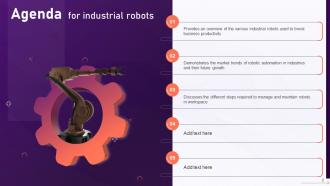
Slide 2: This slide depicts the Agenda of the presentation.
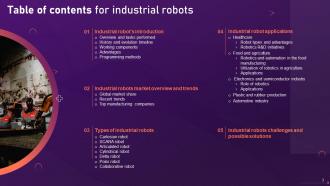
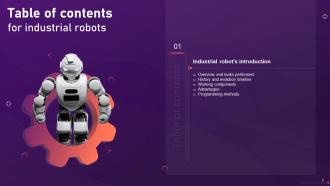
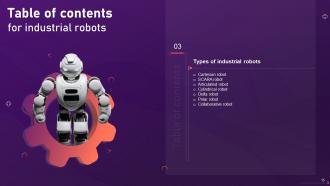
Slide 3: This slide incorporates the Table of contents.
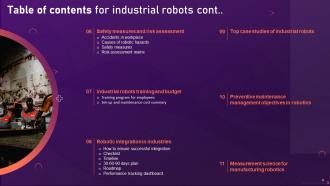
Slide 4: This is yet another slide continuing the Table of contents.
Slide 5: This slide highlights the Title for the Topics to be discussed further.
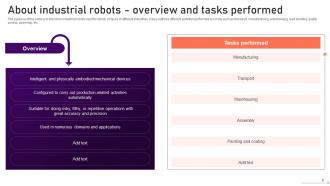
Slide 6: The purpose of this slide is to introduce industrial robots used for variety of tasks in different industries.
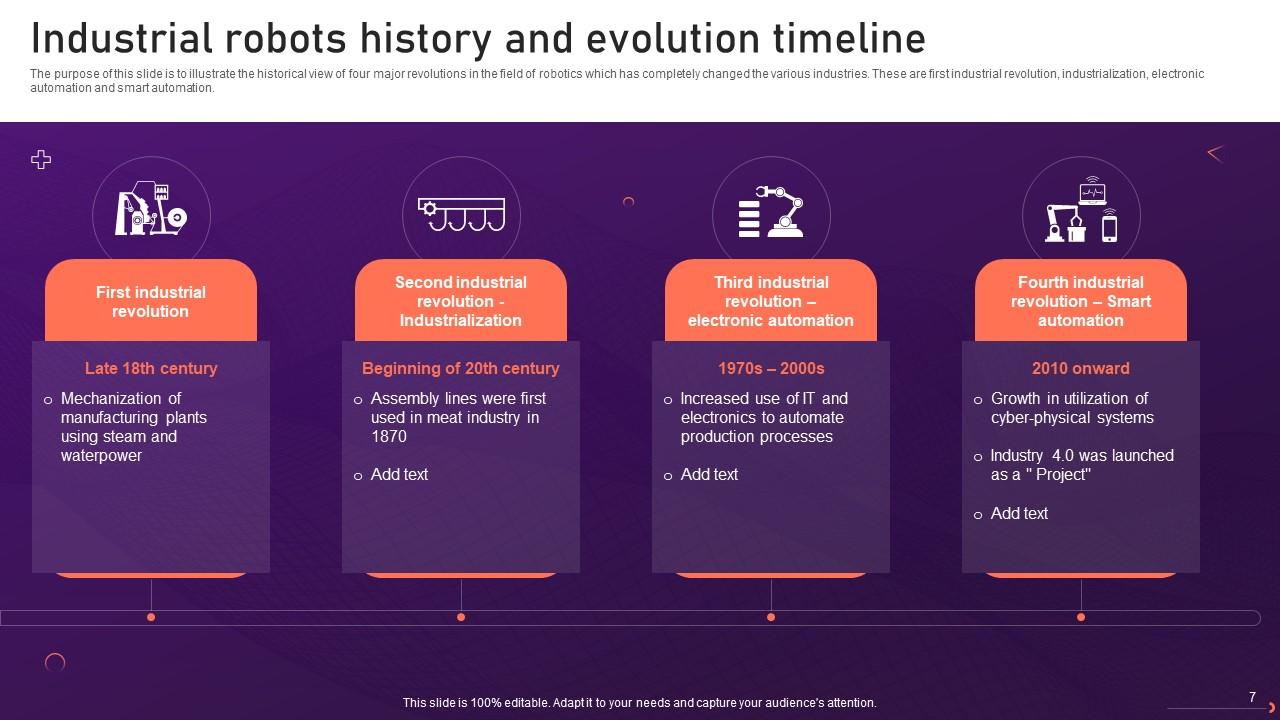
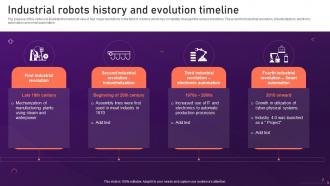
Slide 7: This slide exhibits the Industrial robots history and evolution timeline.
Slide 8: This slide outlines the main elements of an industrial robot.
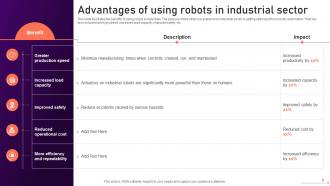
Slide 9: This slide illustrates the benefits of using robots in industries.
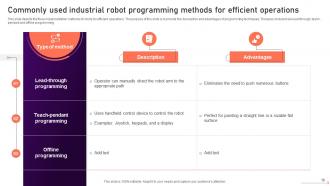
Slide 10: This slide depicts the three implementation methods of robots for efficient operations.
Slide 11: This slide mentions the Heading for the Contents to be covered in the following template.
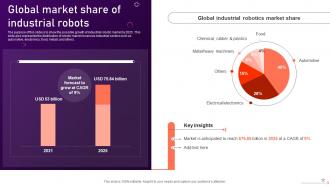
Slide 12: This slide reveals the Global market share of industrial robots.
Slide 13: This slide shows the latest advancements in industrial robotics and automation.
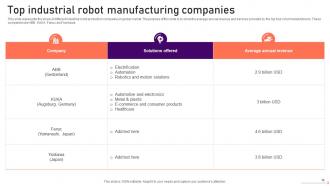
Slide 14: This slide represents the share of different industrial robot production companies in global market.
Slide 15: This slide incorporates the Title for the Ideas to be discussed further.
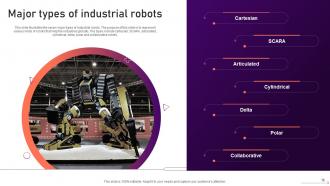
Slide 16: This slide illustrates the seven major types of industrial robots.
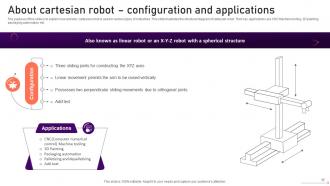
Slide 17: The purpose of this slide is to explain how and why cartesian robot is used in various types of industries.
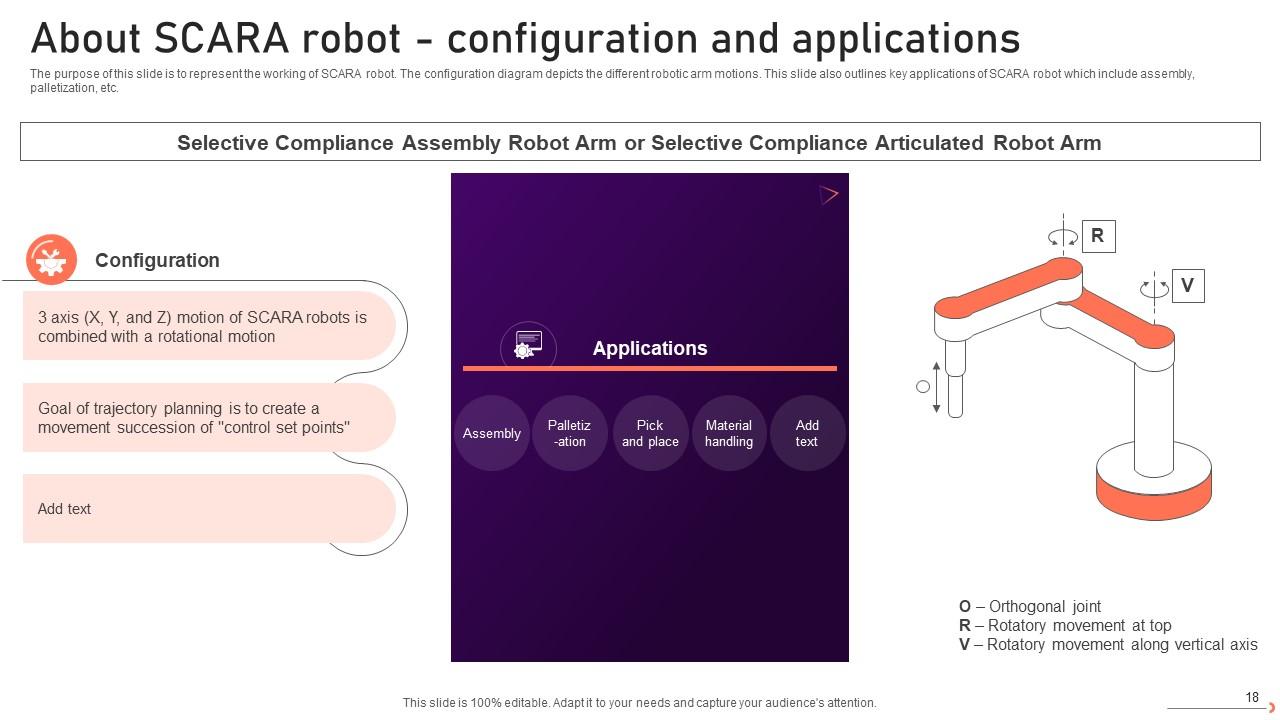
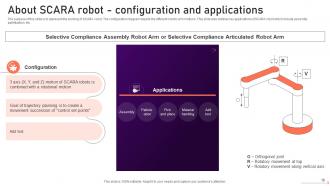
Slide 18: This slide displays the working and advantages of SCARA robot.
Slide 19: This slide talks about the advantages and structural arrangement of articulated robot.
Slide 20: This slide presents the advantages and structural arrangement of cylindrical robot.
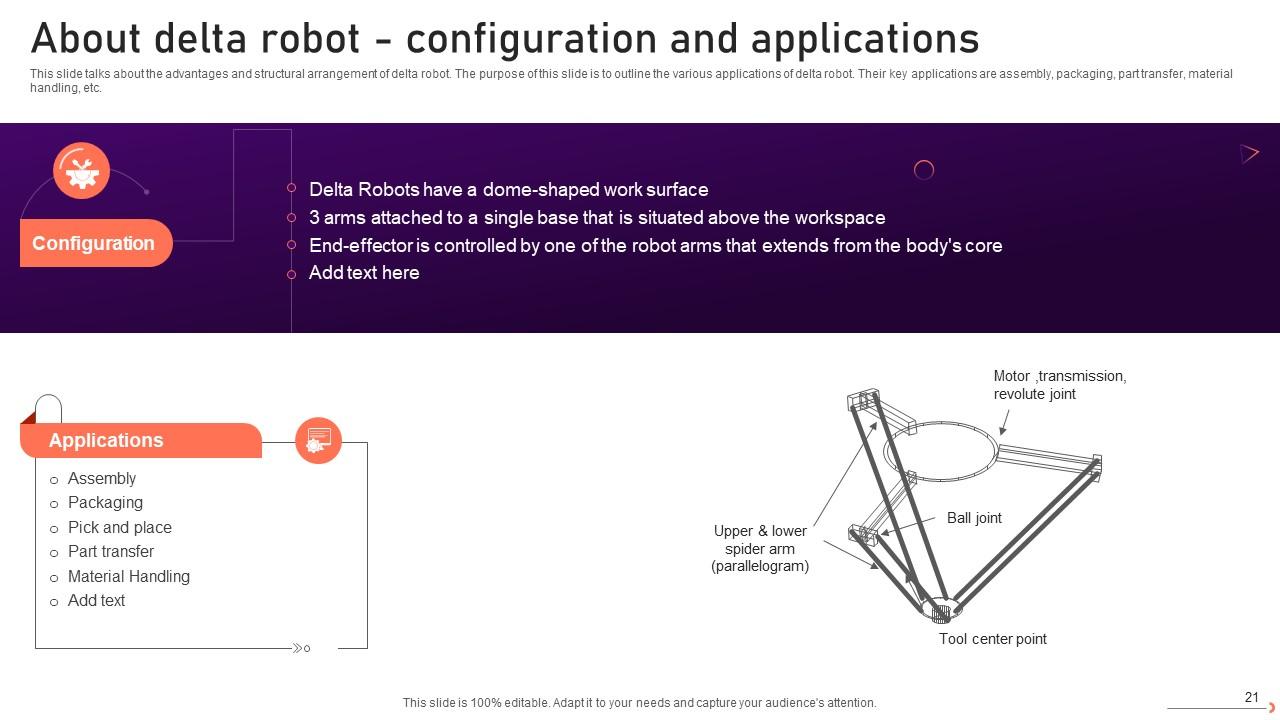
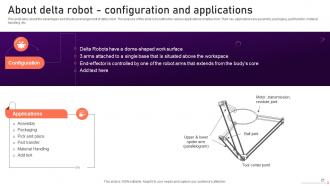
Slide 21: This slide reveals the advantages and structural arrangement of delta robot.
Slide 22: This slide talks about the advantages and structural arrangement of polar robot.
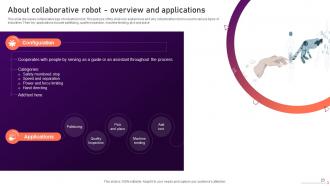
Slide 23: This slide outlines the advantages of collaborative robot.
Slide 24: This slide portrays the Heading for the Ideas to be covered next.
Slide 25: The purpose of this slide is to justify the huge investments made by industries in robotics and automation.
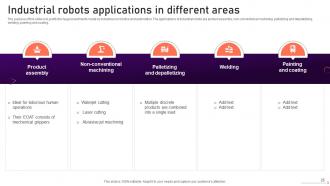
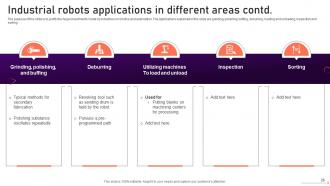
Slide 26: This slide states the Industrial robots applications in different areas.
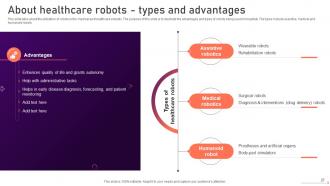
Slide 27: This slide talks about the utilization of robots in the medical and healthcare industry.
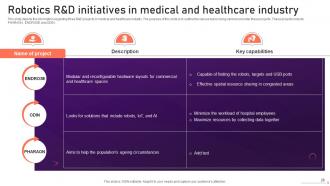
Slide 28: This slide depicts the information regarding three R&D projects in medical and healthcare industry.
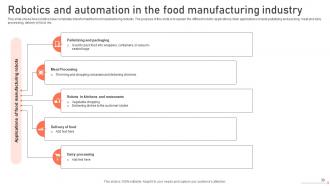
Slide 29: This slide shows how robotics have completely transformed the food manufacturing industry.
Slide 30: This slide demonstrates the use of automation and robotics in agricultural industry.
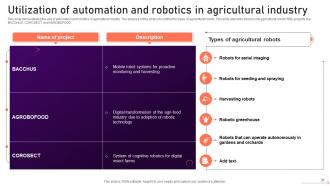
Slide 31: This slide explains the utilization of automation and robotics in agricultural industry.
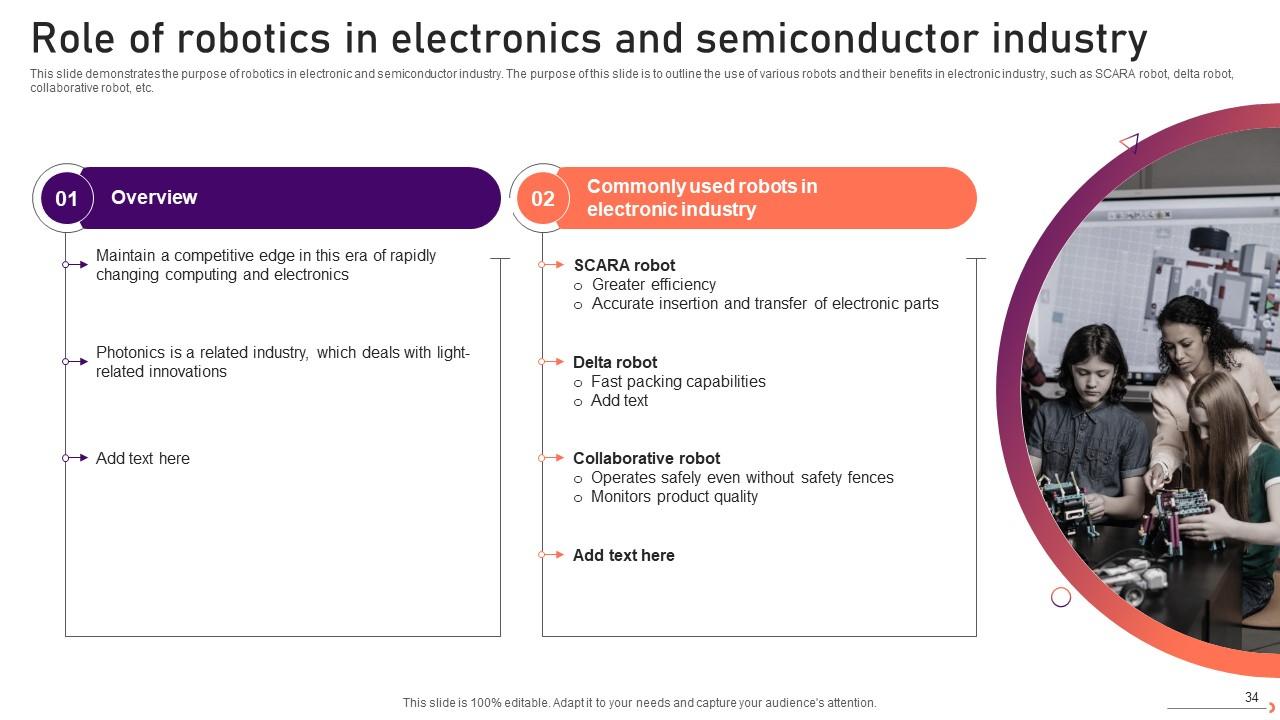
Slide 32: This slide highlights the purpose of robotics in electronic and semiconductor industry.
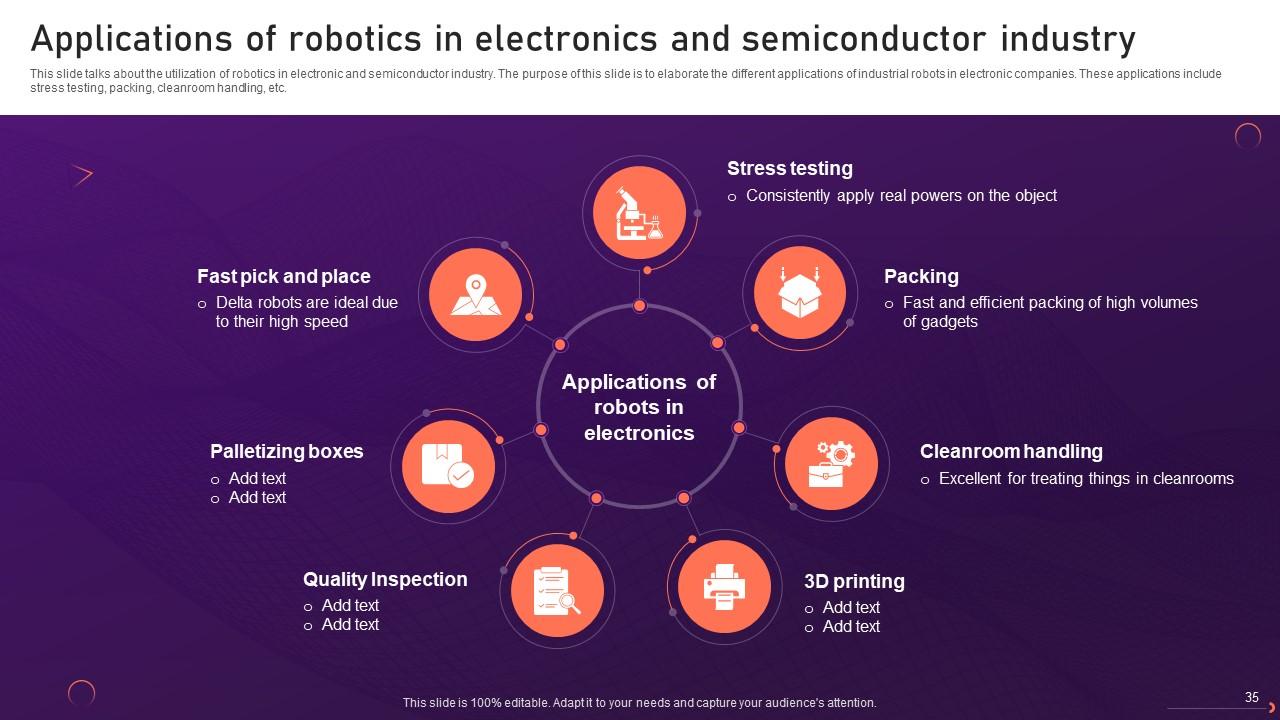
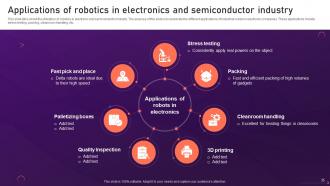
Slide 33: This slide exhibits the Applications of robotics in electronics and semiconductor industry.
Slide 34: This slide depicts the use of robots in plastic and rubber manufacturing industry.
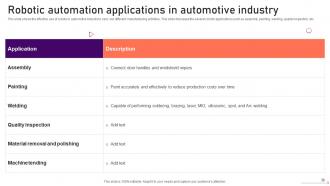
Slide 35: This slide presents the Robotic automation applications in automotive industry.
Slide 36: This slide includes the Title for the Contents to be coveerd next.
Slide 37: This slide shows the challenges faced by industries while setting up robots in their workspace.
Slide 38: This slide indicates the Heading for the Topics to be discussed further.
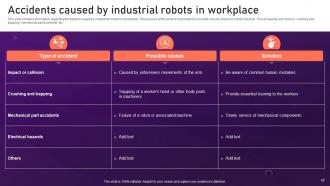
Slide 39: This slide contains information regarding the hazards caused by industrial robots in workplaces.
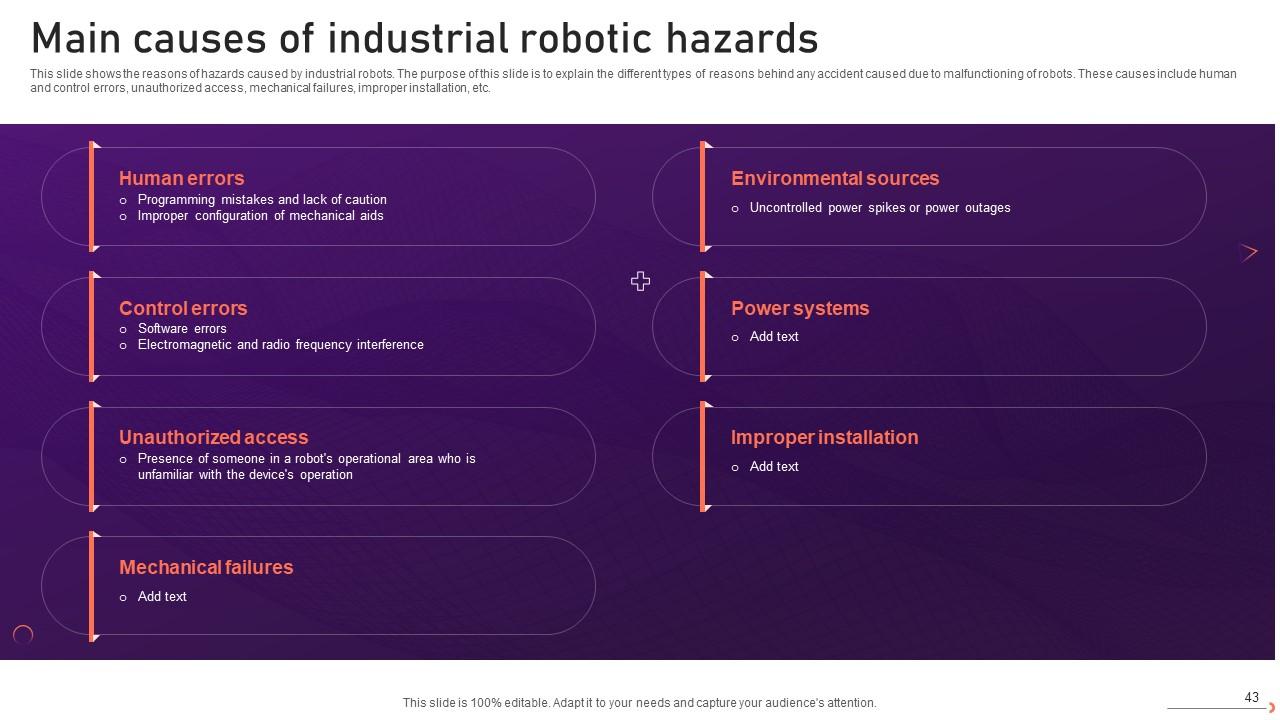
Slide 40: This slide displays the Main causes of industrial robotic hazards.
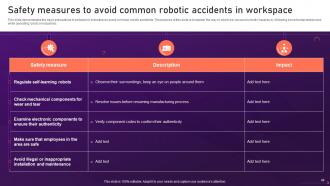
Slide 41: This slide demonstrates the basic precautions to be taken in industries to avoid common robotic accidents.
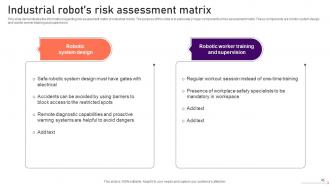
Slide 42: This slide showcases the information regarding risk assessment matrix of industrial robots.
Slide 43: This slide indicates the Title for the Ideas to be covered further.
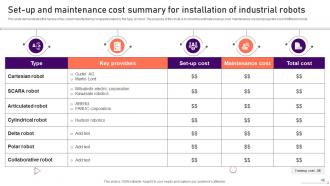
Slide 44: This slide demonstrates the names of key robot manufacturing companies listed by the type of robot.
Slide 45: This slide states the names of key robot manufacturing companies listed by the type of robot.
Slide 46: This slide highlights the Heading for the Ideas to be discussed next.
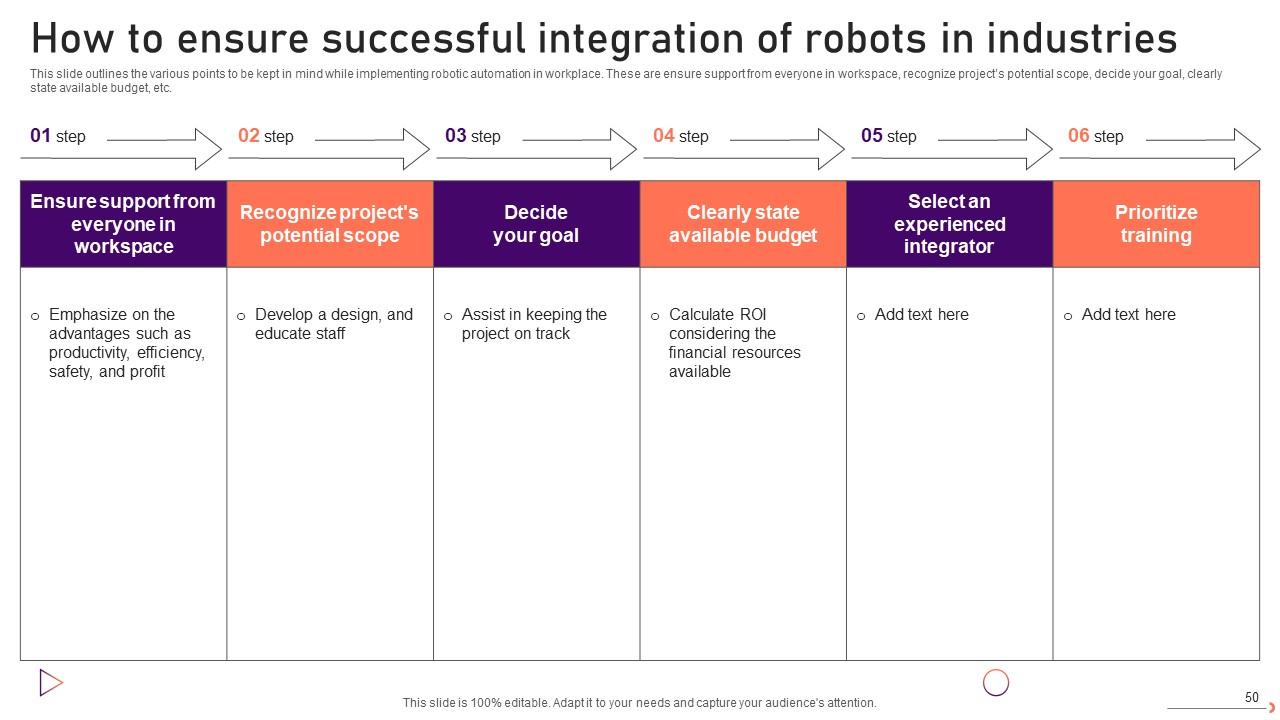
Slide 47: This slide outlines the various points to be kept in mind while implementing robotic automation in workplace.
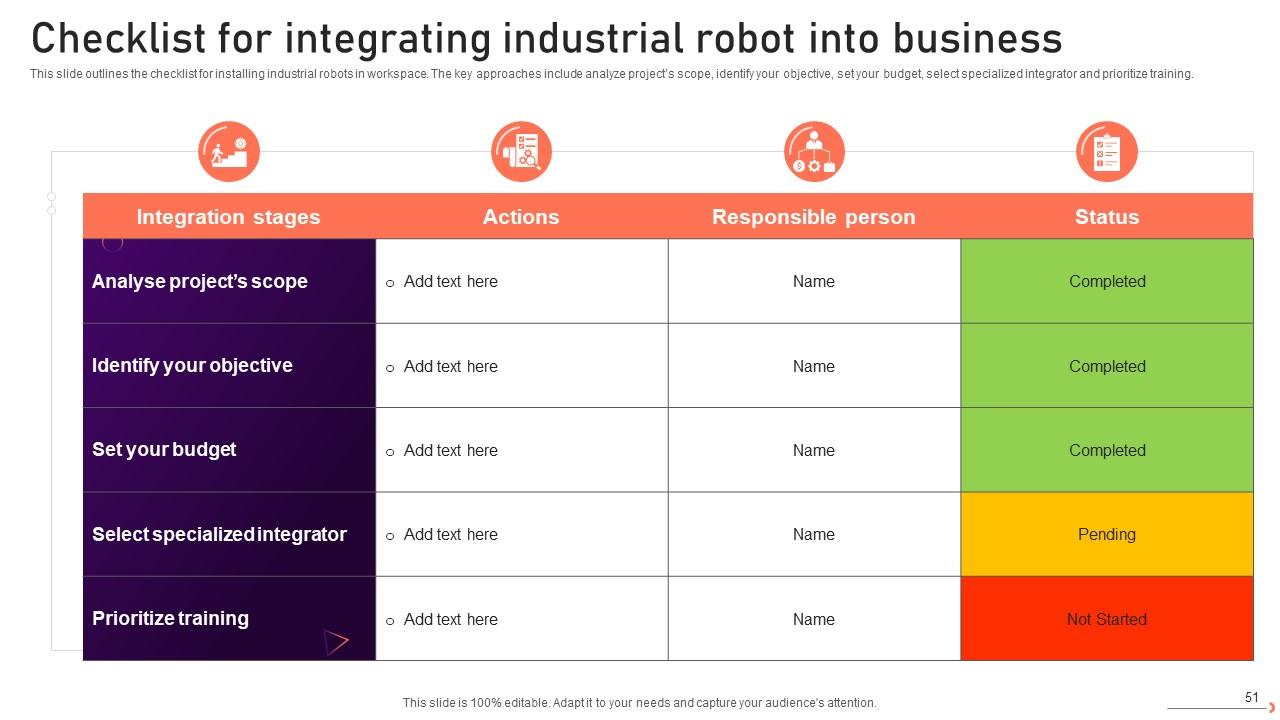
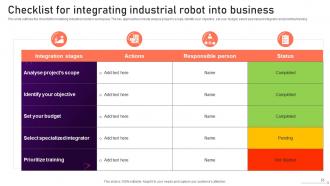
Slide 48: This slide reveals the Checklist for integrating industrial robot into business.
Slide 49: This slide shows the timeline for integrating industrial robots in workspace.
Slide 50: This slide represents 30-60-90 plan for installing industrial robots in workspace.
Slide 51: This slide portrays the Roadmap to install industrial robot in workspace.
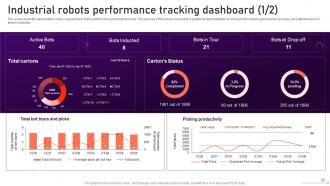
Slide 52: This slide shows the dashboard to keep a regular track of the performance of industrial robots.
Slide 53: This slide continues Industrial robots performance tracking dashboard.
Slide 54: This slide mentions the Heading for the Contents to be covered in the forth-coming template.
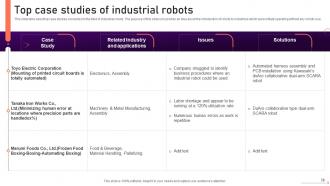
Slide 55: This slide talks about five top case studies conducted in the field of industrial robots.
Slide 56: This slide indicates the Title for the Ideas to be discussed further.
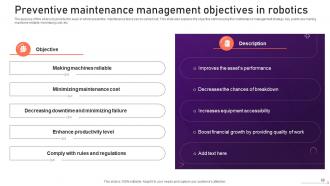
Slide 57: The purpose of this slide is to provide the ways in which preventive maintenance tasks can be carried out.
Slide 58: This slide includes the Heading for the Ideas to be covered next.
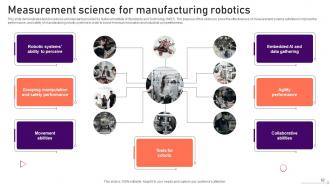
Slide 59: This slide shows test procedures and standards provided by National Institute of Standards and Technology (NIST).
Slide 60: This is the Icons slide containing all the Icons used in the plan.
Slide 61: This slide is used for depicting some Additional information.
Slide 62: This is the About us slide. State your company-related information here.
Slide 63: This slide highlights the Venn diagram.
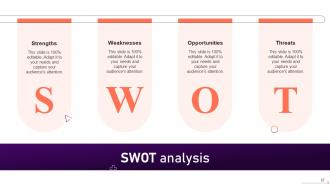
Slide 64: This slide reveals the SWOT analysis.
Slide 65: This slide exhibits the company's Mind map.
Slide 66: This slide contains the Post it notes for reminders and deadlines.
Slide 67: This is Our team slide. State your team-related information here.
Slide 68: This is the Quotes slide for motivation.
Slide 69: This is the Idea generation slide for encouraging fresh ideas.
Slide 70: This is the Thank You slide for acknowledgement.
Industrial Robots V2 Powerpoint Presentation Slides with all 82 slides:
Use our Industrial Robots V2 Powerpoint Presentation Slides to effectively help you save your valuable time. They are readymade to fit into any presentation structure.
-
“Slides are formally built and the color theme is also very exciting. This went perfectly with my needs and saved a good amount of time.”
-
“Thanks to SlideTeam. Now I can make smart presentations in a fraction of time without any hassle.”
