


Industrial solar rooftop system installation powerpoint presentation slides




Try Before you Buy Download Free Sample Product
 Impress Your
 Audience
 100%
100% Editable
 Save Hours
 of Time


Introducing Industrial Solar Rooftop System Installation PowerPoint Presentation Slides. The purpose of this presentation is to reduce annual electricity bill costs by shifting to solar energy. By using this solar power plant PPT visuals, you can showcase the energy consumption analysis of the manufacturing plant. Present issues and challenges related to the solar system with the help of a ready-to-use PPT complete deck. After that, depict the solutions to counter energy issues using a content-ready solar system for industry PowerPoint layouts. Highlight the renewable technologies that the industry can adopt and cost overview of different technologies. You can also depict the application of the solar system and illustrate various solar PV integration model workflow. The slides also explain permissions and regulatory key considerations required before project implementation. Power plant details, along with project description and specifications, are also included in our PPT slideshow. Showcase decision-making checklist for the solar project by using the installation of renewable energy PPT infographics. Depict estimated cost for the solar project, implementation schedule, PV operational and maintenance plan, etc., by incorporating professionally designed solar rooftop system PPT slide deck.
People who downloaded this PowerPoint presentation also viewed the following :
Content of this Powerpoint Presentation
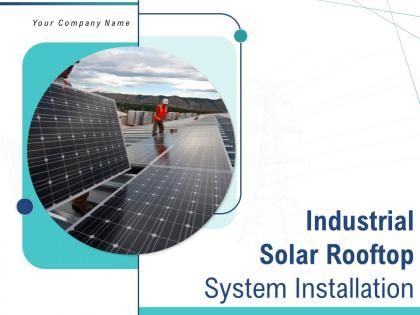
Slide 1: This slide introduces Industrial Solar Rooftop System Installation. State your Company name and begin.
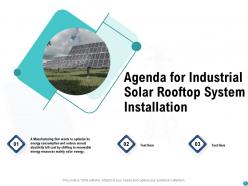
Slide 2: This slide displays Agenda for Industrial Solar Rooftop System Installation
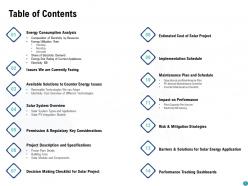
Slide 3: This slide displays Table of Contents.
Slide 4: This slide displays Table of Content.
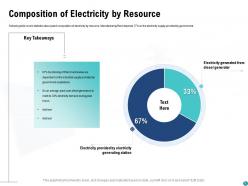
Slide 5: This slide covers statistics about plant composition of electricity by resource. Manufacturing Plant depends 77% on the electricity supply provided by government.
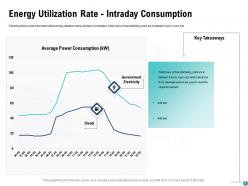
Slide 6: This slide provide information about energy utilization rate by intraday consumption. Peak hours of manufacturing plant are in between 8 am to 4 pm slot.
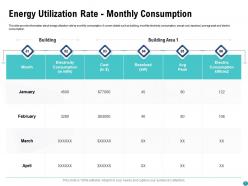
Slide 7: This slide provide information about energy utilization rate by monthly consumption. It covers details such as building, monthly electricity consumption, annual cost, baseload, average peak and electric consumption.
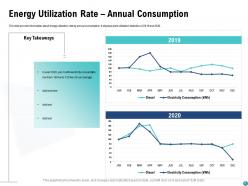
Slide 8: This slide provide information about energy utilization rate by annual consumption. It displays plant utilization statistics of 2019 and 2020.
Slide 9: This slide displays Table of Content
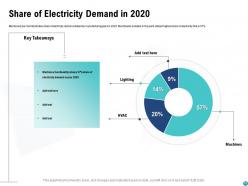
Slide 10: Mentioned pie chart illustrates share of electricity demand utilized by manufacturing plant in 2020. Machineries installed in the plant utilised highest share of electricity that is 57%.
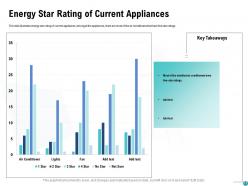
Slide 11: This slide illustrates energy star rating of current appliances. Among all the appliances, there are most of the air conditioners that have five star ratings.
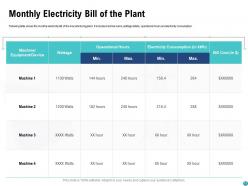
Slide 12: The table in the slide shows the monthly electricity bill of the manufacturing plant. It includes machine name, wattage details, operational hours and electricity consumption.
Slide 13: This slide displays Table of Content.
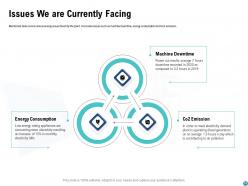
Slide 14: Mentioned slide covers various energy issues faced by the plant. It includes issues such as machine downtime, energy consumption and Co2 emission.
Slide 15: This slide displays Table of Content.
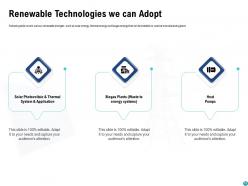
Slide 16: Following slide covers various renewable energies such as solar energy, thermal energy and biogas energy that can be installed or used at manufacturing plant.
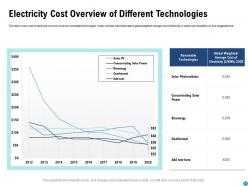
Slide 17: This slide covers cost of electricity overview of various renewable technologies. It also includes information about global weighted average cost of electricity in dollars per kilowatt hour and megawatt hour.
Slide 18: This slide displays Table of Content
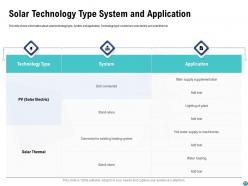
Slide 19: This slide shows information about solar technology type, System and Application. Technology type covered are solar electric and solar thermal.
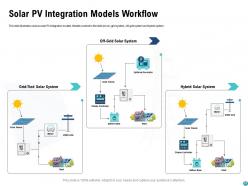
Slide 20: This slide illustrates various solar PV integration models. Models covered in the slide are on-grid system, off-grid system and hybrid system.
Slide 21: This slide displays Table of Content.
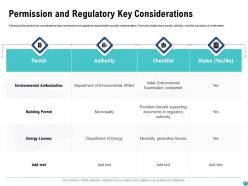
Slide 22: Following slide explains key considerations about permission and regulatory required before project implementation. It includes details about permit, authority, checklist and status of confirmation.
Slide 23: This slide shows Table of Content.
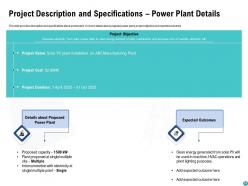
Slide 24: This slide provides description and specifications about power plant. It covers details about proposed power plant, project objective and expected outcomes
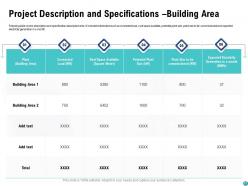
Slide 25: Following slide covers description and specification about plant area. It included information such as connected load, roof space available, potential plant size, plant size to be commissioned and expected electricity generation in a month.
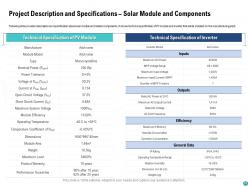
Slide 26: Following slide provides description and specification about solar module and related components. It shows technical specification of PV module and inverter that will be installed on the manufacturing plant.
Slide 27: This slide displays Table of Content.
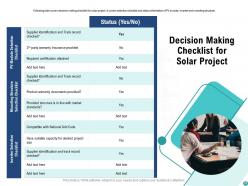
Slide 28: This slide covers decision making checklist for solar project. It covers selection checklist and status information of PV module, inverter and mounting structure.
Slide 29: This slide displays Table of Content.
Slide 30: Following slide provides description and specification about solar module and related components. It shows technical specification of PV module and inverter that will be installed on the manufacturing plant.
Slide 31: This slide shows Table of Content.
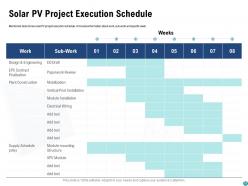
Slide 32: Mentioned slide shows solar PV project execution schedule. It includes information about work, sub-work and specific week.
Slide 33: This slide displays Table of Content.
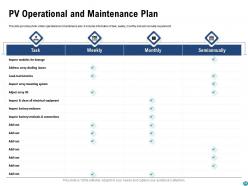
Slide 34: This slide provides photo voltaic operational and maintenance plan. It includes information of task, weekly, monthly and semi annually requirement.
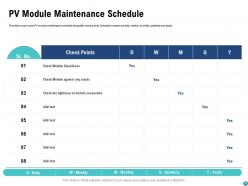
Slide 35: This slide covers solar PV module maintenance schedule along with check points. Schedule covered are daily, weekly, monthly, quarterly and yearly.
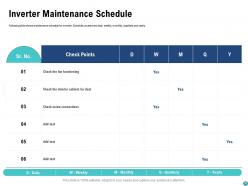
Slide 36: Following slide shows maintenance schedule for inverter. Schedule covered are daily, weekly, monthly, quarterly and yearly.
Slide 37: This slide displays table of content.
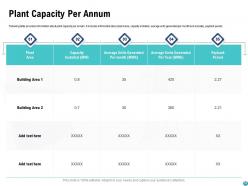
Slide 38: This table provides information about plant capacity per annum. It includes information about plant area, capacity installed, average units generated per month and annually, payback period.
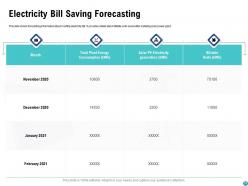
Slide 39: This slide shows forecasting information about monthly electricity bill. It provides details about billable units saved after installing solar power plant.
Slide 40: This slide shows Table of Content.
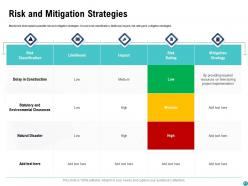
Slide 41: Mentioned slide explains possible risk and mitigation strategies. It covers risk classification, likelihood, impact, risk rating and ,mitigation strategies.
Slide 42: This slide displays Table of Content.
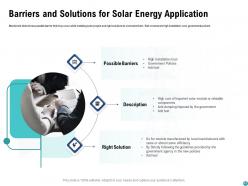
Slide 43: Mentioned slide shows possible barrier that may occur while installing solar project and right solutions to overcome them. Risk covered are high installation cost, government policies.
Slide 44: This slide contains Table of Contents.
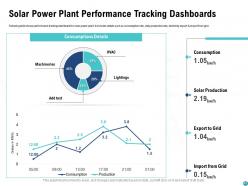
Slide 45: Following slide shows performance tracking dashboard for solar power plant. It includes details such as consumption rate, daily production rate, electricity export & import from grid.
Slide 46: This slide is titled as Additional Slides.
Slide 47: This is Industrial Solar Rooftop System Installation Icons Slide.
Slide 48: This is About Us slide to showcase Company specifications.
Slide 49: This is Our team slide with names and designations.
Slide 50: This slide displays Vision, Mission and Goals.
Slide 51: This slide is titled as Post It Notes
Slide 52: This slide shows Venn.
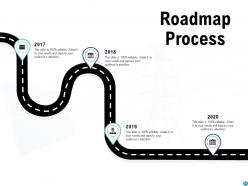
Slide 53: This slide displays Roadmap Process
Slide 54: This is Idea Generation slide to highlight important message and facts.
Slide 55: This is Puzzle slide.
Slide 56: This is Thank You slide with contact details.
Industrial solar rooftop system installation powerpoint presentation slides with all 56 slides:
Use our Industrial Solar Rooftop System Installation Powerpoint Presentation Slides to effectively help you save your valuable time. They are readymade to fit into any presentation structure.








FAQs for Industrial solar rooftop system installation
Dude, the energy savings alone are insane - we're talking 20-30% off your electric bills immediately. Your facility probably has this massive roof just sitting there anyway, so why not use it? Payback's usually around 5-7 years for most industrial places. Oh and the sustainability angle actually helps with contracts now, which is kinda wild but whatever works. Tax breaks make it even better. You should definitely crunch the numbers for your specific setup though - every building's different but most see solid ROI.
Yeah so bigger roofs = more panels, that's obvious. The real pain is working around all the crap up there - HVAC units, vents, skylights that'll shade your panels. South-facing sections are amazing for this, but honestly north-facing is just throwing money away. Multiple roof levels make the wiring a nightmare too. Oh and irregular shapes? Total headache for installers, which means higher costs for you. Definitely get a proper site survey first - they'll map out what you're actually working with and figure out the best layout. Don't skip that step.
Honestly, just focus on three things: efficiency, cost per watt, and how they'll handle your weather. Monocrystalline costs more but you get better efficiency - great if your roof space sucks. Polycrystalline's cheaper with solid performance. Skip thin-film unless you've got some structural nightmare going on, they're pretty much pointless for industrial stuff now. Oh and definitely check the warranty terms and who's actually making them since you're stuck with this for 25+ years. Get quotes comparing the different types with your actual roof and energy requirements.
Dude, start with your local utility and city planning office before doing anything else. The paperwork varies like crazy - some places are chill, others are a nightmare. Federal tax credits are solid right now, but state stuff changes all the time. Net metering policies can literally cut your payback time in half if you're lucky. Zoning and permits are just part of the game unfortunately. My neighbor waited like 6 months just for interconnection approval, which was ridiculous. But honestly? The financial incentives can be huge if you time it right and your area doesn't suck for solar policy.
Dude, the structural stuff is gonna be your biggest pain. Most industrial roofs can't handle solar loads, so you're looking at tons of engineering analysis upfront. Electrical integration gets crazy complicated too - tying into those industrial power systems is no joke. Oh, and permitting? Plan on waiting forever because bureaucrats love their paperwork. You'll also have fun dealing with roof access issues and working around existing equipment. Plus coordinating installation around production schedules since any downtime costs them a fortune. Honestly, just start that structural analysis ASAP and double whatever timeline you're thinking.
PPAs are honestly your best move here - zero upfront costs and you just buy power at a cheaper rate while they own the system. Solar loans give you more control if that's your thing. Tax incentives are actually really good right now, which is weird timing but whatever. Equipment financing spreads everything out too. Oh and definitely get quotes for both buying vs PPA - I was shocked at the difference when my neighbor did this. The long-term savings can be pretty wild depending on your situation.
So batteries let you actually use your solar power when you need it instead of just when it's sunny out. Right now you're probably selling excess back to the grid during the day, then buying it back at night - kinda ridiculous when you think about it. Storage smooths everything out so you can use more of your own power and avoid those crazy peak hour rates. Plus backup power when the grid goes down, which is nice. Oh and don't just match your solar output when sizing - you want to think about when your facility actually uses the most power instead.
Look, industrial solar rooftops are basically carbon-cutting machines for your building. They generate clean power right where you need it, so you're not pulling as much electricity from the grid (which is mostly fossil fuel stuff anyway). A decent-sized installation can cut your building's emissions by 50-80% - that's huge. All that wasted roof space finally does something useful too. The systems last 25+ years, so the environmental impact just keeps adding up. Honestly, the math works out pretty well. Get an energy audit first though - you'll want to see how much of your current usage you could actually cover with what fits up there.
Clean your panels every 3 months or so (more if you're somewhere dusty - our Phoenix setup taught me that lesson). Check electrical connections once a year for corrosion and loose stuff. Your monitoring system is honestly your best friend here - set up alerts for when performance drops. Also trim back any plants that might shade the panels as they grow. The trick is catching problems early before they get expensive. I'd say the automated alerts are clutch because otherwise you're just guessing if everything's working right. Annual electrical checks will save you headaches down the road.
So basically, grid-tied means you stay hooked up to the power company - you can sell back extra electricity and pull from the grid when you need it. Way more popular with businesses. Off-grid is totally separate with batteries doing all the work, but honestly? It gets pricey real quick and you have to plan everything perfectly. Most industrial places go grid-tied because of net metering benefits. Plus you don't need those crazy expensive battery setups. I'd say start there unless you're literally in the middle of nowhere.
So basically you want to stack up your install costs against what you'll save each year over like 25 years. Monthly bill drops are the big thing to track, plus any tax breaks you get. Oh and if you can sell power back to the grid, that's extra cash. Most industrial setups I've seen hit 15-25% ROI yearly which honestly beats most other investments. Use monitoring software to check if you're actually hitting those projected numbers - sometimes reality's different than the sales pitch. If your payback period's under 7 years though, you're golden.
Yeah weather does affect solar but not how you'd expect. Sure, sunny days are great, but your panels actually hate being super hot - they work better when it's sunny but not scorching. Rain's honestly your friend since it washes all the grime off for free. Snow blocks things temporarily but slides right off most roofs anyway. Cloud cover for weeks at a time though? That'll definitely hurt your output. I'd just keep an eye on your numbers during those long gray stretches - that's when you'll actually notice a dip.
Honestly, I'd start with an energy audit first - figure out how much juice you're actually using before jumping into solar. Maybe aim for covering like 30-50% of your power needs initially, not the whole thing. That sticker shock is real if you go too big right away! Consider it part of a bigger picture too - efficiency upgrades, maybe some battery storage down the road. Most companies I know phase it in across different roof sections or buildings. Oh, and definitely look into power purchase agreements to avoid those crazy upfront costs. Get quotes from at least 3-4 installers because prices vary wildly.
Honestly, the coolest stuff I'm seeing right now is floating solar for roofs that can't handle much weight. Bifacial panels are huge too - they grab light bouncing off your roof and bump output like 20-30%. Those new perovskite-silicon cells are hitting insane efficiency numbers. AI systems that move panels throughout the day used to be crazy expensive but they're getting reasonable. Building-integrated panels actually replace your roof instead of just sitting on top, which looks way cleaner. Oh and if you've got green space requirements, agrivoltaics might work. Tracking systems don't cost a fortune anymore either for commercial stuff.
So you're looking at around 3-6% boost in property value with industrial solar. Pretty solid ROI honestly. Buyers love getting an asset that's already making money and cutting energy costs - it's like built-in profit margins. Also helps you dodge those crazy utility price spikes we keep seeing (seriously, my electric bill last month was insane). Appraisers actually treat solar as real property improvements now, not just fancy equipment bolted on. Just save all your performance data and savings records. You'll need that stuff later when you sell or refinance.
-
Attractive design and informative presentation.
-
Awesomely designed templates, Easy to understand.
-
Great designs, really helpful.