


Energy management powerpoint presentation slides




Try Before you Buy Download Free Sample Product
 Impress Your
 Audience
 100%
100% Editable
 Save Hours
 of Time


Showcase ways to conserve energy by employing our professionally designed Energy Management Powerpoint Presentation Slides. Evaluate and analyze building energy consumption by utilizing power management PPT visuals. This power management strategy PPT presentation has-icon slides and many additional slides like timeline, comparison, quotes. etc. Take the advantage of energy management system PPT layouts to showcase how to plan the operation of energy production and energy consumption units. All the diagrams and tables used in this power management PowerPoint deck are completely editable and can be used very easily. Our professionally designed energy demand management PPT slideshow covers the various topics like gathering and track data, energy conservation project tracking, establishing baselines, benchmarking, etc. Raise awareness among people for energy conservation by taking the assistance of energy procurement PPT slide deck. Thus, download our energy audit and management PPT slides to create an impressive presentation.
People who downloaded this PowerPoint presentation also viewed the following :
Content of this Powerpoint Presentation
Slide 1: This slide introduces Energy Management. State your company name and begin.
Slide 2: This slide displays the Outline of the presentation.
Slide 3: This slide displays Commit to continuous improvement.
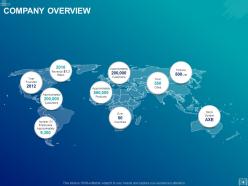
Slide 4: This slide displays Company Overview.
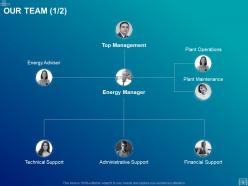
Slide 5: This is Our Team slide with names and designation.
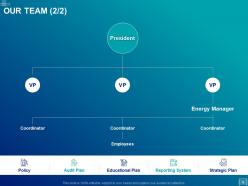
Slide 6: This is also Our Team slide.
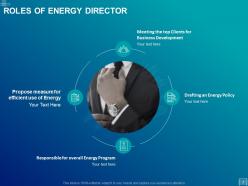
Slide 7: This slide showcases the Roles of Energy Director.
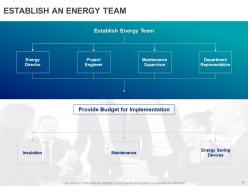
Slide 8: This slide displays Establishing an Energy Team.
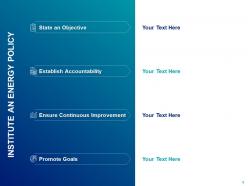
Slide 9: This is Institute an Energy Policy slide such as- State an Objective, Establish Accountability, Ensure Continuous Improvement, Promote Goals.
Slide 10: This slide is about Setting Goals.
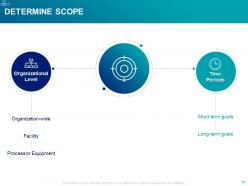
Slide 11: This is Determine Scope slide displaying- Organization-wide, Facility, Process or Equipment, Organizational Level, Short-Term Goals, Long-Term Goals, Time Periods.
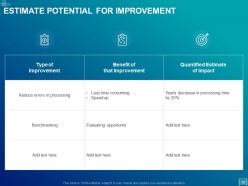
Slide 12: This slide depicts Estimate Potential for Improvement.
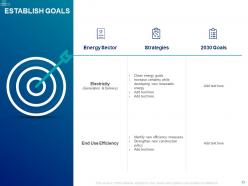
Slide 13: This is Establish Goals slide.
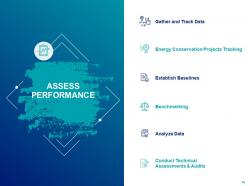
Slide 14: This slide displays assess performance.
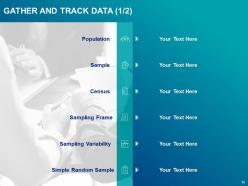
Slide 15: This slide showcases Gather and Track Data with- Sample, Population, Census, Sampling Frame, Simple Random Sample, Sampling Variability.
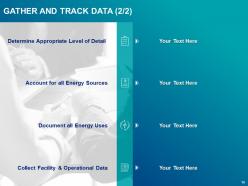
Slide 16: This slide depicts Gather and Track Data with- Determine Appropriate Level of Detail, Account for all Energy Sources, Document all Energy Uses, Collect Facility & Operational Data.
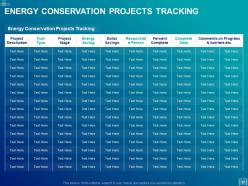
Slide 17: This slide displays Energy Conservation Projects Tracking.
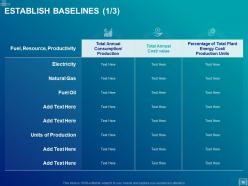
Slide 18: This is Establish Baselines slide.
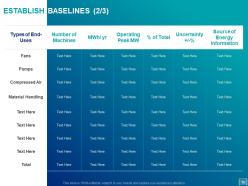
Slide 19: This is Establish Baselines slide.
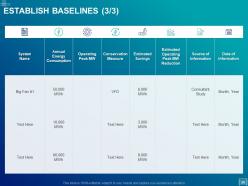
Slide 20: This is also Establish Baselines slide.
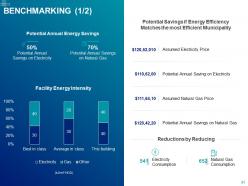
Slide 21: This slide showcases Benchmarking with- Potential Annual Savings on Electricity, Potential Annual Savings on Natural Gas, Potential Annual Energy Savings, Facility Energy Intensity.
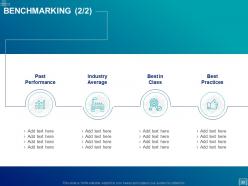
Slide 22: This slide displays Benchmarking showcasing- Past Performance, Industry Average, Best in Class, Best Practices.
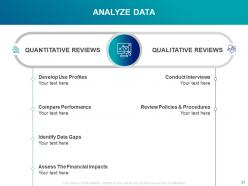
Slide 23: This slide depicts analyze data.
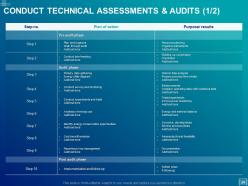
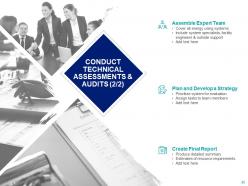
Slide 24: This is Conduct Technical Assessments and Audits slide.
Slide 25: This is also Conduct Technical Assessments and Audits slide.
Slide 26: This slide displays Track and Monitor
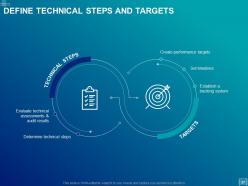
Slide 27: This slide is about Defining Technical Steps and Targets with- Technical Steps, Evaluate Technical Assessments and Audit Results, Determine Technical Steps, Create Performance Targets.
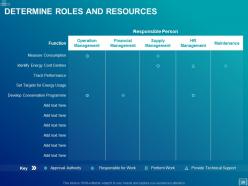
Slide 28: This slide showcases Roles and Resources describing- Responsible Person, Responsible for Work, Approval Authority, Perform Work, Provide Technical Support.
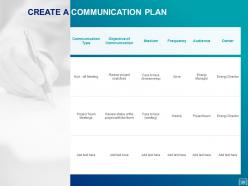
Slide 29: This is Create a Communication Plan slide.
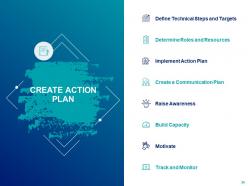
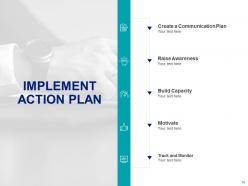
Slide 30: This slide displays implement action plan with- Create a Communication Plan, Raise Awareness, Build Capacity, Motivate.
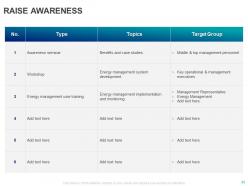
Slide 31: This is Raise Awareness slide.
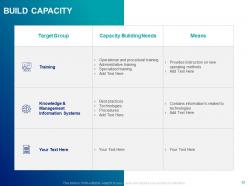
Slide 32: This slide showcases Build Capacity.
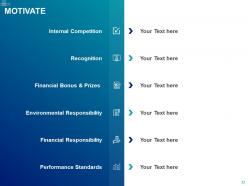
Slide 33: This is motivate slide describing internal competition, recoginition, financial bonus and prizes etc.
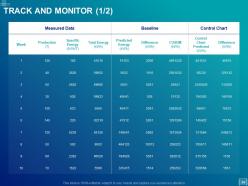
Slide 34: This slide displays Track and Monitor.
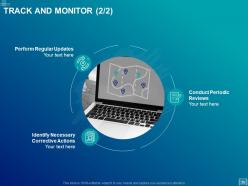
Slide 35: This slide displays Track and Monitor with- Perform Regular Updates, Conduct Periodic Reviews, Identify Necessary Corrective Actions.
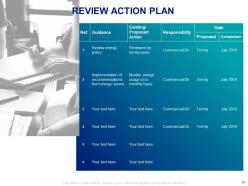
Slide 36: This slide showcases Review Action Plan with evaluate progress, measure results.
Slide 37: This slide showcases measure results.
Slide 38: This is Review Action Plan slide.
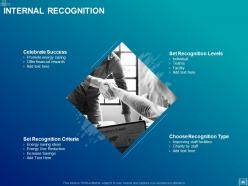
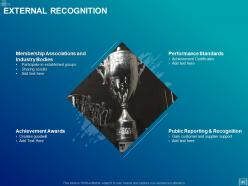
Slide 39: This slide showcases Recognize Achievements displaying- Internal Recognition, External Recognition.
Slide 40: This slide depicts Internal Recognition with- Celebrate success, Promote energy saving, Offer financial rewards, Set Recognition Criteria, Energy saving ideas, Energy Use Reduction, Increase Savings, Set Recognition Levels.
Slide 41: This slide depicts External Recognition with- Membership Associations and Industry Bodies, Participate in established groups, Sharing results, Performance Standards, Achievement certificates, Achievement Awards, Creates goodwill, Gain customer and supplier support.
Slide 42: This is KPI Metrics and Dashboard slide.
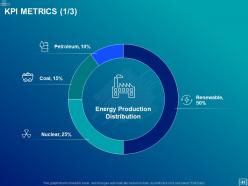
Slide 43: This slide showcases Energy Production Distribution.
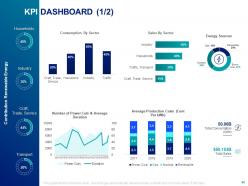
Slide 44: This is KPI Metrics slide showcasing total consumption, Consumption By Sector (kWh).
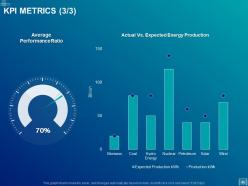
Slide 45: This slide also showcases KPI Metrics with Actual Vs. Expected Energy Production, Average Performance Ration.
Slide 46: This is KPI Dashboard slide showcasing percentages of contribution of renewable energy to household, industry, craft, trade, service.
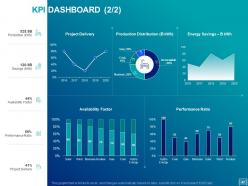
Slide 47: This is KPI Dashboard slide with- Project Delivery, Production Distribution (B kWh), Renewable, Nuclear, Coal, Gas, Energy Savings – B kWh, Performance Ratio Availability Factor, Production (kWh), Performance Ratio.
Slide 48: This is Energy management Icons Slide.
Slide 49: This slide is titled as Additional Slides for moving forward.
Slide 50: This slide displays time for Coffee break.
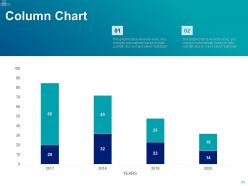
Slide 51: This slide displays Column chart.
Slide 52: This slide displays Line chart with different product comparison.
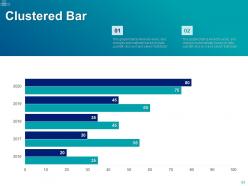
Slide 53: This slide displays clustered bar chart with product comparison.
Slide 54: This is Our Mission slide with vision, mission and goal.
Slide 55: This is Our team slide with names and designation.
Slide 56: This is about us slide to showcase company specifications.
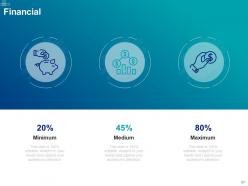
Slide 57: This is financial slide. Showcase your finance related stuff here.
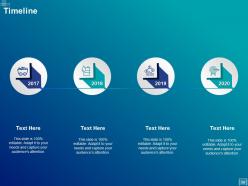
Slide 58: This is four years Timeline slide.
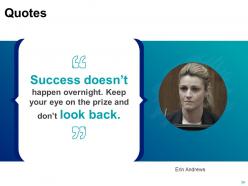
Slide 59: This is Quotes slide to convey message, beliefs.
Slide 60: This is 30 60 90 days plan slide.
Slide 61: This is Venn slide.
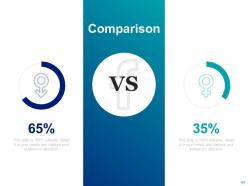
Slide 62: This is comparison slide. Showcase the comparison between male and female users in percentages.
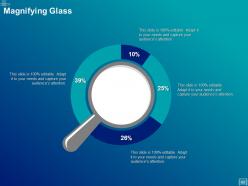
Slide 63: This slide displays magnifying glass. Highlight the important content under it.
Slide 64: This slide displays Mind Map for representing entities.
Slide 65: This is Thank You slide with names, contact number and location.
Energy management powerpoint presentation slides with all 65 slides:
All the information in our Energy Management Powerpoint Presentation Slides is fully investigated. Display only irrefutable facts.










FAQs for Energy management
Honestly, the cost savings alone make it worth it - most places see 10-20% cuts in their energy bills within a year. But what really got me was the visibility part. You finally see which equipment is just bleeding money 24/7. Real-time data shows you everything, and you'll probably be shocked at some of the waste (I know I was). Bonus points: you'll catch maintenance problems early before they turn into expensive disasters. Oh, and hitting those sustainability goals becomes way easier. Start with your biggest energy hogs first - that's where the quick wins are.
Think of energy audits like being a detective for your electric bill. They'll map out where you're burning through power - HVAC, lighting, insulation problems, old equipment that's basically money-sucking monsters. The results can be wild honestly, like finding out your break room fridge costs more to run than some people's rent. You get a report that ranks fixes by cost and savings potential. Go after the easy wins first. Oh, and definitely start with whatever building uses the most energy - that's where you'll actually notice the difference in your bills.
Dude, technology has completely changed how we handle energy stuff. Smart sensors track your usage constantly, while AI figures out when you'll need more power. Your building's systems can automatically adjust heating, cooling, and lights based on who's around and what the weather's doing. The crazy part is you control it all from your phone now - makes catching energy waste so much easier. Oh, and smart grids balance everything across whole networks without human input. I swear my electric bill dropped like 20% just from using these apps. Game changer, honestly.
Start with smart meters and energy monitoring software - you need that real-time data first. Then add submeters for different departments so you can see what's actually draining power. Old equipment is usually the worst culprit, trust me. Set up dashboards that track stuff like kWh per square foot, but here's the key thing - get your baseline numbers before you do anything else. Then you can compare month to month and see how weather or occupancy changes affect things. Don't overthink the tools though. Pick one system and stick with it instead of constantly switching around.
Honestly, making it personal is huge - people need to feel like they're part of something. Try "lights off" competitions between departments, maybe put up dashboards showing energy savings in real time. Everyone loves seeing those numbers go down! Get a few energy champions on each team to help spot waste (they usually know where it's happening anyway). Short updates work better than long emails - just quick wins and progress stuff. Oh and definitely set up suggestion boxes. Your coworkers probably have the best ideas about where energy gets wasted since they see it daily. Public recognition goes a long way too.
First thing - figure out when you're using the most power and see where solar could actually help during those times. Solar's obviously great for daytime stuff, but wind is honestly all over the place depending where you are. I'd definitely do energy efficiency upgrades first though - way cheaper than buying more panels to cover wasteful usage. Mix renewables with some battery storage and keep grid backup as your safety net. Oh and start with like a small test system before you go crazy with the whole setup. No point dropping tons of cash if it doesn't work for your specific situation.
Honestly, I'd focus on both usage and costs to get the real story. Energy per square foot is solid for comparing month-to-month - normalizes everything nicely. Peak demand charges will absolutely wreck your budget if you're not watching them. Total spend and cost per kWh cover the money side, plus carbon metrics if that's important for your company. But here's the thing - the metric that actually works is whatever your team will consistently check. I learned this the hard way when we tried tracking like 8 different things and nobody looked at any of them. Pick maybe 3-4 that match your goals and review monthly.
Honestly, regulatory changes can totally flip your energy strategy upside down. Manufacturing gets slammed the hardest with new emissions standards and efficiency rules, but everyone ends up dealing with higher costs eventually. The trick is getting ahead of it instead of panicking later. Carbon pricing and compliance stuff will eat into your budget fast if you're not ready. I'd set up some alerts for regulatory updates in your industry - maybe join one of those trade associations that actually keeps track of this mess. Way better than scrambling when new rules drop.
Honestly, most places I've seen just don't have anyone actually watching their energy use - facilities teams are swamped with everything else. The monitoring systems are usually garbage or nonexistent, so you're flying blind. Old equipment burns through way more power than it should. Companies know they should upgrade but get spooked by upfront costs, even when the payback is obvious. Plus nobody has decent benchmarks to tell if their usage is even normal. My advice? Start with better monitoring first - sounds boring but you need that data to figure out what's actually worth fixing.
So energy management is honestly where you want to start with sustainability stuff. Do an energy audit first - you'll find tons of easy fixes just by seeing where power actually goes. Track your usage patterns and spot the waste. Most changes end up saving money anyway, which is nice. Your carbon footprint drops when you're not burning through unnecessary energy. Plus you need that data for reporting and hitting your targets. I was shocked how much our office was wasting on heating empty conference rooms! Short wins add up to real impact.
Honestly, most places see like 10-30% drops in their energy bills with decent management. HVAC stuff gives you the biggest bang for your buck, plus LED upgrades and just... not letting equipment run all night for zero reason (you'd be shocked how often that happens). Smart scheduling systems are worth it too. Oh, and do an energy audit first - sounds boring but it'll show you exactly where you're bleeding money. Go after the easy wins initially, then tackle the bigger projects. Most companies make back what they spent within a year or two, which isn't terrible.
Honestly, data analytics is a game-changer for energy management. Instead of guessing what's draining your power, you can actually see patterns and predict when demand spikes. It shows you which equipment is burning through energy before it destroys your budget. Real-time monitoring beats waiting for those painful monthly bills, trust me. You'll spot waste faster and can even predict when stuff needs maintenance. My advice? Start tracking your biggest energy users first - that's where you'll get the quickest payoff and actually see results.
Honestly, start with the lighting - LEDs are cheap and you'll actually see the difference on your bill right away. Get an energy audit done too, you'd be shocked what they find sometimes. Programmable thermostats are worth it, and definitely seal up those drafty spots around windows. Oh, and bug your team about shutting down computers at night - I know it sounds annoying but that stuff really does add up. The little changes hit different when you see the savings pile up month after month.
Scale matters a ton here. Industrial places are energy hogs, so they go all-in on process optimization and fancy monitoring systems - their electric bills would make you cry. Commercial buildings? They're more about HVAC, lighting, and getting tenants to actually care. For industrial clients, dig into their production processes and demand spikes. That's where the money is. Commercial is different though - smart building tech works great, plus behavioral programs if you can get people engaged. Oh, and industrial sites usually have dedicated energy managers while commercial relies more on automated systems. Match your pitch to what they actually deal with daily.
Dude, training your employees is like the secret sauce for energy management that nobody talks about. Your team's the one flipping switches and messing with equipment all day - if they don't get it, you're screwed. I've literally watched people install these fancy smart thermostats and then staff just keeps overriding them because nobody explained how they work. Show your people why turning off lights actually matters for the bottom line. Once they connect their daily habits to real costs, you'll see your energy bills drop. It's honestly that simple.
-
It's very very good work