

 0 Comment
 Customer Reviews

The Global Energy Trading Market is anticipated to increase to USD 2.50 billion by 2030, at a CAGR of 4.66 % during the forecast period.
The global Energy Trading market is growing rapidly due to a surge in demand for efficient energy trading processes, risk management, and regulatory compliance.
Energy trading is a powerful mix of timing, planning, and proactive decision-making in power markets, electricity trading, renewable energy trading, and energy derivatives. However, with presentations filled with jargon-heavy terms, what is the most effective way to convey these complex concepts? A wholesome PowerPoint presentation!
Never forget a task or deadline again! Try our Top 10 Trading Checklist Templates that smoothly direct your trading operations to the ultimate completion!
At SlideTeam, we offer a comprehensive yet compelling tool that not only presents facts but also tells your success story, simplifies complex figures, and sparks action.
It also discusses software tools, applications, elements, and strategies that must be employed to facilitate energy trading, portfolio management, commodity market analysis, and risk assessment. These PPTs help energy companies optimize trading operations, forecast market volatility, and keep a check on environmental regulation compliance.
Ultimately, their customizable elements allow you to adjust the format, professional visuals, data, and energy trading topics according to your company’s goals and objectives.
Let’s get started!
Risk less; earn more! Explore our Top five Trading Plan Templates for building your next failproof trading plan!
Template 1: Energy Trading Market Overview
If the fact that more than 40 countries now use carbon pricing to fight climate change doesn’t encourage you to make a real change, we don’t know what will! This template highlights the two powerful tools that are accelerating the shift to shaping greener markets: carbon costing and renewable energy certificates. The carbon costing section explains how implementing carbon costing mechanisms encourages businesses to reduce greenhouse gas emissions, facilitating informed investments in greener options. The renewable energy certification emphasizes using renewable energy certificates to closely track renewable energy trading and production, creating awareness of the need to adopt and trade in clean energy. Grab it now!

Template 2: Current Trends in Energy Trading
This template can be a lifesaver if your business isn’t able to keep up amidst quickly evolving energy markets. This current trends dashboard functions as a real-time yet all-inclusive data snapshot of major market movements in energy trading, answering questions like:
- What is the size of the energy trading market distribution in North America?
- What industries contribute majorly to greenhouse gas emissions?
- How fast is renewable energy adoption growing?
Additionally, the dashboard provides key statistics, including market size, trading distribution, carbon trading involvement, and market share percentage, all presented through interactive charts, helping you effectively present the change. Grab it today!

Template 3: Regulatory Landscape in Energy Markets
Here’s an eye-opener for you: Renewable energy regulation impacts more than 150 countries, but certain inconsistent policies continue to hamper the energy market adoption rate. This template provides a structured regulatory framework that supports the clean energy transition. It dissects the regulatory landscape neatly into six sections: type, region, impact, date, stakeholders, and goals, highlighting:
- Cap-and-trade: Influences carbon credits and aims to reduce emissions
- Mandates for renewables: Encourages renewable investments
- Tax/fee on emissions: Incentivizes lower emission rates
- Subsidies for clean technologies: Promotes innovation

Template 4: Impact of Climate Policies on Trading
Governments everywhere are taking rigid steps toward climate regulations, which could impact carbon pricing, renewable energy subsidies, and emissions trading, potentially increasing the price of carbon credits by 40% by 2030. This impact helps reveal how changes in laws influence market trends, price direction, and trading strategies. This template features sections like climate policies, sustainable trading, and energy trading that help traders:
- Understand regulations and initiatives.
- Better align energy markets with governance.
- Recognize market trends, mechanisms, and practices.
Get access to it today!

Template 5: Key Players in Energy Trading
Are uninformed trading decisions, weaker market analysis, and unfocused competitive positioning costing you opportunities in commodity markets and electricity trading? This template might come in handy! This template lets you have a glance at the players leading the charge in energy trading, highlighting their market influence and strategic impact. Categorized into three sections, such as governments, utilities, and traders, it allows traders and businesses to spot market trends, analyze marketing strategies, regulate and oversee energy markets, and manage energy resources. Get your hands on this template today!

Template 6: Types of Energy Trading Contracts
With a plethora of contract options available, choosing the right one can be tricky. But worry not! This template neatly illustrates four different types of energy trading contracts that simplify complex agreement terms, key terms, market applications, and more. These contracts are:
- Spot Contracts: They refer to on-the-spot energy trade deals in which delivery and payment occur immediately based on current market prices.
- Futures Contracts: These agreements are finalized to be completed on a predetermined future date.
- Options Contracts: These types of contracts give the right but not the obligation to purchase or sell energy at a set price.
- Power Purchase Agreements: These are long-term contracts where the buyer commits to buying energy from a specific producer at mutually agreed-upon rates.

Template 7: Market Dynamics and Price Formation
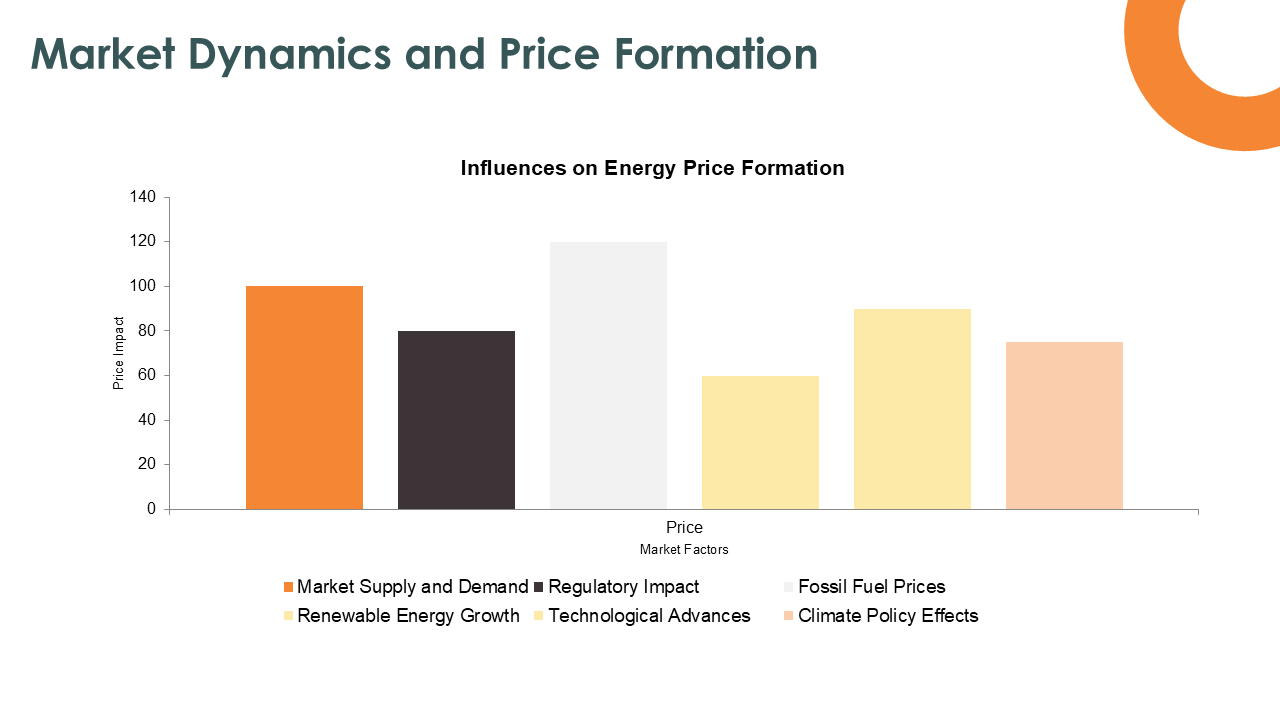
Navigating energy pricing can be a real challenge, especially with all the myths floating around. Whether you believe prices are always predetermined or that a lower rate is inherently better, facts need to be understood. This template sheds light on the key market factors that cause energy price fluctuations within minutes. It discusses topics such as market supply and demand, regulatory impact, fossil fuel prices, renewable energy growth, technological advancements, and climate policy impacts. These topics help you gain insights into pricing mechanisms, risk factors, and trading methodologies and predict market movements. Grab it now!
Template 8: Role of Renewable Energy in Trading
The current U.S. administration and governance, tariffs, policy reversals, and trade tensions are reshaping the U.S. energy landscape. This sparks the need to examine how clean energy influences energy exchange, pricing, market volatility, and carbon trading. This template, aided by a funnel-shaped diagram, illustrates the topics in a step-by-step flow of concepts that are easy to understand. It covers the key roles of renewable energy in trading, such as:
- The impact on global markets
- Discussing policies
- Tracking market adoption growth rate
- Highlighting investment flows
- Improving efficiency due to technological advancements,
- Identifying consumer demand
- Outlining trading mechanisms
- Analyzing pricing models

Template 9: Risk Management Strategies in Trading
Energy markets are unpredictable in terms of price volatility, scope, regulatory shifts, and demand & supply disruptions, creating rapid profit swings. It becomes critical here to explore key risk management tactics in trading to tackle uncertainty and gain protection against steep market fluctuations. This template discusses the following key risk mitigation strategies:
- Conducting market analysis to spot dangers and opportunities.
- Implementing diversification strategies, reducing reliance risks from a single energy source.
- Employing hedging techniques to protect against price volatility and reduce exposure to sudden market movements.
- Ensuring regulatory compliance to minimize risks from legal penalties and operational disruptions.
- Establishing a crisis management plan to respond to unexpected market disruptions and stakeholder concerns effectively.

Template 10: Technological Innovations in Energy Trading
The days of manual trading are over. Today, AI-powered energy trading bots, digital contracts, and predictive market analytics techniques can process data more quickly than you can say ‘digital contracts’! We'll talk about the cutting-edge technological approaches in this template, such as research, development, implementation, and evaluation. These approaches are revolutionizing the way energy markets operate. They focus on identifying key challenges, creating blockchain-based solutions, deploying technology across trading platforms, and assessing performance to gather feedback. The template allows businesses to stay updated by understanding and incorporating automation, data intelligence, and smart tools in their processes. Grab it today!

Do More Than Just Explain The Market; Shape It!
With the energy sector shifting towards digital solutions, energy trading systems are becoming popular among energy traders, analysts, utility companies, and financial institutions that handle energy commodities.
This calls for the need to establish a well-structured Energy Trading PPT that can break down market trends and risk strategies, highlight profitable opportunities, and make renewable energy trading or traditional market strategies easier to grasp.
But most trading presentations are either too cluttered or too technical, losing the audience in a sea of charts and jargon. The key is striking the right balance between data clarity and visual appeal.
The above templates are perfect examples of clarity, organization, engaging content, and customizability. They allow you to turn heavy data into bite-sized sections and confidently chart your course through the ever-changing, wholesome energy market.
- Stock market risks can drastically impact a company’s financial stability. These Stock Market Risk Templates allow you to collect, organize, and deliver the facts that help you stay ahead of market shocks.
FAQs on Energy Trading
How to start energy trading?
To start energy trading, one must understand and learn key concepts like the spot market, futures contracts, and carbon credits. Next comes choosing a trading industry- electricity, gas, or renewables- followed by the registration of the business with an energy exchange. Developing a strategy is the next step. This is achieved through hedging, load forecasting, and grid balancing while staying informed about market trends.
What are the benefits of energy trading?
Enlisted below are the benefits of energy trading:
- Optimizes resource allocation to ensure supply meets demand.
- Fosters price discovery, revealing market values.
- Participants can hedge against volatility, stabilizing costs.
- Trading fuels infrastructure development and market liquidity, offering consumers lower and more stable energy prices.
What are the risks of energy trading?
Energy trading involves market fluctuations, regulatory conditions, and price volatility. Factors such as supply disruptions, weather variations, and geopolitical events can impact profitability. In addition, inaccurate load forecasting or poor hedging techniques can also lead to losses, as can the complexities of emissions trading and compliance issues.