


Energy Consumption Management Powerpoint Presentation Slides




Try Before you Buy Download Free Sample Product
 Impress Your
 Audience
 100%
100% Editable
 Save Hours
 of Time


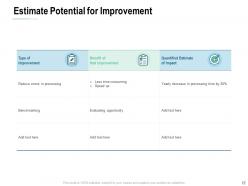
Control your organization's energy consumption with the Energy Consumption Management Powerpoint Presentation Slides. Demonstrate the importance of energy audits to analyze energy flows using this power efficiency PPT graphics. Showcase how to plan the operation of energy production and energy consumption units by taking advantage of energy management system PPT layouts. Present the estimated potential for improvement and showcase the benefits such as less time consuming, speed up, evaluating an opportunity, with the help of power management PPT visuals. Assess the performance by gathering and tracking data with the aid of the energy management system PPT slides. Further, ensure that the pollution levels of your industry do not cross beyond the permissible volumes with the help of energy efficiency & management PPT graphics. Utilize the PPT deck to raise awareness among people by creating workshops and seminars on energy consumption. Thus formulate energy strategies in an efficient way by downloading ready to use energy conservation PPT presentation.
People who downloaded this PowerPoint presentation also viewed the following :
Content of this Powerpoint Presentation
Slide 1: This slide introduces Energy Consumption Management. State your company name and begin.
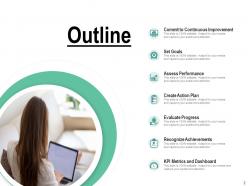
Slide 2: This slide displays the Outline of the presentation.
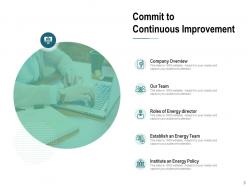
Slide 3: This slide displays Commit to continuous improvement.
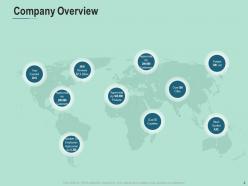
Slide 4: This slide displays Company Overview.
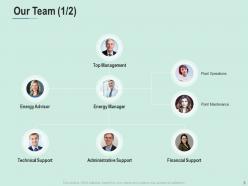
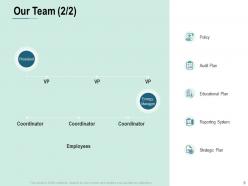
Slide 5: This is Our Team slide with names and designation.
Slide 6: This is also Our Team slide.
Slide 7: This slide showcases the Roles of Energy Director.
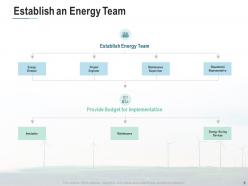
Slide 8: This slide displays Establishing an Energy Team.
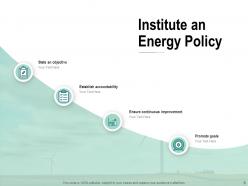
Slide 9: This is Institute an Energy Policy slide such as- State an Objective, Establish Accountability, Ensure Continuous Improvement, Promote Goals.
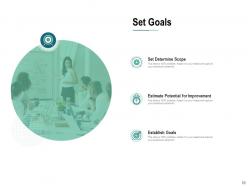
Slide 10: This slide is about Setting Goals.
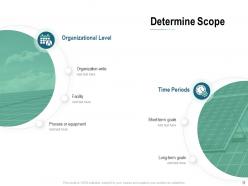
Slide 11: This is Determine Scope slide displaying- Organization-wide, Facility, Process or Equipment, Organizational Level, Short-Term Goals, Long-Term Goals, Time Periods.
Slide 12: This slide depicts Estimate Potential for Improvement.
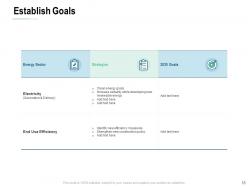
Slide 13: This is Establish Goals slide.
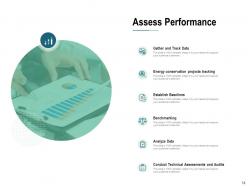
Slide 14: This slide displays assess performance.
Slide 15: This slide showcases Gather and Track Data with- Sample, Population, Census, Sampling Frame, Simple Random Sample, Sampling Variability.
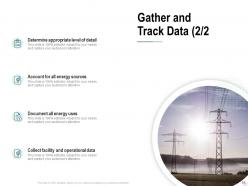
Slide 16: This slide depicts Gather and Track Data with- Determine Appropriate Level of Detail, Account for all Energy Sources, Document all Energy Uses, Collect Facility & Operational Data.
Slide 17: This slide displays Energy Conservation Projects Tracking.
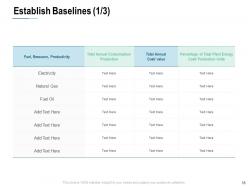
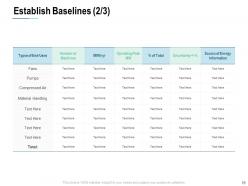
Slide 18: This is Establish Baselines slide.
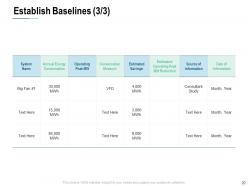
Slide 19: This is Establish Baselines slide.
Slide 20: This is also Establish Baselines slide.
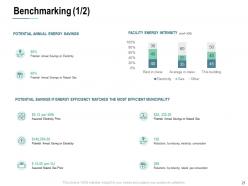
Slide 21: This slide showcases Benchmarking with- Potential Annual Savings on Electricity, Potential Annual Savings on Natural Gas, Potential Annual Energy Savings, Facility Energy Intensity.
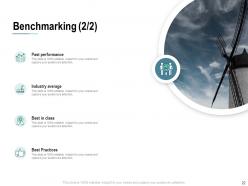
Slide 22: This slide displays Benchmarking showcasing- Past Performance, Industry Average, Best in Class, Best Practices.
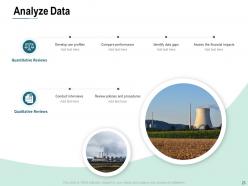
Slide 23: This slide depicts analyze data.
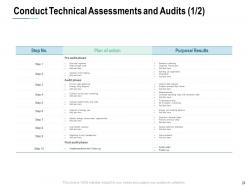
Slide 24: This is Conduct Technical Assessments and Audits slide.
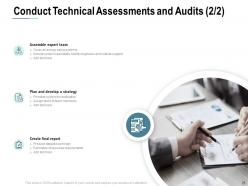
Slide 25: This is also Conduct Technical Assessments and Audits slide.
Slide 26: This slide displays Track and Monitor
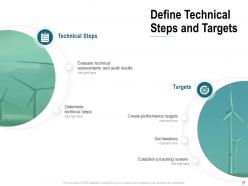
Slide 27: This slide is about Defining Technical Steps and Targets with- Technical Steps, Evaluate Technical Assessments and Audit Results, Determine Technical Steps, Create Performance Targets.
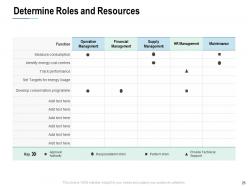
Slide 28: This slide showcases Roles and Resources describing- Responsible Person, Responsible for Work, Approval Authority, Perform Work, Provide Technical Support.
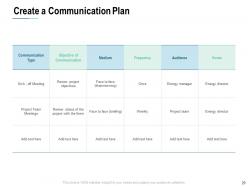
Slide 29: This is Create a Communication Plan slide.
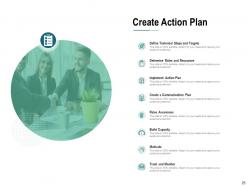
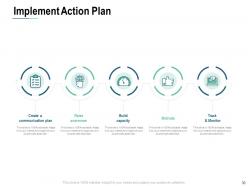
Slide 30: This slide displays implement action plan with- Create a Communication Plan, Raise Awareness, Build Capacity, Motivate.
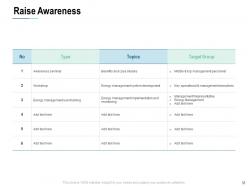
Slide 31: This is Raise Awareness slide.
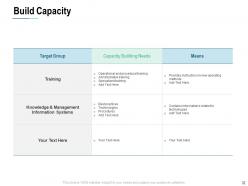
Slide 32: This slide showcases Build Capacity.
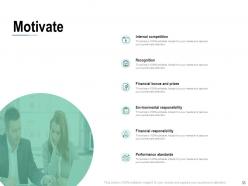
Slide 33: This is motivate slide describing internal competition, recoginition, financial bonus and prizes etc.
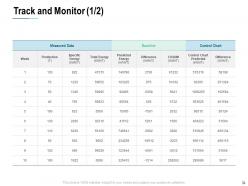
Slide 34: This slide displays Track and Monitor.
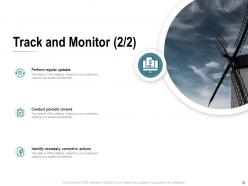
Slide 35: This slide displays Track and Monitor with- Perform Regular Updates, Conduct Periodic Reviews, Identify Necessary Corrective Actions.
Slide 36: This slide showcases Review Action Plan with evaluate progress, measure results.
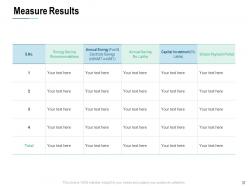
Slide 37: This slide showcases measure results.
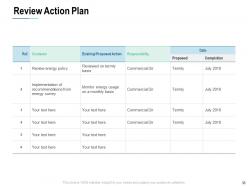
Slide 38: This is Review Action Plan slide.
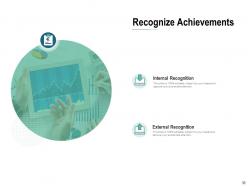
Slide 39: This slide showcases Recognize Achievements displaying- Internal Recognition, External Recognition.
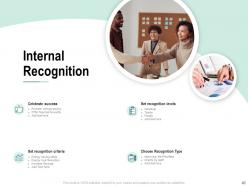
Slide 40: This slide depicts Internal Recognition with- Celebrate success, Promote energy saving, Offer financial rewards, Set Recognition Criteria, Energy saving ideas, Energy Use Reduction, Increase Savings, Set Recognition Levels.
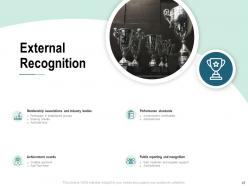
Slide 41: This slide depicts External Recognition with- Membership Associations and Industry Bodies, Participate in established groups, Sharing results, Performance Standards, Achievement certificates, Achievement Awards, Creates goodwill, Gain customer and supplier support.
Slide 42: This is KPI Metrics and Dashboard slide.
Slide 43: This slide showcases Energy Production Distribution.
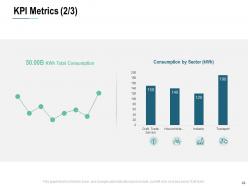
Slide 44: This is KPI Metrics slide showcasing total consumption, Consumption By Sector (kWh).
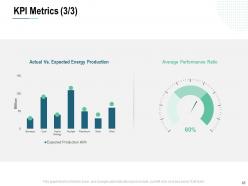
Slide 45: This slide also showcases KPI Metrics with Actual Vs. Expected Energy Production, Average Performance Ration.
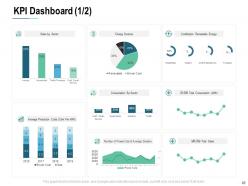
Slide 46: This is KPI Dashboard slide showcasing percentages of contribution of renewable energy to household, industry, craft, trade, service.
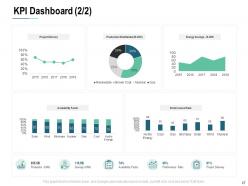
Slide 47: This is KPI Dashboard slide with- Project Delivery, Production Distribution (B kWh), Renewable, Nuclear, Coal, Gas, Energy Savings – B kWh, Performance Ratio Availability Factor, Production (kWh), Performance Ratio.
Slide 48: This is Energy consumption management Icons Slide.
Slide 49: This slide is titled as Additional Slides for moving forward.
Slide 50: This slide displays time for Coffee break.
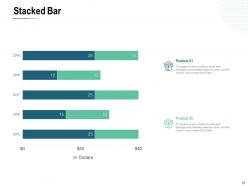
Slide 51: This slide displays stacked bar chart with product comparison.
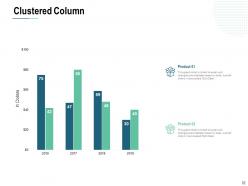
Slide 52: This slide displays clustered column chart with different product comparison.
Slide 53: This is Our mission slide with related imagery.
Slide 54: This is idea generation slide to highlight important ideas and facts.
Slide 55: This is Target slide. Showcase your targets here.
Slide 56: This is Venn slide.
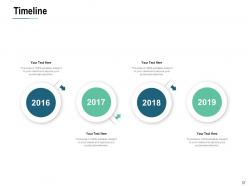
Slide 57: This is four years timeline slide.
Slide 58: This is mind map slide for representing entities.
Slide 59: This is Thank You slide with Email address, address and contact number.
Energy Consumption Management Powerpoint Presentation Slides with all 59 slides:
Use our Energy Consumption Management Powerpoint Presentation Slides to effectively help you save your valuable time. They are readymade to fit into any presentation structure.





FAQs for Energy Consumption Management
You'll need energy monitoring systems to track usage, plus data analytics software to spot where you're wasting power. Automated controls are key - they handle the real-time optimization stuff so you don't have to babysit everything. Good reporting dashboards help too, but honestly? The people side matters just as much. Staff training and clear policies make or break these systems. I'd say start with solid baseline measurements first since you can't really fix what you can't see. Goal-setting features and regular audits round it out, but that foundation data is what makes everything else actually work.
So first thing - get smart meters and sub-meters installed to track usage in real time across different areas. Your monthly utility bills are fine for double-checking but honestly they don't tell you much about what's actually happening day-to-day. Break down consumption by equipment or departments with monitoring systems. Way better insights that way. Energy management software handles the data collection automatically which is nice because who has time for that? Measure consistently so you catch patterns and weird spikes. Oh and start with whatever's sucking up the most power first, then expand from there.
Honestly, renewables are kind of a no-brainer at this point. Solar and wind are dirt cheap now - sometimes cheaper than fossil fuels, which blows my mind. You're not just checking a sustainability box anymore; you're actually saving money and protecting yourself from crazy oil price swings. Smart grids let you store power in batteries and use it strategically throughout the day. My cousin's company made the switch last year and their energy costs dropped like 30%. Bottom line: treat renewables as your main energy strategy, not some side project. It'll improve your flexibility and your finances.
Dude, the monitoring stuff nowadays is insane - smart meters and IoT sensors can track your energy use down to individual appliances. You'll catch waste you'd never notice otherwise. Machine learning even predicts when you'll hit peak usage and adjusts things automatically. Battery storage keeps getting better too, which helps balance everything out. Oh, and the grid management tools are way more sophisticated now. Start with monitoring your biggest energy hogs first - AC, water heater, that kind of thing. Then just expand from there once you see what's actually draining power.
Honestly, you gotta make it personal for people. Show them real numbers - how their actions actually cut costs and help the environment. People eat that stuff up. Set up competitions between departments (everyone's secretly competitive). Create "energy champion" roles so folks feel ownership. Regular updates through dashboards keep the momentum alive - can't let people forget about it. Here's the thing though: tie savings to what they actually care about. Company bonuses? Charity donations? Better office coffee? Whatever clicks with your team. Make those wins super visible and celebrate them loud. Oh, and definitely ask for their ideas - they'll surprise you with good ones.
First thing - grab like a year's worth of utility bills so you can see your actual usage patterns. Walk around with a checklist and look for the obvious stuff: crappy lighting, terrible insulation, ancient HVAC systems. You won't believe how many places have lights blazing in empty rooms all night long! For the complicated systems, maybe bring in a certified energy auditor. They've got thermal cameras and other fancy equipment that'll spot problems you'd totally miss. Just document everything and tackle the cheapest fixes with the biggest payoff first.
Honestly, these systems usually pay for themselves pretty quick through lower electric bills - like 10-30% savings which is solid. Peak demand charges are the worst, and you'll dodge those too. Most utilities throw rebates at you for installing them, so that cuts your upfront costs. Oh and if you're in some regulated industry, there's compliance stuff you might avoid later. I'd just look at what you're spending on energy now first - gives you a real number to work with. ROI is typically 1-3 years, sometimes faster depending on your usage.
So energy management is honestly your best bet for sustainability goals. It hits emissions and costs simultaneously - win-win. Most companies' carbon footprints are huge energy drains anyway. Smart meters are a good starting point, then get an audit done to see where you're actually wasting power. The cool part? ROI happens fast. You'll cut utility bills in months while working toward net-zero targets. Renewables help too, obviously. Executives eat this stuff up because the numbers work immediately - not like some environmental initiatives that take forever to show results. Track your consumption patterns and you'll spot the money pits pretty quickly.
Honestly, start simple or you'll drive everyone crazy. First figure out where you're at energy-wise, then set some realistic targets. Get someone to actually own this stuff - otherwise it just dies. Automatic shutoffs are clutch for lights and equipment. Remote work helps too if that's an option for you guys. When appliances break, replace them with efficient ones. The employee thing is huge though - run some kind of competition or give incentives. People get weirdly competitive about saving energy lol. Pick like one or two things to focus on first, see what actually works, then add more later.
Dude, it's like having an assistant that never sleeps. Your energy software pulls data from everywhere automatically - no more hunting through different systems or building reports from scratch. Real-time dashboards show you what's happening right now, plus you get alerts when something's off. Honestly, the compliance reporting alone is worth it (saves so much time). Instead of drowning in spreadsheets, you can actually focus on fixing problems and making things more efficient. My friend at the hospital says it freed up like 10 hours a week for her team.
Honestly, the hardest part is usually money and convincing your boss it's worth it. Equipment and training costs add up fast upfront. People hate change too - they'll fight new processes even when they make sense. Your executives probably want results next quarter, but energy projects take way longer to pay off than they'd like. Technical stuff gets complicated quick if your team doesn't know energy systems well. My advice? Start with easy wins like LED lights first. Build some momentum there, then tackle the bigger expensive stuff once you've proven it actually works.
First thing - figure out which regulations actually apply to your specific industry and building type. You'll need someone dedicated to track energy usage against standards like ISO 50001. Regular audits are a must, plus you've got to document everything (seriously, the paperwork is insane). Set up automated alerts so you don't miss compliance deadlines - these standards change all the time and it's easy to fall behind. The monitoring process doesn't have to be fancy, just consistent. Trust me, staying ahead of regulatory updates will save you major headaches later.
Think of data analytics as your personal energy detective. It'll catch patterns and waste that you'd never notice just eyeballing your bills. Peak usage times become obvious, plus you can spot which equipment is being a total energy hog. Real-time monitoring is where it gets good - no more staring at last month's statement wondering WTF happened. You can set up smart schedules and catch weird spikes before they wreck your budget. Honestly, comparing your facility to similar ones is pretty eye-opening too. Just collect some baseline data for a few weeks first, then hunt for the obvious peaks and valleys.
Honestly, saving 15-30% on energy bills isn't that hard. Walk around your place first and spot the obvious waste - lights nobody turned off, that loud old fridge that's probably from the 90s. LED bulbs make a huge difference, and those programmable thermostats are worth it. Oh, and power strips! Stuff draws power even when it's "off" which is annoying. Usually pays for itself in under two years. I started tracking my bill monthly because seeing the actual numbers drop is pretty satisfying.
Walmart's probably the best example - they cut energy use by 20% across like 6,000+ stores with LED lights and smarter HVAC systems. Saved them millions. Interface (that carpet company) went completely carbon neutral by 2020, which is pretty wild. Microsoft's data centers run entirely on renewables now too. Manufacturing companies tend to see the biggest returns though, from what I've seen. Oh, and definitely check out case studies in your specific industry first - they'll be way more useful than random examples since every sector's different.
-
Excellent products for quick understanding.
-
Designs have enough space to add content.
-
Excellent products for quick understanding.
-
Designs have enough space to add content.