


Energy Efficiency Powerpoint Presentation Slides




Try Before you Buy Download Free Sample Product
 Impress Your
 Audience
 100%
100% Editable
 Save Hours
 of Time


Grab our professionally created Low-Carbon Technologies PowerPoint presentation. This PPT bundle covers the importance, methods, benefits, and energy supply-demand chain framework for energy efficiency. Also, the Demand-Side Management DSM PPT presentation includes various energy-efficient technologies such as lighting, building envelope, appliances, heating, ventilation, and cooling systems. Furthermore, this Energy Management template caters to the different government policies and programs, metrics, measurement techniques, and measures for buildings. Moreover, this Energy Optimization deck comprises barriers to implementing measures, challenges, solutions, and best practices. It also includes the impact of integrating renewable energy and energy efficiency. Lastly, this Energy Conservation PowerPoint Presentation contains a training schedule, a budget, a timeline, a 30-60-90 days plan, a roadmap, and a dashboard. It also comprises the environmental impact and human impact of energy efficiency. Download our 100 percent editable and customizable template, which is also compatible with Google Slides.
People who downloaded this PowerPoint presentation also viewed the following :
Content of this Powerpoint Presentation
Slide 1: This slide introduces Energy Efficiency. State your company name and begin.
Slide 2: This is an Agenda slide. State your agendas here.
Slide 3: This slide shows Table of Content for the presentation.
Slide 4: This slide shows Table of Content for the presentation.
Slide 5: This slide gives an overview of energy efficiency that helps minimize energy usage, cuts waste, lowers cost, and boosts efficiency.
Slide 6: This slide represents the essential methods for using power efficiently, such as LED bulbs, windows, insulation, smart thermostats, and computer power management.
Slide 7: This slide showcases the advantages of energy efficiency, including cost savings, environmental and health benefits, resilience and reliability, and community pros.
Slide 8: This slide gives an overview of the energy supply-demand chain, and the components include energy resources, generators, energy carriers, conversion appliances, etc.
Slide 9: This slide shows Table of Content for the presentation.
Slide 10: This slide gives an overview of the energy-efficient building market, including the compound annual growth rate, regional analysis, key players, etc.
Slide 11: This slide describes the worldwide market analysis of energy efficient devices, covering forecasted CAGR rate, most significant market share, key drivers, etc.
Slide 12: This slide highlights the significant sectors that are sources of greenhouse gas emissions, including electricity, buildings, industry, transportation, etc.
Slide 13: This slide outlines the various sources of power and their contribution to carbon dioxide emissions, including nuclear, natural gas, coal, and more.
Slide 14: This slide shows Table of Content for the presentation.
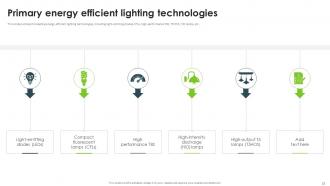
Slide 15: This slide outlines the leading energy-efficient lighting technologies, including light-emitting diodes, CFLs, high-performance T8S, T5HOS, HID lamps, etc.
Slide 16: This slide describes energy-efficient building envelope technologies such as roof and wall insulation, reduced air infiltration, windows, and glazing, etc.
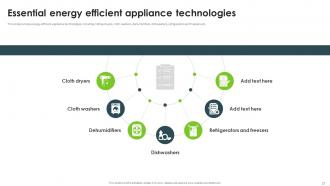
Slide 17: This slide outlines energy-efficient appliance technologies, including clothes dryers, cloth washers, dehumidifiers, dishwashers, refrigerators and freezers etc.
Slide 18: This slide showcases energy-efficient heating, ventilation, and cooling systems, including air conditioning, boilers, furnaces, ventilation fans, and more.
Slide 19: This slide represents energy-efficient water heating technologies such as electric storage water heaters, natural gas water heaters, gas storage, etc.
Slide 20: This slide describes the primary energy-efficient control technologies to control lighting, smart meters, heating, ventilation, and air conditioning.
Slide 21: This slide shows Table of Content for the presentation.
Slide 22: This slide showcases the various government policies and programs for energy efficiency, such as appliance standards, building codes, commissioning, and so on.
Slide 23: This slide outlines the financing and incentive programs for energy efficiency, such as providing loan services, home repairs, and LIHEAP programs.
Slide 24: This slide shows Table of Content for the presentation.
Slide 25: This slide outlines the critical energy efficiency metrics to measure the industrial process performance, such as energy intensity, specific energy consumption, etc.
Slide 26: This slide describes energy efficiency measurement techniques such as direct measurement, indirect measurement, and data analysis.
Slide 27: This slide outlines the energy efficiency measures for buildings including assessing building energy efficiency standards, visualizing energy consumption patterns, etc.
Slide 28: This slide shows Table of Content for the presentation.
Slide 29: This slide showcases the primary barriers to deploying energy efficiency measures, including policy and regulations barriers, limited awareness, etc.
Slide 30: This slide illustrates the main challenges for energy efficiency programs, including regulatory and policy, informational, market, technical, and financial barriers.
Slide 31: This slide showcases the challenges and solutions related to energy efficiency program deployment, such as limited awareness, high initial cost, etc.
Slide 32: This slide shows Table of Content for the presentation.
Slide 33: This slide showcases the best practices for effective energy efficiency, including embracing different policies, fostering awareness, advocating energy auditing, etc.
Slide 34: This slide shows Table of Content for the presentation.
Slide 35: This slide outlines the impact of combining renewables and energy efficiency for users and the environment, such as energy savings, improved resilience, etc.
Slide 36: This slide describes the advantages of combining renewable and energy efficiency, such as economic benefits, employment opportunities, energy self-sufficiency, etc.
Slide 37: This slide shows Table of Content for the presentation.
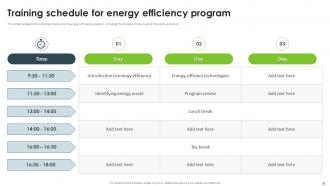
Slide 38: This slide represents the training schedule for the energy efficiency program, including the modules to be covered, time slots, and so on.
Slide 39: This slide showcases the various components of the training budget, such as instructor's cost, training material cost, and so on.
Slide 40: This slide outlines the implementation budget for energy efficiency program that includes the expense categories, and estimated cost.
Slide 41: This slide shows Table of Content for the presentation.
Slide 42: This slide outlines the 30 60 90 days plan to implement energy efficiency program and it includes all the tasks that should be performed in 30 days interval.
Slide 43: This slide represents the timeline for deploying the energy efficiency program, and the main steps include planning, strategy development, budgeting, etc.
Slide 44: This slide presents the roadmap for integrating energy efficiency plans, and the main steps include assessment and planning, implementation, strategy, etc.
Slide 45: This slide highlights the energy consumption monitoring and tracking dashboard, and the components include consumption by room, cooling, security, and more.
Slide 46: This slide presents the energy consumption monitoring and tracking dashboard, and the components include power, air, water, energy and so on.
Slide 47: This slide shows Table of Content for the presentation.
Slide 48: This slide showcases the impact of energy efficiency on the environment, such as reducing greenhouse gas emissions, decreasing pollution, and so on.
Slide 49: This slide represents the impact of energy efficiency on humans, such as reducing respiratory illnesses, long-term availability of resources, and reduced health risks.
Slide 50: This slide shows Table of Content for the presentation.
Slide 51: This slide outlines the case study for the energy efficiency program, including components such as overview, challenges, solutions, and outcomes.
Slide 52: This slide is titled as Additional Slides for moving forward.
Slide 53: This slide shows all the icons included in the presentation.
Slide 54: This slide shows Post It Notes for reminders and deadlines. Post your important notes here.
Slide 55: This is a Timeline slide. Show data related to time intervals here.
Slide 56: This slide presents Roadmap with additional textboxes. It can be used to present different series of events.
Slide 57: This is a financial slide. Show your finance related stuff here.
Slide 58: This slide presents Bar Graph with two products comparison.
Slide 59: This is Our Goal slide. State your firm's goals here.
Slide 60: This slide contains Puzzle with related icons and text.
Slide 61: This is a Thank You slide with address, contact numbers and email address.
Energy Efficiency Powerpoint Presentation Slides with all 69 slides:
Use our Energy Efficiency Powerpoint Presentation Slides to effectively help you save your valuable time. They are readymade to fit into any presentation structure.















FAQs for Energy Efficiency
Get a home energy audit first - seriously, it's like $200 and shows you exactly where your money's disappearing. Insulation and sealing air leaks give you the biggest bang for your buck. HVAC upgrades are pricey but worth it if your system's ancient. LED bulbs and programmable thermostats? Easy wins that'll pay themselves off in like six months. Windows cost a fortune but if yours are from the 90s (or worse), they're probably bleeding energy. Smart water heaters help too. Don't overthink the order though - just tackle whatever'll save you the most cash first.
Basically, using less energy means power plants don't have to burn as much coal and gas to make electricity. Your heating system runs less, appliances use less juice, cars get better mileage - all that adds up. Honestly, it's probably the simplest way to cut emissions without changing your whole lifestyle. Those LED bulbs everyone talks about? They actually work. So do programmable thermostats, though I waited way too long to get one. The whole thing is pretty straightforward math - less energy used means less stuff getting burned to make it.
Dude, it's like having a brain for your whole building that just handles energy stuff automatically. The system watches your lights, heating, cooling, when people are actually around - then tweaks everything without you doing anything. I mean, smart thermostats by themselves can drop your heating/cooling bills 10-15%, which honestly isn't terrible. It picks up on how you use things and stops wasting energy on empty rooms. Oh and the learning thing is pretty cool too - it figures out your patterns over time. I'd probably start with smart thermostats and those occupancy sensors since they're cheap and pay for themselves fast.
First things first - grab your last few utility bills and start tracking monthly usage. I use a basic spreadsheet but there's energy management software if you're fancy. Track consumption per square foot or per production unit, whatever makes sense for your business. My last company kept switching how they measured things every few months which was honestly a nightmare - pick one method and stick with it. Calculate your energy intensity ratios. Set some realistic reduction targets. Maybe compare against similar businesses too. Seriously though, start this month. Can't fix what you don't track, and the data will show you where to invest next.
Your bills drop immediately - these things use way less power, like 10-50% less than regular ones. Takes about 2-3 years to break even on the higher price, but then it's all savings after that. Check your utility company's site first though, they usually have rebates that make the sticker shock less painful. Oh and they break down less often too, which is honestly just as important as the energy savings. Free money from tax credits doesn't hurt either. I actually wish I'd switched sooner - my old fridge was basically an electricity vampire.
LED lighting is probably your biggest win - I swapped ours out last year and wow, the difference was real. Motion sensors are clutch too, especially in bathrooms and conference rooms where people always forget to turn stuff off. Programmable thermostats will save you money without anyone even noticing. Check for air leaks around windows first though - that's free and takes like an hour. Energy-efficient appliances help but they're pricier upfront. Honestly I'd start with lighting and go from there based on what you can afford.
So here's the deal - when you make your place more energy efficient, you're actually cutting down on air pollution from power plants. Better ventilation means less gross stuff floating around inside too. Your respiratory system will definitely notice the difference. The money you save on bills? That can go toward better food or healthcare instead of utility companies (which honestly feels way better). Efficient homes stay at more stable temps, which is huge for older people who struggle with heat waves. I'd start with weatherstripping and maybe upgrade appliances when they die. It's one of those rare things that helps your health AND your bank account.
Smart heat pumps are wild right now - they actually learn your habits and adjust automatically. Solar panels hit 26%+ efficiency which is insane compared to older ones. Those windows that tint themselves based on sunlight? Straight up feels like living in the future. AI building systems are getting really good too, though honestly I'm still figuring out half of what mine does. Solid-state batteries crush regular lithium-ion for longevity. Before you buy anything though, definitely check what rebates your utility offers - sometimes they'll cover like half the cost of smart thermostats.
Oh man, you should totally get an energy audit! They'll find all sorts of crazy stuff - inefficient equipment, terrible insulation, lighting that's burning money. I swear companies are always blown away by the results. You're looking at probably 10-30% savings once you fix things. The auditor ranks everything by cost and impact too, which is super helpful since you don't have to guess what to do first. My buddy's company found out their HVAC was basically hemorrhaging energy. Get quotes from certified auditors nearby and see what they dig up.
Oh totally! Federal tax credits are huge right now - like 30% back on solar panels, heat pumps, that kind of stuff. Your state probably has rebates too, and don't sleep on utility company incentives for efficient appliances. Programs change all the time though which is honestly annoying to keep track of. I'd hit up your state energy office website first, then check dsireusa.org - they've got everything mapped out by location. Worth doing this search every year since new stuff pops up constantly.
Honestly, just getting people to turn off their monitors and unplug stuff when they leave makes a massive difference. The thermostat thing is tricky - even one degree gets people fired up, but it's probably your biggest energy saver. Double-sided printing helps too. During the day, try using natural light instead of all the overheads. Oh, and those little reminder signs by light switches? They actually work better than you'd think. Getting everyone to power down equipment at night is where you'll see real results though. Nothing fancy needed - just basic habits that add up.
Ugh, the money thing is always the worst part - bosses hate spending cash now for savings that won't show up for like 2-3 years. Old equipment's a pain to replace too. Plus your coworkers will probably whine about learning new systems (people are so stubborn about change). Compliance stuff makes everything more complicated. Honestly though? Just start tiny. LED bulbs, maybe a smart thermostat - boring stuff that saves money fast. Once you've got some wins on paper, it's way easier to pitch the bigger projects. Works every time.
Dude, transportation is seriously one of the best ways to cut emissions and save cash. Electric cars, hybrids, better route planning - all of it directly slashes fuel use and those nasty greenhouse gases. Gas prices are brutal right now anyway! Transportation makes up like 29% of U.S. emissions, which is wild when you think about it. For your company fleet, I'd start by checking how efficient your current vehicles are. Then maybe try electric for shorter routes first - that's usually the easiest win.
Honestly, your materials matter way more than most people think. Insulation is huge – spray foam or good batts will save you tons. Steel studs are sneaky efficiency killers though, they create thermal bridges that let heat escape. Windows are where I see everyone screw up royally – those cheap single-pane ones will absolutely wreck your electric bill. Brick and concrete are solid for keeping temperatures stable, just make sure you've got insulation behind them. Start with sealing up gaps and getting continuous insulation right. Then worry about window upgrades.
Definitely check out ENERGY STAR first - their calculators are actually pretty useful and not boring like you'd expect. Your utility company probably does free energy audits (most people have no clue about this). The Department of Energy site has tons of info, though it can be a bit overwhelming. YouTube's surprisingly good for DIY energy stuff too. Oh, and community colleges sometimes run workshops on the basics. I'd start with ENERGY STAR's home checklist since it gives you quick wins you can knock out in a weekend.
-
Content of slide is easy to understand and edit.
-
Innovative and Colorful designs.