

Solar Power Project Proposal Powerpoint Presentation Slides





Try Before you Buy Download Free Sample Product
 Impress Your
Audience
 100%
Editable
 Save Hours
of Time


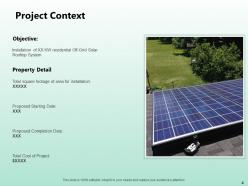
The conversion of energy from sunlight into electricity is known as solar power. It is a renewable source of energy, so it generates electricity from natural resources. Solar power mainly uses photovoltaic panels that transform sunlight into direct electric power. These panels are generally mounted on the rooftops of buildings or in the solar forms. Solar power consumes less electricity and so, it is beneficial to the people as well as to the environment. The ones who are running their solar power business can pitch their services to the people by using readymade proposals. Design an impressive proposal for your clients and provide them with the best services by using our topic-specific Solar Power Project Proposal PowerPoint Presentation Slides. You can design an interactive cover letter for your landing page with the help of this visually-attractive solar energy proposal PPT layout. The solar power project proposal presentation template includes a table of contents that showcase the project context, scope of work, system configuration & costing, activity schedule, types of solar panels, statement of work & contract, etc. In the scope of the work section, you can include the system design & engineering, supply of all project-related material, pedestal and cable conduit fittings, installation & commissioning of all electrical components, and project planning & controlling. Take the assistance of our attention-grabbing solar energy services proposal PowerPoint theme to highlight the types of solar panels you offer such as monocrystalline solar panels, polycrystalline solar panels, and thin-film panels. With the help of this outwardly engaging proposal PPT slide, you can show your viewers the structural diagram of the solar system your company offers. Use the power project proposal PowerPoint presentation to portray the solar system solutions your company provides like a grid-tied system, an off-grid system, and a hybrid system. You can properly explain the activity schedule for solar power project services that consist of the site survey, design layout, site preparation, and installation. So, download our ready-to-use Project Proposal ppt now.
People who downloaded this PowerPoint presentation also viewed the following :
Solar Power Project Proposal Powerpoint Presentation Slides with all 30 slides:
Our Solar Power Project Proposal Powerpoint Presentation Slides allow you choice in any field. They assure you alternatives galore.




FAQs for Solar Power Project Proposal
Start with the site assessment - everything else builds off that data. Your proposal needs five key pieces: sun exposure analysis, system design with panel/inverter specs, financial projections (ROI, payback periods), permitting stuff, and timeline. Solar prices are all over the place right now, so double-check your cost estimates aren't outdated. The money section gets picked apart the most, honestly - spend extra time there. Don't forget maintenance requirements and warranties either. I'd probably frontload the financial benefits since that's what most people actually care about.
So here's what worked for me - focus on payback period, NPV, and IRR for your proposal. Calculate upfront costs (equipment, installation, permits) versus energy savings over 20-25 years. Those solar salespeople always say "zero maintenance" but that's BS - factor in maintenance and equipment replacements too. Local utility rates matter huge, plus tax incentives and financing options change everything. Run different energy price scenarios so you're covered if rates spike or drop. Present two financing options minimum so stakeholders can pick what works. Oh, and don't forget permits can be pricier than expected depending on your area.
Look, those government incentives are honestly what make the whole thing work financially. Right now you can get 30% back from the feds through the tax credit, plus whatever your state throws in - some places are way better than others though. I've seen total incentives hit 40-50% of your upfront costs. Without that stuff? Your payback period gets brutal and most investors just walk away. You definitely want to build these numbers into your proposal from day one since they'll make or break whether you get the green light. Location really is everything with solar.
First thing - grab solar irradiance data for your potential sites to see how much sun they're actually getting year-round. Land costs matter too, obviously. Grid connections are huge though, you don't want to be miles from existing infrastructure. Oh and check permitting requirements super early because some places are absolutely brutal about that stuff. Terrain slope, nearby shading from buildings or trees, whether construction trucks can even get there - all that needs factoring in. I'd honestly run full numbers on like 3-5 spots minimum before picking one.
Hey! So for the environmental stuff, definitely hit land use first - what's there now and how much space you're taking. Wildlife disruption is huge, especially near migration paths. Water usage for cleaning panels matters more than people think. Visual impact and glare complaints from neighbors can kill projects fast, trust me. End-of-life recycling plans show you're not just dumping problems on future generations. Oh, and mitigation strategies for each issue - regulators eat that up. Honestly, the more you show you've thought through the whole lifecycle, the smoother your approval process will be.
Okay so first thing - figure out who all your stakeholders are. Local folks, regulators, utility companies, landowners, environmental groups, the whole crew. Get them involved super early, like way before you file anything official. Town halls work great, maybe set up some advisory committees too. Actually listen to what people are saying instead of just pitching your idea at them. Trust me, I bombed this on my last project lol. Document everything and show how you're tweaking things based on their input. Be upfront about the good and bad from the start. Regular updates help too so nobody gets caught off guard later.
Smart inverters are huge right now - definitely lead with those. Also energy storage and AI monitoring systems, those three are what everyone wants to see. Bifacial panels are pretty hot too since they grab light from both sides, which is honestly pretty cool tech. Predictive maintenance stuff will impress them, especially if you're tying into existing grid infrastructure. IoT sensors for tracking performance? That's just expected now. The key is showing how all this cuts operational costs long-term. That's what actually gets the budget approved at the end of the day.
Track your system's capacity factor and energy output first - that's the real test of whether your panels are doing their job. Financial stuff matters just as much though: payback period, ROI, cost per kWh. Maintenance costs can sneak up on you if you're not careful! I'd also measure environmental impact like CO2 offset. Honestly, a monthly dashboard makes tracking way easier - you'll spot problems before they get expensive. Oh, and don't forget uptime percentage. Short downtime periods can really mess with your numbers.
Break it down into phases with clear milestones - kickoff, site assessment, design, engineering, then permitting (ugh, this part ALWAYS drags). After that you've got procurement, installation, and commissioning. Residential usually takes 6-12 months total, commercial is way longer. Build in buffer time because weather and permit delays happen constantly. Focus on the critical path stuff that'll mess up your whole timeline. Oh, and definitely show them a visual timeline or Gantt chart - clients eat that stuff up. Makes everything feel more legit and organized.
So there's definitely some stuff to watch out for. Weather can mess with your energy output, obviously. Equipment breaking down or becoming outdated will hurt your returns too. Policy changes are probably the biggest wildcard - government shifts can totally screw over solar projects. Then you've got all the bureaucratic headaches like permitting delays and grid connection issues. Oh, and land disputes sometimes pop up. Financial stuff matters too - energy prices fluctuate and funding isn't always easy to get. Construction delays happen more than you'd think, plus supply chain problems are still a thing. I'd make a list ranking everything by how likely it is and how bad it'd be, then figure out how to handle the worst ones first.
Hey! So definitely lead with the money stuff - job numbers, tax revenue, what residents will save on energy bills. That's what grabs people. Be super specific though, like "20 construction jobs over 8 months" instead of some vague BS. Environmental benefits are worth mentioning too since people actually give a damn about that now. Oh, and if you can snag letters from local groups, do it. Shows you're not just some outsider trying to make a quick buck. Timeline and scale matter way more than you'd think. Numbers plus real voices = winning combo.
Honestly, break it down into three main things: upfront costs (with real numbers), realistic payback times, and don't oversell the energy savings. I always do best/worst/likely scenarios now - people see right through the overly sunny projections. Show your work too - where you got electricity rates, equipment costs, all that stuff. Charts help a ton for visualizing cash flow over time. Oh, and don't forget maintenance costs! Everyone overlooks those. My rule is basically under-promise on the savings side and be super transparent about what could go wrong from day one.
Dude, definitely partner up with local groups early on. Community buy-in is everything for solar - I've seen projects tank because neighbors complained to city council. Nonprofits and chambers already have trust built up that would take you forever to earn. They know which city councilors are pro-environment, who to schmooze at planning meetings, all that insider stuff. Environmental groups especially love solar projects (obviously). Don't just slap their logo on your proposal though - give them actual roles or they'll see right through it. Start reaching out now while you're still planning.
Ugh, the permitting process is honestly a pain. Local zoning and building permits come first - your city or county handles those. Some places are way more chill about it than others. Your utility company needs to approve the interconnection too. Bigger projects need environmental reviews, which is fair I guess. State permits are all over the map - most want some renewable energy certification thing. Federal stuff only matters if you're near wetlands or protected areas. Seriously though, start mapping this out now because it always takes forever. Like, way longer than they tell you.
Just start with hard numbers - tell them "7-year payback, then 15% savings every year after." That's what they actually want to hear first. Break everything down super simple: what it costs upfront, yearly energy savings, maintenance stuff, tax breaks. Spreadsheets work great if you don't make them overwhelming. Graphs showing savings over time hit way harder than paragraphs of explanations. Here's the thing though - don't oversell it. Give them conservative numbers AND the optimistic ones. You'll want three scenarios: worst case, realistic, and best case. Trust me, they'll respect you more for being honest about the range.
-
good
-
good
-
nice presentation