Innovation Program Powerpoint Ppt Template Bundles

Rating:
90%
Slide 1 of 17

or

Favourites Favourites

Try Before you Buy Download Free Sample Product

Audience Impress Your
Audience
Editable 100%
Editable
Time Save Hours
of Time
The Biggest Sale is ending soon in
0
0
:
0
0
:
0
0
Rating:
90%
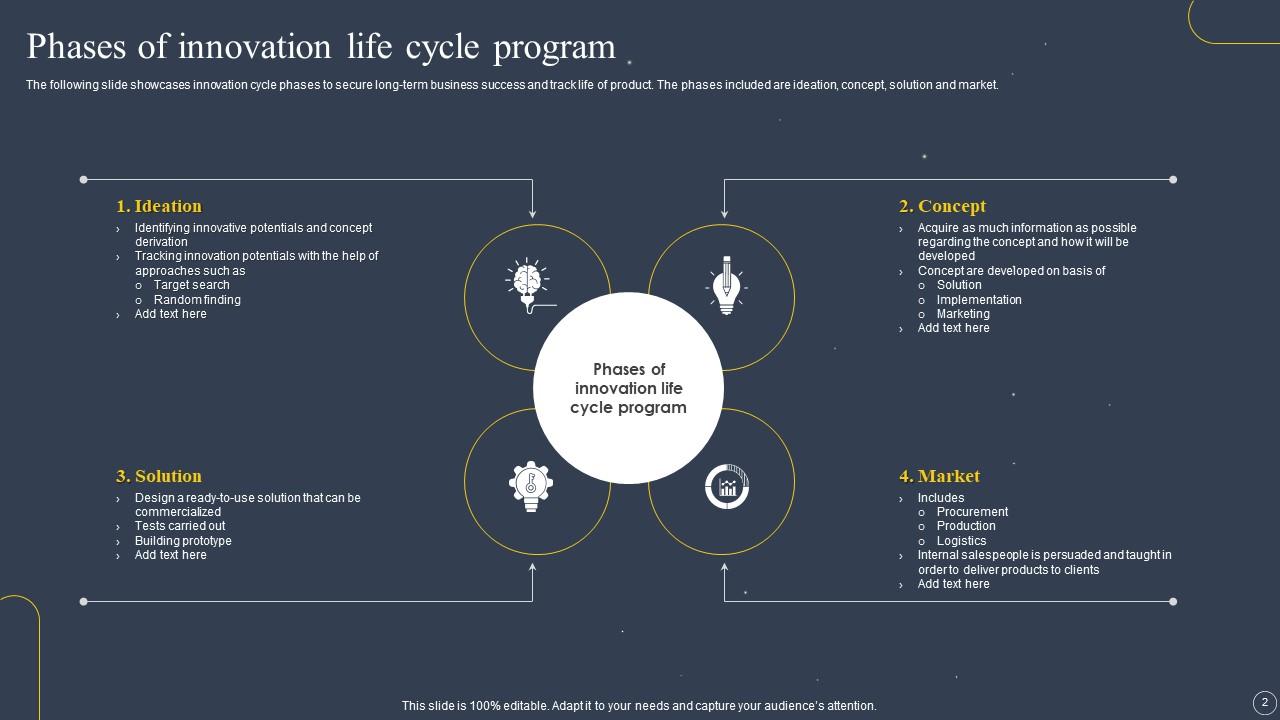
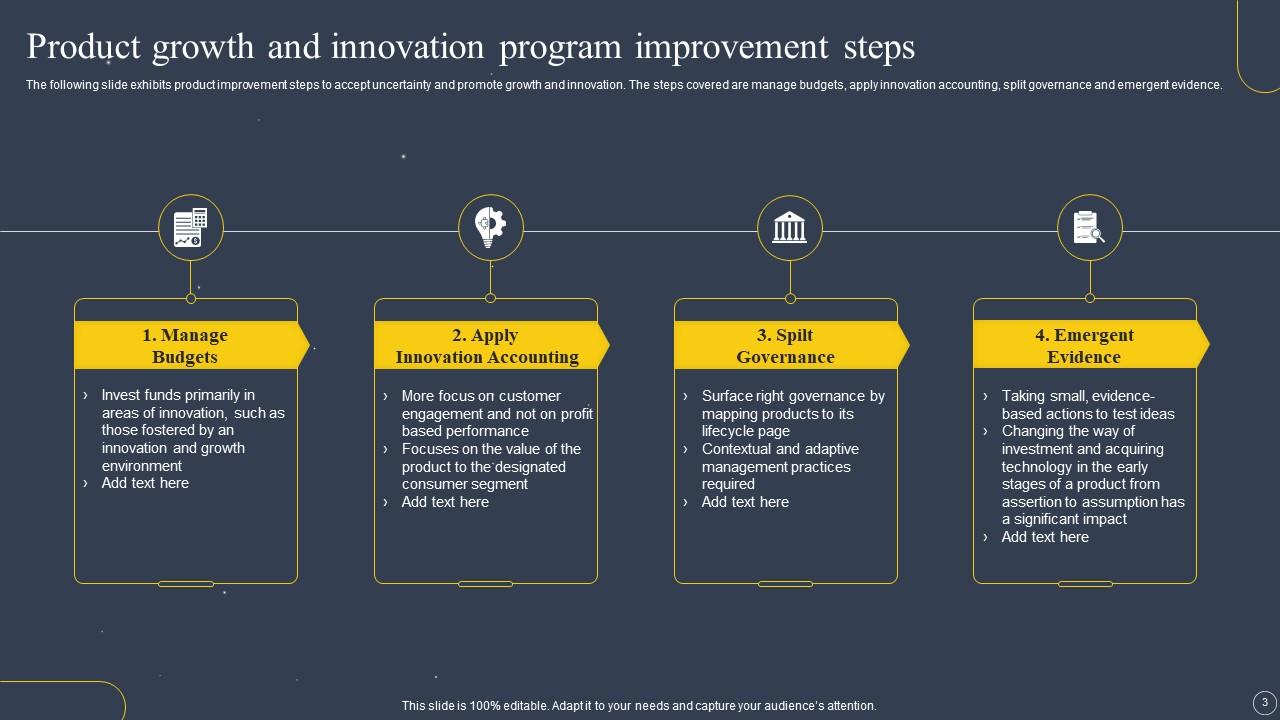
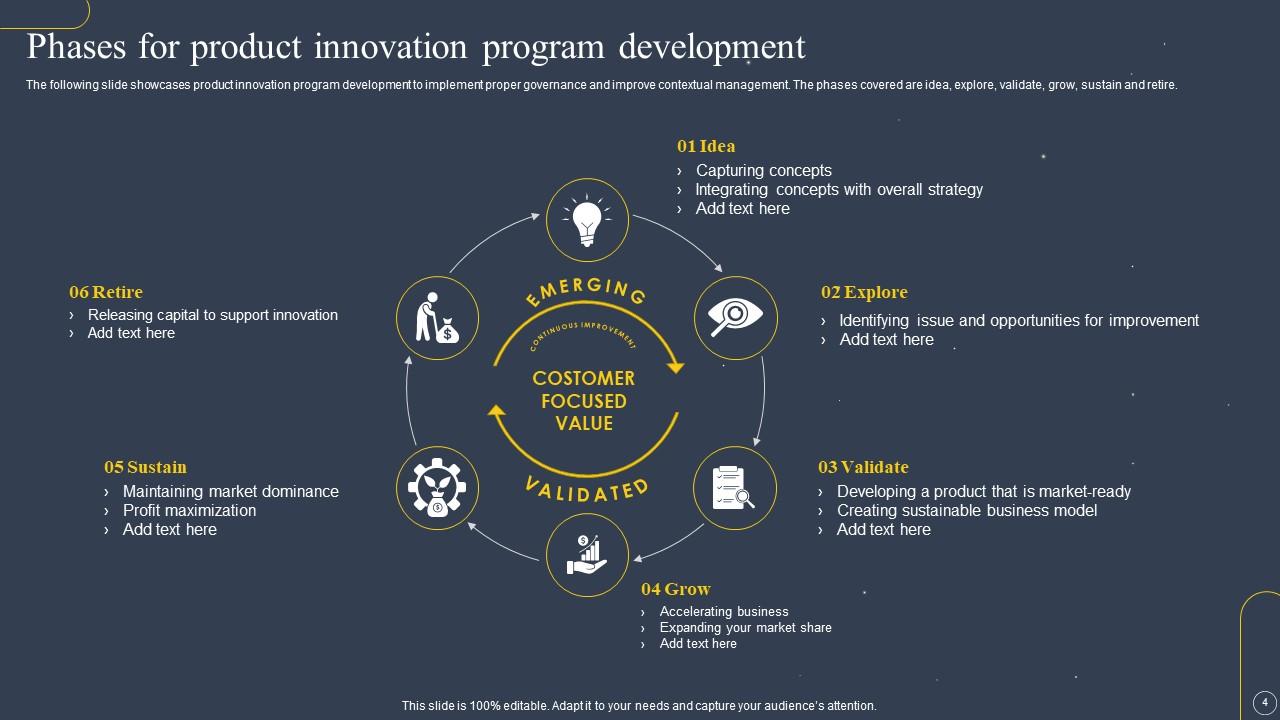
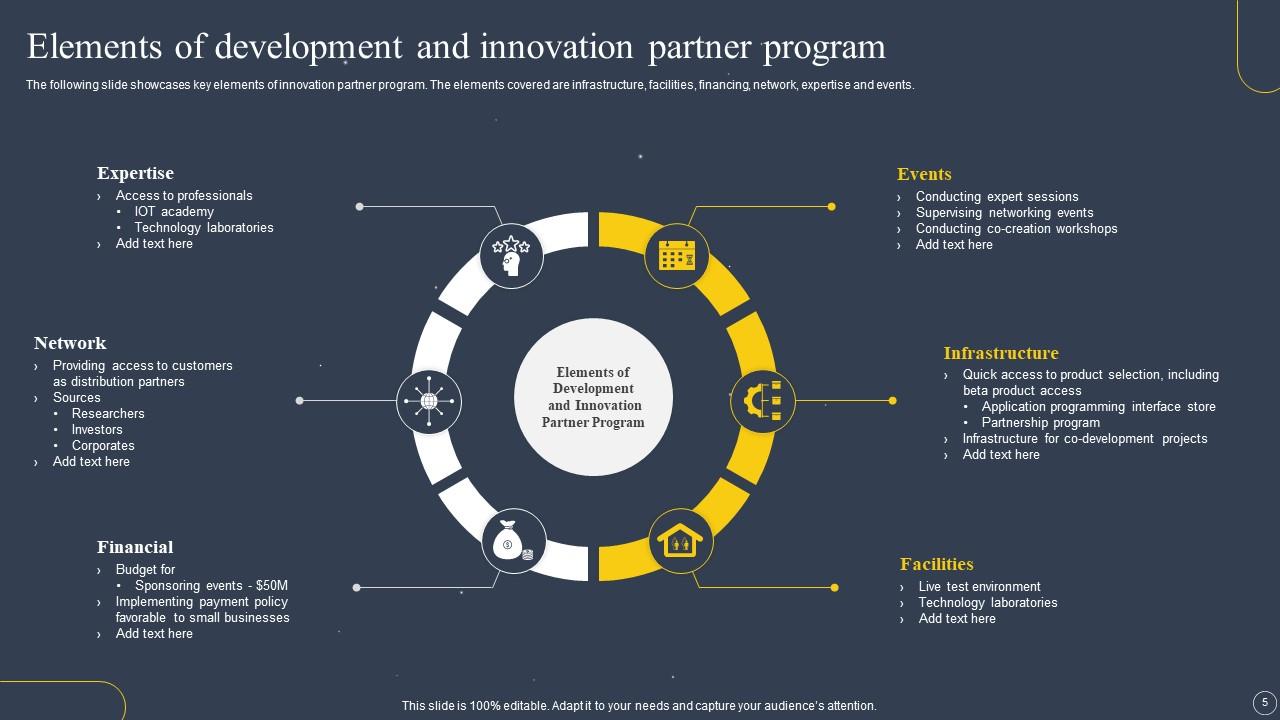
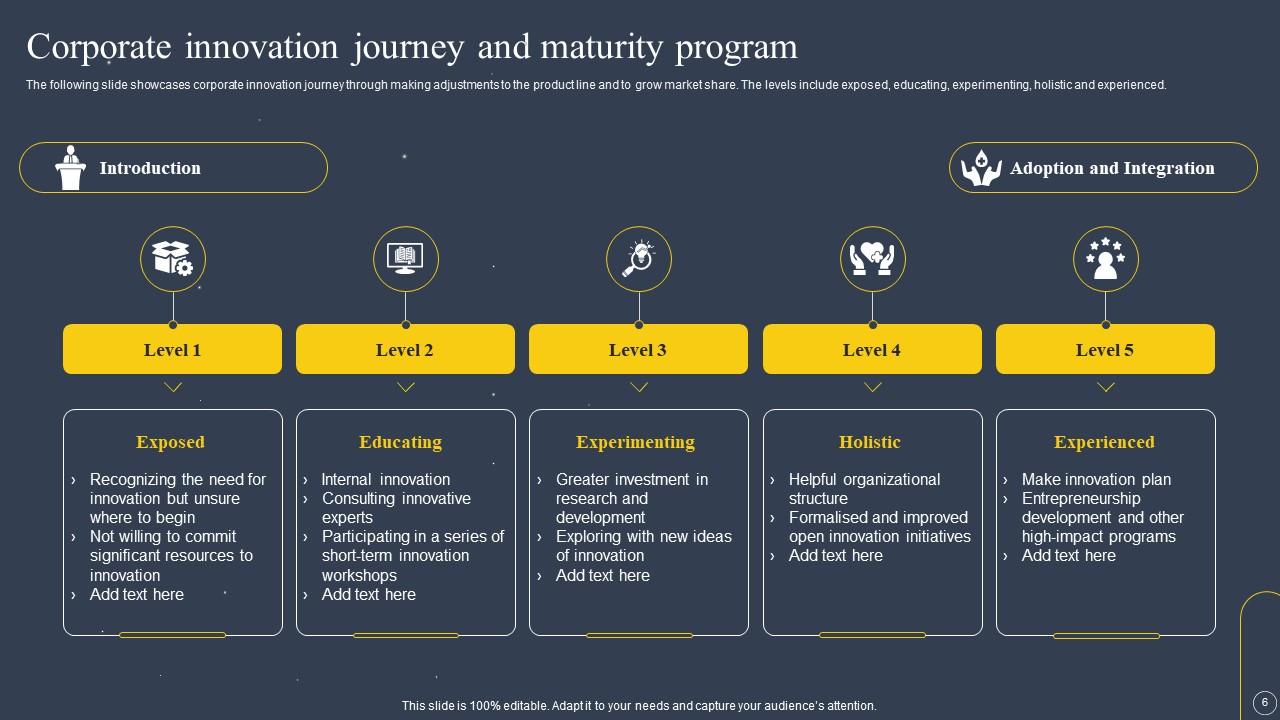
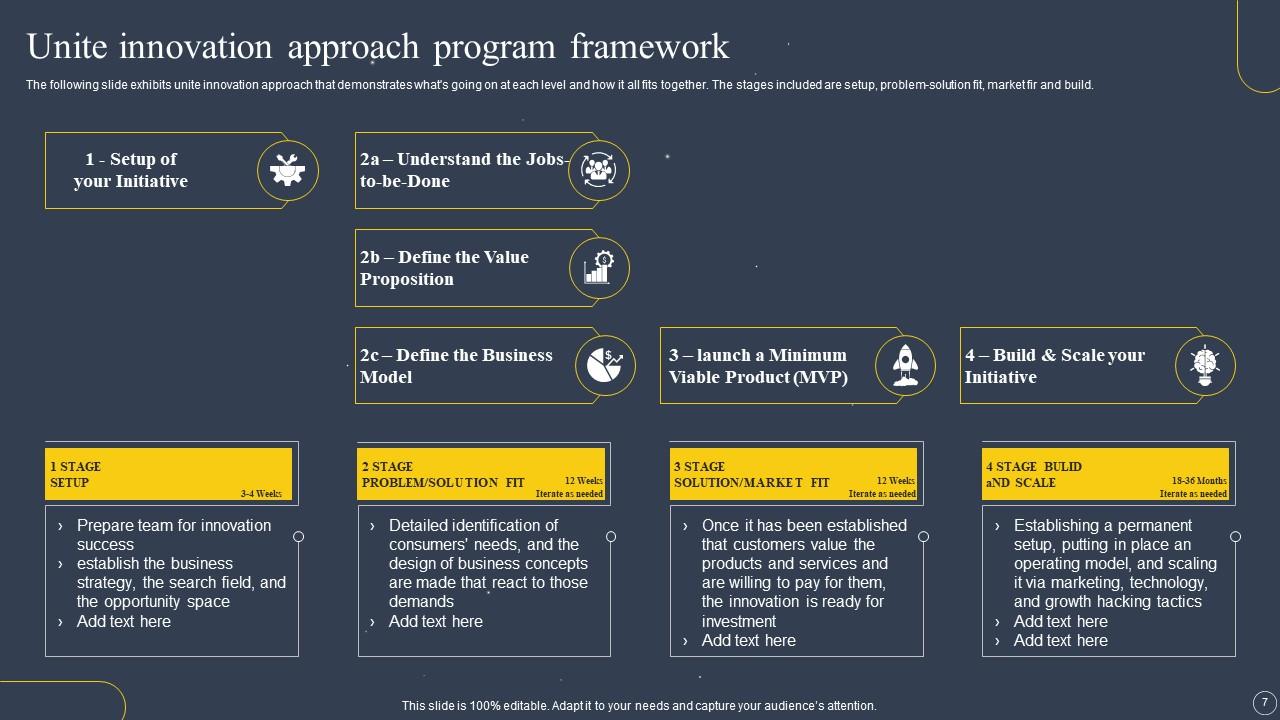
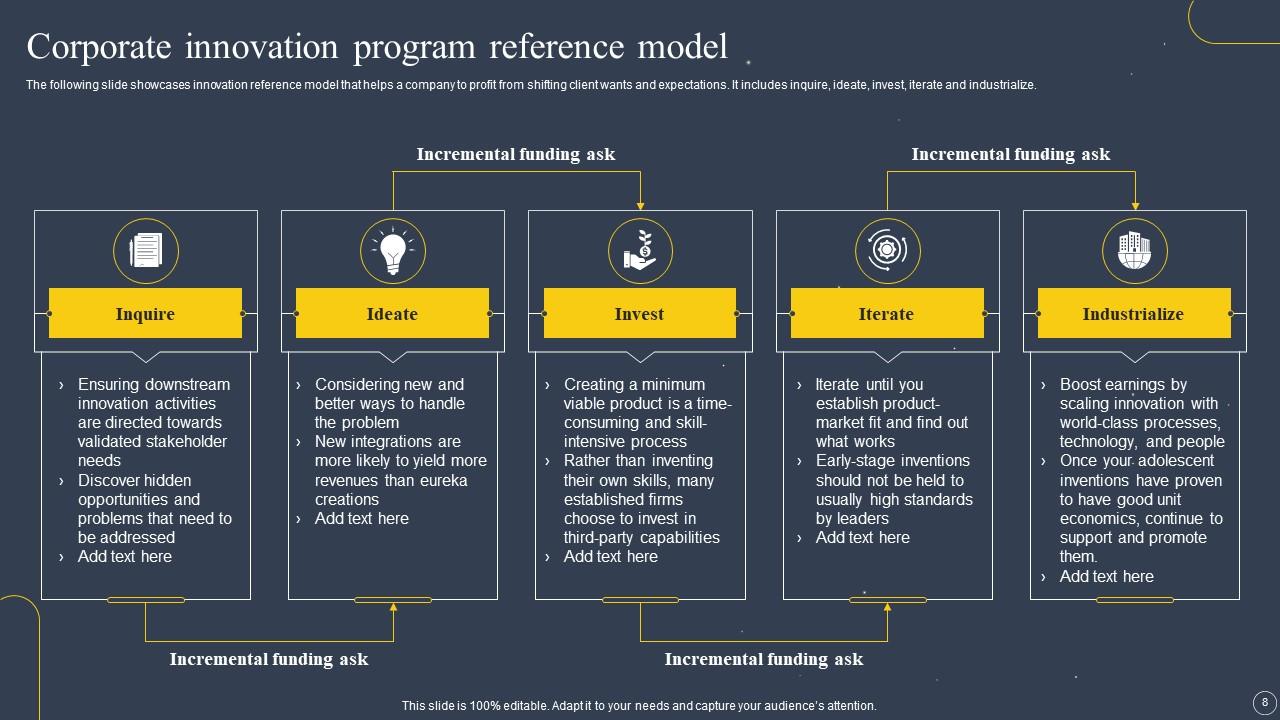
Engage buyer personas and boost brand awareness by pitching yourself using this prefabricated set. This Innovation Program Powerpoint Ppt Template Bundles is a great tool to connect with your audience as it contains high-quality content and graphics. This helps in conveying your thoughts in a well-structured manner. It also helps you attain a competitive advantage because of its unique design and aesthetics. In addition to this, you can use this PPT design to portray information and educate your audience on various topics. With twelve slides, this is a great design to use for your upcoming presentations. Not only is it cost-effective but also easily pliable depending on your needs and requirements. As such color, font, or any other design component can be altered. It is also available for immediate download in different formats such as PNG, JPG, etc. So, without any further ado, download it now.

FAQs for Innovation Program Powerpoint

Successful innovation programs include clear strategic alignment, dedicated resources and leadership, structured ideation processes, rapid prototyping capabilities, and robust measurement frameworks. These components work together by fostering organizational creativity, accelerating time-to-market for new solutions, and enabling systematic risk management, with many companies finding that strategic combination ultimately delivers sustainable competitive advantage and enhanced market responsiveness.

Measuring innovation program impact involves tracking revenue from new products, time-to-market improvements, cost reductions, and employee engagement metrics alongside traditional ROI calculations. Through balanced scorecards and innovation dashboards, organizations monitor patent applications, prototype success rates, and customer satisfaction scores, with many companies finding that combining financial metrics with strategic innovation indicators delivers comprehensive performance insights.

Company culture serves as the foundation for innovation by encouraging risk-taking, collaboration, open communication, psychological safety, and continuous learning throughout the organization. Organizations with innovation-focused cultures empower employees to experiment and share ideas freely, while providing resources and recognition for creative problem-solving, ultimately delivering breakthrough products, improved processes, and sustained competitive advantage in dynamic markets.

Leaders can effectively encourage participation in innovation initiatives by creating psychological safety for experimentation, offering dedicated time and resources, recognizing both successes and valuable failures, and establishing clear pathways from ideas to implementation. Through transparent communication and cross-departmental collaboration, organizations streamline idea-sharing processes while providing mentorship and skill development, ultimately delivering higher employee engagement and breakthrough solutions that enhance competitive advantage.

Common implementation challenges include resistance to change, insufficient resource allocation, lack of clear objectives, inadequate leadership support, and difficulty measuring success. While these obstacles can seem daunting, many organizations find that strategic planning, employee engagement initiatives, and phased rollouts help streamline adoption, ultimately delivering enhanced competitive advantage and sustainable growth.

Organizations balance risk and reward in innovation by diversifying portfolios across incremental improvements, breakthrough initiatives, and disruptive ventures, while establishing clear metrics and governance frameworks. Through staged funding approaches and pilot programs, companies like 3M and Google systematically test concepts before scaling, ultimately enabling calculated experimentation that drives competitive advantage without jeopardizing core operations.

Innovation program metrics should include idea generation volume, conversion rates from concept to implementation, time-to-market for new initiatives, revenue from innovation projects, and employee participation levels. These measurements enable organizations to track both quantity and quality outcomes, with many companies finding that combining financial indicators like ROI with engagement metrics delivers comprehensive program visibility and strategic competitive advantage.

Cross-departmental collaboration enhances innovation programs by combining diverse expertise, breaking down silos, and accelerating idea development through shared resources and perspectives. When marketing, R&D, operations, and finance teams collaborate seamlessly, organizations streamline product development cycles, reduce implementation barriers, and deliver more market-relevant solutions, ultimately creating competitive advantages through comprehensive innovation approaches.

Customer feedback can be integrated through systematic collection methods, cross-functional review processes, rapid prototyping cycles, and direct co-creation sessions with key clients. These approaches enable organizations to validate concepts early, reduce development risks, and accelerate market-ready solutions, with many companies finding that customer-driven innovation delivers higher adoption rates and competitive advantage.

Tools facilitating innovative thinking include collaborative platforms like Miro and Mural, AI-powered brainstorming software, design thinking frameworks, and digital whiteboarding solutions. These technologies streamline idea generation, enable cross-functional collaboration, and accelerate concept development, with many organizations finding that combining multiple platforms ultimately delivers enhanced creativity and faster innovation cycles.

Fostering innovation requires establishing psychological safety, providing dedicated resources, and implementing structured processes that support creative risk-taking. Organizations can enhance creativity by creating cross-functional teams, allocating time for exploration projects, offering failure tolerance policies, and establishing innovation labs, with many companies finding that regular brainstorming sessions and prototype funding ultimately deliver breakthrough solutions and competitive advantages.

Best practices for sustaining long-term innovation include establishing dedicated innovation budgets, creating cross-functional teams, implementing structured idea management systems, fostering psychological safety, and maintaining executive sponsorship. These approaches streamline innovation by encouraging continuous experimentation, reducing bureaucratic barriers, and aligning resources with strategic goals, with many organizations finding that consistent investment and cultural support ultimately deliver sustained competitive advantage.

Organizations can effectively pivot their innovation strategy by continuously monitoring market trends, reassessing customer needs, reallocating resources toward emerging opportunities, and fostering agile decision-making processes. Through strategic combination of data analytics, cross-functional collaboration, and rapid prototyping, companies streamline adaptation while maintaining competitive advantage, with many finding that flexible innovation frameworks ultimately deliver faster market responsiveness and sustainable growth.

Diversity drives innovative ideas by bringing together varied perspectives, experiences, cultural backgrounds, problem-solving approaches, and cognitive styles that challenge conventional thinking. These diverse teams enhance creativity, identify market opportunities across different demographics, and develop comprehensive solutions, with many organizations finding that inclusive innovation programs deliver breakthrough products and competitive advantages in increasingly global markets.

Startups can leverage innovation programs by accessing mentorship, funding opportunities, collaborative networks, accelerated development resources, and market validation frameworks. These programs enable smaller companies to rapidly prototype solutions, connect with industry experts, and scale operations more efficiently, while established partnerships often provide crucial market access and credibility that helps startups compete effectively against larger competitors.

Ratings and Reviews

90% of 100
Review Form
Write a review
Most Relevant Reviews
  1. 80%

    by Conrad Romero

    Excellent Designs.
  2. 100%

    by Dylan Richards

    “Love it! I was able to grab an exciting proposal because of SlideTeam.”

2 Item(s)

per page: