


Innovation Project Management Powerpoint Ppt Template Bundles




Try Before you Buy Download Free Sample Product
 Impress Your
 Audience
 100%
100% Editable
 Save Hours
 of Time


Our Innovation Project Management Powerpoint Ppt Template Bundles are topically designed to provide an attractive backdrop to any subject. Use them to look like a presentation pro.
People who downloaded this PowerPoint presentation also viewed the following :
Innovation Project Management Powerpoint Ppt Template Bundles with all 17 slides:
Use our Innovation Project Management Powerpoint Ppt Template Bundles to effectively help you save your valuable time. They are readymade to fit into any presentation structure.






FAQs for Innovation Project Management Powerpoint
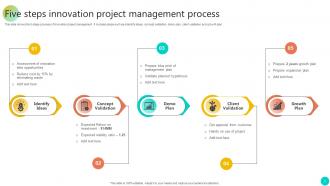
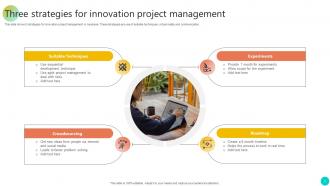
Innovation project management includes ideation and concept development, feasibility assessment and planning, prototype development and testing, implementation and scaling, and performance evaluation. These stages streamline innovation by establishing clear milestones, managing resource allocation strategically, and minimizing development risks, with many organizations finding that structured approaches ultimately deliver faster time-to-market and sustainable competitive advantage.
Cross-functional teams enhance innovation projects by combining diverse expertise, accelerating decision-making, and reducing silos that typically slow development cycles. These collaborative structures streamline communication between departments like R&D, marketing, and operations, while enabling faster prototyping and market validation, with many organizations finding that integrated teams deliver innovations 40% faster than traditional approaches.
Stakeholder engagement drives innovation success by securing buy-in, identifying requirements, managing expectations, and facilitating resource allocation throughout project lifecycles. Through strategic communication and collaborative planning, organizations enhance project adoption, minimize resistance, and accelerate implementation timelines, with many companies finding that engaged stakeholders ultimately deliver stronger innovation outcomes and sustainable competitive advantage.
Project managers balance creativity and structure by establishing flexible frameworks that encourage experimentation while maintaining clear timelines, budgets, and deliverables. Through agile methodologies, design thinking workshops, and staged gate reviews, they create safe spaces for creative exploration within defined parameters, with many technology and pharmaceutical companies finding that this structured flexibility accelerates innovation while minimizing risks and ensuring commercial viability.
Innovation impact measurement techniques include ROI analysis, customer satisfaction metrics, time-to-market assessments, patent applications tracking, and revenue attribution models. These approaches enable organizations to quantify both financial and strategic outcomes by monitoring market penetration, operational efficiency gains, and competitive positioning improvements, with many companies finding that balanced scorecards ultimately deliver comprehensive innovation portfolio visibility.
Organizations foster innovation culture within project management frameworks by encouraging experimentation, implementing flexible methodologies, establishing cross-functional collaboration channels, creating safe-to-fail environments, and rewarding creative problem-solving approaches. Through agile frameworks and design thinking integration, companies like Google and 3M streamline ideation processes, accelerate prototype development, and enhance team creativity, ultimately delivering breakthrough solutions and sustained competitive advantage.
Common pitfalls in managing innovation projects include unclear objectives, inadequate resource allocation, poor stakeholder communication, rigid timelines, and insufficient risk assessment. These challenges can be avoided by establishing flexible frameworks, maintaining regular cross-functional collaboration, and implementing iterative feedback loops, with many organizations finding that adaptive project management ultimately delivers faster innovation cycles and stronger market outcomes.
Different industries approach innovation project management through sector-specific methodologies, regulatory frameworks, risk tolerance levels, and timeline requirements. Healthcare and pharmaceuticals emphasize rigorous compliance and extended testing phases, while technology companies prioritize rapid prototyping and agile development cycles, and manufacturing focuses on lean processes and quality control, ultimately delivering competitive advantages tailored to each industry's unique operational demands.
Effective methods for prioritizing innovation ideas include impact-effort matrices, strategic alignment scoring, risk-return assessments, customer value mapping, and resource availability analysis. These frameworks enable organizations to evaluate projects by market potential, implementation feasibility, and strategic fit, with many companies finding that combining quantitative scoring with qualitative stakeholder input delivers optimal portfolio balance and competitive advantage.
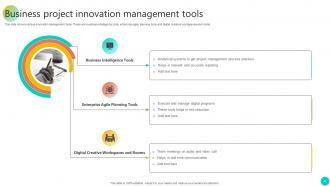
Essential tools for innovation project management include project management platforms like Asana or Monday.com, collaborative whiteboards such as Miro, version control systems, real-time communication tools like Slack, and analytics dashboards for performance tracking. These technologies streamline workflows by centralizing documentation, enabling cross-functional collaboration, and providing transparent progress visibility, with many organizations finding that integrated toolsets significantly accelerate innovation cycles while reducing project bottlenecks.
Project managers can leverage data analytics to inform innovation strategies by analyzing market trends, customer feedback, performance metrics, resource allocation patterns, and competitive intelligence. Through predictive analytics and real-time dashboards, organizations streamline decision-making processes, identify emerging opportunities more quickly, and optimize resource deployment, with many finding that data-driven approaches ultimately deliver faster time-to-market and enhanced competitive advantage.
Risk management and innovation in project management presents both challenges and opportunities, as innovative projects inherently carry higher uncertainty while requiring structured approaches to navigate potential setbacks. Strategic risk management enables innovation by creating frameworks for calculated experimentation, rapid prototyping, and iterative development, with many organizations finding that proactive risk assessment accelerates breakthrough solutions while minimizing costly failures, ultimately delivering competitive advantage.
Prototyping and testing serve as critical validation phases within innovation project management, typically occurring during development and refinement stages to minimize risk and optimize solutions. These iterative processes enable organizations to gather user feedback, identify design flaws, and validate market assumptions early, ultimately reducing development costs and accelerating time-to-market for successful innovations.
Innovation project alignment strategies include establishing clear strategic frameworks, implementing stage-gate processes, creating cross-functional governance committees, developing measurable KPIs, and conducting regular milestone reviews. These approaches streamline decision-making by connecting project outcomes to business objectives, resource allocation priorities, and market opportunities, with many organizations finding that structured alignment processes deliver faster time-to-market and stronger competitive advantage.
Effective feedback loops integrate through regular stakeholder reviews, iterative prototyping cycles, customer validation checkpoints, and cross-functional team assessments throughout each project phase. These mechanisms enable organizations to identify issues early, refine concepts based on real-world input, and accelerate development timelines, with many companies finding that structured feedback processes reduce project risks while enhancing innovation outcomes.
-
“Excellent information with easy access.”
-
The best and engaging collection of PPTs I’ve seen so far. Great work!