

Introduction To Solar Power Green Energy Resources Ppt Slides Graphics Tutorials




Try Before you Buy Download Free Sample Product
 Impress Your
 Audience
 100%
100% Editable
 Save Hours
 of Time


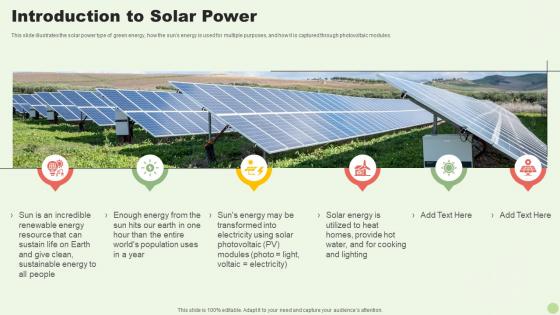
This slide illustrates the solar power type of green energy, how the suns energy is used for multiple purposes, and how it is captured through photovoltaic modules.
People who downloaded this PowerPoint presentation also viewed the following :
Introduction To Solar Power Green Energy Resources Ppt Slides Graphics Tutorials with all 6 slides:
Use our Introduction To Solar Power Green Energy Resources Ppt Slides Graphics Tutorials to effectively help you save your valuable time. They are readymade to fit into any presentation structure.





FAQs for Introduction To Solar Power Green Energy Resources Ppt
So the money savings are huge - most people's electric bills drop to almost nothing. Takes about 6-10 years to pay itself off, which isn't bad honestly. Your house value goes up too. Oh and there's that 30% federal tax credit right now which helps a lot upfront. You become basically energy independent once they're on your roof - kinda nice when everyone else loses power and you don't. Plus way better for the environment obviously. I'd definitely get multiple quotes though since every roof situation is different and your actual savings depend on how much electricity you use.
Dude, solar wins hands down. Zero emissions when it's actually running, unlike coal and gas that just keep pumping out pollution. Yeah, making the panels isn't perfect environmentally, but it's honestly tiny compared to what fossil fuels do every single day. Here's the thing - panels pay back their carbon footprint in like 2-4 years, then you get clean energy for 25+ years. Fossil fuels? They're finite and getting harder to extract. My neighbor just got solar and keeps bragging about his electric bill, but the environmental math really does make sense.
Dude, the solar tech right now is crazy good. Perovskite tandem cells are hitting 30%+ efficiency in labs by layering materials to grab more light spectrum. Bifacial panels collect from both sides which is pretty sick. PERC cells are becoming standard and bump silicon panels up 1-2%. Honestly? I'd hold off 6 months if you're thinking solar for your place. These commercial perovskite panels should drop soon and they'll totally flip your ROI math. The whole industry's moving stupid fast - feels like every week there's something new.
Solar panels are honestly worth looking into - most people see their bills drop 20-50%. Yeah, the upfront cost is rough, but you get 30% back through federal tax credits. Your state probably has extra rebates too. Oh, and if you generate more power than you use? The utility company actually pays you back. Pretty wild. Before you do anything though, get an energy audit so you don't end up with a system that's way too big or small. I'd grab quotes from like 3-4 installers in your area. They'll look at your monthly usage and give you realistic numbers.
Honestly, the big things that'll drive up your costs are how big the system is and what quality panels you go with. Your roof matters a ton too - if it's complicated or needs work, that adds up fast. Location's huge for labor costs, like California installers are gonna cost way more than Ohio ones. Oh and shading issues can make things pricier since they might need special equipment. The good news is federal tax credits cover about 30%, plus most states throw in extra rebates. Definitely get at least three quotes so you can see what's actually driving your specific costs.
So basically net metering means when your solar panels make more power than you're using, that extra electricity goes back to the grid. Your utility gives you credits for it. Super handy on cloudy days or at night - you just use those credits instead of paying full price. It's like the grid becomes your personal battery storage, which is honestly pretty clever. Your monthly bills drop and you'll pay off the solar installation faster. Oh, and definitely call your utility first to ask about their rates because they're all different.
Dude, solar is seriously one of the best ways we can actually tackle climate change. Once you get those panels up, they're cranking out clean electricity for like 20+ years with zero emissions. Coal and gas plants? Total carbon monsters in comparison. I know it seems like just one house doesn't matter, but multiply that across millions of homes and it adds up fast. Plus you'll save money on your electric bill, which is honestly half the reason I'd do it. Even a smaller system makes a real dent in your carbon footprint.
City solar is tough - buildings block sun and there's barely any roof space. Plus permits are a nightmare. Rural seems perfect with all that open land, but honestly? Getting connected to the grid can be a total pain when power lines are miles away. Installation costs more too since crews have to travel out there. Cities have better financing options though, while rural folks often get stuck without good loan programs. Community solar gardens work great for urban people, but rural areas really need better incentives and grid upgrades to make it worthwhile.
Your location makes a huge difference with solar - like, way more than most people realize. Sunny spots like Arizona can get 20-30% more energy than cloudy northern areas. But honestly, even places like Germany make it work with good incentives. Mountains, buildings, seasonal weather patterns - all that stuff affects your panels too. Oh, and I learned this the hard way from my neighbor who didn't check first. Definitely get a site assessment before you buy anything. Local conditions can totally make or break the whole investment.
Honestly, solar loans are probably your best bet since you'll actually own the panels. Cash upfront saves you the most money but yeah, that's not happening for most of us lol. You could also lease them - basically just pay monthly but you don't own anything. Power purchase agreements let you buy the electricity at a set rate instead. Oh, and definitely shop around! Different installers work with different lenders, so you might find way better deals. Some states have their own financing programs too that can help cut costs.
Honestly, the whole "cloudy weather kills solar" thing is such BS - panels still work, just not as efficiently. Yeah, the upfront cost used to be insane, but prices have dropped like 70% recently. You don't need your roof facing perfectly south either - east or west work totally fine. Most panels last way longer than their 20-25 year warranties too. And forget what people say about needing desert weather - you don't have to live in Arizona to make it worth it. If you're actually thinking about it, installers usually do free assessments of your roof situation.
Dude, think about it this way - countries can make their own power instead of buying oil from sketchy governments. It's like growing your own tomatoes instead of depending on the store, you know? Way less risky. Plus volatile markets won't screw you over as much. Countries with good sun can actually start selling energy instead of buying it, which is pretty wild economically. The tech keeps getting cheaper too, so honestly it's becoming a smart move for most places. Check out what your country's solar situation looks like compared to import costs.
Yeah there's actually a bunch of stuff available right now. Federal tax credit gives you 30% back through 2032, which is pretty solid. Most places have net metering so you can sell excess power back to the grid. State rebates are all over the place though - depends where you live. California goes hard on the renewable requirements for utilities. Property tax exemptions are common too, plus businesses get that accelerated depreciation thing. Oh and some cities do zero-interest loans. Honestly, start with your state energy website since you can usually stack the local stuff with federal incentives.
Basically, inverters convert the DC power from panels into AC that works with the grid. Your utility has to have net metering though - definitely check that first. When you make extra power, it goes back to the grid and you get credits. Pretty sweet deal honestly. The tricky part is handling the variable output since solar isn't constant. That's where smart grid tech and forecasting come in. Oh, and grid-tie systems need safety shutoffs so your panels don't zap utility workers during outages. Learned that lesson on a job site once - not fun explaining that oversight.
Honestly, solar panels are pretty chill maintenance-wise. You'll need to hose them down maybe twice a year (more if you live somewhere dusty like Arizona). The panels themselves last forever - like 25+ years easy. But here's the catch nobody tells you upfront: those inverters die every 10-15 years and cost a decent chunk to replace. I'd probably budget around $200-500 yearly for random maintenance stuff. Oh, and definitely keep all your warranty papers somewhere safe since most problems are covered for ages. Quick inspections for loose wires or damage are smart too.
-
I looked at their huge selection of themes and designs. They appeared to be ideal for my profession. I'm sure I'll grab a few of them.
-
The ease of modifying templates is just superb! Also, the vast collection offers plenty of options to choose from.