


Renewable energy introduction of biomass energy ppt template




Try Before you Buy Download Free Sample Product
 Impress Your
 Audience
 100%
100% Editable
 Save Hours
 of Time


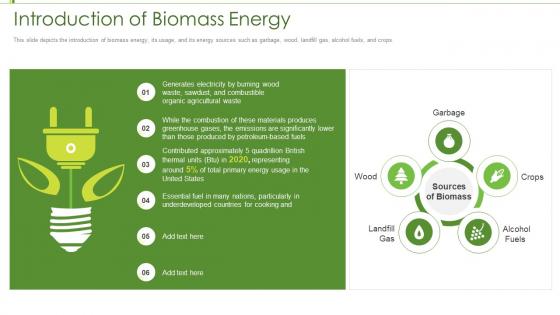
This slide depicts the introduction of biomass energy, its usage, and its energy sources such as garbage, wood, landfill gas, alcohol fuels, and crops.
People who downloaded this PowerPoint presentation also viewed the following :
Renewable energy introduction of biomass energy ppt template with all 6 slides:
Use our Renewable Energy Introduction Of Biomass Energy Ppt Template to effectively help you save your valuable time. They are readymade to fit into any presentation structure.





FAQs for Renewable energy introduction of biomass
So there's basically four main types - wood/forest stuff, farm crops and waste, animal manure, and city garbage. Wood's great for consistent energy but you'll need decent processing setup. Farm biomass like corn or sugarcane is seasonal, plus collecting crop residues in bulk is pretty straightforward (though honestly the whole food vs fuel debate gets messy). Animal and municipal waste? Available year-round and you're solving disposal headaches too. Energy density's lower though. Really comes down to what's around you locally and if you can handle seasonal supply or need something steady.
Yeah, biomass is way better than fossil fuels environmentally speaking. The big difference? When you burn biomass, you're releasing CO2 that plants just sucked out of the air recently - so it's basically carbon neutral. Fossil fuels dump carbon that's been buried for millions of years back into the atmosphere. Plus biomass creates fewer nasty pollutants and doesn't need all that destructive mining or fracking. Though honestly, some large-scale biomass operations can mess with land use too. For your company, I'd just check where the biomass comes from and make sure the operation isn't sketchy.
Honestly, biomass is pretty clever as a stopgap solution. When wind and solar aren't producing, you can still burn it for steady power. The carbon footprint isn't terrible either - plants suck up CO2 while growing, so it mostly balances out (land use makes it messier though). Agricultural waste is where it gets interesting. Corn husks, wood chips, stuff that's rotting anyway. Way better than purpose-grown crops taking up farmland. It's not gonna save the world, but it buys us time while battery storage gets cheaper and we build more renewables. What kind of waste does your area produce? That's where I'd start looking.
So there's basically four ways to turn biomass into energy. Burning stuff directly is the obvious one - wood, crop waste, whatever. Works great for heat and electricity. Gasification heats biomass without much oxygen to make syngas, which you can use in turbines or turn into liquid fuel. Anaerobic digestion is where bacteria eat organic waste and burp out biogas (kinda gross but effective). Then there's pyrolysis - high heat breaks things down into bio-oil. Honestly, what you've got lying around matters most. Like if you're dealing with food scraps, digestion's your best bet.
Honestly, biomass regulations are all over the place depending where you look. The EU's got pretty tight rules on sourcing and emissions - they don't mess around. Meanwhile the US does this weird state-by-state thing that's kind of a headache to navigate. Brazil focuses mainly on stopping deforestation, which makes sense given their situation. You'll need to dig into feedstock certification requirements and emission standards wherever you're thinking of setting up. Oh, and grid connection rules if it's a commercial thing. Local governments love piling on extra requirements too, so check both national and regional stuff. It's honestly more complicated than it should be.
Honestly, biomass can save you a ton long-term. Your energy bills drop big time, plus you might sell excess power back to the grid for extra cash. Federal tax credits are solid - sometimes 30-50% of what you spend upfront. State incentives vary but they're usually decent too. The fuel itself is way cheaper than oil or gas, and the prices don't bounce around like crazy. Yeah, you're looking at some serious upfront costs, but most places break even in like 5-8 years. Definitely get a few quotes though - incentives are all over the place depending where you live.
Yeah, biomass can cut emissions but don't expect miracles. The CO2 from burning it was recently pulled from the air by plants - way better than fossil fuels that release ancient carbon. Sustainable sourcing is everything though. Chopping down forests faster than they grow back? You're screwing yourself over. Wood pellets and ag waste are solid options. Energy crops work too. Oh and factor in the whole process - transportation, processing, all that stuff adds up. Some projects look great on paper but fall apart when you dig into the details.
Honestly, biomass sounds great until you dig into the messy details. The big issue is land use - you're either chopping down forests or stealing space from food crops, which kinda defeats the whole point. Carbon math gets weird too; some biomass is actually worse than fossil fuels once you factor in all the harvesting and shipping. Water usage for energy crops can be insane. Oh, and lifecycle assessments are crucial but so boring to read through. Before jumping into any project, definitely check where they're getting their feedstock from first.
So basically plants suck up CO2 while they're growing, then release that exact same carbon back when you burn them. That's why people call it "carbon neutral" - you're just moving the same carbon around, not dumping new stuff into the air. Pretty clever system, right? The catch is timing though - if you chop down a 30-year-old tree, you better be planting replacements that'll actually grow back. It only works if you're harvesting and replanting at the same pace. Otherwise you're just making excuses for deforestation.
So agriculture's actually perfect for biomass energy! Farmers can use all that leftover stuff - corn stalks, wheat straw, rice hulls that would just rot anyway. Then there's dedicated energy crops like switchgrass and miscanthus (I know, weird names). Animal manure works great for biogas too through that digestion process. Oh, and food processing waste - corn cobs, sugar bagasse, all that. The cool part? Most of this doesn't mess with food production since it's either waste or grown on crappy land that can't handle food crops well.
Oh man, biomass energy can be pretty rough on air quality. Workers and people living nearby deal with particulate matter and toxic stuff when it burns. Respiratory issues, heart problems, even potential cancer risk - not great. Indoor burning is absolutely the worst though. Way more dangerous than outdoor plants. Modern facilities aren't terrible if they have decent pollution controls, but honestly? Location matters huge. You don't want these things next to schools or hospitals, that's just common sense. The newer tech does help cut down emissions a lot.
Biomass projects can actually bring solid money into local areas. Jobs get created - think collecting materials, running plants, maintenance work that stays put. Farmers make extra cash selling their waste crops or growing energy plants specifically for this. The independence factor is pretty sweet too, honestly - you're not at the mercy of outside energy companies jacking up prices. Tax revenue goes up from these facilities. But here's the thing - communities need to push for ownership stakes or profit-sharing deals. Otherwise all that money just flows to some corporation elsewhere, which would suck.
Dude, the pyrolysis tech is getting insane - they can basically turn any organic waste into clean fuel now. Algae biofuels are finally cheap enough to matter too, which is wild since that felt like fantasy stuff forever. Companies like Gevo are building these massive new facilities. The enzyme treatments for breaking down cellulose work way better now. Oh and they're using AI to optimize the whole supply chain thing, which honestly makes sense. Renewable Energy Group is worth checking out if you're serious about this space. The whole industry feels like it's actually moving.
Honestly, biomass could be perfect for rural areas. Farmers can actually make money off crop residues instead of just burning them - which seems way smarter. Local processing facilities mean new jobs that don't require moving to the city. Communities become way less dependent on expensive imported fuels too. The money stays put instead of flowing out to urban centers like it usually does. Corn stalks suddenly have actual value, which is kinda wild when you think about it. If you're looking at rural development, you'd be crazy not to consider biomass in your energy planning.
Honestly, you can turn most organic waste into energy pretty easily. Food scraps and farm waste work awesome for anaerobic digestion - basically makes biogas you burn for power. Wood chips? Just burn them directly. The annoying part is sorting everything first because contaminated stuff ruins the whole thing. Cities are already doing this with their garbage dumps, which is actually kind of cool when you think about it. Figure out what waste you've got access to first, then match it to whatever process works best. Even sewage works if you're not squeamish about it.
-
Colors used are bright and distinctive.
-
Great designs, Easily Editable.