

Introduction To Solar Power Clean Energy Ppt Powerpoint Presentation Icon Information




Try Before you Buy Download Free Sample Product
 Impress Your
 Audience
 100%
100% Editable
 Save Hours
 of Time


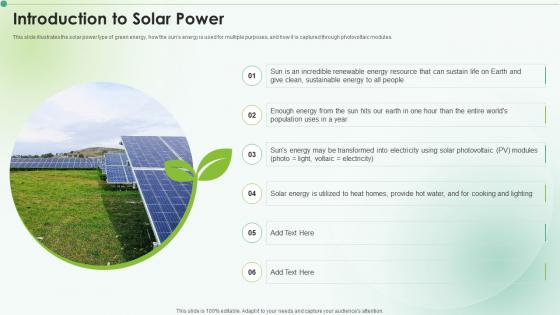
This slide illustrates the solar power type of green energy,how the suns energy is used for multiple purposes,and how it is captured through photovoltaic modules.
People who downloaded this PowerPoint presentation also viewed the following :
Introduction To Solar Power Clean Energy Ppt Powerpoint Presentation Icon Information with all 6 slides:
Use our Introduction To Solar Power Clean Energy Ppt Powerpoint Presentation Icon Information to effectively help you save your valuable time. They are readymade to fit into any presentation structure.





FAQs for Introduction To Solar Power Clean Energy Ppt Powerpoint
Honestly, the money savings are insane - most people cut their electric bills by 70-90%. Sometimes you even sell power back to the grid which is pretty cool. Your house value goes up about 4% too. Yeah it helps the planet but let's be real, everyone's mostly in it for the cash savings. Solar's gotten way cheaper lately and there's still that 30% federal tax credit through 2032. I'd definitely get quotes from like 3 or 4 local companies to see what you'd actually save. My neighbor did it last year and won't shut up about how much he's saving lol.
Solar's honestly a game-changer for the environment. Your panels don't emit anything once they're up - no CO2, air pollution, or nasty water runoff like coal plants. Sure, making the panels isn't perfect, but they pay back that environmental cost in just 1-4 years. Then you get 25+ years of clean energy. My neighbor made the switch last year and keeps bragging about his carbon footprint (kind of annoying but he's not wrong). If cutting emissions matters to you, solar's probably your best bet.
So you'll need the obvious stuff - solar panels, mounting hardware for the roof, and an inverter to flip DC power to AC. A monitoring system's pretty handy too. Don't skimp on the inverter though, those things break way more than anything else. Net metering's where you make real money selling power back. Oh and batteries are cool but still crazy expensive, so maybe skip those for now? Definitely hit up at least three installers for quotes. Their designs can be super different even for the same house.
So you've got a few options here. Solar loans are probably your best bet - you own the panels, get the tax credits, and pay it off over like 10-20 years. Leasing is another route where you put basically nothing down, but honestly you won't save as much over time. Some people tap their home equity too, though that's kinda risky if you ask me. Oh, and there's still that 30% federal tax credit until 2032 which is huge. I'd just get quotes from a few installers and see what financing they offer.
So these big solar farms are actually pretty good for local areas. Construction creates tons of jobs, but yeah they're temporary. The real money maker is property taxes - rural counties can rake in millions yearly, which they desperately need. Plus farmers get solid lease payments that often beat what they'd make from crops. Local shops usually see more business when all those workers are around building stuff. Honestly, don't get too hung up on the construction jobs since they disappear. The permanent operations jobs are limited, but that steady tax revenue? That's where the real long-term benefit is.
Honestly, solar tech is having a moment right now. Those perovskite tandem cells are hitting 30%+ efficiency, which is wild. Bifacial panels grab light from both sides now, and floating solar farms are popping up everywhere. Battery storage is finally getting decent too - you can actually bank power for when the sun goes down. There's even AI stuff that moves panels around automatically throughout the day (sounds extra but apparently it works). Prices keep dropping while everything gets better, so if your company's been thinking about it... might be worth crunching some numbers soon.
Dude, solar incentives are honestly a game changer. The federal tax credit alone gives you 30% back, plus there's usually state rebates and utility programs on top of that. We're talking thousands off your bill. Most people wouldn't even consider solar without these deals - the upfront cost is just too brutal otherwise. I actually looked into this last year (didn't pull the trigger though). But seriously, check what your area offers before you do anything. The savings stack up fast, and some programs have waiting lists or expire. Makes a huge difference in whether it's actually worth it.
Honestly, the biggest pain with solar storage is the upfront cost - batteries aren't cheap and you'll need new ones every 10-15 years or so. Also kinda annoying that you lose about 10-15% of whatever energy you store, which seems wasteful when you think about it. But the tech keeps improving! Look into your local time-of-use rates before deciding. Sometimes avoiding those crazy peak hours makes the whole battery thing worth it financially. I'd definitely budget for storage costs from the start rather than adding them later.
Dude, solar can slash your electricity bills by 20-70% easy. Federal tax credit is 30% right now, plus whatever your state throws in. Your customers will eat up the green angle too - that marketing basically writes itself. Honestly, there's something satisfying about telling the power company to shove it when rates spike again. Most businesses hit ROI around 6-10 years, which isn't terrible for something that boosts property value. Yeah the upfront cost stings, but grab a free energy audit first. They'll size everything properly so you're not overpaying for panels you don't need.
So solar power basically frees you from buying energy from other countries - you're making electricity right at home from sunlight instead. Germany and Denmark did this really well, though Germany's whole Russia situation kinda messed things up recently. But here's the thing - once you've got the solar panels up, sunlight is free and nobody can control it. Your energy bills become way more predictable too since you're not getting hit by crazy oil and gas price swings. For policy stuff, I'd focus on the money you save long-term and how it makes your energy supply more secure.
Hey! So basically just hose them down every few months to get rid of dirt and bird poop - seriously, the birds are relentless. Regular water works fine, no special cleaners needed. Keep an eye out for cracks or loose stuff, and trim back any trees that start casting shadows (I learned this the hard way). Check your monitoring app regularly so you'll catch efficiency drops before they hit your wallet. Get a pro to look at everything once a year since they'll spot things you'd miss. Stay on top of it and you won't get nasty surprises later.
Basically, solar panels swap out dirty energy for clean stuff - no emissions when they're running. Your rooftop setup actually cuts down on CO2 that would've come from coal plants. Pretty cool how direct it is. You can also charge your car with it or power bigger industrial things, which multiplies the whole effect. The tech keeps getting way cheaper too (my neighbor just got panels and said the price blew his mind compared to a few years ago). Even just home solar makes a real dent in your carbon footprint.
Yeah so solar's kinda weird - makes the grid less stable at first but way more bulletproof later. Like when clouds pass over, power just drops and grid operators scramble to balance everything out. Can't exactly tell the sun when to shine, you know? The upside though is you're spreading power generation around instead of relying on huge centralized plants. Battery tech is improving crazy fast too, which helps. Honestly if you're thinking about solar, talk to your utility company early. They need time to upgrade their forecasting systems and whatnot.
Okay so the big myths - cloudy days don't kill solar panels, they just make them less efficient. Costs have seriously dropped (like 80% over ten years), so forget those old articles saying it's too pricey. Your roof doesn't need to face perfectly south either. Cold weather actually makes panels work better, not worse. Most people think maintenance is a nightmare but honestly? Pretty much install and forget. Oh, and definitely get multiple quotes if you're thinking about it - installers can vary wildly on price.
Honestly, just get a local installer who knows your area's weird weather patterns. Hot climates? You'll want panels that don't crap out when temps spike, plus good airflow underneath. Cold places are actually great - snow reflects extra light, though you want panels angled so snow slides off. Cloudy spots need the fancy high-efficiency panels to grab whatever light they can get. Sunny areas can go standard but maybe add tracking systems. The tilt angle math gets super nerdy (installers have software for that anyway). Bottom line - don't overthink it, find someone local who's done a ton of installs in your exact climate.
-
SlideTeam makes creating presentations easy. Unlimited products, premium quality designs and affordable.
-
Informative and engaging! I really like the design and quality of the slides.