


Renewable energy introduction to solar power ppt sample




Try Before you Buy Download Free Sample Product
 Impress Your
 Audience
 100%
100% Editable
 Save Hours
 of Time


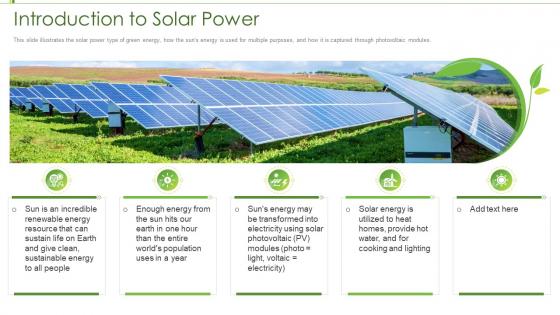
This slide illustrates the solar power type of green energy, how the suns energy is used for multiple purposes, and how it is captured through photovoltaic modules.
People who downloaded this PowerPoint presentation also viewed the following :
Renewable energy introduction to solar power ppt sample with all 6 slides:
Use our Renewable Energy Introduction To Solar Power Ppt Sample to effectively help you save your valuable time. They are readymade to fit into any presentation structure.





FAQs for Renewable energy introduction to solar
So there's solar, wind, hydro, geothermal, and biomass - each one's got its perks. Solar's getting ridiculously cheap and you can put it basically anywhere. Wind is super scalable with crazy low operating costs once it's up. Hydro gives you that reliable baseload power plus storage, which is clutch. Geothermal runs 24/7 no matter what the weather's doing. And biomass is actually pretty neat because it uses waste materials. Honestly, I'd just figure out what resources you've got locally first - no point planning around wind if you're in a dead zone, you know?
So solar panels basically capture sunlight and turn it into electricity - photons hit these silicon cells and knock electrons around to make current. The tech has gotten insane lately though. Lab efficiency is hitting 30%+ with these new perovskite cells, and some panels can even grab light from both sides now. Manufacturing costs dropped like 90% since 2010 (wild, right?). They work way better in cloudy weather too and last longer than the old ones. Honestly if you're thinking about getting solar, timing's pretty perfect right now.
Honestly, wind energy crushes fossil fuels environmentally - like 98% fewer carbon emissions over a turbine's whole life. Sure, birds get hit sometimes and there's noise, but compared to coal's mess? No contest. You won't get acid rain or nasty water pollution with wind farms. Construction does mess with local wildlife for a bit, and yeah, some people think they're eyesores. My cousin actually lives near one and says you barely notice the sound after a week. If your company's looking at options, wind's environmental impact is way smaller - just don't put turbines right in migration paths.
So here's the deal with energy storage - it fixes the main issue with renewables being all over the place. Solar and wind are great but totally unpredictable, right? Batteries let you bank that energy for when you actually need it instead of losing it during those sunny/windy peaks. Plus your lights won't flicker every time weather changes, which is honestly pretty annoying when it happens. If you're thinking about going renewable, just budget for storage from the start. Makes the whole setup way more reliable and you won't regret it later.
Honestly, government policies are pretty much what's driving renewable energy adoption right now. Tax credits and subsidies make solar and wind way more affordable. Most states also have these renewable energy standards that force utilities to buy clean power - which is actually genius if you think about it. Oh, and there are feed-in tariffs too that guarantee payments if you generate your own renewable energy. Meanwhile carbon pricing jacks up fossil fuel costs. If you're considering renewables for your business, I'd definitely look into what your state offers first. Some places have surprisingly good deals.
So smart grids are basically like having a super intelligent traffic cop for electricity. They use real-time data to balance everything out, which is huge since solar and wind are all over the place. When your panels are cranking out extra power, the grid automatically stores it or sends it elsewhere. Not producing enough? It pulls from other sources instantly. You can even sell excess energy back - pretty cool setup honestly. If you're thinking about going renewable for your business, make sure whatever system you get plays nice with smart grids. You'll save way more money that way.
Yeah, it's honestly a mixed bag. Those upfront infrastructure costs are brutal - can totally wreck a budget. But here's the thing: once you're set up, you're not hemorrhaging money on imported oil anymore. Energy independence is huge, especially when oil prices go crazy or supply chains get messed up. Renewables actually create way more jobs per dollar than fossil fuel stuff, which is pretty cool. I'd definitely hunt for international climate funding and partnerships to help with the initial hit. Building local expertise alongside it is smart too - you don't want to be dependent on outside help forever.
So biomass is kinda weird efficiency-wise - it's only hitting like 20-40% compared to solar's 15-22% and wind's 35-45%. But honestly? The big win with biomass is you can flip it on whenever you want power. Solar and wind just leave you hanging when it's cloudy or still outside. New tech like gasification is making biomass way better though. I'd say if you need reliable power 24/7, the efficiency hit might be worth it. Really depends what you're trying to do with your setup.
Dude, tidal and wave energy is actually getting pretty cool now. These floating wave converters can handle nasty weather way better than the old ones. Plus there's underwater turbines that work like wind turbines but - here's the thing - tides don't randomly die like wind does, so they're super predictable. Some new systems generate power from tiny 1-meter waves now, which is crazy efficient. Companies like Orbital Marine are already doing real projects. Honestly, if you're tracking renewables, coastal stuff is gonna blow up in the next few years.
Start with the big stuff first - schools, hospitals, community centers make good anchor points. Then you can connect houses and businesses nearby. Solar panels are obvious, but throw in some small wind turbines and battery storage depending on what works in your area. The control systems are honestly where it gets complicated - you need inverters that can handle switching between the main grid and standalone mode. Oh, and the regulatory maze is brutal. But here's the thing - most utility companies are actually pretty reasonable if you loop them in early. Do a feasibility study first though, don't just wing it.
Yeah, renewable projects do take up space, but it's not as black and white as most people assume. Wind and solar farms need land, sure, but farmers can still graze animals or grow stuff under solar panels. What was there before matters a lot - replacing a cornfield might actually help wildlife by giving them new corridors to move through. Offshore wind is obviously the winner here since you're not using land at all (though I guess technically you're using ocean floor?). The trick is doing your homework first and picking spots that won't wreck the local ecosystem.
Honestly, the biggest pain points are space and grid stuff - like where do you even put wind turbines in Manhattan, you know? Then there's the whole intermittent power thing that makes utilities nervous. But cities are getting creative with rooftop solar programs and these building-integrated panels that actually look decent. Micro-grids are pretty cool too - they can handle the supply/demand juggling act way better than old infrastructure. Storage tech is obviously huge right now. I'd probably start with figuring out your city's current energy patterns first, then see what renewable options actually make sense for your climate and layout.
So here's the thing - companies set these big climate goals, right? Net-zero by 2030, cut emissions by 50%, whatever. Renewable energy is basically the low-hanging fruit for hitting those targets. You can actually measure the impact when you switch to solar or wind, which makes the sustainability folks happy. Plus it's usually cheaper in the long run (though don't quote me on that for every situation). If you're diving into this stuff, I'd start by figuring out what energy you're currently using. Then see where you can realistically make the switch.
Dude, decentralized renewable energy is seriously a game-changer for rural areas. Communities get way more control over their power, costs drop, and you see actual local jobs being created. People get more involved too since they're invested in maintaining these shared solar or wind setups - it's wild how energy stuff can get people caring about other community issues. The downside though? You need solid training programs, and honestly the upfront costs can be brutal. Some communities just can't swing it while others thrive. Definitely look into financing options that don't leave people behind from day one.
So the numbers are pretty wild - solar costs dropped like 80% since 2010. Wind's been similar, maybe 70% or so. Battery storage though? That's the crazy one - 90% cheaper, which is nuts because that was always the big problem with renewables, right? Solar's actually beating fossil fuels on price in tons of places now. I mean, the exact percentages depend on which study you're looking at, but they're all showing massive drops. If you're doing any energy stuff these days, renewables are probably gonna be your cheapest bet in most areas.
-
Designs have enough space to add content.
-
Unique and attractive product design.