


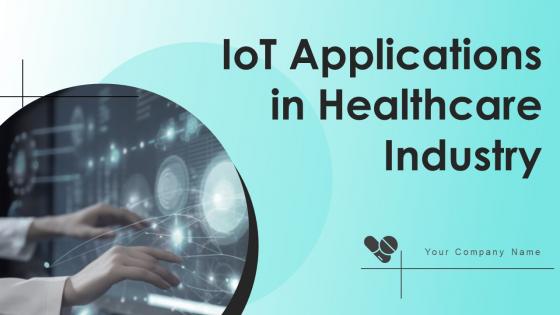
IoT Applications In Healthcare Industry Powerpoint Ppt Template Bundles IoT MM




Try Before you Buy Download Free Sample Product
 Impress Your
 Audience
 100%
100% Editable
 Save Hours
 of Time


Our IoT Applications In Healthcare Industry Powerpoint Ppt Template Bundles IoT MM are topically designed to provide an attractive backdrop to any subject. Use them to look like a presentation pro.
People who downloaded this PowerPoint presentation also viewed the following :
IoT Applications In Healthcare Industry Powerpoint Ppt Template Bundles IoT MM with all 24 slides:
Use our IoT Applications In Healthcare Industry Powerpoint Ppt Template Bundles IoT MM to effectively help you save your valuable time. They are readymade to fit into any presentation structure.

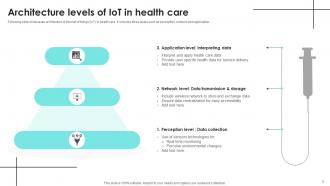
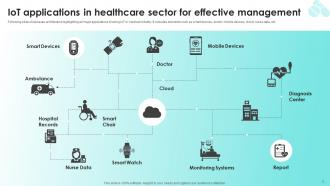
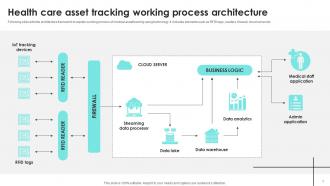
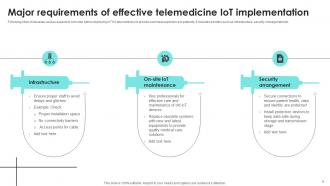









FAQs for IoT Applications In Healthcare Industry Powerpoint Ppt Template
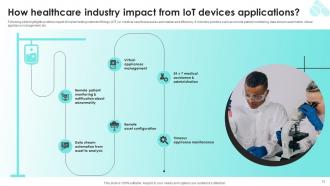
Remote patient monitoring devices, wearable health sensors, smart hospital beds, continuous glucose monitors, and cardiac monitoring systems are revolutionizing healthcare delivery. These IoT technologies enhance patient outcomes by enabling real-time data collection, reducing hospital readmissions, and facilitating early intervention, with many healthcare institutions finding that automated alerts and predictive analytics ultimately streamline care delivery while minimizing costs.
IoT devices enhance medication adherence through smart pill dispensers, wearable reminders, mobile app notifications, and automated refill systems that track dosing schedules in real-time. These technologies streamline patient monitoring by sending alerts to caregivers, integrating with electronic health records, and providing data analytics, with many healthcare providers finding that automated adherence systems reduce hospital readmissions while improving treatment outcomes.
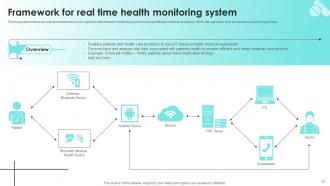
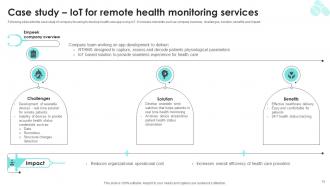
IoT enables remote patient diagnostics through wearable devices, smart sensors, continuous monitoring systems, and connected medical equipment that track vital signs, detect irregularities, and transmit real-time health data to healthcare providers. These technologies streamline patient care by facilitating early intervention, reducing unnecessary hospital visits, and enabling proactive treatment adjustments, with many healthcare institutions finding that remote monitoring ultimately delivers cost savings and improved patient outcomes.
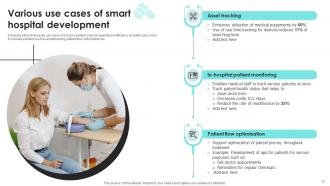
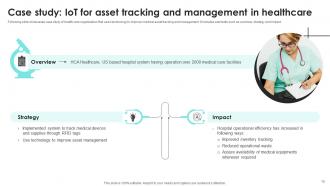
IoT solutions enhance hospital management efficiency by automating patient monitoring, optimizing resource allocation, and streamlining workflow coordination across departments. Through connected devices and real-time data analytics, hospitals achieve faster patient processing, reduced equipment downtime, and improved staff productivity, while minimizing operational costs and ultimately delivering better patient outcomes in an increasingly complex healthcare environment.
Wearable IoT devices contribute to personalized healthcare by continuously monitoring vital signs, tracking physical activity patterns, detecting health anomalies, and providing real-time health insights tailored to individual needs. These technologies enable healthcare providers to deliver customized treatment plans, preventive care recommendations, and early intervention strategies, with many hospitals and clinics finding that connected wearables significantly enhance patient outcomes while reducing healthcare costs.
Healthcare IoT faces significant data security challenges including unauthorized access to patient records, device vulnerabilities, data breaches during transmission, inadequate encryption protocols, and compliance with HIPAA regulations. These concerns present both risks and opportunities, with many hospitals and medical institutions finding that implementing robust cybersecurity frameworks, regular security audits, and encrypted communication channels ultimately delivers enhanced patient trust and regulatory compliance.
IoT-enabled smart devices facilitate better elderly care by providing continuous health monitoring, emergency response systems, and medication management capabilities. Through wearable sensors, smart home technologies, and automated alert systems, healthcare providers and family members can track vital signs, detect falls, and ensure medication compliance remotely, ultimately delivering enhanced safety and independence for seniors.
IoT significantly enhances real-time health data analytics by enabling continuous patient monitoring, automated data collection, and instant clinical alerts through connected devices and sensors. Through wearable monitors, smart medical equipment, and remote sensing technologies, healthcare providers streamline diagnostic processes, accelerate treatment decisions, and improve patient outcomes, ultimately delivering faster interventions and more personalized care experiences.
IoT devices assist in managing chronic diseases by enabling continuous monitoring, automated data collection, and real-time health tracking through connected glucometers, blood pressure cuffs, and wearable sensors. These technologies streamline patient care by delivering instant alerts to healthcare providers, reducing emergency interventions, and enhancing treatment adherence, ultimately improving outcomes while lowering healthcare costs.
IoT significantly enhances patient engagement through wearable devices, mobile health apps, remote monitoring systems, and smart medication dispensers that enable continuous health tracking and real-time communication. These technologies streamline patient-provider interactions by delivering personalized health insights, automated appointment reminders, and instant data sharing, ultimately improving treatment adherence and care outcomes.
IoT-driven supply chain management enhances medical supply availability by providing real-time inventory tracking, automated reordering systems, and predictive analytics for demand forecasting. Through smart sensors and connected devices, hospitals and healthcare networks can monitor stock levels, reduce waste from expired medications, and ensure critical supplies reach facilities faster, ultimately delivering improved patient care and operational efficiency.
**INPUT**: What advancements in IoT technology are expected to shape the future of telemedicine? **OUTPUT**: Future IoT advancements include 5G-enabled real-time monitoring, AI-powered diagnostic wearables, smart implantables, edge computing devices, and blockchain-secured health networks. These technologies streamline remote consultations, enhance predictive analytics, and enable seamless data integration, with hospitals and clinics finding that patients receive faster diagnoses and personalized care delivery. [Word count: 54 words]
IoT-powered predictive analytics enhances preventive healthcare by continuously monitoring vital signs, detecting early warning patterns, and identifying health risks before symptoms appear. Through wearable devices and smart sensors, healthcare providers can predict potential cardiac events, diabetic complications, and chronic disease flareups, enabling proactive interventions that reduce hospitalizations and improve patient outcomes significantly.
Barriers include limited internet infrastructure, high implementation costs, insufficient technical expertise, device interoperability challenges, and data security concerns. Rural hospitals and clinics often struggle with budget constraints and staffing limitations, while patients may lack digital literacy, though many healthcare systems increasingly find that phased implementation approaches and partnerships with technology providers help overcome these obstacles while delivering improved access to specialized care.
Regulatory frameworks like HIPAA and FDA guidelines significantly influence IoT healthcare development by requiring rigorous data encryption, patient consent protocols, and device safety validations before market approval. While these regulations can extend development timelines, they ultimately enhance patient trust and product reliability, with many healthcare institutions finding that compliant IoT solutions deliver better long-term adoption rates.
-
I was never satisfied with my own presentation design but SlideTeam has solved that problem for me. Thank you SlideTeam!
-
World-class PowerPoint designs that are fully customizable!