


Implementing IOT Devices For Effective Health Care Management Powerpoint Presentation Slides IoT CD




Try Before you Buy Download Free Sample Product
 Impress Your
 Audience
 100%
100% Editable
 Save Hours
 of Time


Explore the realm of Implementing IoT devices for effective health care management through this comprehensive PowerPoint presentation that delves into the transformative impact of IoT in healthcare. Starting with an introduction to IoTs role, benefits, and architecture levels, this Remote Patient Monitoring deck progresses to encompass real life examples such as virtual hospitals, wearable biosensors, and smart inhalers. Additionally, our virtual hospitals PPT navigates through IoT applications like remote patient monitoring, telemedicine, and smart hospitals, while also addressing ethical implications, security best practices, and healthcare analytics. Uncover the budgeting aspects and real world case studies showcasing IoTs potential in saving lives and revolutionizing health care practices. With a focus on robotic surgery, wearable devices, and their impact on healthcare sectors, this module underscores the game changing influence of IoT in enhancing patient care and management. Step into the future of health care with this comprehensive PowerPoint deck get access now.
People who downloaded this PowerPoint presentation also viewed the following :
Content of this Powerpoint Presentation
Slide 1: This slide introduces Implementing IoT Devices for Effective Health Care Management. State your company name and begin.
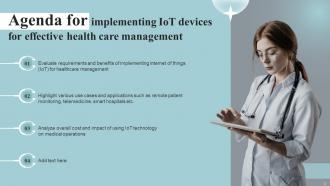
Slide 2: This slide states Agenda of the presentation.
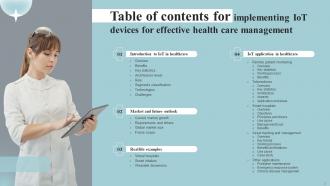
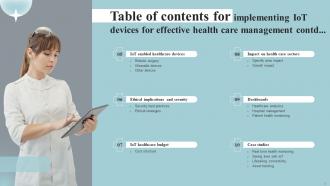
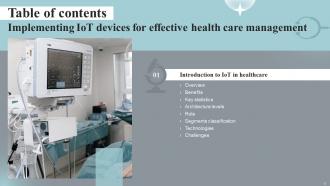
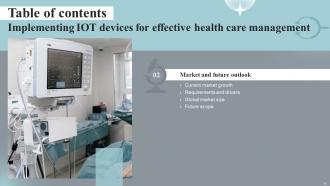
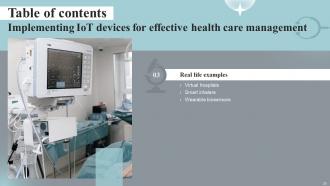
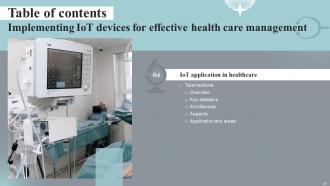
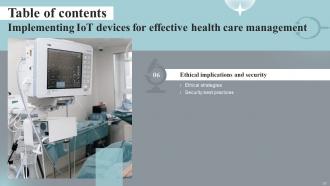
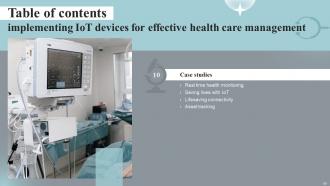
Slide 3: This slide shows Table of Content for the presentation.
Slide 4: This is another slide continuing Table of Content for the presentation.
Slide 5: This slide highlights title for topics that are to be covered next in the template.
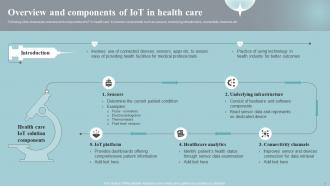
Slide 6: This slide displays Practice of using technology in health industry for better outcomes.
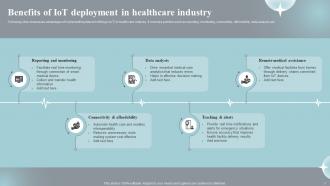
Slide 7: This slide represents Benefits of IoT deployment in healthcare industry.
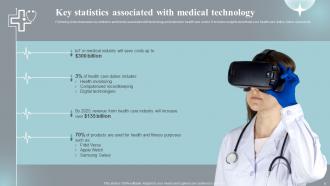
Slide 8: This slide showcases Key statistics associated with medical technology.
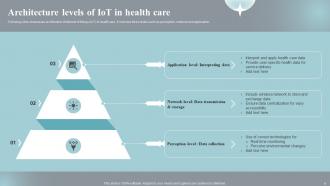
Slide 9: This slide shows Architecture levels of IoT in health care.
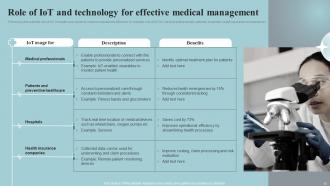
Slide 10: This slide presents Role of IoT and technology for effective medical management.
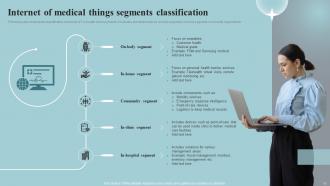
Slide 11: This slide displays Internet of medical things segments classification.
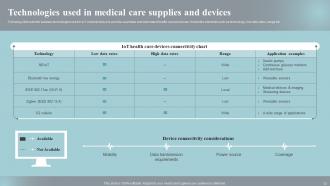
Slide 12: This slide represents Technologies used in medical care supplies and devices.
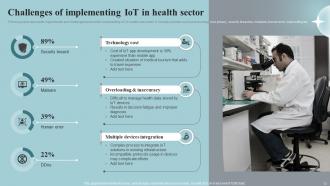
Slide 13: This slide showcases Challenges of implementing IoT in health sector.
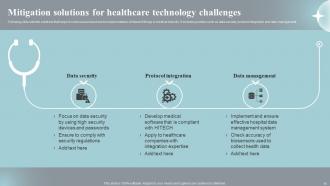
Slide 14: This slide shows Mitigation solutions for healthcare technology challenges.
Slide 15: This slide highlights title for topics that are to be covered next in the template.
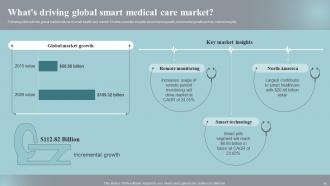
Slide 16: This slide presents What's driving global smart medical care market.
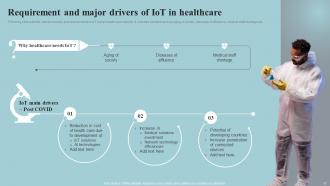
Slide 17: This slide displays Requirement and major drivers of IoT in healthcare.
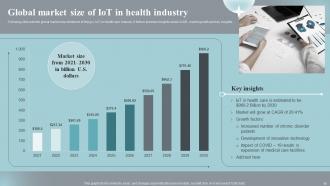
Slide 18: This slide represents Global market size of IoT in health industry.
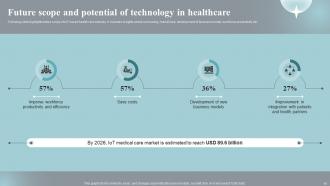
Slide 19: This slide showcases Future scope and potential of technology in healthcare.
Slide 20: This slide highlights title for topics that are to be covered next in the template.
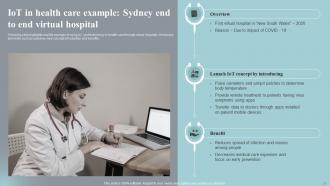
Slide 21: This slide shows IoT in health care example: Sydney end to end virtual hospital.
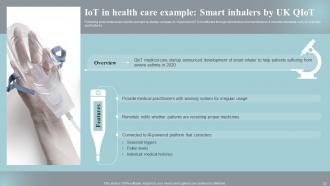
Slide 22: This slide presents IoT in health care example: Smart inhalers by UK QIoT.
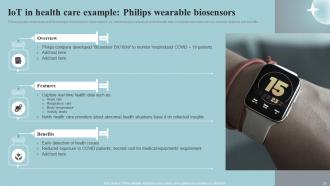
Slide 23: This slide displays IoT in health care example: Philips wearable biosensors.
Slide 24: This slide highlights title for topics that are to be covered next in the template.
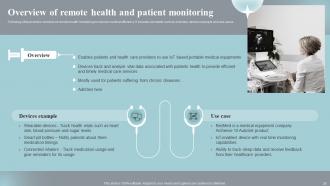
Slide 25: This slide represents Overview of remote health and patient monitoring.
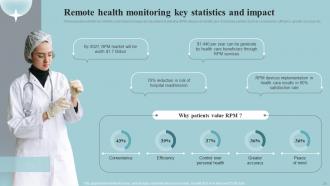
Slide 26: This slide showcases Remote health monitoring key statistics and impact.
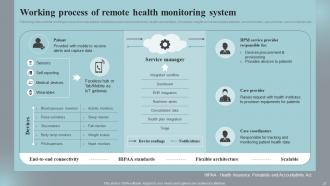
Slide 27: This slide shows Working process of remote health monitoring system.
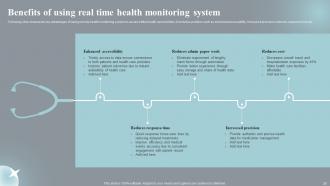
Slide 28: This slide presents Benefits of using real time health monitoring system.
Slide 29: This slide highlights title for topics that are to be covered next in the template.
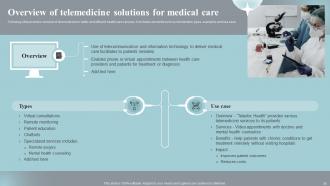
Slide 30: This slide displays Overview of telemedicine solutions for medical care.
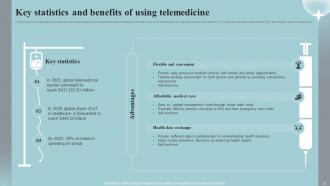
Slide 31: This slide represents Key statistics and benefits of using telemedicine.
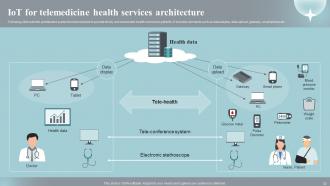
Slide 32: This slide showcases IoT for telemedicine health services architecture.
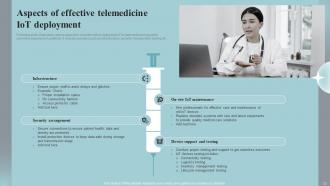
Slide 33: This slide shows Aspects of effective telemedicine IoT deployment.
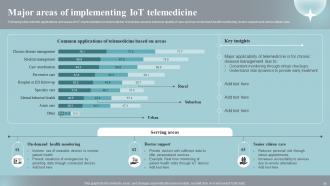
Slide 34: This slide presents Major areas of implementing IoT telemedicine.
Slide 35: This slide highlights title for topics that are to be covered next in the template.
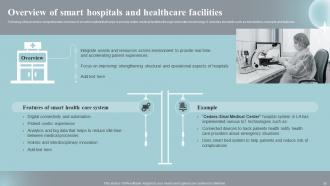
Slide 36: This slide displays Overview of smart hospitals and healthcare facilities.
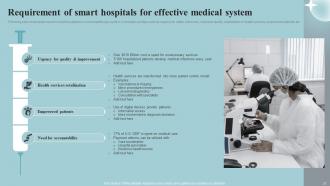
Slide 37: This slide represents Requirement of smart hospitals for effective medical system.
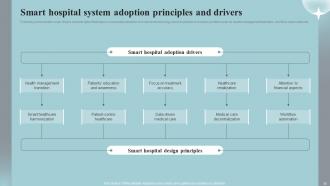
Slide 38: This slide showcases Smart hospital system adoption principles and drivers.
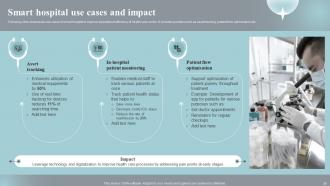
Slide 39: This slide shows Smart hospital use cases and impact.
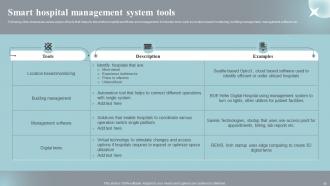
Slide 40: This slide presents Smart hospital management system tools.
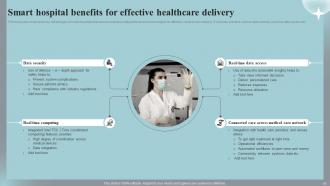
Slide 41: This slide displays Smart hospital benefits for effective healthcare delivery.
Slide 42: This slide highlights title for topics that are to be covered next in the template.
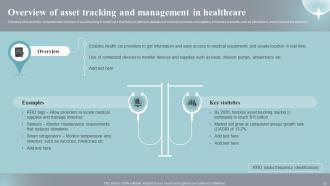
Slide 43: This slide represents Overview of asset tracking and management in healthcare.
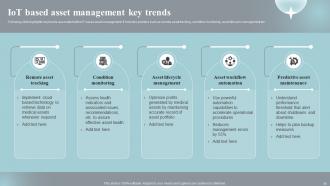
Slide 44: This slide showcases IoT based asset management key trends.
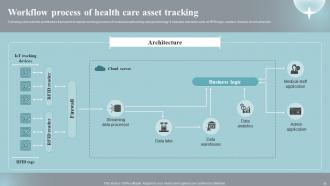
Slide 45: This slide shows Workflow process of health care asset tracking.
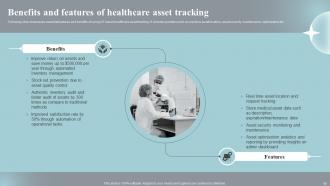
Slide 46: This slide presents Benefits and features of healthcare asset tracking.
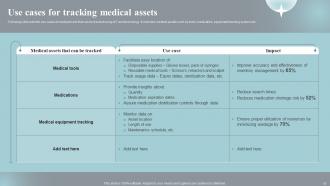
Slide 47: This slide displays Use cases for tracking medical assets.
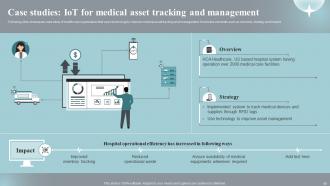
Slide 48: This slide represents Case studies: IoT for medical asset tracking and management.
Slide 49: This slide highlights title for topics that are to be covered next in the template.
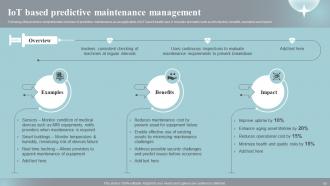
Slide 50: This slide showcases IoT based predictive maintenance management.
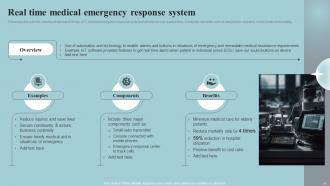
Slide 51: This slide shows Real time medical emergency response system.
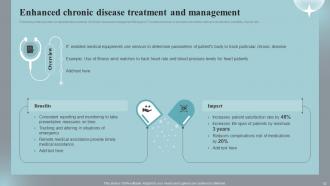
Slide 52: This slide presents Enhanced chronic disease treatment and management.
Slide 53: This slide highlights title for topics that are to be covered next in the template.
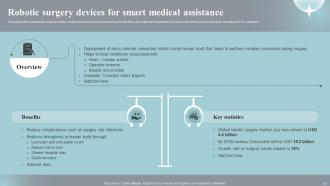
Slide 54: This slide displays Robotic surgery devices for smart medical assistance.
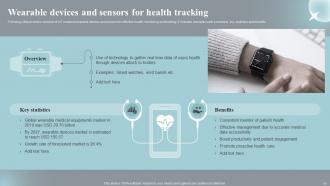
Slide 55: This slide represents Wearable devices and sensors for health tracking.
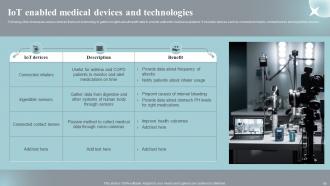
Slide 56: This slide showcases IoT enabled medical devices and technologies.
Slide 57: This slide highlights title for topics that are to be covered next in the template.
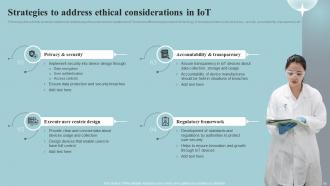
Slide 58: This slide shows Strategies to address ethical considerations in IoT.
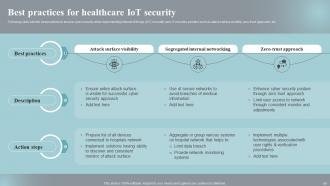
Slide 59: This slide presents Best practices for healthcare IoT security.
Slide 60: This slide highlights title for topics that are to be covered next in the template.
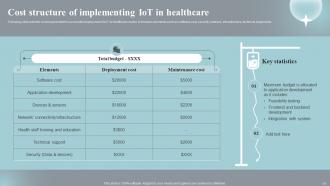
Slide 61: This slide displays Cost structure of implementing IoT in healthcare.
Slide 62: This slide highlights title for topics that are to be covered next in the template.
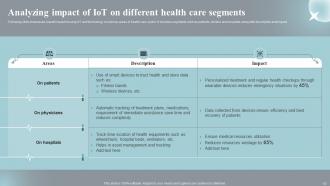
Slide 63: This slide represents Analyzing impact of IoT on different health care segments.
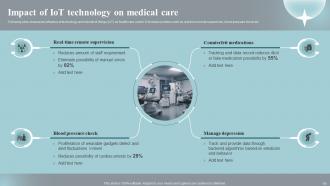
Slide 64: This slide showcases Impact of IoT technology on medical care.
Slide 65: This slide highlights title for topics that are to be covered next in the template.
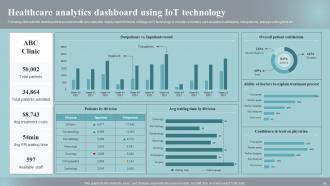
Slide 66: This slide shows Healthcare analytics dashboard using IoT technology.
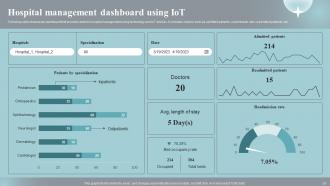
Slide 67: This slide presents Hospital management dashboard using IoT.
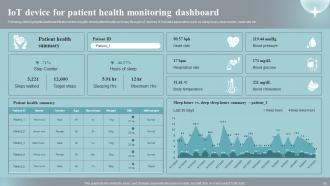
Slide 68: This slide displays IoT device for patient health monitoring dashboard.
Slide 69: This slide highlights title for topics that are to be covered next in the template.
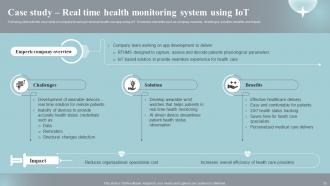
Slide 70: This slide represents Case study – Real time health monitoring system using IoT.
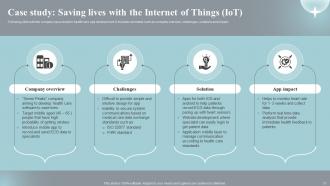
Slide 71: This slide showcases Case study: Saving lives with the Internet of Things (IoT).
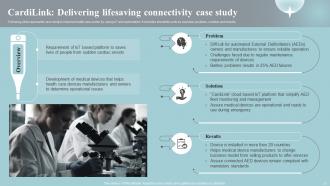
Slide 72: This slide shows CardiLink: Delivering lifesaving connectivity case study.
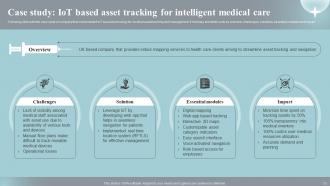
Slide 73: This slide presents Case study: IoT based asset tracking for intelligent medical care.
Slide 74: This slide contains all the icons used in this presentation.
Slide 75: This slide is titled as Additional Slides for moving forward.
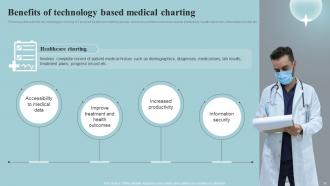
Slide 76: This slide displays Benefits of technology based medical charting.
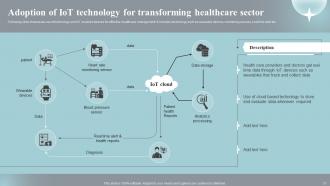
Slide 77: This slide represents Adoption of IoT technology for transforming healthcare sector.
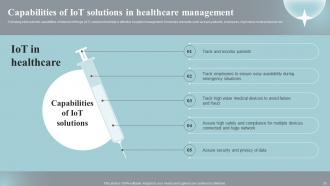
Slide 78: This slide showcases Capabilities of IoT solutions in healthcare management.
Slide 79: This is a Timeline slide. Show data related to time intervals here.
Slide 80: This slide depicts Venn diagram with text boxes.
Slide 81: This is a Thank You slide with address, contact numbers and email address.
Implementing IOT Devices For Effective Health Care Management Powerpoint Presentation Slides IoT CD with all 86 slides:
Use our Implementing IOT Devices For Effective Health Care Management Powerpoint Presentation Slides IoT CD to effectively help you save your valuable time. They are readymade to fit into any presentation structure.






FAQs for Implementing IOT Devices For Effective Health Care Management Powerpoint Presentation
So real-time monitoring is huge - you catch problems way before they turn into disasters. Patients love not being chained to hospital beds while still getting tracked continuously. Smart pill dispensers help with medication compliance too, which is honestly a nightmare otherwise. The data you collect gives you patterns you'd never notice just looking at charts manually. Oh and it cuts down on staffing costs since devices handle the routine stuff. My advice? Pick one device type first and see how it goes with your specific patients before going crazy with everything.
So basically IoT lets you monitor patients 24/7 from their own homes - pretty wild when you think about it. Wearables and sensors track vitals, med compliance, all that stuff in real-time. The best part? You catch problems before they explode into ER visits. Heart rhythm going wonky? Blood sugar spiking? You'll know immediately. Honestly works amazing for older folks and anyone with diabetes or heart issues. My advice though - don't go crazy trying to do everything at once. Just pick whatever condition you see most and test it out first.
Honestly, the security stuff will keep you up at night - way more entry points for hackers. Getting it to play nice with your current systems is a total pain too. Your team's gonna push back hard because nobody likes learning new tech. Data compliance gets messy fast, especially if you're in healthcare or finance. The costs hit you twice - upfront for everything, then ongoing training and maintenance. Oh, and more connected devices means more things that can randomly break down. My advice? Test it in just one department first. Work out all the bugs before you go crazy and roll it everywhere.
Honestly, data security is killing IoT adoption in healthcare. Patient data breaches mean HIPAA fines and ruined trust - healthcare orgs are terrified of that. Every IoT device creates new entry points for hackers, which freaks out IT teams. The real problem? Most devices weren't designed with medical-grade security from day one. I've seen hospitals drag their feet on cool tech because of this exact issue. My take - do a thorough risk assessment first. You'll need bulletproof encryption before rolling out anything that touches patient data. Can't blame them for being paranoid though.
Honestly, smartwatches and fitness trackers are where I'd start - they're seriously amazing for tracking vitals 24/7. Heart rate, blood pressure, sleep patterns, glucose levels... that's the stuff that actually matters for getting a full health picture. Smart scales are solid too, plus pulse oximeters if you need them. Oh and connected inhalers work great for asthma patients. The trick is picking devices that'll actually sync with whatever system you're already using. Patients won't wear stuff that's a pain to deal with. I'd say start small - maybe one or two types that fit your biggest patient needs, then build from there.
Honestly, the biggest win is catching equipment problems before they blow up into expensive disasters. Smart sensors tell you when stuff's about to break so you're not scrambling for emergency repairs. Your nurses will love you too - patient monitoring happens automatically instead of them running around checking vitals every hour. That frees them up for actual patient care. Oh, and inventory tracking is clutch for not overstocking pricey supplies while avoiding those "oh crap we're out" moments. Energy costs drop with smart building controls, but that's almost secondary. I'd start with equipment monitoring first - you'll see results pretty fast.
HIPAA's gonna be your main headache - patient data through IoT is tricky stuff. FDA might jump in too if they decide your devices count as medical equipment, which honestly feels pretty random sometimes. Encryption and storage need to hit healthcare standards, obviously. Don't forget state privacy laws either - they vary all over the place. Oh, and definitely loop in your legal team from day one. Trust me, trying to fix compliance issues after you've already built everything is a nightmare you don't want.
So IoT stuff is actually pretty game-changing for medication compliance. Smart pill bottles track when patients open them, and there are even pills with tiny sensors that confirm someone actually swallowed it (wild, right?). Connected blister packs monitor which doses get taken. All this data flows to apps that send reminders and flag your care team when patients aren't sticking to their regimen. Some dispensers automatically release meds at the right times. You can link everything with fitness trackers too - correlate med timing with blood pressure, glucose, whatever. I'd start small though, maybe pick your worst non-adherence patients and test one device type first.
So IoT devices are basically turning patients' houses into little monitoring hubs. Smart blood pressure cuffs, glucose meters, pulse oximeters - they all feed data straight to your telehealth system in real time. It's honestly pretty wild how much insight you get. You can catch problems brewing before they blow up into ER visits. Makes your virtual appointments way more productive too since you're not flying blind. I'd start with basic vitals monitoring for your chronic patients - my cousin's practice did this and saw results right away. The data quality alone makes such a difference.
Look, patient consent is basically your whole foundation here - can't touch any health data without getting clear permission first. IoT makes this weird though because you're collecting info 24/7, so those old consent forms are pretty much useless. What you really need is something dynamic where patients can pick and choose what they share, then change their mind later if they want. Make sure you explain which devices are watching what, who sees the data, all that stuff. Honestly, the biggest mistake is treating consent like some checkbox you add later. Build it into your system from the start or you'll hate yourself.
So basically, ML takes all that messy IoT health data and actually makes sense of it. You know how overwhelming it gets with constant heart rate readings, blood pressure numbers, activity tracking - stuff like that? Well, these algorithms can spot weird patterns way faster than any human could. It's pretty cool actually - they can predict health issues before symptoms even pop up and give personalized treatment suggestions. The best part? It gets better with more data over time. Honestly though, don't try to tackle everything at once. Pick one specific thing first and build from there.
IoT sensors can track your medical equipment in real-time - no more hunting around for wheelchairs or IV pumps. Smart tags automatically update inventory and trigger reorders when you're running low. Honestly, the amount of time hospitals waste on this stuff manually is crazy. The data also shows usage patterns, so you can figure out better placement and when equipment needs maintenance. Oh, and temperature monitoring keeps meds and blood products in safe ranges. I'd start with your most expensive equipment first - easier to show it's worth the investment before you go all-in.
So instead of just reacting to problems, you're actually predicting them now. Continuous data streaming means catching issues before they blow up - way better than those snapshot visits. Honestly, the pattern recognition stuff is pretty mind-blowing; algorithms spot things we'd totally miss. But yeah, you'll get buried in data at first. Setting smart alert thresholds is huge - you want the critical stuff without your phone buzzing every two seconds. Your gut instincts matter less when you've got solid datasets backing decisions. It's basically shifting everything from guesswork to actual evidence-based care.
Honestly, the game-changer is when all those devices actually sync up properly. Your patient's glucose monitor talks to their BP cuff and fitness tracker - suddenly you're seeing the full picture instead of random data scattered everywhere. I've seen docs catch stuff they would've totally missed before because the system flags weird patterns automatically. No more jumping between five different apps like some kind of digital scavenger hunt. You'll make way better calls faster. Oh, and go with HL7 FHIR protocol from the start - trust me on this one, it'll save you so much frustration down the road.
Dude, the predictive analytics stuff is wild - AI will catch health problems before you even feel sick. Wearables are getting crazy sophisticated too, tracking glucose and blood pressure constantly. Edge computing's where it's at though, processing data locally instead of cloud uploads so everything's faster and more private. Remote surgeries are becoming legit viable, and hospitals will basically run themselves, adjusting automatically for patients. Oh, and devices will actually talk to each other properly now (finally!). Seriously though, you better start beefing up your data infrastructure because the flood of connected devices is gonna be insane.
-
Good research work and creative work done on every template.
-
My team has been relying on SlideTeam’s professional PPT designs for a while now. It has greatly sped up quality work at my organization. So thanks!