


Process Flow Of IOT Based Smart Healthcare Medical System




Try Before you Buy Download Free Sample Product
 Impress Your
 Audience
 100%
100% Editable
 Save Hours
 of Time


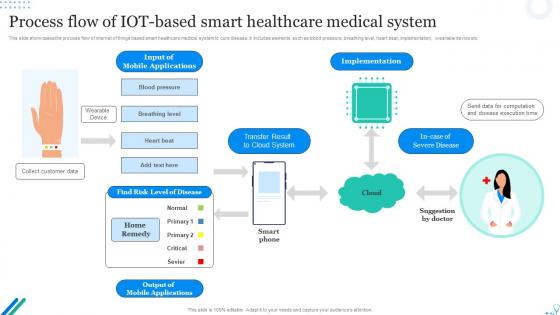
This slide showcases the process flow of internet of things based smart healthcare medical system to cure disease. It includes elements such as blood pressure, breathing level, heart beat, implementation, wearable device etc.
People who downloaded this PowerPoint presentation also viewed the following :
Process Flow Of IOT Based Smart Healthcare Medical System with all 6 slides:
Use our Process Flow Of IOT Based Smart Healthcare Medical System to effectively help you save your valuable time. They are readymade to fit into any presentation structure.





FAQs for Process Flow Of IOT Based Smart
Honestly, IoT in healthcare is a game changer for monitoring patients. Connected devices let you track vitals continuously, so you're catching issues before they blow up into emergencies. Patients can stay home while you still keep tabs on their health 24/7 - way less stressful for everyone involved. The data helps you spot patterns and make smarter decisions too. Chronic disease management becomes so much easier when you don't need constant office visits. Hospital readmissions drop, which saves tons of money. I'd start with remote monitoring for your riskiest patients first.
Honestly, IoT stuff is pretty wild for chronic care. You get constant data instead of just those quick doctor visits - glucose monitors syncing to your phone, smart pill bottles tracking if you actually took your meds (guilty as charged sometimes lol). Blood pressure cuffs can even ping your doctor when things spike. The cool part? You catch problems way earlier instead of waiting until you feel terrible. Patients actually like seeing their own patterns too. I'd start people with basic things like connected scales or fitness trackers first though - gets them used to the tech without being overwhelming.
Honestly, the big threats are hackers getting into patient records, taking over devices, or exploiting weak passwords. And yeah, it's terrifying when you realize pacemakers and insulin pumps are networked now. You'll want solid encryption everywhere, plus keep devices updated and use strong authentication. Network segmentation helps too - isolate those IoT devices from everything else. Regular vulnerability checks are clutch. First step though? Figure out what devices you actually have running and how secure they are right now. Most places have no clue what's connected to their network, which is... not great.
So basically, IoT stuff helps hospitals run smoother by automating the boring tasks and giving you real-time data. No more hunting around for missing equipment - you'll know exactly where that IV pump ended up. Your nurses get freed up from constantly checking monitors since everything's automated now. Plus you can see which equipment actually gets used (spoiler: probably not as much as you think). The data helps with scheduling staff better and catching maintenance issues before things break down. Honestly, just start with whatever's driving everyone crazy first and work from there.
So basically these connected health gadgets make telemedicine way better. Your blood pressure cuff, glucose monitor, pulse oximeter - they all send data straight to your doctor during video calls. Way cooler than just saying "I feel tired" or whatever. My mom uses one of those smart thermometers and her doctor can see the readings in real time while they're talking. Plus wearables track everything between appointments, so docs get the full picture of what's actually happening with your health. Definitely ask what devices your provider works with - makes such a difference.
So basically, all those IoT health gadgets are collecting massive amounts of data from your wearables and monitors, right? Analytics turns that flood of information into something doctors can actually use. The software spots patterns in your vitals and can predict problems before they get serious. Pretty cool how it personalizes treatments based on your specific trends. Hospitals use it too - tracking equipment and patient flow to run smoother operations. My advice? Pick one thing you want to track first. Don't go crazy trying to analyze everything at once, you'll just get overwhelmed.
So basically, regulatory stuff is a huge pain but necessary for IoT healthcare. The FDA makes companies jump through tons of hoops before approval - takes forever but keeps patients safe, I guess. HIPAA's another headache since you're dealing with personal health info. What makes it worse is every country has different rules, so what passes in Europe might bomb here. Most companies just play it super safe because one mistake can tank their whole product. Oh, and budget way more time than you think for approvals. Start thinking about data privacy from the beginning or you'll regret it later.
Yeah totally! Those smart pill dispensers are actually pretty legit - they'll remind you when to take stuff and even dispense the right pills automatically. There's also wearable devices and connected bottles that track everything. Your doctor can see if you're actually taking your meds, which is kinda nice for accountability. Some will text your family if you miss doses too. The reminder apps are decent since they work around your schedule. Only downside is you gotta make sure whatever device you pick works with your doctor's system, otherwise it's just another gadget collecting dust.
IoT health devices are basically data goldmines for hackers - breaches happen all the time, plus companies love sharing your info with random third parties. Strong passwords are obvious but people forget about firmware updates (boring but crucial). Two-factor auth is your friend. Before connecting anything new, actually read those privacy policies - I know, tedious as hell, but you need to know where your data's going. Check what encryption they're using too. Honestly, start by looking at what you've already got connected and lock down those privacy settings first.
So basically these devices track your heart rate, blood pressure, glucose, sleep - all that stuff through tiny sensors. The data goes straight to healthcare systems automatically. If something looks weird, your doctor gets pinged before you even know there's a problem. My cousin's CGM caught her blood sugar dropping dangerously low last month - pretty wild that a little gadget can do that. Just make sure whatever you get actually works with your doctor's system and isn't some cheap knockoff. The accuracy really matters when it's your health we're talking about.
Dude, the sensor tech in elder care is getting wild. Fall detection automatically pings staff when someone goes down. There's medication dispensers tracking if people actually take their pills - which honestly, my grandma would hate lol. Wearables monitor heart rate and stuff 24/7. Even saw smart beds that detect pressure points and movement patterns. Everything feeds into dashboards so nurses can catch problems early instead of waiting for disasters. Philips and GE Healthcare are doing most of the heavy lifting if you want to research actual products.
Honestly, IoT sensors are a game changer for this stuff. Smart tags on wheelchairs, IV pumps, meds - whatever keeps going missing - will show you exactly where everything is. Real-time tracking means no more wandering around looking for equipment that's somehow vanished into thin air. The sensors automatically ping you when inventory's getting low or something needs maintenance. I'd start with your most expensive gear or the things that disappear constantly (we all know there's always that one piece of equipment). You'll probably see results pretty quickly, then just add more devices as you go.
Dude, 5G is gonna be a game changer for healthcare IoT. Remote surgeries will actually work in real-time - no more sketchy delays that could literally kill someone. All those patient monitors? They'll send data instantly instead of buffering like a bad Netflix connection. Hospitals can finally connect thousands of devices without everything crashing - smart beds, pill dispensers, air quality stuff, you name it. I'm honestly kinda jealous of the tech they'll have. Which of your current projects could use that speed bump?
Honestly, interoperability will make or break your whole setup. You want your heart monitors talking to medication dispensers, fall sensors feeding into the same dashboard - basically everything working together instead of being isolated gadgets. Without it, you're stuck with expensive equipment that doesn't communicate. Pretty frustrating, right? The magic happens when devices sync seamlessly and give you real-time data for care decisions. My advice? Go with HL7 FHIR standards from the start - it'll save you major headaches later. Trust me on this one.
You should check out these real examples - they're pretty solid proof IoT works in healthcare. Kaiser Permanente cut hospital readmissions by 44% with remote monitoring for chronic diseases. Mayo Clinic's smart pill dispensers basically solved the whole "did I take my meds?" problem that drives everyone crazy. Philips has these ICU systems that predict patient issues before they happen, which sounds a bit sci-fi but apparently works great. The nursing staff loves them too since it cuts down their workload. All of these have actual ROI numbers you can look at, which is gold if you're trying to build a business case.
-
The slides come with appealing color schemes and relevant content that helped me deliver a stunning presentation without any hassle!
-
The designs are super attractive. Me and my team love using SlideTeam’s presentations.