


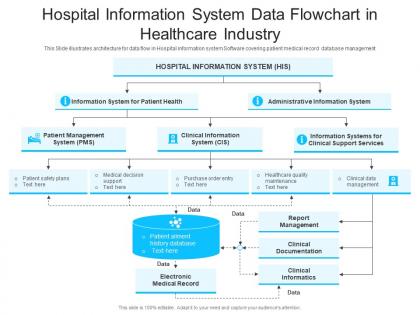
Hospital information system data flowchart in healthcare industry




Try Before you Buy Download Free Sample Product
 Impress Your
 Audience
 100%
100% Editable
 Save Hours
 of Time


This Slide illustrates architecture for data flow in Hospital information system Software covering patient medical record database management.
People who downloaded this PowerPoint presentation also viewed the following :
Hospital information system data flowchart in healthcare industry with all 2 slides:
Use our Hospital Information System Data Flowchart In Healthcare Industry to effectively help you save your valuable time. They are readymade to fit into any presentation structure.
FAQs for Hospital information system data flowchart
So basically you've got patient stuff - registration, scheduling, all their records. Then there's the clinical side with lab results, pharmacy, radiology. Administrative modules handle billing and inventory tracking. Interface engines are what connect everything (honestly those things are lifesavers when they work right). Most systems also come with reporting tools and mobile access for staff. Here's the thing though - before you even look at vendors, map out how your workflow actually works now. Otherwise you'll end up with something that technically does everything but doesn't fit how your team operates.
Look, HIS is a total game-changer for patient safety. You get instant access to everything - medical histories, labs, meds - without digging through paper charts or waiting forever for faxes. The system catches drug interactions and allergies before they hurt someone, which honestly saved my butt more times than I can count. Real-time tracking of vitals and treatment responses is huge too. Care coordination between departments actually works now, and patients get faster diagnoses since their data follows them around. Just make sure your staff gets proper training because most people barely scratch the surface of what these systems can do.
Honestly, data interoperability makes or breaks everything in HIS. Your lab results need to flow straight into the EMR automatically - otherwise nurses are stuck typing everything manually and mistakes happen constantly. It's frustrating when systems can't talk to each other because you end up with these annoying data silos. Real-time patient info should move between departments without anyone thinking about it. Fewer duplicate tests, better coordination, happier staff. Oh, and definitely push for HL7 FHIR standards when you're looking at new integrations - trust me on that one.
So basically HIS takes all that annoying admin stuff and handles it automatically. Patient registration, scheduling, billing - it all connects instead of you dealing with like five different systems. The reporting thing is actually pretty sweet for tracking everything. Your staff won't be buried in paperwork anymore and can focus on patients instead. Way fewer mistakes too since it's all linked up. Oh, and definitely figure out what's driving you crazy first - maybe it's scheduling or billing - then tackle those modules. Trust me, your sanity will thank you later.
Ugh, staff resistance is brutal - doctors and nurses absolutely despise change. Data migration will make you want to scream, especially coming from paper or ancient systems. Training's a mess since everyone picks it up differently, plus you'll have downtime that screws with patient care. Oh and budgets? Forget whatever number you're thinking. Honestly, double whatever timeline the vendors tell you (they always lie about that stuff). Find your department champions first though - makes everything way less painful. Trust me on this one.
Look, HIS basically saves you from drowning in paperwork. You get all patient info in one spot - histories, labs, meds, everything. No more digging through charts or playing phone tag. The duplicate entry thing? Gone. That's probably worth it right there tbh. Plus it handles scheduling and billing automatically, which frees you up for actual patient care. Oh and prescription management too - I forgot about that part. Just think about what wastes most of your time now and you'll see how it fixes like 90% of those headaches.
Honestly, HIS is way better for security than people think. Built-in encryption and access controls mean staff only see what they need to. Plus you get automatic HIPAA compliance and audit trails tracking everything - beats those old paper charts scattered around offices (what a mess that was). Most platforms now have breach detection and auto-backups too. The main weak spot? Staff training, really. Your IT folks should check those access logs regularly because that's usually where things go wrong. Oh, and role-based permissions are clutch for keeping data locked down properly.
Your HIS can pull patient records, labs, and imaging straight into telemedicine visits - no more juggling multiple screens while talking to patients. Remote monitoring gets way easier too. Data from glucose meters, fitness trackers, whatever devices patients have at home flows automatically into their charts. You can set alerts for when vitals go wonky, which honestly saves so much time. Everything ends up in one place, so follow-ups actually make sense. I'd start with whatever devices your patients are already using most - work with IT to get those connected first, then expand from there.
Track user adoption first - are people actually using it or finding workarounds? System downtime and task completion times matter too. Clinical stuff like med errors and documentation quality will show if it's helping patient care. ROI tracking is obvious but worth mentioning - less paperwork, fewer duplicate tests, better billing. Patient satisfaction scores are underrated honestly, they notice when check-in runs smooth. Don't try measuring everything though. Pick 3-4 metrics max or you'll drown in data.
So patient portals are definitely your starting point - lets people check records, book appointments, message docs. Then you can add automated reminders and push relevant health info based on what conditions they have. Mobile apps are pretty much expected at this point, which is kinda annoying but whatever. The trick is making sure everything connects back to your main HIS so data doesn't get messy. Honestly? Don't go crazy trying to launch everything simultaneously. Pick one feature, get it working smoothly, then build from there. Way less headache that way.
So basically HIS puts all patient info in one place where your whole team can see updates instantly. No more chasing people down for status reports or playing that annoying game of telephone. When someone logs vitals or changes a treatment plan, boom - everyone sees it right away. The system's pretty smart about flagging urgent stuff and shooting alerts to whoever needs them. You can drop notes for the next shift too, which honestly saves so much headache. Just make sure you set up your notifications right from the start so you're not drowning in alerts all day.
Look, AI integration is what you're gonna see everywhere now - predictive stuff for patient outcomes, auto documentation, clinical decision support that doesn't drive doctors crazy. Cloud migration is massive too since hospitals can scale without buying tons of infrastructure. Interoperability is finally working (seriously, those data silos were killing everyone). Mobile interfaces are standard now. Oh, and patient engagement tools are getting built into core systems instead of just slapped on later. Honestly? Start checking your vendor's AI roadmap ASAP - that's where you'll win in a few years.
So your HIS can pull patient data to spot health trends and risk patterns across different groups - it's honestly pretty cool what you can see. Track stuff like vaccination rates, chronic conditions, disease outbreaks by demographics. Risk stratification helps too - figure out who needs more preventive care. I'd start small though, pick maybe 2-3 specific metrics you actually want to monitor instead of trying to track everything at once. The analytics part is where it gets interesting - you're already collecting all this data anyway, might as well make it work for you. Population health outcomes become way clearer over time.
So you're gonna need technical training on the actual software plus workflow stuff for how it fits into daily hospital life. Plan on 8-16 hours initially - basic navigation, patient data entry, the works. Not gonna lie, it's pretty brutal at first but gets way easier once people get the hang of it. Clinical staff need extra time on documentation and compliance features (ugh, the compliance stuff never ends). Train a few "super users" per department who can help when things go sideways. Oh, and definitely do refresher sessions every six months with quick reference guides for common tasks.
So HIS analytics takes all that messy hospital data and turns it into stuff you can actually work with. Real-time dashboards show patient flow, bed occupancy, medication patterns - way better than drowning in Excel hell, honestly. You'll spot bottlenecks fast, predict when you need more staff, find places to cut costs. Oh and it flags quality issues before they blow up. My advice? Pick one annoying metric your department deals with and start there. Don't try to fix everything at once or you'll go crazy.
-
Use of icon with content is very relateable, informative and appealing.
-
Awesomely designed templates, Easy to understand.
-
Amazing product with appealing content and design.
-
Unique design & color.
-
Great product with highly impressive and engaging designs.