

Healthcare Inventory Management System Powerpoint Presentation Slides




Try Before you Buy Download Free Sample Product
 Impress Your
 Audience
 100%
100% Editable
 Save Hours
 of Time


Healthcare inventory management system is a computer system that assists in the efficient administration of healthcare information and the work fulfillment of healthcare personnel. Here is a competently designed Healthcare Inventory Management System that covers the current challenges faced by healthcare administrators and shows the companys rising costs. It also includes the components required by the company in the HIM system, such as patient management, accounting, reporting, inventory management, etc. Also, the slides show a process flow for patient billing management, statistics associated with medication adherence, and a hospital discharge summary. Moreover, this presentation represents the strategies which include clinical workflow to optimize resources, process flow to improve healthcare quality, etc. It also shows slides to optimize hospital management functions such as drug order and delivery forms, payment collection reports, and tracking invoices. Also, it showcases costs associated with implementing HMS, the impact of the healthcare inventory management system on operating expenses and metrics to measure impact, etc. Lastly, it contains dashboards to measure operational performance and metrics associated with discharges, admits, etc. Get access now.
People who downloaded this PowerPoint presentation also viewed the following :
Content of this Powerpoint Presentation
Slide 1: This slide introduces Healthcare Inventory Management System. State Your Company Name and begin.
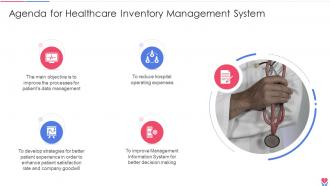
Slide 2: This is an Agenda slide. State your agendas here.
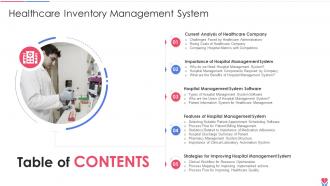
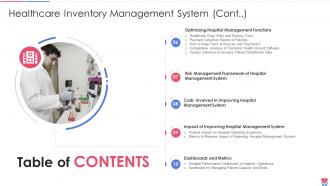
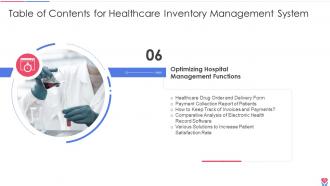
Slide 3: This slide presents Table of Content for the presentation.
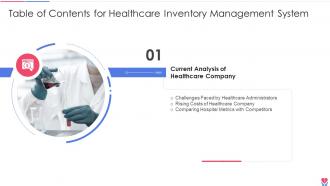
Slide 4: This is another slide continuing Table of Content for the presentation.
Slide 5: This slide shows title for topics that are to be covered next in the template.
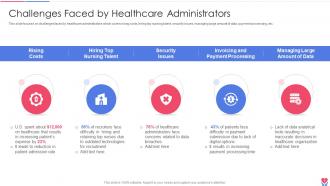
Slide 6: This slide displays Challenges Faced by Healthcare Administrators.
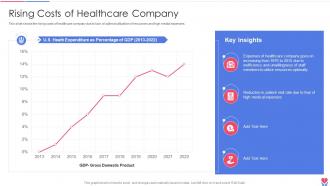
Slide 7: This slide shows the rising costs of healthcare company due to lack of optimal utilization of resources.
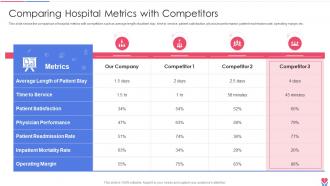
Slide 8: This slide presents the comparison of hospital metrics with competitors such as average length of patient stay, time to service, etc.
Slide 9: This slide shows title for topics that are to be covered next in the template.
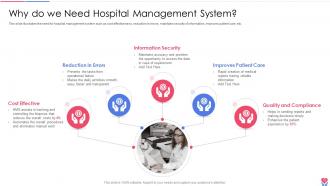
Slide 10: This slide illustrates the need for hospital management system such as cost effectiveness, reduction in errors, etc.
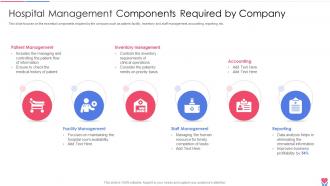
Slide 11: This slide displays Hospital Management Components Required by Company.
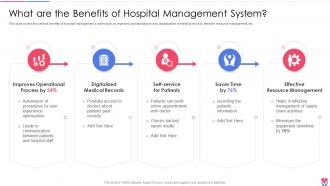
Slide 12: This slide showcases several benefits of hospital management system.
Slide 13: This slide shows title for topics that are to be covered next in the template.
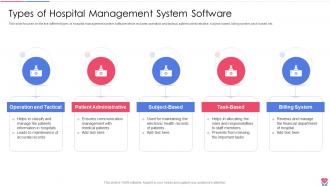
Slide 14: This slide represents Types of Hospital Management System Software.
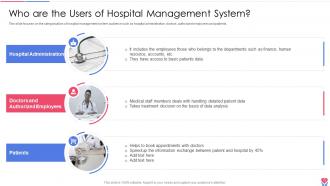
Slide 15: This slide focuses on the categorization of hospital management system audience.
Slide 16: This slide showcases Patient Information System for Healthcare Management.
Slide 17: This slide shows title for topics that are to be covered next in the template.
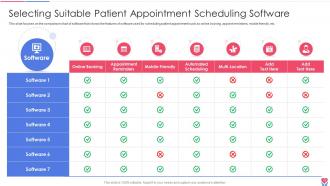
Slide 18: This slide presents Selecting Suitable Patient Appointment Scheduling Software.
Slide 19: This slide shows the process flow for patient billing management which includes patient demographics, insurance details, etc.
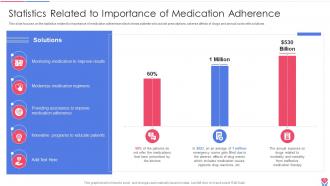
Slide 20: This slide represents Statistics Related to Importance of Medication Adherence.
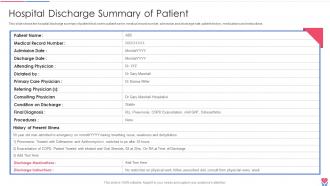
Slide 21: This slide showcases hospital discharge summary of patient that covers patient name, medical record number, etc.
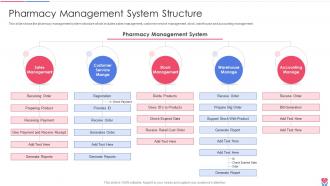
Slide 22: This slide shows the pharmacy management system structure which includes sales management, customer service management, etc.
Slide 23: This slide presents Importance of Clinical Laboratory Automation System.
Slide 24: This slide shows title for topics that are to be covered next in the template.
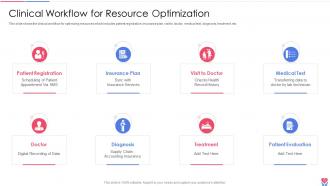
Slide 25: This slide displays clinical workflow for optimizing resources which includes patient registration, insurance plan, visit to doctor, etc.
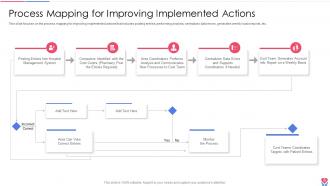
Slide 26: This slide represents Process Mapping for Improving Implemented Actions.
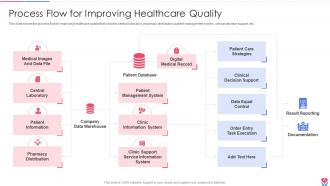
Slide 27: This slide showcases Process Flow for Improving Healthcare Quality.
Slide 28: This slide shows title for topics that are to be covered next in the template.
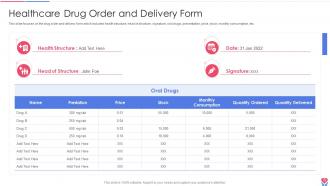
Slide 29: This slide focuses on the drug order and delivery form which includes health structure, head of structure, signature, etc.
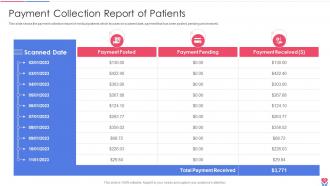
Slide 30: This slide presents payment collection report of medical patients.
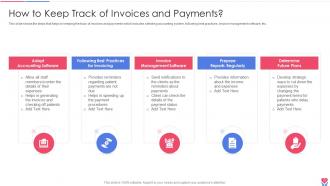
Slide 31: This slide displays How to Keep Track of Invoices and Payments.
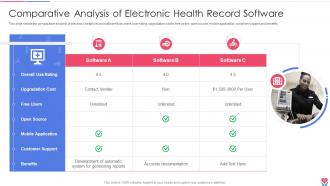
Slide 32: This slide represents Comparative Analysis of Electronic Health Record Software.
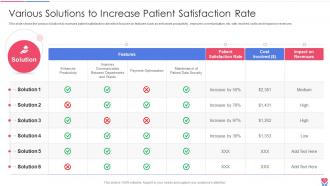
Slide 33: This slide showcases Various Solutions to Increase Patient Satisfaction Rate.
Slide 34: This slide shows title for topics that are to be covered next in the template.
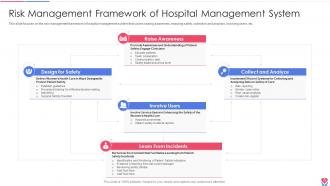
Slide 35: This slide presents Risk Management Framework of Hospital Management System.
Slide 36: This slide shows title for topics that are to be covered next in the template.
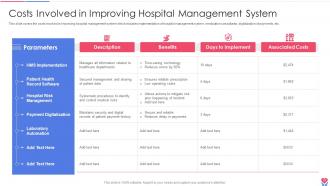
Slide 37: This slide displays Costs Involved in Improving Hospital Management System.
Slide 38: This slide shows title for topics that are to be covered next in the template.
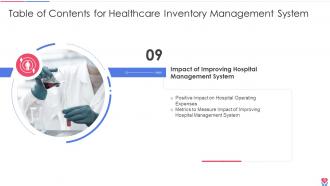
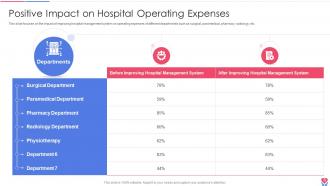
Slide 39: This slide represents Positive Impact on Hospital Operating Expenses.
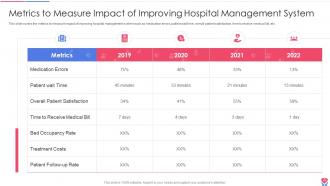
Slide 40: This slide showcases Metrics to Measure Impact of Improving Hospital Management System.
Slide 41: This slide shows title for topics that are to be covered next in the template.
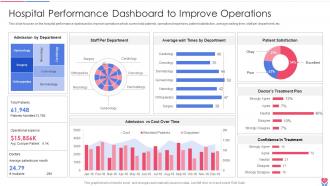
Slide 42: This slide presents Hospital Performance Dashboard to Improve Operations.
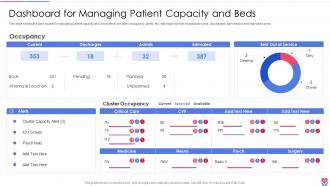
Slide 43: This slide displays Dashboard for Managing Patient Capacity and Beds.
Slide 44: This slide showcases Icons for Healthcare Inventory Management System.
Slide 45: This slide is titled as Additional Slides for moving forward.
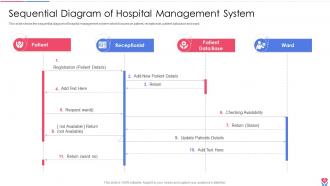
Slide 46: This slide shows Sequential Diagram of Hospital Management System.
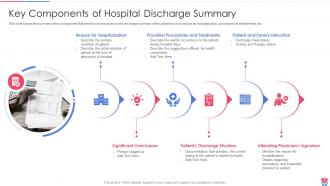
Slide 47: This slide presents Key Components of Hospital Discharge Summary.
Slide 48: This is About Us slide to show company specifications etc.
Slide 49: This is Our Mission slide with related imagery and text.
Slide 50: This slide provides 30 60 90 Days Plan with text boxes.
Slide 51: This slide contains Puzzle with related icons and text.
Slide 52: This slide shows Circular Diagram with additional textboxes.
Slide 53: This is an Idea Generation slide to state a new idea or highlight information, specifications etc.
Slide 54: This is Our Goal slide. State your firm's goals here.
Slide 55: This slide depicts Venn diagram with text boxes.
Slide 56: This slide shows Post It Notes. Post your important notes here.
Slide 57: This is a Timeline slide. Show data related to time intervals here.
Slide 58: This is a Thank You slide with address, contact numbers and email address.
Healthcare Inventory Management System Powerpoint Presentation Slides with all 63 slides:
Use our Healthcare Inventory Management System Powerpoint Presentation Slides to effectively help you save your valuable time. They are readymade to fit into any presentation structure.



















FAQs for Healthcare Inventory Management System
Honestly, start with real-time inventory tracking and automated reordering when you hit minimum levels. Expiration date alerts are huge too - I've seen way too many places get stuck with expired stock. Barcode scanning is basically required now, don't even consider systems without it. You'll need lot tracking for recalls, plus integration with whatever EHR or purchasing software you're already using. Temperature-controlled storage features matter if you handle specialty meds. Oh, and decent reporting so you can actually see usage patterns. Before you demo anything though, write down your biggest headaches right now and make sure whatever system you pick fixes those specific problems first.
Honestly, automation is a game changer - it handles all that boring manual tracking and gets way more accurate results. Real-time inventory levels, automatic reordering when you hit minimums, barcode scanning instead of hand counting everything. Your staff can actually focus on patients instead of walking around with those stupid clipboards all day. The system learns your usage patterns too, so it'll predict when you need more supplies. I'd definitely start with your busiest items first - you'll see the difference right away. Way less headache overall.
Honestly, staff pushback is the worst part - people hate changing from manual stuff they're comfortable with. Training costs a fortune upfront too. And don't even get me started on system integration... vendors always say everything will sync perfectly but it never does. Different departments will fight you because they all think their workflow is special. My advice? Start small with just one department. Prove it actually saves money there first, then expand once you've figured out what breaks. Way less painful than going hospital-wide and having everything blow up at once.
Dude, real-time tracking is a game changer - no more "shit, we're out of gauze" panic moments during procedures. Your staff stops wasting time digging through supply closets and can actually focus on patients. Set up automatic reorder alerts for critical stuff so you're never scrambling last minute. It tracks expiration dates too, which honestly saves you from compliance headaches. We used to do those crazy expensive rush orders all the time before switching over. You'll avoid both the overstocking problem and the "oops we have nothing" problem. Trust me, your budget will thank you.
Data analytics basically predicts what supplies you'll need by looking at usage patterns and seasonal trends. It's like having a crystal ball, honestly. You can finally spot which items get overstocked (bye bye, expired supplies) or cause those annoying rush orders. The system crunches your historical data plus real-time stuff - upcoming surgeries, flu season, whatever. Really cuts down on carrying costs too. Oh, and you won't run out of critical supplies anymore, which is huge. Start with your top 20% of expensive or high-volume items first - way easier than tackling everything at once.
Dude, get a system that automates your tracking - you won't believe how much money most places are just throwing away on expired stuff or panic orders. Real-time visibility shows what's actually getting used vs sitting there collecting dust. Most facilities are genuinely shocked when they see the data for the first time. Set automatic reorder points and expiration tracking. That prevents waste and those crazy expensive emergency runs to suppliers. Honestly, start with auditing your current waste patterns first. You'll see exactly where you're bleeding cash and what kind of ROI to expect from fixing it.
FDA regs are your starting point - CFR Title 21 covers medical devices and pharma traceability. HIPAA's obviously mandatory since you're dealing with patient data. Joint Commission standards matter too (they're honestly pretty hardcore about expiration tracking). DEA requirements kick in if controlled substances are involved, which gets messy fast. State pharmacy boards all have different rules depending where you are. Oh, and don't forget lot tracking requirements. I'd tackle FDA and HIPAA first, then add the others based on what you're actually managing. Way easier than trying to do everything at once.
So with a centralized system, you can actually see what's happening at all your sites in real time. No more Site A drowning in supplies while Site B is completely out. Bulk purchasing saves you serious money - the IV bag savings alone will blow your mind. Also prevents those panic moments when you suddenly realize you're out of basic stuff like gauze. The automated reordering is clutch. You get way better reporting on usage patterns too, which is actually pretty useful once you start digging into it. I'd map out your current inventory flows first to see where things are getting messy.
Dude, barcodes and RFID will save your sanity. No more manual counting mistakes - you just scan stuff and boom, your inventory updates automatically. RFID's pretty sweet because you don't even need direct line-of-sight, so you always know where things are. Both cut human error by like 90%, which is huge when you're trying to avoid running out of critical supplies. Oh and real-time updates mean no more surprise stockouts. If money's an issue, start with basic barcodes. But honestly? Get RFID for your expensive stuff first - that's where you'll see the biggest impact.
Look, when you can actually see what's on your shelves in real-time, everything changes. No more "oh crap, we're out of gauze again" situations. You'll catch shortages before they hit, which means way fewer panic orders (and those are expensive). Your reorder points get smarter too. Honestly, the best part is your staff stops wasting time hunting for supplies and can focus on patients instead. Your suppliers love it because they get better demand forecasting - makes their job easier. Oh, and pro tip: don't try to track everything at once. Start with your priciest or most critical stuff first, then expand from there.
Honestly, hands-on training with real scenarios is the way to go - way better than sitting through boring presentations. Different departments need different training though, like nurses vs procurement teams use totally different features. Get some super users in each area who can help troubleshoot later. The generic training approach? Don't bother, it never works. Document the common workflows with screenshots so people can reference them. Oh and prep for about 2-3 weeks of "how do I do this again?" questions - it's totally normal. Schedule some follow-up sessions once they've actually used it for real situations.
Look, EHR integration is where you'll see the biggest impact - it automatically tracks supplies used per patient and updates your stock instantly. No more manual entry hell. Billing integration honestly saves you the most money though, because you'll actually charge for everything instead of losing money on forgotten supplies. The forecasting gets way better too since it uses your scheduled procedures to predict what you'll need. Oh, and start with whatever system has cleaner data first - trust me on that one. Real-time updates mean you're not scrambling last minute.
Ok so the main things you wanna watch are stock-outs and expired meds - those hurt patients and your budget. Inventory turnover shows if stuff's moving fast enough, and carrying costs tell you how much cash is just sitting there doing nothing. Order accuracy and lead times are huge too, especially for the critical stuff. I'd honestly start with just those core ones because dashboards can get crazy overwhelming real quick. Oh, and definitely set up alerts when things go sideways so you're not constantly checking everything manually.
Honestly, mobile inventory is pretty sweet - you literally scan barcodes and update stock right there in the supply room instead of walking back to a computer constantly. Real-time updates keep everyone on the same page, plus you'll get alerts on your phone when stuff's running low or about to expire. Being able to approve orders from wherever you are in the hospital is clutch too. Oh, and definitely test it out in your craziest department first - if it works there, it'll work anywhere. Makes the whole thing way less of a headache.
Oh man, seasonal demand is a real pain if you don't see it coming. Flu season hits and suddenly everyone needs vaccines and antivirals. Summer brings more trauma stuff because people do dumb things outdoors. Winter? Respiratory equipment disappears fast. Build these cycles into your forecasting - I learned this the hard way last year. Start ordering heavy about 6-8 weeks early, and remember supplier lead times get brutal when everyone's scrambling for the same stuff. Historical data is your best friend here, seriously track everything.
-
Appreciate the research and its presentable format.
-
Wonderful templates design to use in business meetings.