


Inventory management system powerpoint presentation slides




Try Before you Buy Download Free Sample Product
 Impress Your
 Audience
 100%
100% Editable
 Save Hours
 of Time


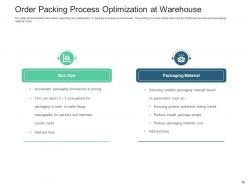
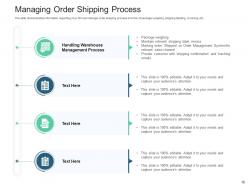
Introducing our inventory management system PowerPoint presentation slides. Enhance warehouse workforce management with our stockroom management PowerPoint deck. This inventory setup PPT theme consists of a slide that talks about the statistics related to effective warehouse management. Adding this warehouse authority control PPT layout helps you in discussing the benefits of having a well established warehouse management system. This storehouse standard checklist PowerPoint design contains a slide discussing the optimizing warehouse layout. Assimilating this storeroom inventory PPT theme in your presentation allows you to label areas that are effective for warehouse management. This store command PowerPoint creative set contains a slide that lets you talk about the automated warehouse order picking system. Selection of this inventory authority PowerPoint template allows you to discuss the order shipping process. This warehouse management PPT deck lets you make required variations to icons and colors. Choose this depository inventory management PowerPoint design to showcase organization and assurance. Download this PPT slide to explore true perfection.
People who downloaded this PowerPoint presentation also viewed the following :
Content of this Powerpoint Presentation
In business, inventory management is the most crucial pillar of providing customers with a healthy supply of products and services. It is the process of planning, producing, storing, and selling the products or parts to make sure that the warehouse is not holding excess stock and that all the required raw materials or products that are necessary for the production are available.
When inventory management is done properly, it can save thousands of dollars for the business and, at the same time, make the working of the warehouse smooth, ensuring all goods along with materials meet the required demand on time, without resulting in an overflow of stock in the inventory.
Inventory Management System Powerpoint Presentation
As a business owner or an inventory manager it is your responsibility to educate others about the working and the benefits of the inventory management system. Now, we know this is a challenging task, but with the help of our 100% customizable inventory management system, a PowerPoint presentation can depict and provide vital information on how this system works. Here, we are going to show you some of the slides that you must include in your own IMS presentation to make it more attractive and filled with knowledge.
Template 1: Key Challenges Faced by Firms in Handling Warehouse
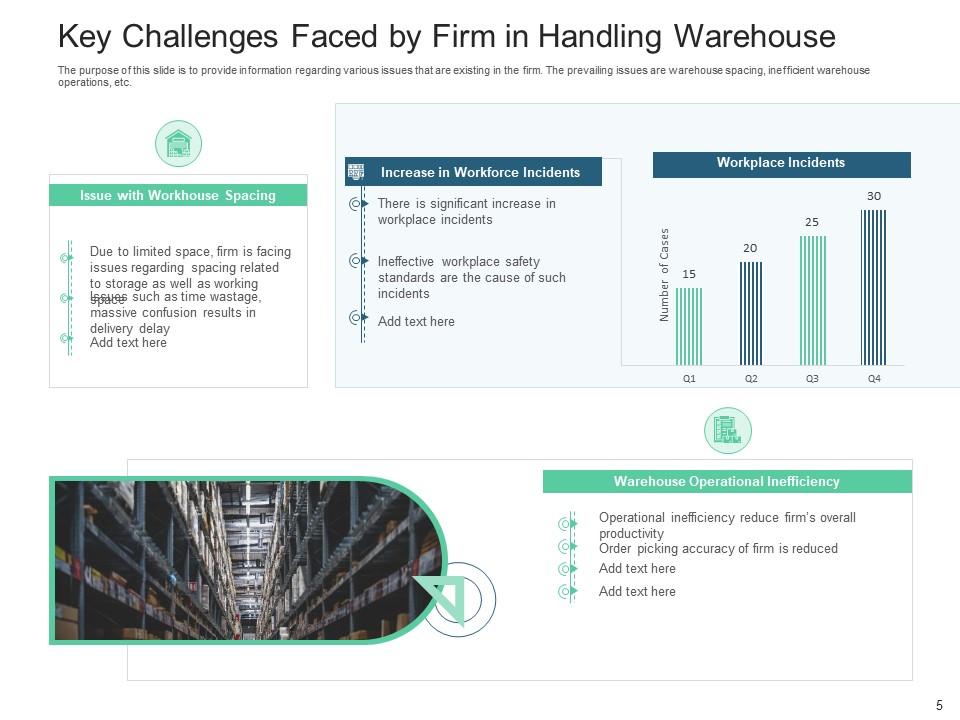
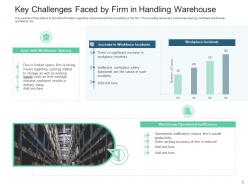
This slide can be used as an introduction to showcase the most common problems that your company is facing in terms of inventory management. You can include a number of workplace incidents, issues that are caused by workspace spacing, areas of work that lead to inefficiency in management, and others. Using this slide, you can discuss how these problems affect the speed and productivity of your entire operation.
Template 2: Comparison Between Warehouses With & Without Management
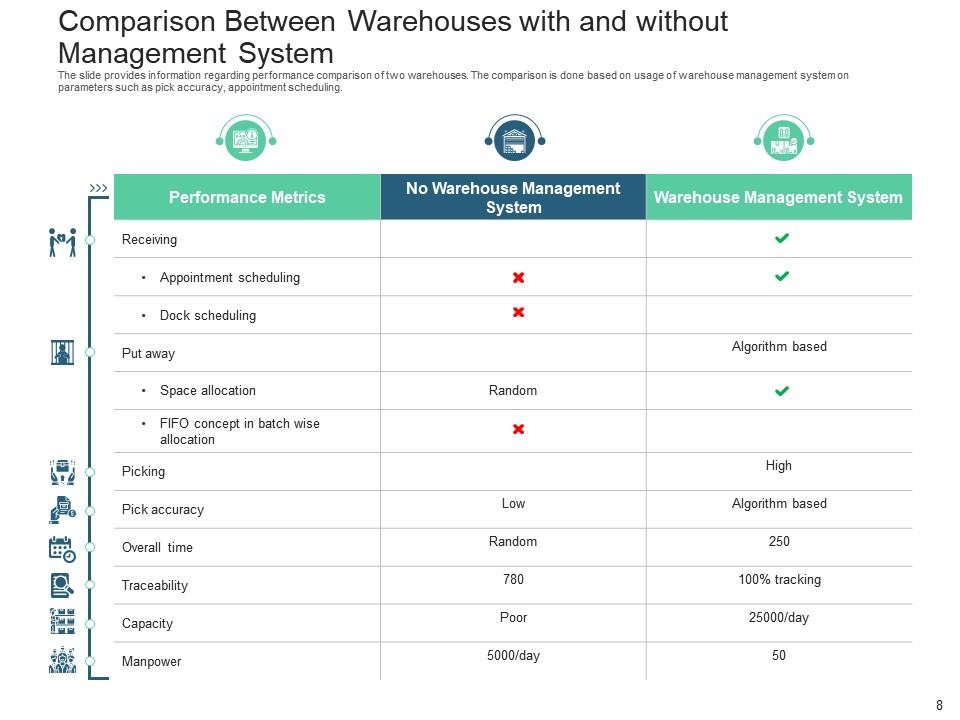
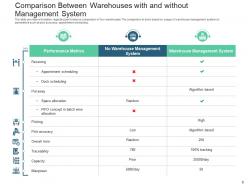
Here, you can input data from your competitors who are using inventory management systems to share the benefits that they are getting from it and the ones you are missing out on because you need to implement them. This specific PPT highlights critical performance metrics like traceability, capacity, workforce, the overall time required to collect, pack, and ship the product from the warehouse, and space allocation, along with appointment and dock scheduling.
In addition to this, you can also add performance metrics of your own to make this slide more informative. The end goal of this slide is to educate people on how warehouse efficiency can be increased using inventory management systems.
Template 3: Optimizing Warehouse Layout
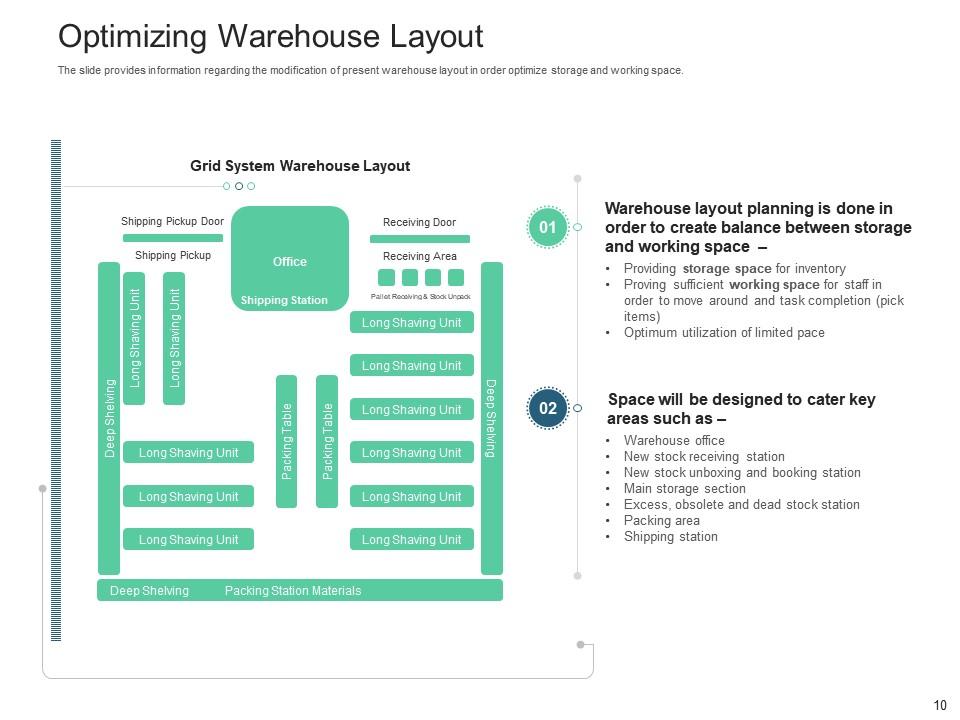
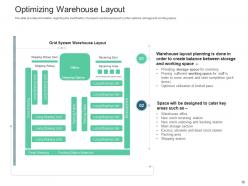
This slide works more like your warehouse mapping; using this, inventory managers can optimize the warehouse layout to improve space usage and increase warehouse productivity while saving money. The objective of this slide is to help you design an optimal flow of inventory that correctly marks space for material handling equipment, packaging station materials, receiving area, receiving door, shipping station, office, and others. Likewise, you can also mention how these key spaces will be handling large volumes of products, making it easier to move products in and out of the inventory warehouse.
Template 4: Stock Inventory Arrangement in Warehouse
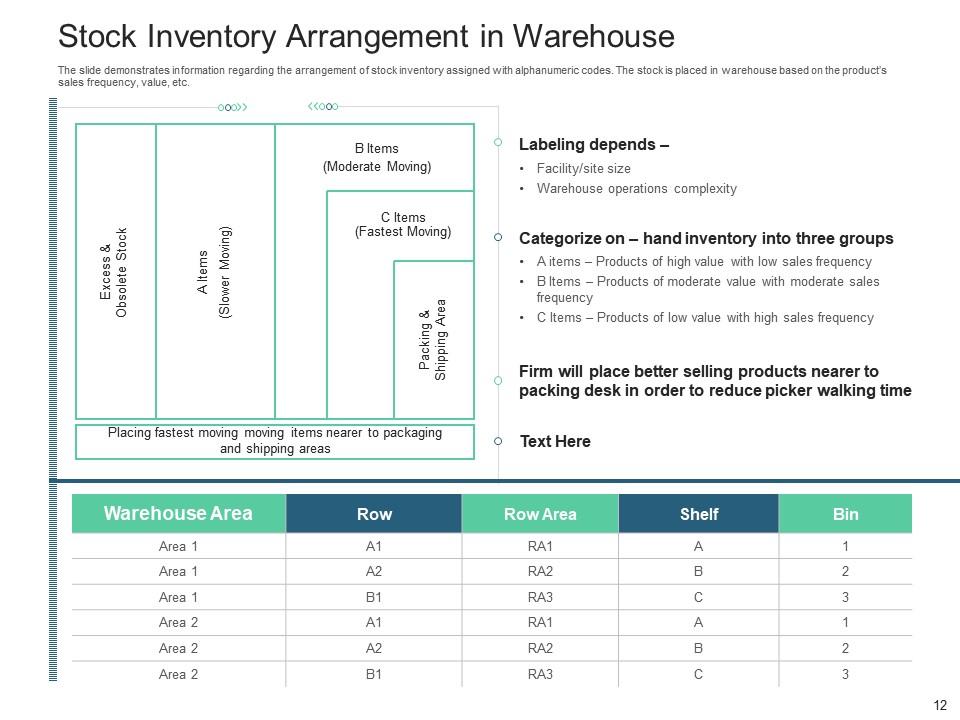
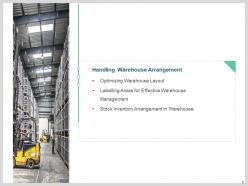
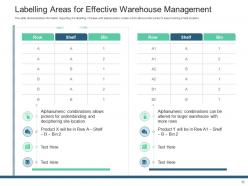
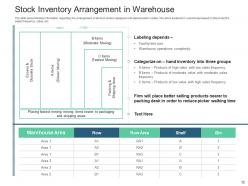
Keeping a proper layout for the inventory arrangement is a crucial aspect for a business to be profitable. Businesses that don’t effectively manage their warehouses always find themselves in trouble of stocking too little or too much of their products in the inventory, resulting in products to be not delivered to customers on time, leading to lower customer satisfaction rates. As a result, we made this inventory management PPT, which can be used to showcase your exact inventory layout.
In addition to this, you can mark the layout based on the labeling methodology you are using. Even though it is a basic inventory layout, it is still considered to be the best in terms of optimization; you can elevate this layout by adding your inputs and making it work according to your requirements.
Template 5: Warehouse Inbound Operations Optimization
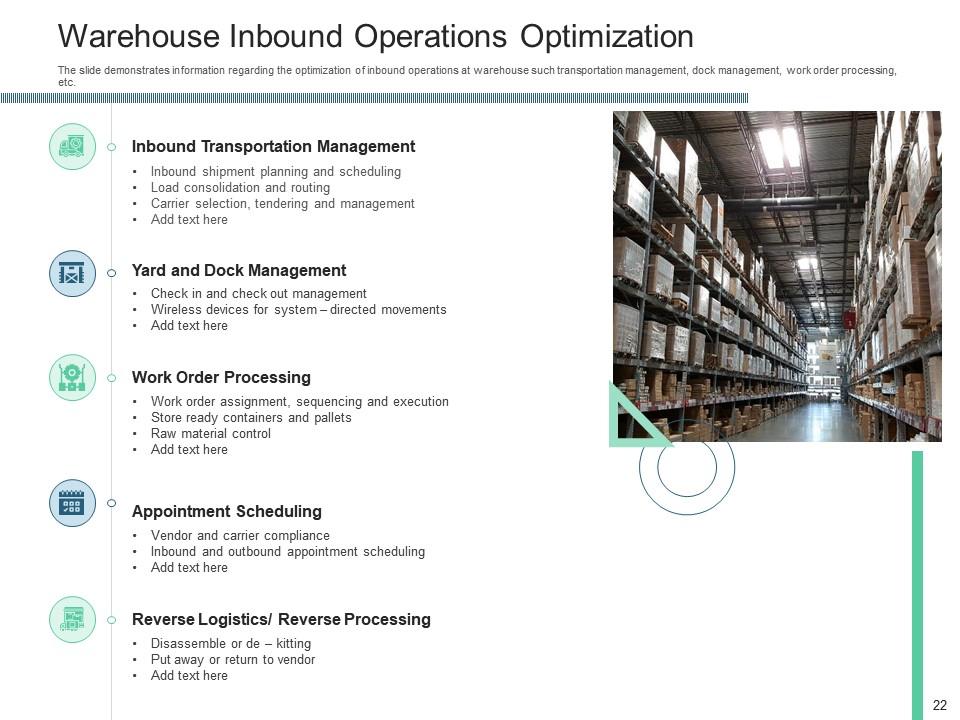
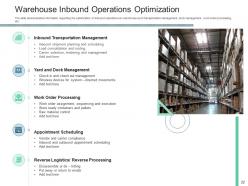
Inventory warehousing is divided into two main activities: inbound and outbound operations. In this particular slide, the focus is on inbound operations that include sourcing, purchasing, receiving, investigating products, storage, and other things that are incoming in the warehouse. Here, you can represent tasks associated with each inbound operation along with the individual responsible for getting the job done.
From this slide, the deployed inbound team will learn how to keep their workflow constant to receive goods from the supplier without any issues. At the same time, create the required storage space depending on the inbound volume prior to the delivery.
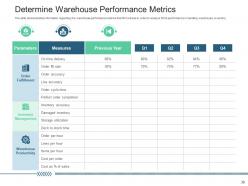
Template 6: Determine Warehouse Performance Metrics
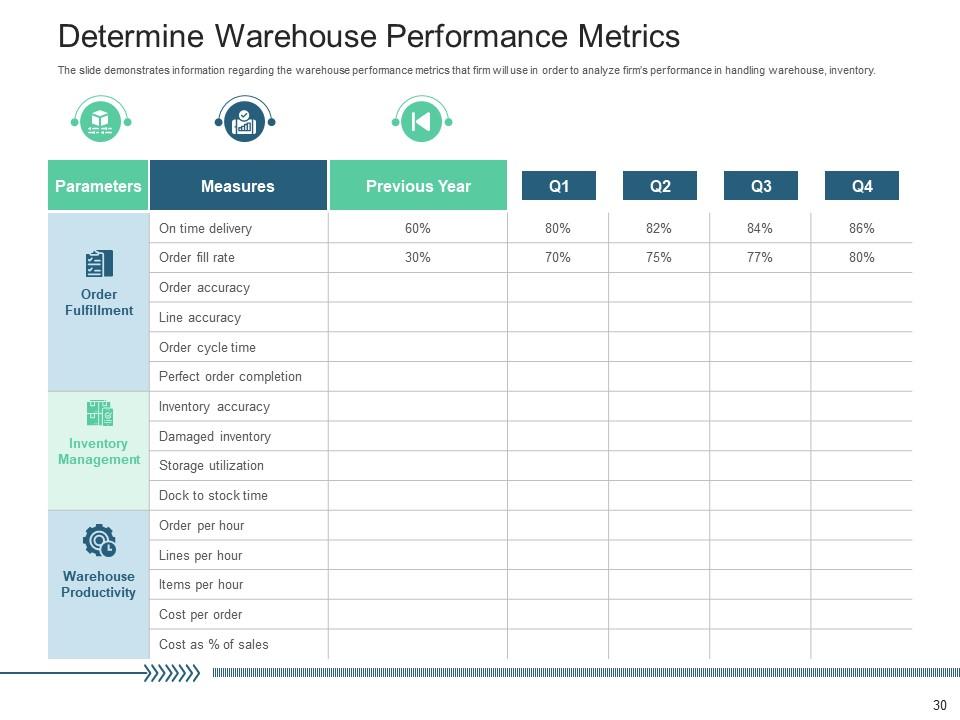
Using this slide, you can learn about the efficiency of your warehouse inventory team. There are multiple metrics, such as how many orders the inventory was able to dispatch in the 4 different quarters of the year, what the perfect order completion, storage utilization, cost per order, line accuracy, damage to products stored in inventory, and others. Moreover, this is just one of the sheets present in the PPT; the other two sheets are warehouse productivity and order fulfillment. This is one of those PPTs that can give you details of how the inventory is working and what needs to be done in order to yield more savings both in terms of money and time.
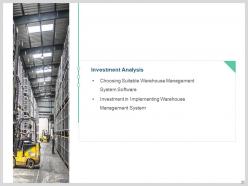
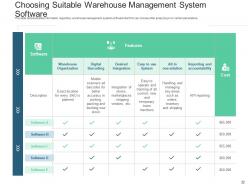
Template 7: Choosing Suitable Warehouse Management
System Software
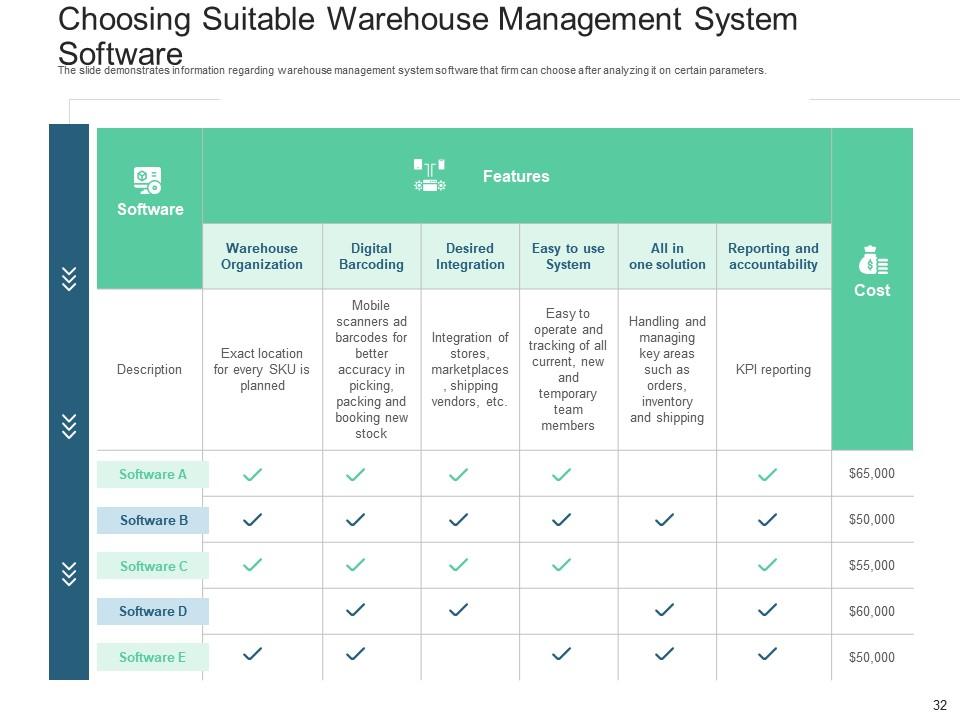
Getting a good inventory software system is the first step toward building an efficient warehouse workflow. It can be difficult to know where to start when you are implementing completely new software from scratch or replacing the existing one. What you need is a PPT which can help you with the comparison of various factors such as the cost of the software, its digital barcoding, how easy it is to use the system, whether the software is all in one solution or not, does it come with the KPI reporting and many more.
You can also edit this slide to add various other important factors according to your requirements, so it becomes easier to provide key features and benefits of available software options.
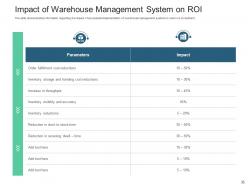
Template 8: Impact of Warehouse Management System on ROI

Having efficient inventory control, you will avoid stockouts, minimizing the risk of overflowing the inventory and optimizing the supply chain, which ultimately leads to a reduction in cost, an increase in profitability, and, finally, maximum ROI for the business. With the right implementation of an inventory management process PPT, you can accurately forecast the product demand, reduce inventory load, reduce order fulfillment cost, and increase the throughput.
The impact of all these different parameters can be showcased in this slide, providing the whole team with an understanding of the importance of their work and whether they are outperforming or underperforming.
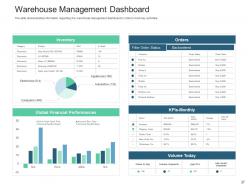
Template 9: Warehouse Management Dashboard
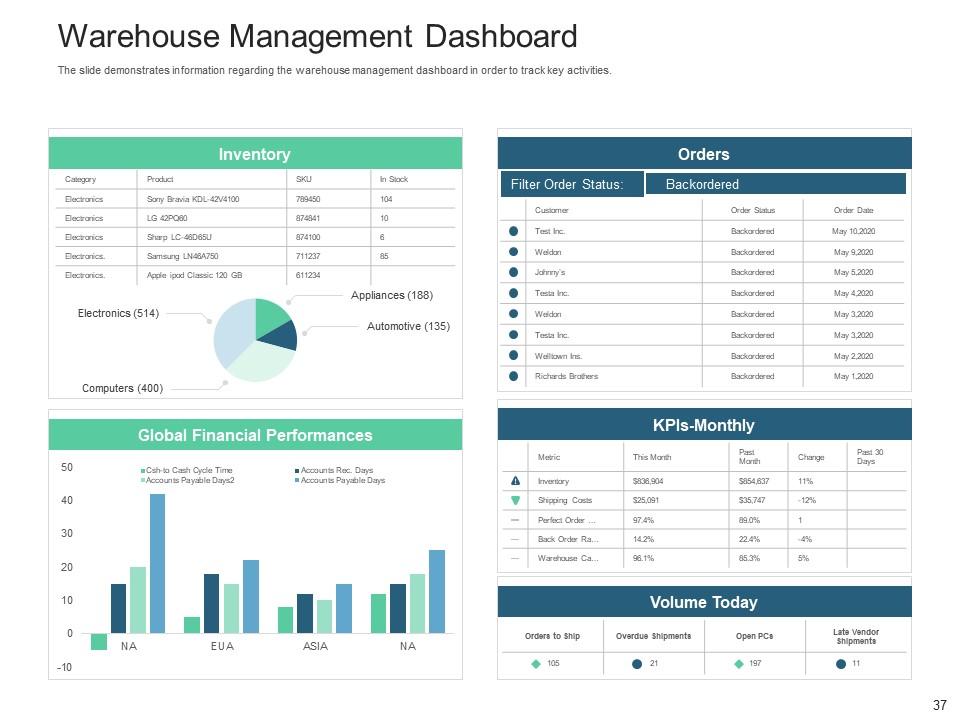
Warehouse and inventory management are interlinked components in the supply chain industry. Both of these have to work together in harmony to ensure the effective flow of goods. With a warehouse management dashboard, the main focus is on keeping up with the storage and logistics of the item.
With the help of this warehouse management dashboard PPT, you can showcase multiple statistics like the number of orders that will ship, volume of overdue shipments, monthly KPIs, how the organization is performing on a global level, and finally, live updates on the number of products present in the inventory.
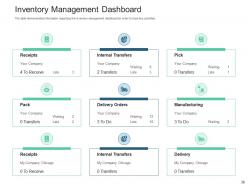
Template 10: Inventory Management Dashboard

The final slide that we want to share with you is probably the most crucial PPT from all these slides. This slide contains a working framework of an inventory management dashboard that can be used to depict real-time statistics related to receipts generated, completion of internal transfers, and number of deliveries being done by the agent.
See, building your own custom inventory management dashboard makes it possible for you to build a dashboard that is specific to your business requirements. It also ensures that all the parameters of the inventory management process are present in the dashboard and are placed in a neat fashion for user-friendliness.
Wrapping Up
These were some of the PowerPoint slides for the inventory management system that you can use in your presentation. All of these are 100% editable and come with an Excel in which you can add your data to represent on slides.
If you want to look for similar slides like these make sure to check out our Inventory management dashboard management control system and Inventory management PPT template. That’s all from our side; now, it is up to you to make the best use of our slides and win over your managers and team members with your presentation. Good luck!
Inventory management system powerpoint presentation slides with all 51 slides:
Use our Inventory Management System Powerpoint Presentation Slides to effectively help you save your valuable time. They are readymade to fit into any presentation structure.



FAQs for Inventory management system
Honestly, start with real-time tracking and automated reorder points - that's the stuff that'll actually save you headaches. Good reporting is clutch too. The interface needs to be dead simple because nobody has time to train everyone on some complicated system. Barcode scanning is pretty much standard now, and if you've got multiple locations, make sure it handles that. Oh, and it better play nice with whatever systems you're already using - data silos are the worst. I'd demo like 2-3 options with your actual inventory before deciding anything.
Dude, barcode and RFID will save you so much headache with inventory mistakes. No more typos when people are manually entering stuff. RFID's pretty sick because you can scan a whole bunch of items at once without even seeing them - though it costs more upfront. Barcodes are cheaper but you need direct line of sight, which honestly isn't that bad. Both update your system in real-time so you'll know what's moving instantly. We went from like 85% accuracy to over 99% when we switched. I'd say start with barcodes if money's tight, then maybe upgrade to RFID later for your busiest areas.
Dude, good inventory management is honestly a game-changer for cash flow. It stops you from dumping all your money into stock that just sits there forever. I've watched way too many businesses almost crash because they went crazy buying seasonal stuff they couldn't move. Track your turnover rate each month - you'll spot patterns fast. Better forecasting means you can actually negotiate decent payment terms with suppliers instead of scrambling. Short version: don't overstock, don't run out of popular items, and time your reorders right. Your working capital will thank you.
Think of demand forecasting as your inventory crystal ball - it tells you what customers will actually buy so you don't get stuck with too much or too little stuff. Historical sales data and seasonal patterns are your best friends here. When you get good at predicting demand, you can run leaner inventory without pissing off customers who can't find what they want. Plus you're not tying up cash in products that just sit there forever (been there, done that). Even basic forecasting beats just winging it with gut feelings. Trust me, it'll save you way more headaches than you'd expect.
So most inventory systems just plug into your ERP and CRM through APIs or database connections. When someone orders through your CRM, it'll automatically update stock levels and ping your ERP if you need to reorder stuff. Pretty smooth once you get it working. Honestly, I'd check if your systems actually play nice together first - compatibility can be a pain. Maybe test it with just one system before going all-in everywhere? Oh, and make sure your inventory platform actually supports what you need. Learned that one the hard way.
Honestly, start with better demand forecasting - that's like 80% of the battle right there. Just-in-time ordering helps too, plus setting automated reorder points based on what you're actually using. Do an ABC analysis and tackle your expensive items first since they're eating up the most cash. I'd also do regular audits to catch slow-moving stuff early. The whole thing gets way easier once you've got decent data coming in. Oh, and find your worst inventory offenders first - then work backwards to figure out why you keep overstocking those particular items. Makes the whole process less overwhelming.
So basically these systems track all the stuff regulators care about - lot numbers, expiration dates, supplier details, the whole audit trail. Super helpful for inspections since you're not digging through random spreadsheets at the last minute (trust me, I've been there). They'll flag expired stuff and recall issues before things get messy. Everything gets timestamped and logged automatically, which auditors eat up. Honestly, just set up some alerts for expiring items and schedule those compliance reports to run themselves. Worth it to avoid the stress later.
Focus on four metrics that actually matter for your inventory. Inventory turnover ratio shows how fast you're moving stuff - super important for cash flow. Then track your stockout frequency and what you're spending on carrying costs as percentages. Fill rate tells you how often you can actually fulfill complete orders. Most companies go crazy tracking like 20 different things, but honestly? These four will show you what's really happening. I'd check them monthly first, then if something looks weird you can dig into specific products or categories.
Yeah definitely! Multi-channel inventory systems are a lifesaver - they sync everything in real time across your website, physical stores, Amazon, all that stuff. When someone buys something online, it automatically updates stock everywhere else so you won't oversell. Trust me, manually updating each channel is pure hell (learned that the hard way). Everything gets centralized in one dashboard which is pretty sweet. Just make sure whatever system you pick has good API connections for your specific platforms. Way less headaches overall.
Ugh, seasonal stuff totally messes with your usual inventory game. You gotta start ordering way earlier - like getting holiday stock in September, which always feels weird. I'd dig into your last 2-3 years of sales data first to spot the real patterns. Then bump up your reorder points during peak seasons instead of keeping them the same all year. Most inventory systems have seasonal multipliers you can set up to handle this automatically. Just don't go crazy with the quantities - I still have nightmares about that fidget spinner overstock situation. Build in extra lead time too since everyone's ordering at once during busy periods.
Dude, cloud inventory systems are seriously worth it. You can check stock from your couch at 10pm if you want - saved me so many times. Updates happen automatically, which is nice because I always forget that stuff. Your data gets backed up without you thinking about it, and adding new people is super easy as you grow. Integration with accounting software usually works pretty well too. Honestly, the main thing is not being stuck at one computer anymore. Start with whatever has a free trial - most of them do these days and you'll know pretty quick if it clicks.
So basically, data analytics can predict when you'll need to reorder stuff and catch slow-moving inventory before it sits around forever. Your system will automatically notice patterns - like how certain products always spike during holidays or whatever. You can also track supplier performance so delays don't blindside you. Honestly, the profit margin analysis is probably the most useful part since it shows which items are actually worth the storage space they take up. I'd start with just your top 20% of products though - that's where you'll see real results without getting overwhelmed by data.
Dude, clean your data first - don't just dump everything into the new system like I did last year (what a mess). Training is huge too because people will literally go back to Excel if they're confused. Start basic, then customize later once you actually know what you need. Oh and seriously, test twice before launch. I'd map your current processes beforehand so you catch stuff like "wait, how do we handle refunds again?" Trust me, those surprise gaps always pop up at the worst times.
Good inventory systems save you from those awful "we're out of stock" moments that kill sales. You'll stop overselling stuff you don't actually have too - trust me, that's a nightmare to deal with. Customers get realistic delivery dates upfront instead of false promises. The best part? You can track what's selling fast and restock before running out. I mean, keeping popular items in stock is like basic business 101, but you'd be surprised how many people mess this up. Your repeat customers will actually stick around when they know you have what they need.
Honestly, AI forecasting is getting scary good at predicting what you'll actually need in stock. IoT sensors track everything in real-time - warehouse temps, where stuff is, all that. Blockchain sounds trendy but it's legit useful for tracking authenticity through your supply chain. Cloud systems mean smaller companies can finally access the same tech as big players, which is pretty cool. Oh, and don't go crazy trying to implement everything - just pick one AI forecasting tool first. You can always add more later once you see how it works.
-
Awesome use of colors and designs in product templates.
-
Great quality slides in rapid time.
-
Great designs, really helpful.
-
Best Representation of topics, really appreciable.
-
Helpful product design for delivering presentation.
-
Presentation Design is very nice, good work with the content as well.
-
Excellent work done on template design and graphics.
-
Nice and innovative design.
-
Innovative and attractive designs.
-
Great product with effective design. Helped a lot in our corporate presentations. Easy to edit and stunning visuals.