


Supply Chain Inventory Control Powerpoint Presentation Slides




Try Before you Buy Download Free Sample Product
 Impress Your
 Audience
 100%
100% Editable
 Save Hours
 of Time


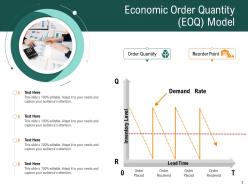
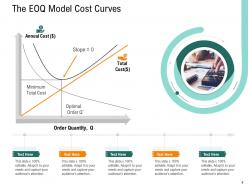
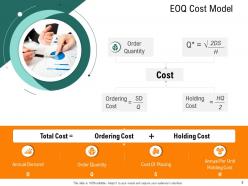
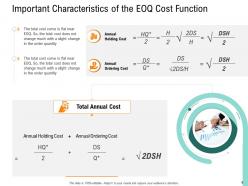
Create an appealing presentation by using Supply Chain Inventory Control PowerPoint Presentation Slides and provide the details on inventory management. The slideshow helps to perform a comprehensive analysis of the economic order quantity of your company. This readily available infographic contains the formula to calculate the total cost of EOQ. Highlight the correlation among different variables such as total cost, purchase unit price, unit production cost, and inventory management PPT slideshow. Take advantage of this optimum lot size PPT background and design a quantity schedule to give information about manufacturing activities. Utilize this EOQ formula PowerPoint visuals to elucidate various assumptions of the EOQ model, such as ordering cost, demand rate, lead time for a better understanding of the concept. Include inventory management software in this template for better control of raw material and finished goods. Therefore, download this striking and eye-catching production model PowerPoint layout to ensure optimal stock levels and immediate orders.
People who downloaded this PowerPoint presentation also viewed the following :
Supply Chain Inventory Control Powerpoint Presentation Slides with all 25 slides:
Use our Supply Chain Inventory Control Powerpoint Presentation Slides to effectively help you save your valuable time. They are readymade to fit into any presentation structure.









FAQs for Supply Chain Inventory Control
You need solid demand forecasting first, then nail down your safety stock levels. ABC analysis helps prioritize the expensive stuff - focus there. Real-time tracking is huge though, and I mean across your whole supply chain, not just warehouse inventory. Most companies totally bomb this part. Set up automated reorder points using your lead times and how fast you actually burn through things. Oh, and ditch those awful yearly counts - cycle counting is way less painful. Your supplier relationships matter more than people think. Start by cleaning up your data mess first, trust me on that one.
Honestly, real-time inventory tracking is a game changer. You'll know exactly what's in stock at any moment, so no more scrambling when you're about to run out of something important. Customers hate ordering stuff only to find out later it's backordered – been there myself with online shopping. Your team won't waste time doing manual counts either, which is mind-numbing work anyway. Start with your best-selling products first since that's where you'll see the biggest impact. Less overstock sitting around collecting dust, better delivery promises, and your purchasing decisions actually make sense because they're based on real numbers.
Honestly, demand forecasting is what makes or breaks your whole inventory game. You're basically using old sales data, trends, and seasonal stuff to predict what people will actually buy. Pretty straightforward concept, but the execution can be tricky. Look at your last 12-24 months of sales to spot patterns - trust me, they're usually there even when you don't expect them. Good forecasting means you won't get stuck with tons of dead inventory or keep running out of the stuff customers actually want. Plus you'll save money on storage costs and keep people happy. It's like having a crystal ball that actually works.
Honestly, start with pulling your sales data and supplier lead times - that's where the magic happens. You'll spot demand patterns and figure out which products are just sitting there collecting dust. ABC analysis is clutch for grouping items by how much they move and their value. Set up alerts when stock hits certain levels so you're not babysitting everything 24/7. Track your turnover rates and how often you're running out of stuff. Machine learning gets crazy sophisticated, but even basic trend spotting works wonders. Oh, and definitely factor in seasonal stuff - learned that one the hard way last year.
Ugh, supply chain stuff is such a headache - you're basically dealing with demand forecasting that's always wrong, suppliers who can't stick to deadlines, and zero visibility into what's actually happening. It's like playing whack-a-mole constantly! Better demand planning tools help, plus diversifying suppliers so you're not screwed if one flakes. Real-time tracking systems are worth it too. Keep some safety stock around but don't go crazy or you'll just burn through cash. Oh, and figure out your worst problem first - are you running out of stuff or drowning in inventory? Then hit that specific issue hard.
So JIT flips your whole supply chain - instead of hoarding inventory "just in case," you order exactly what you need when you need it. Inventory costs drop like crazy, but honestly? Your suppliers become make-or-break critical. One late shipment and you're screwed. COVID taught everyone that lesson the hard way. You've gotta nail your forecasting and keep tight communication with suppliers. The payoff is less waste, lower storage costs, and you can pivot faster when demand shifts. Oh, and definitely line up backup suppliers first - trust me on that one.
Honestly, once you get automated tracking set up, it's like night and day compared to spreadsheets and guesswork. Real-time updates show you everything - supplier deliveries, warehouse counts, what's sitting on shelves. When stock gets low, boom, instant alerts. Everyone can see the same live numbers too, so no more "wait, how many do we actually have?" arguments between teams. Oh and you'll catch bottlenecks way earlier. I'd definitely start with your biggest sellers first - you'll notice the difference right away, then just add more products as you go.
First thing you need is real-time inventory data across everything - otherwise you're basically flying blind. Get software that connects all your sales channels and can shift stock around automatically based on what's selling where. Safety stock gets weird when you're dealing with multiple demand streams, honestly. Set up auto-reorder points and maybe look into drop-shipping to expand without hoarding inventory. ABC analysis is clutch for deciding which products get first dibs when you're running low. Trust me, without solid inventory software that talks to all your channels, you'll just be constantly chasing stockouts. It's exhausting.
Honestly, inventory turnover is huge for your business - it hits cash flow, storage costs, and keeping customers happy. High turnover means you're flipping stock fast, which frees up cash and cuts down on warehouse expenses. You won't get stuck with dead inventory either (trust me, I watched that disaster unfold last quarter). Low turnover? Usually means your demand forecasting is off or you're buying wrong. Break it down by product category and stack it against industry numbers. That's where you'll spot what's actually working versus what's just burning cash.
Your excess inventory is basically cash just sitting there doing nothing. You're paying for storage, insurance, and some of that stuff might go obsolete - honestly, it's such a waste. That money could be going toward actual operations or growth instead. The whole thing messes with your cash flow because you're waiting forever to turn products into sales, then sales into actual money. Smart demand forecasting helps, but yeah, keeping inventory lean is probably your best bet. Free up that cash and put it to work somewhere it'll actually make you money.
So start with JIT ordering - only restock when you hit those trigger points instead of guessing. Kanban boards are honestly game-changers for seeing what's actually happening with your inventory. The 5S thing works too, giving everything a specific spot makes tracking so much simpler. I'd map out your current process first though, helps you spot where things get stuck or wasteful. Oh, and don't try fixing everything at once - pick one product line, see how it goes, then expand from there. That whole continuous improvement approach just works better than massive overhauls.
Honestly, seasonal stuff completely messes with normal inventory planning. You can't just stick with your usual reorder points anymore. Build up extra stock before busy seasons hit - and yeah, work with suppliers early so they're not scrambling when demand jumps. Weather makes forecasting a nightmare though, which is super frustrating. Your demand patterns get way more complicated since everything's cyclical instead of steady. Safety stock levels need adjusting throughout the year too. I'd pull at least 2-3 years of sales data to spot your patterns first. That historical stuff is gold for building better planning models.
Look, good supplier relationships are a game changer for inventory management. You'll get way better visibility into demand patterns, plus more flexibility with orders. Communication improves? You can cut down on safety stock because there's less guesswork around lead times and quality problems. Your inventory moves faster too since you're not hoarding extra stock for emergencies. Trust me, I've seen companies waste so much cash on "just in case" inventory. Find suppliers who actually work with you when things change - honestly makes or breaks your cash flow and turnover numbers.
So ABC analysis is just inventory triage - helps you figure out what's actually worth your time. You sort stuff into A (high-value, critical), B (middle ground), and C (cheap but tons of them). Like email sorting but for products, you know? Don't waste energy micromanaging every single item when your A products are the ones paying the bills. Smart ordering, better storage, smarter monitoring - it all flows from this. Pull your sales data and rank by revenue. That 80/20 thing usually holds true here. Honestly, once you see which items are carrying your business, everything else becomes way clearer.
Okay so you gotta find that balance between keeping customers happy and not drowning in inventory costs. I'd start with demand patterns - look at what actually sells and when. Don't go crazy chasing 99% fill rates, honestly 95% is usually fine and way cheaper. Do that ABC thing where you focus hard on your big movers but stay conservative with the slow stuff. Yeah safety stock formulas help, but sometimes you just have to go with your gut on seasonal weirdness. Track your stockout costs versus carrying costs - storage fees add up fast. Weekly check-ins on key numbers will save you when things get wonky.
-
Wonderful templates design to use in business meetings.
-
Informative presentations that are easily editable.
-
Appreciate the research and its presentable format.
-
Editable templates with innovative design and color combination.
-
Great quality slides in rapid time.