


Supply Chain Inventory Management Powerpoint Presentation Slides





Try Before you Buy Download Free Sample Product
 Impress Your
 Audience
 100%
100% Editable
 Save Hours
 of Time


Identify attempts to gloss over facts with our Supply Chain Inventory Management Powerpoint Presentation Slides. Convince folks to address the actual conditions.
People who downloaded this PowerPoint presentation also viewed the following :
Content of this Powerpoint Presentation
Slide 1: This slide introduces Supply Chain Inventory Management. State Your Company Name and get started.
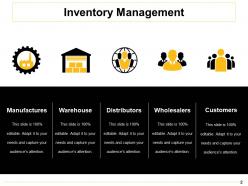
Slide 2: This slide showcases Inventory Management with these five factors- Customers, Manufactures, Warehouse, Distributors, Wholesalers.
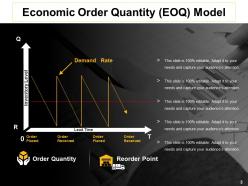
Slide 3: This slide shows Economic Order Quantity (EOQ) Model.
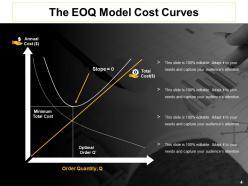
Slide 4: The EOQ Model Cost Curves which further shows- Minimum Total Cost, Annual, Cost ($), Total Cost($), Optimal, Order Q*, Order Quantity,
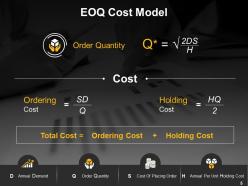
Slide 5: This slide presents EOQ Cost Model.
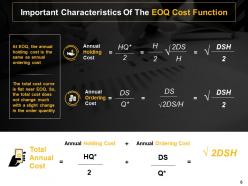
Slide 6: This slide presents important characteristics of the EOQ cost funtion. You can add your content.
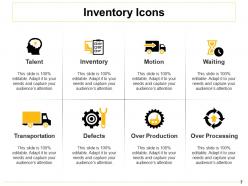
Slide 7: This slide showcases Inventory Icons.
Slide 8: This slide shows Supply Chain Inventory Management Icon Slide
Slide 9: This slide is a Coffee Break image for a halt.
Slide 10: This slide forwards to Charts & Graphs.
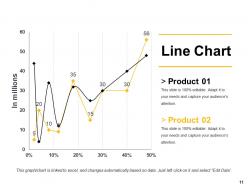
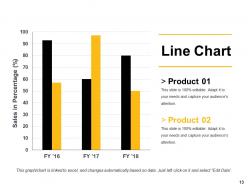
Slide 11: This slide shows a Line Chart for two product comparison
Slide 12: This slide presents bar chart for the comparison.
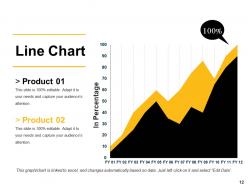
Slide 13: This slide showcases Area Chart.
Slide 14: This slide is titled Additional slides.
Slide 15: This slide contains Our Mission with text boxes.
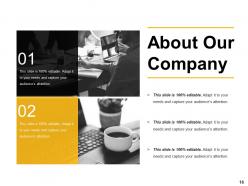
Slide 16: This slide helps show- About Our Company. The sub headings include- Creative Design, Customer Care, Expand Company
Slide 17: This slide showcases Our Team with Name and Designation to fill.
Slide 18: This is a Puzzle slide with the following subheadings- PPC Advertising, Media Marketing, Print Marketing, E-mail Campaigns.
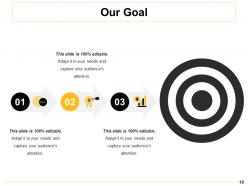
Slide 19: This slide shows Our Goals for your company.
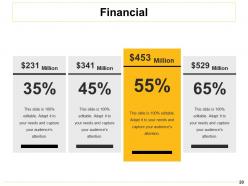
Slide 20: State your Financial score in this slide with relevant imagery and text.
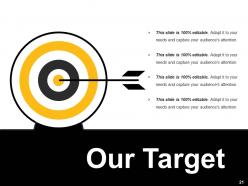
Slide 21: This slide displays Our Target with a background image.
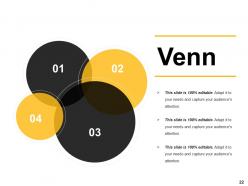
Slide 22: This is a Venn diagram image slide to show information, specifications etc.
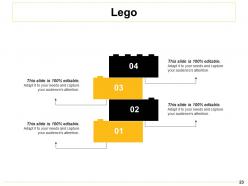
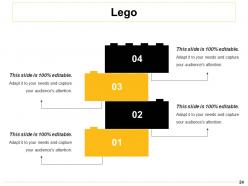
Slide 23: This is a Lego Box slide with the following subheadings- Teach, Encourage, Increase, Build.
Slide 24: This is a Bulb Or Idea image slide to show information, innovative aspects etc.
Slide 25: This is a Thank You slide for acknowledgement.
Supply Chain Inventory Management Powerpoint Presentation Slides with all 26 slides:
Demonstrate ability to handle any difficulty with our Supply Chain Inventory Management Powerpoint Presentation Slides. It helps display grim determination.







FAQs for Supply Chain Inventory Management
Okay so the big one you need is inventory turnover ratio - just divide cost of goods sold by your average inventory value. Days sales inventory is super helpful too, shows you how long it actually takes to move your stock. Track your stock-outs because trust me, customers lose their minds when stuff's not available. I'd also watch carrying costs as a percentage and your fill rate to see if you're keeping up with demand. Monthly reviews work best - oh and definitely compare against industry benchmarks so you can catch problems before they get messy.
Dude, it's like having eyes everywhere in your supply chain. IoT sensors automatically track where stuff is, how much you have, and if it's in good shape. Then AI crunches all that data to predict what you'll need and catch problems early. No more "where the hell did that shipment go?" panic moments - been there, not fun. You get dashboards showing everything in real time instead of those ancient spreadsheets we all hate. My advice? Start small with your most expensive inventory first. You'll see results fast and can build from there.
Start with demand forecasting - look at your historical data to actually predict what you need instead of ordering extra "just in case." ABC analysis helps too - categorize stuff by value so you're focusing on what matters most. Just-in-time ordering is great if your suppliers don't flake out (though honestly, after the whole pandemic mess, maybe keep a tiny buffer). Set automatic reorder points based on real lead times. Do regular audits and don't hesitate to discount slow-moving inventory. That dead stock is just cash sitting there doing nothing.
So demand forecasting is basically what drives your whole inventory game. You look at historical data, seasonal trends, market patterns - all that stuff helps you figure out how much to order and when. Good forecasts mean you won't tie up cash in dead stock sitting around. But honestly? Even the best predictions fail sometimes, which is why safety stock exists. I'd say review your forecast accuracy every month - sounds boring but it's huge for tweaking your buying strategy. Short version: predict demand well, keep some buffer stock, and don't be stubborn about adjusting when reality hits different than expected.
So safety stock is basically your backup inventory - extra stuff you keep around for when demand goes crazy or your supplier is late. Then reorder points tell you when to actually place orders based on how fast you go through things and shipping times. Honestly, I was terrible at this until I figured out the formula. Take your daily usage, multiply by lead time, then tack on safety stock. The tricky part is nailing down realistic safety stock levels - you'll need to watch your sales patterns for a few months first. Way less stressful once you get it dialed in though.
Look, demand forecasting is where you want to put your energy - that's what'll save you headaches. Pull your historical data and watch for seasonal patterns so you can predict what you actually need. Keep safety stock for fast movers but don't go crazy. I made this mistake once with widgets sitting around for months! Figure out your reorder points to avoid stockouts on your top 20% products. Be pickier with slow sellers though. Start by checking which out-of-stocks tick off customers most - those are your priority items to keep stocked.
Ugh, where do I even start? Demand forecasting gets crazy complicated when you're dealing with different markets. Lead times are forever, and don't get me started on currency swings screwing up your costs. Then there's the fun stuff - multiple suppliers, customs being slow as usual, plus every country has its own random regulations. Honestly feels impossible some days! You end up needing tons of safety stock just to cover all the uncertainty, which kills your cash flow. My advice? Find solid local partners you can trust and get some decent tracking tools. Being able to see what's actually happening in real-time saves your butt when everything inevitably goes wrong.
Look, lean inventory is basically keeping just what you need instead of hoarding stuff. Your cash flow improves since money isn't stuck in random stock sitting around. Plus you get more storage space back. The cool part? You actually understand your demand patterns better because you have to pay attention. I'd honestly start with your best-selling items first - way less risky that way. Once your team gets the hang of tighter inventory control, you can expand it to other products. Oh, and you won't end up with outdated inventory collecting dust, which is always a win.
JIT is like walking a tightrope, honestly. Your inventory costs drop and cash flow improves, but one supplier screws up and you're toast. You need super reliable suppliers and solid communication - no room for error there. Less waste is great, plus you can pivot faster when demand shifts. But man, COVID really exposed how fragile these systems are. I'd say start small with stuff that's not mission-critical first. Oh, and definitely have backup suppliers lined up even if you're not using them yet. Better safe than scrambling at 2am trying to find widgets or whatever.
Honestly, seasonal stuff is such a pain but you've gotta flip your whole strategy. Look back at your last 2-3 years of sales data - that'll show you the patterns. Build up inventory like 6-8 weeks before your busy times hit. During slow periods? Scale way down or you'll be drowning in stock nobody wants. The tricky part is finding that sweet spot between having enough and getting stuck with too much. I learned this the hard way lol. Just don't try to keep steady levels year-round - it never works with seasonal businesses.
So RFID and IoT sensors are definitely where you want to go for real-time tracking - they're pretty much game changers. Barcode scanners work great too if you're watching your budget. Cloud platforms like NetSuite or TradeGecko play nice with all this stuff and give you those dashboard views. Honestly though, mixing approaches beats going all-in on just one thing. I'd start with better scanners first, then maybe add RFID for your expensive inventory where you need that hands-off automatic tracking. My buddy's warehouse went this route and it's been solid for them.
Honestly, getting your departments to actually talk to each other is a game-changer for inventory stuff. Sales knows what customers want, finance has the budget reality check, and your warehouse team knows what's actually possible - but they're usually all doing their own thing. Super frustrating. Set up monthly meetings where everyone shares what's coming up and what problems they're hitting. You'll catch those "oh crap, we're about to run out" situations way earlier. My friend's company started doing this and their forecasting got so much better. Just don't make the meetings too long or people will hate them.
Dude, you're basically putting all your eggs in one basket. If that supplier screws up - delays, quality issues, goes under, whatever - you're toast. They'll also jack up prices since they know you can't go anywhere else. Been there, it sucks. No competition means you miss out on better deals and new tech from other vendors. Your whole operation becomes ridiculously fragile. Honestly, I'd line up at least 2-3 backup suppliers for your critical stuff, even if you rarely use them. Way better than panicking when things go sideways.
Honestly, sustainability flips your whole inventory game upside down. Instead of just looking at cost and quality, now you're checking if suppliers actually care about the environment. Maybe you'll ditch that cheap vendor halfway across the world because the shipping emissions are brutal. Or find someone who doesn't wrap everything in plastic. That whole "let's stock up just in case" approach? Gets tricky when you're trying not to waste stuff. You'll probably end up tracking weird new numbers like carbon footprint per box - sounds nerdy but whatever. I'd start by just asking your current suppliers what they're doing sustainability-wise, then swap out the worst ones first.
So reverse logistics is basically when you take returned stuff and turn it back into something sellable instead of just tossing it. Returns, repairs, refurbishing - all that flows back into your inventory system. It's honestly pretty smart for procurement planning because you can use refurbished stock instead of always buying new. Plus you're getting value from inventory that would've been worthless otherwise. I'd start by tracking your return rates first - see which products you get back the most and figure out what's actually worth fixing up. Some stuff just isn't worth the hassle though.
-
Great quality slides in rapid time.
-
Designs have enough space to add content.