


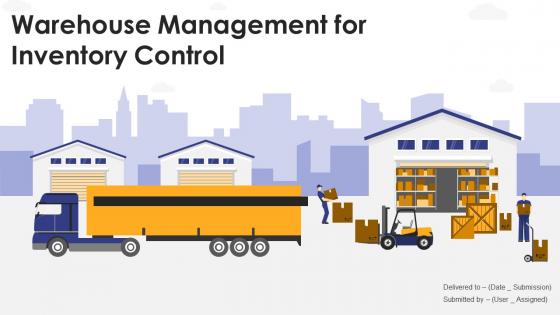
Warehouse management for inventory control powerpoint presentation slides




Try Before you Buy Download Free Sample Product
 Impress Your
 Audience
 100%
100% Editable
 Save Hours
 of Time


Introducing our warehouse management for inventory control PowerPoint presentation slides. Enhance warehouse workforce management with our stockroom management PowerPoint deck. This inventory setup PPT theme consists of a slide that talks about the statistics related to effective warehouse management. Assimilating this warehouse authority control PPT layout helps you in discussing the benefits of having a warehouse management system. This readymade storehouse standard checklist PowerPoint design contains a slide discussing the optimizing warehouse layout. Incorporating this particular storeroom inventory PPT theme allows you to label areas for effective warehouse management. This store command PowerPoint creative set contains a slide that lets you talk about the automated warehouse order picking system. Selection of this inventory authority PowerPoint template allows you to discuss the order shipping process. This warehouse management PPT deck lets you make required variations to icons and colors. Choose this depository inventory management PowerPoint design to showcase organization and assurance. Download this PPT slide to explore true perfection.
People who downloaded this PowerPoint presentation also viewed the following :
Content of this Powerpoint Presentation
Slide 1: This slide displays title i.e. 'Warehouse Management for Inventory Control'.
Slide 2: This slide presents agenda.
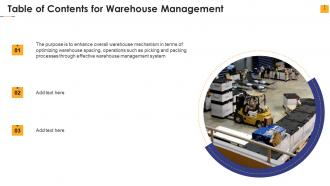
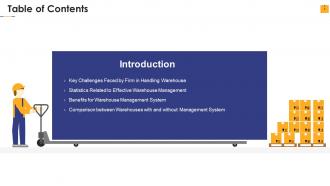
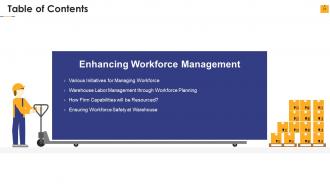
Slide 3: This slide exhibits table of contents.
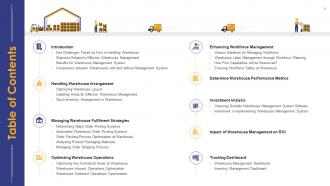
Slide 4: This slide shows title for four topics to be covered next in the template.
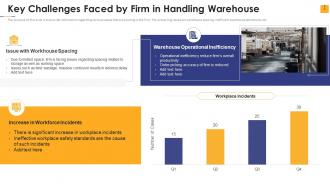
Slide 5: This slide provide information regarding various issues that are existing in the firm.
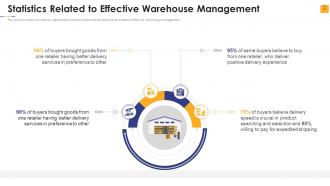
Slide 6: The slide provides information regarding the statistics demonstrating key facts related to effective warehouse management.
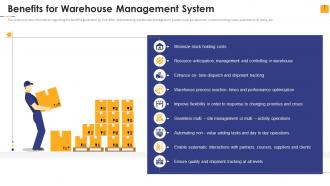
Slide 7: The slide provides information regarding the benefits generated by firm after implementing warehouse management system.
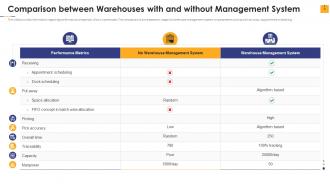
Slide 8: The slide provides information regarding performance comparison of two warehouses.
Slide 9: This slide depicts title for next three topics to be covered.
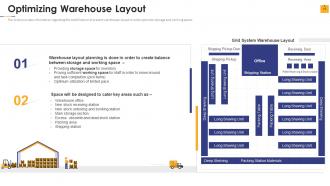
Slide 10: The slide provides information regarding the modification of present warehouse layout in order optimize storage and working space.
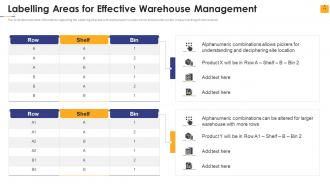
Slide 11: The slide demonstrates information regarding the labelling of areas with alphanumeric codes which allows order picker in easy tracking of site location.
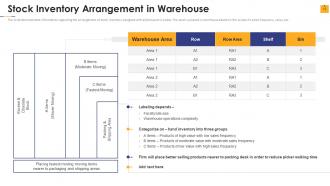
Slide 12: The slide demonstrates information regarding the arrangement of stock inventory assigned with alphanumeric codes.
Slide 13: This slide highlights title for next five topics to be covered in the template.
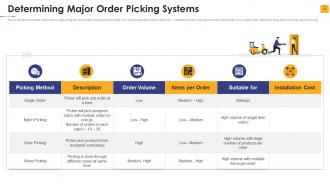
Slide 14: The slide demonstrates information regarding various order picking systems that firm can use based on their features, installation cots.
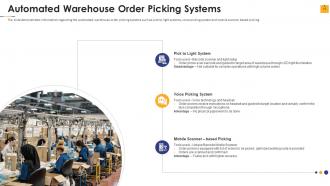
Slide 15: The slide demonstrates information regarding the automated warehouse order picking systems such as pick to light systems, etc.
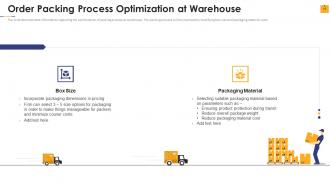
Slide 16: The slide demonstrates information regarding the optimization of packing process at warehouse.
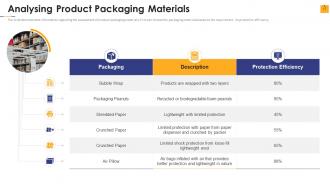
Slide 17: The slide demonstrates information regarding the assessment of product packaging materials.
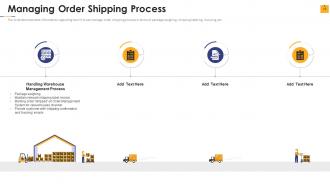
Slide 18: The slide demonstrates information regarding how firm can manage order shipping process in terms of package weighing, shipping labeling, invoicing, etc.
Slide 19: This slide illustrates title for next three topics to be covered in the template.
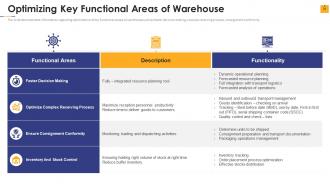
Slide 20: The slide demonstrates information regarding optimization of key functional areas of warehouse such as faster decision making, etc.
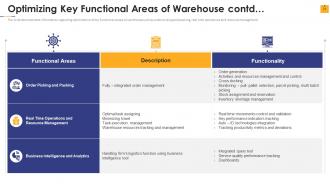
Slide 21: The slide demonstrates information regarding optimization of key functional areas of warehouse such as order picking and packing, etc.
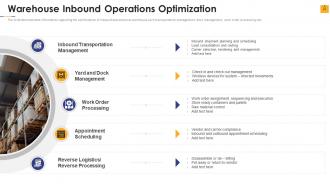
Slide 22: The slide demonstrates information regarding the optimization of inbound operations at warehouse such transportation management, etc.
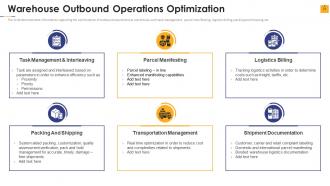
Slide 23: The slide demonstrates information regarding the optimization of outbound operations at warehouse such task management, parcel manifesting, etc.
Slide 24: This slide displays title for next four topics to be covered.
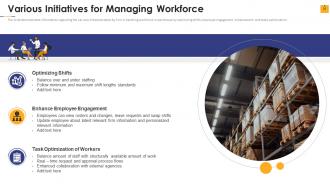
Slide 25: The slide demonstrates information regarding the various initiatives taken by firm in handling workforce in warehouse.
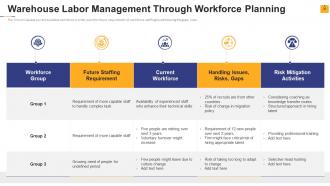
Slide 26: This slide shows Warehouse Labor Management Through Workforce Planning.
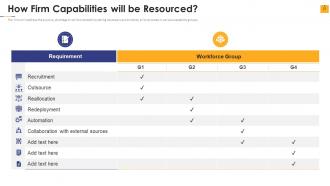
Slide 27: This slide shows 'How Firm Capabilities will be Resourced?'.
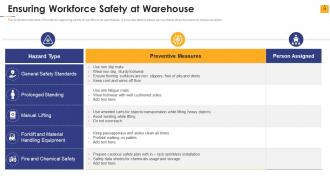
Slide 28: The slide demonstrates information regarding safety of workforce at warehouse.
Slide 29: This slide presents title for next topic to be covered.
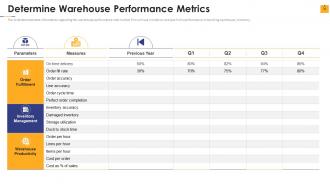
Slide 30: The slide demonstrates information regarding the warehouse performance metrics that firm will use.
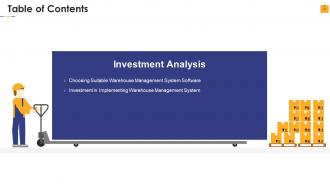
Slide 31: This slide exhibits title for next two topics to be covered in the template.
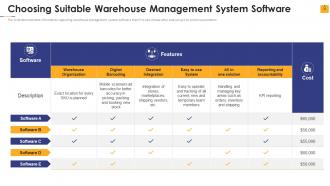
Slide 32: The slide demonstrates information regarding warehouse management system software that firm can choose after analyzing it on certain parameters.
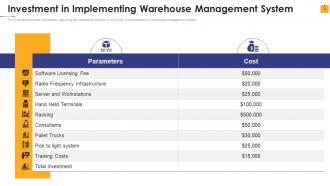
Slide 33: The slide demonstrates information regarding the investment made by firm for the implementation of warehouse management system.
Slide 34: This slide depicts title for next topic to be covered.
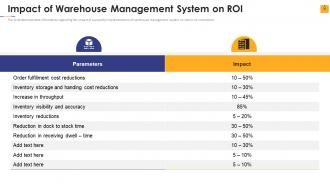
Slide 35: The slide demonstrates information regarding the impact of successful implementation of warehouse management system on return on investment.
Slide 36: This slide shows title for next two topics to be covered in the template.
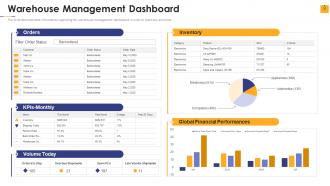
Slide 37: The slide demonstrates information regarding the warehouse management dashboard in order to track key activities.
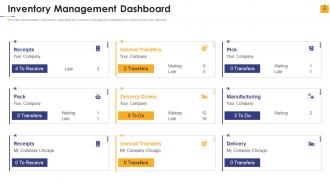
Slide 38: The slide demonstrates information regarding the inventory management dashboard in order to track key activities.
Slide 39: This is the icons slide.
Slide 40: This slide presents title for additional slides.
Slide 41: This slide shows about your company, target audience and its client's values.
Slide 42: This slide presents your company's vision, mission and goals.
Slide 43: This slide depicts 30-60-90 days plan for projects.
Slide 44: This slide depicts posts for past experiences of clients.
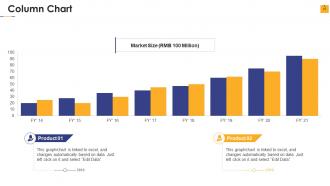
Slide 45: This slide exhibits yearly column charts for different products. The charts are linked to Excel.
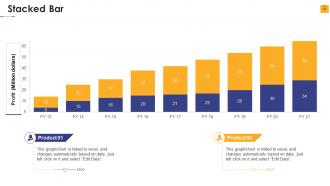
Slide 46: This slide displays yearly profits stacked bar charts for different products. The charts are linked to Excel.
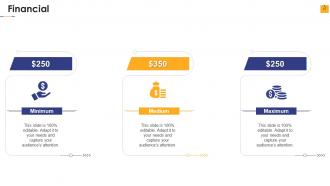
Slide 47: This slide showcases financials.
Slide 48: This slide exhibits yearly timeline.
Slide 49: This slide highlights comparison of products based on selects.
Slide 50: This is thank you slide & contains contact details of company like office address, phone no., etc.
Warehouse management for inventory control powerpoint presentation slides with all 50 slides:
Use our Warehouse Management For Inventory Control Powerpoint Presentation Slides to effectively help you save your valuable time. They are readymade to fit into any presentation structure.






FAQs for Warehouse management for inventory control
So you'll definitely need inventory tracking and order management as your base. Warehouse layout optimization too - that's critical. Then add picking/packing workflows and shipping integration. Real-time reporting is honestly where the magic happens because you can't fix what you can't see, right? Mobile support is non-negotiable since your team will be constantly scanning stuff. Oh, and make sure whatever you pick plays nice with your current ERP - trust me on that one. Map out how you currently do things first, then find a WMS that actually fits instead of forcing everyone to learn some weird new process.
Honestly, RFID and barcode scanning are game changers - they cut out all the manual tracking mistakes that mess things up. Your workers don't have to log everything by hand anymore, so picking and packing gets way faster. Real-time inventory tracking means you'll actually know where stuff is. RFID's pretty sweet since you don't need perfect line-of-sight like with barcodes. Both help you avoid those annoying stockouts (or buying way too much). If money's an issue, start with barcodes - they're cheaper but you'll still see solid returns on the efficiency boost.
Look, if your inventory numbers are off, you're basically screwed from day one. Your system says 100 units but only 75 are actually there? Now you've got stockouts and pissed off customers. Plus your buying decisions get completely messed up because you're working with garbage data. I swear, some places I've seen spend half their time just chasing down missing inventory instead of doing actual work. Get cycle counts going regularly and make sure people update the system right when they pick stuff - not at the end of their shift when they've forgotten half of what they did.
First thing - walk through and see where your pickers are wasting time. Put your hot sellers near shipping and at waist level so people aren't constantly bending over (your back will thank you later). Make aisles wide enough that forklifts aren't playing bumper cars. That ABC thing actually works - fast movers up front, slow stuff in back. Zone picking helps too if you've got crazy volume. Oh, and don't let receiving and shipping fight over the same real estate. Pick one area to test changes first, then spread what works. Way easier than redoing everything at once.
Start with solid hands-on training - your team needs to understand WHY they're doing each step, not just going through motions. Cross-training is huge too since you'll inevitably have call-outs. Visual stuff like warehouse maps work way better than boring text manuals, honestly. Safety refreshers can't be optional. Pair up newbies with your experienced workers - the knowledge transfer happens naturally and they actually build relationships. Oh, and definitely track your productivity numbers before and after training. That's the only way you'll know if your approach is actually working or if you need to switch things up.
Ugh, seasonal demand is like riding a rollercoaster you never asked to get on. Holiday rushes hit hardest, but don't forget back-to-school madness too. You're gonna need way more staff and storage space during peaks, then crickets during slow months. Look at your past data to spot patterns - seriously helps. I learned this the hard way last year. Start planning your staffing and inventory buys 3-6 months early, otherwise you'll be fighting everyone else for temp workers and warehouse space when it's crunch time.
Look, carrying costs are basically money down the drain. Start with just-in-time ordering so you're not stuck with tons of extra inventory. ABC analysis helps you figure out which items actually matter. Dead stock sitting around? Get rid of it ASAP - that stuff's costing you every day it sits there. Better demand forecasting prevents you from overordering in the first place. Also try negotiating longer payment terms with suppliers (gives you more breathing room). Warehouse layout matters too - organize it so you're using space efficiently. Oh, and cross-docking works great if you've got fast-moving products.
Dude, real-time analytics is a game changer - you can catch issues while they're happening instead of reading about them in some report next week. Like when your pick rates tank or you're about to run out of inventory, boom, you know instantly. Workers can get reassigned on the spot, stock gets reordered before it's too late. It's honestly like having superpowers for warehouse management (okay maybe that's dramatic but you get it). Just make sure your dashboards show stuff that actually matters to day-to-day ops, not random metrics nobody cares about.
Honestly, the worst part is trying to track inventory when you're selling everywhere at once - Amazon, your website, maybe eBay too. You'll oversell stuff constantly without good visibility. Get a system that shows real-time stock across all channels. That's non-negotiable. Set up rules so orders get routed automatically based on what matters most to your business. Zone picking helps when you're dealing with different order types all day. Oh, and standardize your packaging process early. Trust me on this one - switching between different channel requirements will drive you insane otherwise. Centralize everything and let automation handle the decisions.
Look, the magic happens when everything talks to each other without you babysitting the process. Your WMS connects straight to ERP and transport systems - no more manual data entry nightmares or waiting around for updates. Honestly, the automated stuff is where you'll see crazy improvements. Sorting and picking runs all night, fewer mistakes, better forecasting. It's pretty wild. My advice? Don't go nuts buying robots right away. Connect what you've already got first, then add automation wherever you're pulling your hair out. Way smarter approach.
Start with OSHA basics - good signage, clear walkways, unblocked exits. Your forklift operators need proper training, and everyone should have steel-toed boots and high-vis gear. Honestly, most warehouse accidents happen because people get careless around corners. Hazmat storage is critical too - follow those safety data sheets religiously. Oh, and label everything clearly. Weekly safety walks with the crew work great for catching problems early. I'd make training a regular thing, not just a one-time deal. Small stuff adds up fast in warehouses.
Track order accuracy, inventory turnover, and pick/pack speed - those are your main ones. On-time shipments too, obviously. Cost per order and how much of your space you're actually using will show if you're being efficient or just burning money. Most places go crazy tracking like 20 different things and then ignore half the data. Pick maybe 4-5 that actually matter for your setup. Check them weekly so you can catch problems early. The key is being consistent with measuring - otherwise you're just guessing if things are getting better or worse.
Start with an energy audit - you'll be shocked at what you find. LED lighting and solar panels are game changers for cutting costs. Right-size your packaging and go recyclable where you can. Route optimization software is worth every penny for reducing fuel waste. Electric forklifts are pricey upfront but they're so much quieter (and your workers will thank you). HVAC optimization makes a huge difference too, though honestly most people overlook it. When you're renovating anyway, sustainable materials don't cost much more. The transportation piece is probably your biggest win though.
Dude, e-commerce changes everything about warehousing. Instead of shipping pallets to stores, you're now picking individual items for customers - which is honestly a nightmare for efficiency. Amazon made everyone expect 2-day shipping (or faster), so speed is everything now. Your whole layout needs to change, plus you'll need way better inventory tracking. Most places are still figuring this out tbh. Robots help but they're pricey. The picking process becomes your biggest headache since you're grabbing one lipstick instead of a whole case. Don't wait to start planning - B2C fulfillment is totally different than B2B operations.
You'll want a dedicated area for returns with clear processes - damaged stuff, regular customer returns, recalls, whatever. Inspection stations are crucial so your team can quickly figure out what goes to repair, refurbish, liquidation, or just toss it. Most warehouses totally botch the sorting and create massive bottlenecks there. Your WMS should track everything so returned inventory doesn't just vanish into thin air. Speed matters big time - items sitting around just lose value every day. I'd start by mapping your current flow first. Find where you're wasting the most time and fix those spots.
-
Unique and attractive product design.
-
Awesomely designed templates, Easy to understand.
-
Best way of representation of the topic.
-
Nice and innovative design.