


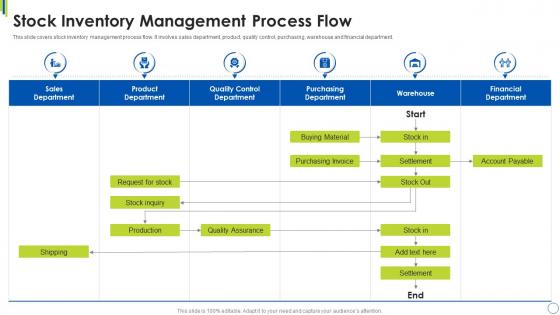
Stock Inventory Management Process Flow




Try Before you Buy Download Free Sample Product
 Impress Your
 Audience
 100%
100% Editable
 Save Hours
 of Time


This slide covers stock inventory management process flow. It involves sales department, product, quality control, purchasing, warehouse and financial department.
People who downloaded this PowerPoint presentation also viewed the following :
Stock Inventory Management Process Flow with all 6 slides:
Use our Stock Inventory Management Process Flow to effectively help you save your valuable time. They are readymade to fit into any presentation structure.





FAQs for Stock Inventory
Honestly, it comes down to three big things - accuracy, timing, and not tying up all your cash. First off, you've got to know what you actually have vs what your computer thinks you have. Those gaps will absolutely wreck you. Then there's the whole dance of keeping enough stuff around without your warehouse turning into a graveyard of dead inventory. ABC analysis is clutch here - sort items by how much they're worth and how fast they move. Don't treat a $5 widget the same as your big ticket items. Set up automatic reorder points and actually do your cycle counts regularly. Start with your A-items.
Honestly, the tech makes such a difference for inventory stuff. Get some barcode scanners or RFID tags - no more counting mistakes. Cloud inventory software is where it's at because everything syncs automatically and your team can check stock from their phones or whatever. The integration with your POS system saves so much time on data entry (seriously, life changing). AI forecasting tells you what to reorder before you're scrambling. Oh, and don't try to automate everything at once - that's a nightmare. Start small with cycle counting maybe? Then add more features as you get comfortable with it.
Honestly, the worst part is trying to predict what people will actually buy - like, good luck with that. You'll either end up with too much stuff eating your cash or not enough and missing sales. Seasonal swings mess with everything, and don't get me started on tracking inventory across different locations. Manual tracking is a disaster waiting to happen - so many mistakes. Lead times from suppliers are all over the place, plus you're stuck with dead inventory that just sits there. Real-time stock visibility fixes most of this chaos though. Seriously saves your sanity.
Oh man, good inventory tracking literally saves you money in two big ways. First, you're not buying too much stuff that just sits around forever (I swear my cousin's warehouse looks like a graveyard sometimes). Second, you won't lose customers because you're out of what they want. Regular counts keep your numbers honest. Better data means you can actually push back when suppliers try to jack up prices. Plus you'll cut down on expired products eating into profits. Honestly, most businesses wing it way too much - get a decent tracking system and stick with it.
So demand forecasting is basically predicting what your customers will buy and when. Honestly, it sounds simple but gets crazy complicated with seasonal stuff and random market changes. You analyze your past sales data first - that's your starting point. Then factor in any promotions or events coming up that might spike demand. The whole point is avoiding those annoying stockouts that lose sales, plus you won't get stuck with tons of inventory gathering dust. I learned this the hard way with my last business. Better forecasting = better cash flow and fewer headaches.
Honestly, start with demand forecasting - just look at your historical data to predict what you actually need. That alone fixes like 80% of problems. Then set up safety stock levels that give you a buffer without hoarding too much inventory (such a pain to balance this right). Automated reorder points are clutch too - they trigger orders when stock hits certain levels so you're not constantly stressed about timing. Oh, and ABC analysis helps you focus on your most critical items first. If this all sounds overwhelming, just pick demand forecasting to start. Trust me, even basic forecasting will save your sanity.
So inventory turnover shows how quick stuff sells, right? Fast movers need frequent orders and more safety stock since they're making you money. Slow ones? Cut back those orders big time. I totally screwed this up last quarter by ordering way too much dead inventory - ugh. What you want is reorder points that actually match how things sell. Short bursts work better than long cycles for hot items. Start with your top 20% of products first and tweak from there. Those ratios don't lie, they'll save you from sitting on cash-eating stock that just collects dust.
So FIFO is "first in, first out" - basically you sell your oldest stuff first. Makes total sense for most businesses since you don't want things getting stale or outdated. LIFO flips it around and sells the newest inventory first. Here's where it gets interesting though - when prices go up, FIFO makes your profits look better because you're using those older, cheaper costs. LIFO hits you with the expensive recent prices right away. Oh and heads up, most countries outside the US actually banned LIFO entirely. Honestly seems like more hassle than it's worth unless you've got a specific reason for it.
So yeah, seasonal stuff totally messes with inventory planning. You can't just forecast the same amounts year-round anymore. I always think it's crazy ordering winter coats in August, but you gotta ramp up stock before peak seasons hit. Then scale way back during slow periods - otherwise you're just burning cash on inventory that sits there. Look at last year's sales data first to spot the patterns. Build extra buffer stock for busy times, but stay conservative during off-seasons. Honestly, mapping out those sales cycles is probably the smartest place to start.
Honestly, start with your inventory turnover ratio - that'll show you how many times you're cycling through stock each year. Then look at days sales outstanding to see how long stuff sits around collecting dust. Your carrying costs matter too since storing inventory isn't free. Stockouts are absolutely killer for sales, so track those religiously. Fill rate tells you if you're actually completing orders, and don't sleep on gross margins by category. Those last two can be real eye-openers. If I had to pick just two? Turnover and stockouts. They'll show you exactly where you're bleeding money.
Honestly, just start with the basics - track what's actually selling and stock up on those items. Most people think they know their best-sellers but never actually look at the numbers consistently (guilty as charged). Google Sheets works fine for monitoring turnover rates, don't blow money on expensive software yet. Cut back on the stuff that sits around forever. Set up simple reorder alerts based on what you've sold before. Also try pushing your suppliers on payment terms - worst they can say is no. You'll probably notice a difference pretty quickly, maybe within a few weeks.
Schedule your counts when it's slow so you're not juggling customers at the same time. Cycle counting year-round beats doing everything at once - honestly, annual counts are brutal. Train your team first and give everyone specific zones. I made the mistake once of having three people count the same area... what a mess that was! Do blind counts without looking at your system numbers, then compare after. Write down variances right away and figure out why they happened. Oh, and if you're not doing cycle counts yet, start next month. You'll thank me later.
Dude, automated inventory reconciliation is a game changer. Your system constantly checks physical stock against what's recorded, so no more of those brutal manual counts where you lose track halfway through. It catches discrepancies right away instead of you finding out months later during audits. Honestly, shrinkage and data entry mistakes get spotted way faster this way. Your team can actually focus on real work instead of standing around counting stuff. Just set alerts for like 2-3% variances - sounds small but it'll save you from major problems later. Trust me on this one.
Honestly, the biggest thing happening is AI demand forecasting - it's getting scary good. IoT sensors are everywhere now tracking inventory in real time, plus those automated reordering systems basically babysit your stock levels. Cloud platforms are finally killing off those ancient legacy systems (thank god). Predictive analytics can catch problems before you're stuck with empty shelves or warehouses full of crap nobody wants. Oh, and sustainability tracking is exploding since everyone needs to prove they're not destroying the planet. My advice? Jump on some basic AI forecasting tools now. Even simple ones will save your sanity.
Okay so here's the deal - supply chain and inventory are totally connected. If your suppliers are solid and deliveries come on time, you don't need to hoard tons of stuff. But when things get messy (and trust me, they will), you'll want extra stock sitting around so you don't run out. Your forecasting affects how much you order, obviously. Good supplier relationships help too. The whole logistics piece feeds into it. Honestly, the trick is matching your inventory plans with what your supply chain can actually handle. Otherwise you're either drowning in products or frantically trying to fill orders last minute.
-
I discovered some really original and instructive business slides here. I found that they suited me well.
-
“Immediate response, professional support, and effective solutions that were customized and immediately provided. Well done- Thank you!”