


Stock inventory management powerpoint presentation slides




Try Before you Buy Download Free Sample Product
 Impress Your
 Audience
 100%
100% Editable
 Save Hours
 of Time


Introducing our stock inventory management PowerPoint presentation slides. Enhance warehouse workforce management with our stockroom management PowerPoint deck. This inventory setup PPT theme consists of a slide that talks about the statistics related to efficient warehouse management. Assimilating this storage authority organization PPT layout helps you in discussing the benefits of having a warehouse management system. This readymade storehouse standard arrangement PowerPoint design contains a slide discussing the optimizing warehouse layout. Incorporating this particular storeroom inventory PPT theme allows you to label areas for effective warehouse management. This store command PowerPoint creative set contains a slide that lets you talk about ensuring workforce safety at the warehouse. Selection of this inventory authority PowerPoint template allows you to discuss the order shipping process. This warehouse management PPT deck lets you make required variations to icons and colors. Choose this inventory administration PowerPoint design to showcase organization and assurance. Download this PPT slide to explore true perfection.
People who downloaded this PowerPoint presentation also viewed the following :
Content of this Powerpoint Presentation
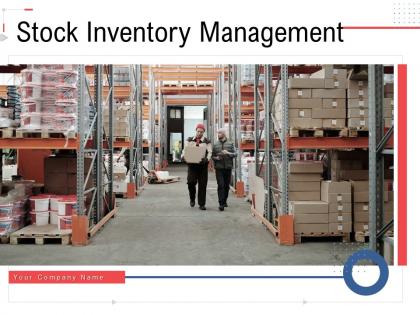
Slide 1: This slide introduces Stock Inventory Management. State Your Company Name and begin.
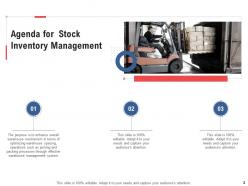
Slide 2: This is an Agenda slide. State your agendas here.
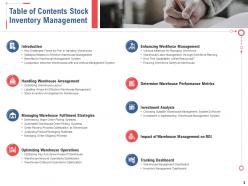
Slide 3: This slide presents Table of Content for the presentation.
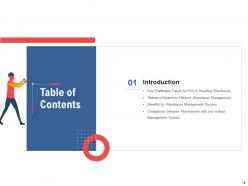
Slide 4: This slide shows Table of Content highlighting Introduction.
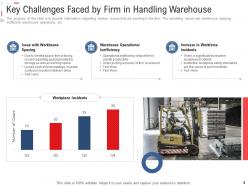
Slide 5: This slide displays Key Challenges Faced by Firm in Handling Warehouse.
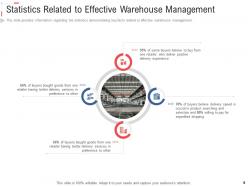
Slide 6: This slide represents Statistics Related to Effective Warehouse Management.
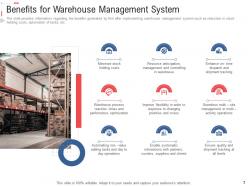
Slide 7: This slide shows benefits generated by firm after implementing warehouse management system.
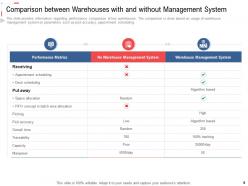
Slide 8: This slide presents Comparison between Warehouses with and without Management System.
Slide 9: This slide shows Table of Content for the presentation.
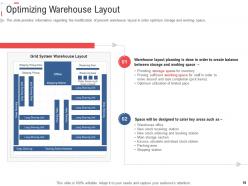
Slide 10: This slide displays Optimizing Warehouse Layout.
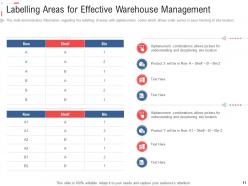
Slide 11: This slide represents Labelling Areas for Effective Warehouse Management.
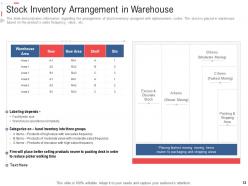
Slide 12: This slide shows Stock Inventory Arrangement in Warehouse.
Slide 13: This slide presents Table of Content for the presentation.
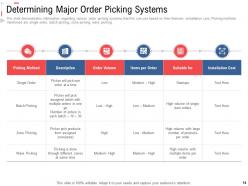
Slide 14: This slide shows various order picking systems that firm can use based on their features.
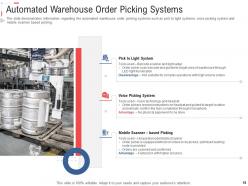
Slide 15: This slide displays automated warehouse order picking systems such as pick to light systems, voice picking system and mobile scanner based picking.
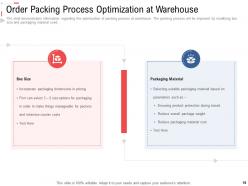
Slide 16: This slide represents optimization of packing process at warehouse.
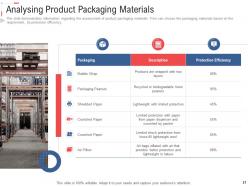
Slide 17: This slide shows the assessment of product packaging materials.
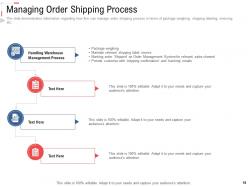
Slide 18: The slide demonstrates information regarding how firm can manage order shipping process in terms of package weighing, shipping labeling, invoicing, etc.
Slide 19: This slide shows Table of Content for the presentation.
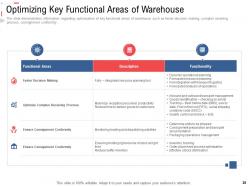
Slide 20: This slide displays Optimizing Key Functional Areas of Warehouse.
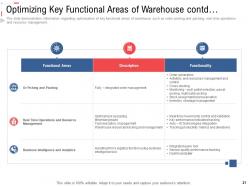
Slide 21: This slide represents optimization of key functional areas of warehouse such as order picking and packing, real time operations and resource management.
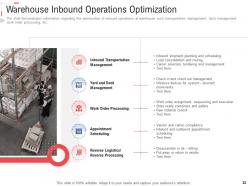
Slide 22: This slide shows Warehouse Inbound Operations Optimization.
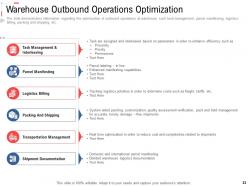
Slide 23: This slide presents optimization of outbound operations at warehouse such task management, parcel manifesting, logistics billing, packing and shipping, etc.
Slide 24: This slide shows Table of Content for the presentation.
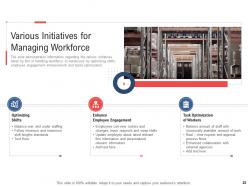
Slide 25: This slide displays Various Initiatives for Managing Workforce.
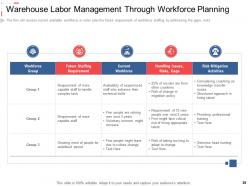
Slide 26: This slide represents Warehouse Labor Management Through Workforce Planning.
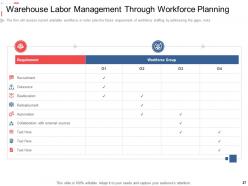
Slide 27: This slide shows How Firm Capabilities will be Resourced.
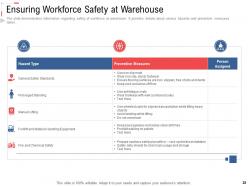
Slide 28: The slide demonstrates information regarding safety of workforce at warehouse.
Slide 29: This slide shows Table of Content for the presentation.
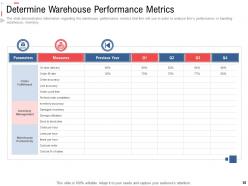
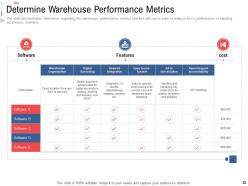
Slide 30: This slide displays the warehouse performance metrics that firm will use in order to analyze firm’s performance.
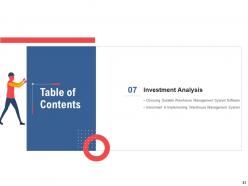
Slide 31: This slide represents Table of Content for the presentation.
Slide 32: This slide shows Choosing Suitable Warehouse Management System Software.
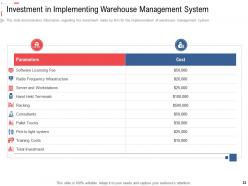
Slide 33: This slide presents Investment in Implementing Warehouse Management System.
Slide 34: This slide shows Table of Content for the presentation.
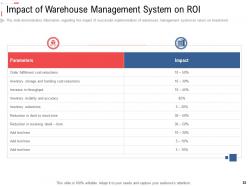
Slide 35: This slide displays Impact of Warehouse Management System on ROI.
Slide 36: This slide represents Table of Content for the presentation.
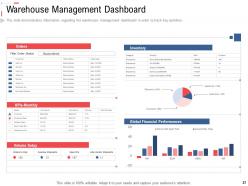
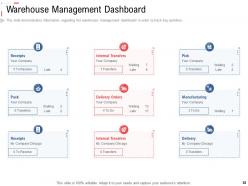
Slide 37: This slide shows the warehouse management dashboard in order to track key activities.
Slide 38: This slide presents inventory management dashboard in order to track key activities.
Slide 39: This slide shows Stock Inventory Management Icons.
Slide 40: This slide is titled as Additional Slides for moving forward.
Slide 41: This is About Us slide to show company specifications etc.
Slide 42: This is Our Mission slide with related imagery and text.
Slide 43: This slide presents 30 60 90 Days Plan with text boxes.
Slide 44: This slide shows Post It Notes. Post your important notes here.
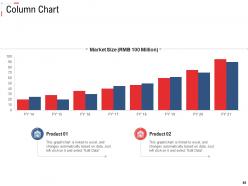
Slide 45: This slide displays Column chart with two products comparison.
Slide 46: This is a Financial slide. Show your finance related stuff here.
Slide 47: This is a Timeline slide. Show data related to time intervals here.
Slide 48: This is a Comparison slide to state comparison between commodities, entities etc.
Slide 49: This is a Thank You slide with address, contact numbers and email address.
Stock inventory management powerpoint presentation slides with all 49 slides:
Use our Stock Inventory Management Powerpoint Presentation Slides to effectively help you save your valuable time. They are readymade to fit into any presentation structure.



FAQs for Stock inventory management
Honestly, the accuracy boost alone is worth it - no more manual counting mistakes. You'll save tons of time too since your team won't be stuck doing inventory all day. Real-time stock updates mean customers won't get mad when you're suddenly out of something. Auto-reordering is clutch though, probably my favorite feature since it prevents those "oh crap we're empty" moments. The data insights help you figure out buying patterns and stuff. I'd say figure out what's driving you crazy about inventory right now, then find a system that fixes exactly those problems first.
Get inventory software that connects to your POS and scanners - that's what actually works. Barcode everything when it comes in, moves around, or sells. NetSuite's solid if you have budget, inFlow's cheaper and still good. Trust me, spreadsheets will drive you insane trying to keep up. Set automatic alerts for when stuff runs low so you're not scrambling. The tricky part? Getting your team to scan consistently - missed scans mess up everything and suddenly your data's worthless. But once everyone's in the habit, you'll know exactly what you have in real time.
So demand forecasting is basically trying to predict what your customers will actually buy and when. Look at your sales data from the past year or two - you'll start seeing patterns pretty quickly. Seasonal stuff is usually obvious, but there's other trends too. Honestly, without this you're just throwing darts blindfolded and hoping for the best. Either you'll be sold out of your hot items or stuck with tons of crap nobody wants. Get better at predicting demand and you can order smarter amounts, spend less on storage, and actually have stuff in stock when people want it. Way better than guessing.
Track your turnover ratios every month - that's where you'll spot the problem areas. Fast-moving stuff should get just-in-time ordering while slow movers are basically cash vampires sitting on your shelves. Run some promotions to dump the dead inventory, honestly it's better to break even than let it collect dust. Your demand forecasting probably needs work too so you're not over-ordering from the start. I learned this the hard way with seasonal items last year. The goal is simple: enough stock to avoid pissing off customers but not so much that your cash is tied up forever.
Ugh, you're gonna deal with demand forecasting screwups, stockouts, and overstocking for sure. Everyone does! Start with decent inventory software - the real-time data actually helps. Safety stock levels based on your sales history are clutch. Also, find suppliers you can trust for quick restocks. I'd do cycle counts regularly too, catches problems early. Honestly though? Figure out your worst issue first. Usually it's either your bestsellers going out of stock or dead inventory eating up your cash. That second one's the worst because it just sits there mocking you.
Dude, inventory software can totally make or break how smoothly things run. Your order accuracy shoots up right away, stock counts get way faster, and you're not drowning in manual entry anymore. Trust me on this - bad software means your team burns hours doing annoying workarounds. Good ones actually play nice with whatever tools you're already using. They'll automate when to reorder stuff and show you what's happening everywhere in real-time. Plus everyone can actually find things in the system (revolutionary concept, right?). Demo a few with your real data first though - see what feels right for how your people work.
Inventory turnover ratio is your best starting point - shows how fast you're actually moving stuff. I'd also watch stockout rates and carrying costs as a percentage of inventory value. Days sales outstanding is clutch but honestly most people ignore it for some reason. Shrinkage rates matter too, plus fill rate percentage. Oh and dead stock percentage - that'll show you what's just sitting around doing nothing. But seriously, don't try tracking all this at once. Pick maybe 2-3 that match whatever's driving you crazy right now.
Honestly, just get your supply chain data talking to your inventory system directly. APIs make this way easier now - no more manual spreadsheet hell. Pull in supplier orders, shipping updates, and demand forecasting all into one place so you can actually see what's happening. Set up those automated reorder points based on your lead times and how reliable each supplier actually is. The trick is having everything update automatically when stuff ships or orders come in. Oh, and definitely start with your biggest suppliers first - don't try to do everyone at once or you'll go crazy.
Honestly, start by looking at your stock turnover rates - figure out what's sitting around too long. Better demand forecasting is huge, so get some decent data analytics going. Just-in-time ordering works well if you can match your actual consumption patterns instead of guessing. Set up automated reorder points based on what you've used historically. ABC analysis is super helpful too - categorize stuff by value and how fast it moves so you're not stuck with tons of slow inventory. Oh, and do regular audits. Sounds boring but they catch problems before you're hemorrhaging money. Once you know which products are your problem children, adjust those order quantities accordingly.
Dude, seasonal demand is a total game-changer for inventory planning. Start stocking up 2-3 months before your busy seasons - trust me on this one. I'd rather have too much than run out when everyone's buying. The forecasting part gets tricky though. Pull your sales data from the same months last year, but don't ignore new trends that might mess with your usual patterns. Oh, and definitely plan your cash flow around this since you'll be dropping way more money upfront on stock. My neighbor learned this the hard way last Christmas. Use last year's numbers as your starting point and build from there.
Honestly, just stay consistent with it - I do mine quarterly and it works pretty well. Always count when things are slow, like weekends or after closing. Print your inventory lists ahead of time (learned that one the hard way). Break everything into sections and assign people to specific zones or SKU groups. Yeah, it's boring as hell but finding problems early beats dealing with a massive mess later. Start with your expensive stuff first. Document weird numbers right away while you remember what happened. The key is having a system and sticking to it every time.
Honestly, start with just one product category and look at last year's sales patterns - that's way less overwhelming than diving into everything at once. You'll start seeing trends in your sales cycles and can actually predict when demand's about to spike. Real-time data shows you what's selling fast vs. what's just sitting there collecting dust (which happened to me with those seasonal items I thought would be huge). Set up alerts for low stock so you're not scrambling. Historical data is your friend for forecasting what you'll need and when. Track inventory turnover rates too - it's pretty eye-opening once you get into it.
Dude, e-commerce totally changes the inventory game. Real-time tracking across all your channels is a must now - forget just watching your physical store. Demand gets crazy unpredictable too. One random viral video can clear you out overnight (trust me on this one). You're juggling way more SKUs, faster turnover, and people want to know if stuff's available RIGHT NOW. Buffer stock for both online and in-store? Yeah, that ties up your cash. Oh and manually tracking everything will literally make you lose your mind. Get inventory software that syncs automatically - it's worth every penny.
Start simple - just use a spreadsheet and do basic ABC analysis. Group your stuff by value so you're not wasting time on cheap items that don't matter. Seriously, people overcomplicate this when they're just getting going. Your POS probably has decent reports already, so use those. Set reorder points based on what you're actually selling, not some formula you found online. Track your fast movers, slow stuff, and how long suppliers take to deliver. Do that consistently for a few months first. Then yeah, maybe look at fancy inventory software if you really need it.
Honestly, AI and machine learning are game-changers for demand forecasting - way more accurate than old-school methods. IoT sensors give you real-time stock visibility, which is clutch. RFID and smart barcoding basically eliminate manual counting (thank god). Blockchain's getting big for supply chain transparency. Automated robotics are handling more warehouse stuff now too. Cloud systems connect everything across your network pretty seamlessly. If I were you, I'd start with AI-powered demand forecasting first - quickest ROI and biggest impact usually.
-
Very educative and insightful
-
Awesome use of colors and designs in product templates.
-
Unique research projects to present in meeting.
-
Helpful product design for delivering presentation.
-
Qualitative and comprehensive slides.
-
Wonderful templates design to use in business meetings.
-
Excellent Designs.
-
Understandable and informative presentation.
-
Very unique and reliable designs.