Inventory Management Process Flow For Warehouse And Store

Rating:
80%
Inventory Management Process Flow For Warehouse And Store
Slide 1 of 6
Favourites Favourites

Try Before you Buy Download Free Sample Product

Audience Impress Your
Audience
Editable 100%
Editable
Time Save Hours
of Time
The Biggest Sale is ending soon in
0
0
:
0
0
:
0
0
Rating:
80%
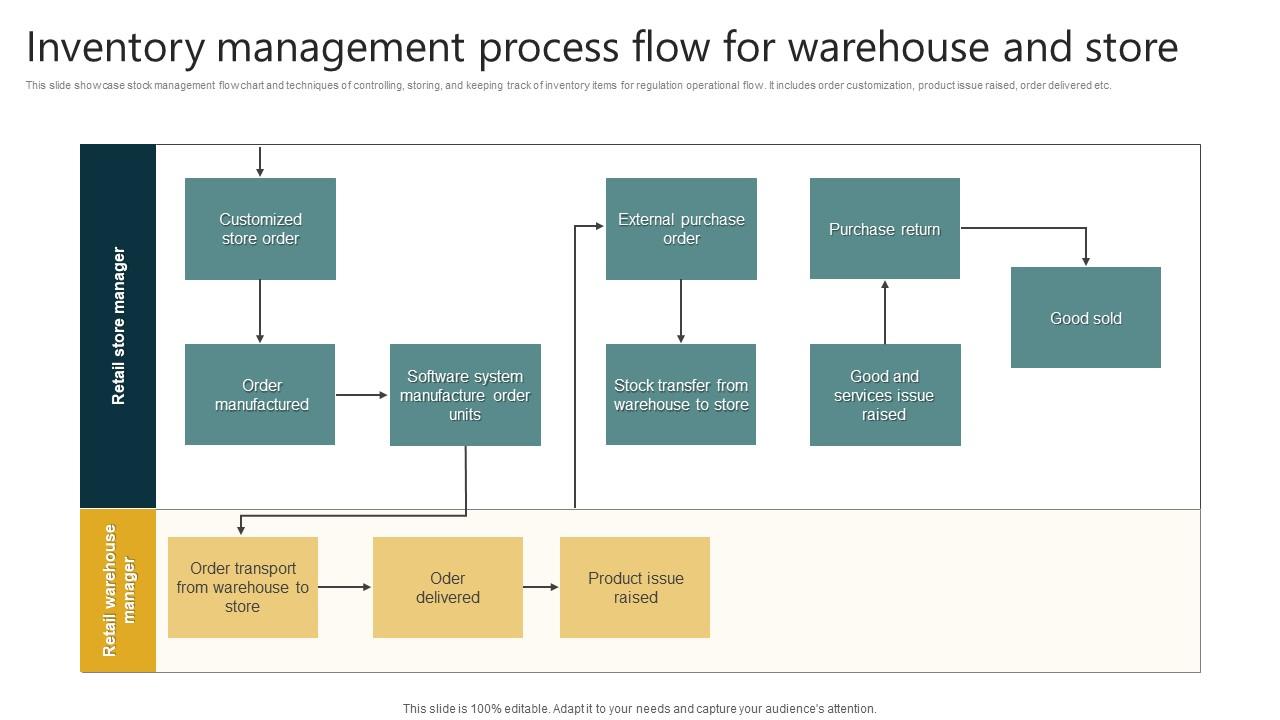
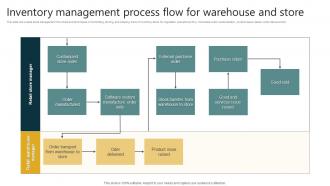
This slide showcase stock management flowchart and techniques of controlling, storing, and keeping track of inventory items for regulation operational flow. It includes order customization, product issue raised, order delivered etc. Presenting our well structured Inventory Management Process Flow For Warehouse And Store. The topics discussed in this slide are Software System, Manufacture Order, Services Issue. This is an instantly available PowerPoint presentation that can be edited conveniently. Download it right away and captivate your audience.

FAQs for Inventory Management Process Flow For

Demand forecasting and real-time tracking are huge - you can't wing inventory without knowing what's coming. Set up automated reorder points so you're not scrambling when stuff runs out. ABC analysis is solid too, just groups your inventory by how much it's worth and moves. Most people totally bomb the tracking though, manual counts suck so bad. Get automated alerts when you hit minimum stock levels and you won't deal with those "oh crap we're out" moments. Also grab some decent reporting dashboards and nail down your supplier relationships. Start with reorder points first - honestly gives you the fastest wins.

Dude, get some tech in there - barcode scanners and basic inventory software will save your sanity. Manual spreadsheets are the worst, honestly. The software updates everything automatically so you'll spot problems way faster instead of finding out you're out of stock when a customer asks for it (been there, it sucks). Most apps can predict when you're running low on stuff too. If you have multiple locations, you can see everything in one place. I'd start simple - just grab a basic inventory app and scanner. Even that small change will cut down on so much BS tracking.

Dude, inventory management is literally the backbone of your whole supply chain. Get it wrong and you'll have stockouts, crazy lead times, plus costs spiraling everywhere. Honestly, nobody thinks about it until shit hits the fan - then suddenly it's everyone's problem! Good management keeps storage costs down and customers happy. Track your turnover rates and safety stock levels first, that's where the real insights are hiding. It sounds super boring but trust me, nail this part and everything else flows way smoother. Those metrics will show you exactly what needs fixing.

Start by pulling your sales data from the last 6-12 months - look for trends and seasonal stuff. Then check how long suppliers take to restock you. Do an ABC analysis to categorize products by revenue (honestly, this saved my butt when I was drowning in SKUs). Focus tight control on your A-items, let C-items run leaner. Don't forget storage costs and cash flow limits. I'd calculate reorder points and safety stock for just your top 20% first. That's where you'll actually move the needle on profits instead of getting lost in the weeds.

Honestly, start with demand forecasting - look at your historical data instead of just winging it. Just-in-time ordering is a game changer so you're not stuck with dead inventory (trust me on this one). Set automated reorder points for different product categories, but make sure your safety stock levels actually make sense. Oh, and audit regularly to catch slow movers early - you can always bundle them with bestsellers or run discounts. Good tracking software is worth every penny if you don't have it already. Real-time visibility into what's actually moving vs sitting there collecting dust? That's where the magic happens.

So JIT is basically ordering stuff right when you need it instead of hoarding inventory. You're not keeping huge safety stocks sitting around eating up your cash and warehouse space anymore. Super nerve-wracking at first though - you're cutting it close! The timing has to be perfect and your suppliers better be reliable as hell. I learned this the hard way at my last job, actually. But man, the benefits are worth it. Way lower carrying costs, less waste, cash flow improves big time. Just don't attempt it unless you trust your suppliers completely or you'll be panicking every delivery cycle.

Track these four things monthly: inventory turnover (how fast you sell through stock), carrying costs as percentage of inventory value, stockout frequency, and days sales outstanding. Turnover shows if product's moving efficiently. Carrying costs tell you if too much cash is tied up - that one bites people more than they realize. Stockouts = unhappy customers obviously. DSO measures how quickly inventory becomes actual cash in your account. Honestly don't overthink it beyond these four. You'll start seeing patterns pretty fast once you're tracking consistently.

Honestly, data analytics is a game changer for catching sales patterns you'd never spot otherwise. Feed it clean data from everywhere - past sales, market trends, weather if that matters for your business. Machine learning beats the hell out of spreadsheet guessing (been down that rabbit hole too many times). Track how accurate your forecasts are and tweak accordingly. I'd start basic with trend analysis first. Once you're comfortable, add fancier predictive stuff. The seasonal patterns alone will surprise you - customers are way more predictable than they think they are.

Yeah, forecasting demand online is a nightmare - way harder than brick-and-mortar stores. Stockouts kill your sales, but too much inventory just sits there burning cash. The multi-channel thing makes it worse since you're selling on your site, Amazon, social media, everywhere. Returns are honestly the worst part because people can't feel products beforehand, so you get stuck with crazy return logistics. Oh, and don't even get me started on keeping everything synced up. Real-time inventory software that connects all your channels is where I'd start - it's a game changer.

You basically have to become a fortune teller and guess what people will want months ahead of time - kind of stressful tbh. Look at last year's numbers to spot your busy seasons, then start building up stock way before you actually need it. The hard part is not going overboard and ending up with tons of leftover stuff when the season dies. Try to work out flexible deals with your suppliers too, maybe line up some backup options. Oh and definitely start tracking these patterns now if you're not already - that data will save your butt next year when you're trying to figure out how much to order.

Get all your inventory data in one place first - you're basically guessing without real-time numbers. Sync everything: online store, physical shops, Amazon, whatever you're using. Spreadsheets turn into a hot mess once you grow (learned that the hard way). Set up automatic reorder points for each channel since they all have different patterns. Pick favorites when stock runs low - maybe your website beats third-party sites. Oh, and audit what you actually have vs what your system thinks before changing anything. Trust me on that last part.

So RFID lets you scan hundreds of items at once just by walking around with a reader - no more manually hitting every barcode. Pretty neat stuff honestly. Your accuracy goes way up since there's way less human error, plus you can find specific items instantly and see stock levels in real time. The tags don't even need line-of-sight which is clutch. Labor costs drop too since you're not spending forever doing manual counts. I'd probably start with your expensive stuff first to see how it works, then expand from there. Way better than the old school clipboard method.

Dude, bad inventory management absolutely destroys customer happiness. When stuff's out of stock or shipments get delayed, people get pissed fast. They ordered something expecting it to be there, right? Overstocking sucks too since it eats up your cash, but running out of inventory is way worse for keeping customers around. You'll get slammed with angry reviews and people will just bounce to competitors who actually have their shit together. Honestly, investing in some basic forecasting tools and setting up automatic reorder alerts will save you so much headache down the road.

Honestly, just start with whatever's cheap - even a basic spreadsheet works, or grab something like inFlow if you want to get fancy. Set up those reorder points so you're not constantly panicking about running out of stuff. Trust me, I made that mistake with way too much seasonal inventory just sitting there collecting dust! Physical counts are super boring but you gotta do them - your numbers mean nothing if they're wrong. Oh, and try that ABC thing where you focus on your expensive items first. Way easier than trying to track everything perfectly from day one.

Honestly, supply chain chaos means you gotta throw out the old playbook. Keep way more inventory on hand than before - I know it ties up cash, but empty shelves are worse. Find backup suppliers now, not when your main one fails. Local sourcing costs more but saves your butt when shipping gets weird. Just-in-time is basically suicide these days. Demand forecasting? Good luck predicting anything beyond a few months out. Build flexibility everywhere so you can switch gears fast. Map out your critical suppliers first - that's where I'd start if I were you.

Ratings and Reviews

80% of 100
Review Form
Write a review
Most Relevant Reviews
  1. 80%

    by Donny Elliott

    SlideTeam is my one-stop destination for templates. Highly recommended!
  2. 80%

    by Walsh Turner

    Unique and attractive product design.

2 Item(s)

per page: