

Inventory management dashboard management control system mcs ppt background




Try Before you Buy Download Free Sample Product
 Impress Your
 Audience
 100%
100% Editable
 Save Hours
 of Time


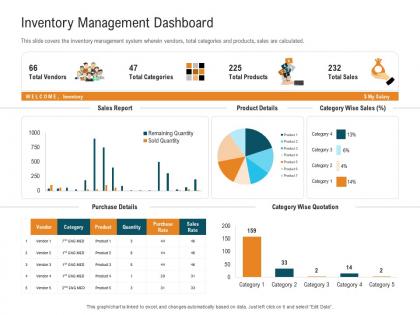
This slide covers the inventory management system wherein vendors, total categories and products, sales are calculated.
People who downloaded this PowerPoint presentation also viewed the following :
Inventory management dashboard management control system mcs ppt background with all 2 slides:
Use our Inventory Management Dashboard Management Control System MCS Ppt Background to effectively help you save your valuable time. They are readymade to fit into any presentation structure.
FAQs for Inventory management dashboard management control system
Honestly, the biggest win is just not running out of stuff your customers actually want. Track your turnover rates first - that's where you'll spot the real problems. You're basically freeing up cash that's been sitting in dead inventory (and trust me, we all have more of that than we want to admit). Lower carrying costs, better demand forecasting, less waste from expired products. The visibility thing is huge too - you'll actually see what sells versus what just takes up space. Start there and work backwards.
So I'd start with your last 12-24 months of sales data and layer in seasonal stuff - like how summer always kills certain products. ABC analysis is clutch here, honestly just focus on forecasting your big revenue drivers first. Don't overthink the fancy methods right away though. Moving averages work fine when you're starting out, then maybe try exponential smoothing later. Oh and definitely factor in any promos or weird economic stuff coming up. The whole thing's basically educated guessing at first, but reviewing monthly helps you get way better at it.
Honestly, tech has completely changed the game for inventory management. Barcode scanners and RFID make tracking way less painful than the old spreadsheet days. Real-time dashboards show you exactly what's flying off shelves vs what's just sitting there forever. Machine learning actually gets pretty good at predicting demand patterns - saves you from those awkward "whoops we're out of everything" moments. Most stuff plays nice with whatever system you're already using too. My advice? Pick whatever's driving you crazy right now and fix that first. You'll probably see results faster that way.
Look at your sales data first - that's way more reliable than guessing what'll sell. Set up automatic reorder points so you're not constantly playing catch-up. Try bundling slow-moving stuff with your bestsellers; people eat that up. Honestly, smaller orders more often beats one massive shipment that sits there forever. Run some promotions before old stock becomes dead weight - learned that one the hard way. Just-in-time ordering sounds fancy but it's basically ordering what you actually need when you need it, not what you think might sell someday.
Honestly, start with your sales data and figure out what's actually moving. Stock more of those winners. That dead inventory sitting around? Mark it down hard - yeah it sucks taking the loss, but it's just eating up your cash otherwise. I'd run ABC analysis on everything so you know which products deserve priority. Try negotiating better terms with suppliers too, so you're not paying everything upfront. Oh, and demand forecasting helps a ton if you're not doing that already. Pull a report on your slowest items this week and figure out how to clear them out fast.
Okay so supply chain visibility is basically having real-time intel on everything happening in your network. You can track suppliers, shipments, demand patterns - the whole nine yards. Game changer for inventory management honestly. Instead of playing guessing games, you'll spot shortages coming and avoid that dreaded overstocking situation. Plus you can dial in your reorder points way better and cut down on safety stock. When disruptions hit (and they always do), you're ready. The trick is getting systems that actually show you end-to-end data so you're making smart moves instead of just winging it.
So ABC analysis is your friend here - A items are your money makers (high-value, fast movers), B's are middle tier, and C's are the slow/cheap stuff. Most of your energy should go to those A items since they pay the bills. You could also sort by product type or supplier, whatever clicks for your setup. Honestly though? The best system is just the one your team will actually use. I've seen fancy setups fail because nobody maintained them. Start basic - good labels, clear spots for everything. You can get fancier later once it's working.
Honestly, data analytics is a game changer for this stuff. Track your basics first - turnover rates, how often you stock out, carrying costs. Modern tools can dig into your sales history and spot patterns you'd never catch manually. They'll predict when demand's gonna spike and flag products that aren't moving before you're stuck with dead inventory. Weather, seasonal trends, market shifts - good software factors all that in. You'll start noticing which items customers always buy together too, which makes ordering way smarter. Once you get comfortable with the numbers, add fancier predictive models. Start simple though.
Ugh, the inventory sync thing is brutal - sell something on Amazon and your Shopify store has no clue, then boom, you've oversold. Each platform moves at different speeds too, so customers expect totally different things. Makes forecasting impossible honestly. You can't just split inventory evenly either because demand patterns are weird on each channel. Oh and slow-moving stock? That needs its own game plan per platform. Seriously though, get a solid inventory system that talks to everything - I know it's pricey but you'll thank me later.
Dude, cycle counting is way better than those awful full inventory shutdowns. You spread the counting throughout the year so nothing gets disrupted. Honestly, those weekend inventory marathons are the worst - nobody wants that stress. Small discrepancies get caught before they blow up into major headaches. Your high-value stuff (A-items) gets counted monthly, while the slower-moving inventory can be quarterly or yearly. It's actually pretty smart - you're not wasting time obsessing over cheap items that barely move. Start with identifying what's worth counting most often and work from there.
Dude, the worst thing you can do is tie up all your cash in too much inventory - learned that one the hard way. But understocking sucks too because you're literally missing sales. Most people I know just wing it instead of looking at actual numbers, which works until it doesn't. You really need to track stuff in real-time, not with some janky spreadsheet that's always wrong. Seasonal trends will bite you if you're not paying attention. Honestly? Just get decent inventory software and actually use the data it spits out. Makes such a difference.
Okay so the big thing is volume and predictability. B2B companies usually get fewer but way larger orders that you can actually forecast ahead of time. B2C is the opposite - tons of tiny transactions with crazy unpredictable demand spikes. With B2B you can keep higher safety stock since those customers plan months ahead. B2C needs super tight inventory control because trends literally change overnight. Honestly feels like whack-a-mole sometimes lol. Your strategy should match that rhythm though. B2B is all relationship-based forecasting and bulk efficiency. B2C needs real-time data and quick replenishment. I'd start by actually mapping your order patterns first to see which way you lean.
Start with inventory turnover ratio - shows how fast you're actually moving stuff. Stockout frequency matters too, plus carrying costs as a percentage of inventory value. Order accuracy is huge. Lead times are still all over the place since supply chains got weird, so definitely track that variability. GMROI is clutch - tells you which products make money vs. just sitting there eating up space. Safety stock levels, watch those closely. Honestly, gross margin return on investment sounds fancy but it's just "what's actually profitable." Build from these basics, then add industry-specific stuff based on where you're bleeding money.
JIT will slash your carrying costs big time - no more cash tied up in inventory sitting around. Your warehouse space shrinks too, which honestly feels amazing when you see all that room freed up. Less obsolete stock means way less waste, plus your cash flow improves. You'll end up working closer with suppliers, which actually strengthens those relationships. Production gets tighter and more efficient. But here's the thing - your suppliers better be rock solid reliable. One delayed shipment and boom, your whole production line stops. I've seen it happen and it's not pretty.
Honestly, globalization makes everything way more complicated. Your supply chains stretch across countries and time zones, so you're dealing with longer lead times and currency swings. Different regions have their own regulations too - it's a headache. Trade wars can totally wreck your inventory planning overnight. You'll need bigger safety stock and better forecasting since each market has different buying patterns. Oh, and seasonal stuff varies by region which is super annoying to track. Build in flexibility though. Having backup suppliers in different areas saves you when things go sideways.
-
Unique design & color.