


Process Flow For Patient Billing Management Healthcare Inventory Management System




Try Before you Buy Download Free Sample Product
 Impress Your
 Audience
 100%
100% Editable
 Save Hours
 of Time


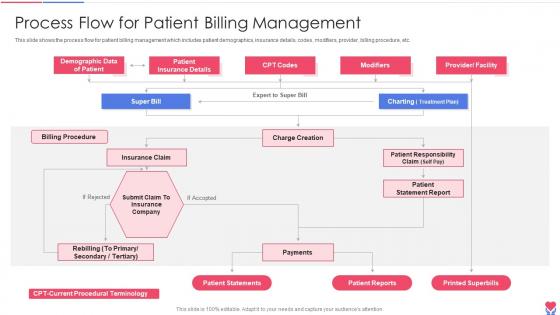
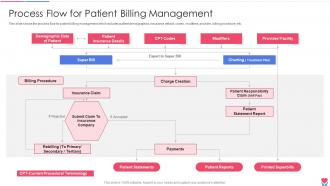
This slide shows the process flow for patient billing management which includes patient demographics, insurance details, codes, modifiers, provider, billing procedure, etc.
People who downloaded this PowerPoint presentation also viewed the following :
Process Flow For Patient Billing Management Healthcare Inventory Management System with all 6 slides:
Use our Process Flow For Patient Billing Management Healthcare Inventory Management System to effectively help you save your valuable time. They are readymade to fit into any presentation structure.





FAQs for Process Flow For Patient Billing Management Healthcare
Ugh, claim denials are the absolute worst - and prior auths take forever these days. Insurance companies definitely aren't making our lives easier. Missing patient info drives me crazy too, plus coding mistakes that send everything bouncing back. Oh, and trying to collect what patients owe after treatment? Good luck with that. Keeping up with policy changes feels impossible sometimes - I swear they update stuff just to mess with us. My advice? Get your verification process tight from day one. Jump on denials fast because waiting just makes collecting harder later.
So basically automation takes care of all that mind-numbing stuff your team probably hates - invoice generation, payment reminders, processing insurance claims. You can build workflows that check patient info and eligibility automatically, plus post payments as they roll in. Manual billing is honestly such a nightmare, I don't know how anyone does it anymore. Your staff gets to tackle the complicated cases instead of drowning in data entry all day. I'd start with automating payment reminders since that's where you'll see results fastest and it's pretty straightforward to set up.
Dude, patient education is seriously a game-changer for billing disputes. Most people just have no clue what they're actually paying for. Before any treatment, walk them through their insurance coverage and what stuff costs - no fancy insurance speak, just normal English. Written estimates help too since everyone's on the same page later. Your front desk team needs to nail these conversations because honestly, patients get way less pissy when they know what to expect upfront. I've heard practices cut disputes by 40% just doing this. Makes such a difference.
Set up checkpoints throughout your whole billing workflow - that's honestly the biggest game changer. Train your team on coding properly and keep everyone updated since those codes change constantly (seriously, it's ridiculous). Always double-check insurance info at each visit. Make sure your diagnosis codes actually match what's documented - this trips up so many practices. Run audits on claims before you submit them. Way better to catch mistakes early than deal with angry patients later. Oh, and have at least two people review each claim. Sounds excessive but it works.
Dude, you've gotta verify insurance upfront or you'll get burned later with denials and payment drama. Trust me on this one. Check for inactive policies, wrong member IDs, coverage limits - all that stuff that kills claims after the fact. Your patients will actually thank you for telling them what they owe beforehand instead of surprising them with bills. Short sentences work. Also catches if you need prior auth, which is huge for avoiding those annoying retroactive denials. Yeah, it's extra work upfront, but it saves so much billing chaos and gets you paid faster.
So basically your billing software talks to your EHR through APIs - you set up the data mapping once and then everything flows automatically. Patient info, insurance details, diagnosis codes, all that stuff just pulls right over without having to type it twice. Honestly it's a huge time saver and way fewer mistakes happen. The tricky part is some systems play nice together and others... don't. Really depends on what EHR you're already using. I'd check with your current vendor first to see what billing platforms they actually support before you go down any rabbit holes. Some integrations are certified and smooth, others can be a headache.
Make paying super easy - online portals, payment plans, even those text-to-pay things. Your front desk should grab copays right when people check in and be upfront about costs. Clear statements help too, obviously. Follow up but don't be annoying about it (nobody likes feeling harassed). The real trick? Offer payment plans before sending stuff to collections - that alone will probably save half your problem accounts. Oh, and don't try to change everything overnight. Pick one thing and nail it first.
Ugh, regulatory changes are the worst - they basically make you redo everything. Your coding systems need updates, patient statements get overhauled, and don't even get me started on retraining staff. Remember the No Surprises Act chaos? Suddenly we're all scrambling with good faith estimates and new dispute processes. I swear it never ends. But you can't just sit there waiting to get blindsided. Set up CMS alerts, jump in some billing forums, and honestly? Get cozy with your software vendors. They'll usually give you a heads up before major updates hit. Makes life way easier.
Ugh, coding updates are seriously the worst but you gotta stay on top of ICD-10 and CPT changes. Document everything like your life depends on it. Always check insurance eligibility upfront - saves so much headache later. Modifiers are where people mess up constantly, so drill your team on those. Monthly audits will catch problems before they snowball. Oh and denial management? Set up a solid process now or you'll hate yourself later. Training staff on documentation is huge too. Honestly the whole thing's annoying but these basics will save you.
Check insurance eligibility upfront - seriously, this one step will save you so much drama later. Get all patient info complete during registration too. Claims should go out within 24-48 hours max. The quicker you submit, the quicker you get paid, period. Set up automatic follow-ups at 30, 60, and 90 days for unpaid stuff. Your team needs to know the common denial reasons so they can catch problems before resubmitting. Oh, and definitely audit your current timeline from service to payment first - you'll see exactly where things are getting stuck.
Honestly, just focus on five key things and you'll be golden. Your collection rate shows what percentage you're actually getting paid - that's huge. Days in A/R should stay under 45 days or something's wrong with your process. Denial rate tells you if your billing team is screwing up submissions. Clean claims rate matters too because rejected claims are such a pain to resubmit. Oh, and patient satisfaction scores - I know it sounds weird but happy patients actually pay their bills faster. Track these monthly and compare against industry averages. Don't overthink it with a million metrics.
Dude, patient experience is HUGE for getting people to actually pay their bills. I learned this the hard way at my old job - confused patients just ghost you completely. Clear upfront communication about costs changes everything. Nobody wants that surprise $200 charge showing up later, you know? Train your front desk to go over expenses before any procedures if you can. Flexible payment plans work wonders too. When patients feel like you're working with them instead of against them, they'll actually follow through. It's honestly pretty simple - transparency builds trust, and trust gets you paid faster.
AI is totally changing the game with claims and payment processing - way fewer manual screw-ups now. RPA handles all that boring data entry stuff, which honestly should've happened years ago. Blockchain's starting to pop up for secure records but it's still pretty new. Most patients expect to pay online now just like Amazon, so those integrated portals are becoming must-haves. My advice? Figure out what's actually broken in your workflow first. Then see which tech fixes those specific headaches instead of just grabbing whatever sounds cool.
Honestly, nobody wants to get blindsided by random medical bills they can't decode. Break down costs upfront and skip the confusing jargon - patients actually appreciate knowing what they're paying for before you do anything. It's wild how much this cuts down on angry phone calls too. Simple invoices make a huge difference. When people feel like they're not getting hit with mystery fees, they trust you way more. Plus they can actually make informed decisions about their care instead of just crossing their fingers and hoping their wallet survives.
Dude, yes - get a billing team if you can swing it. Your nurses and doctors will thank you because they can actually focus on patients instead of fighting with insurance nonsense all day. Those billing people become wizards at dealing with claim denials and coding changes (seriously, that stuff changes constantly and it's such a pain). You'll get paid faster, make fewer mistakes, and patients won't get confused about who to call. I'd start small though - figure out what's driving you crazy first, then see if having dedicated people handle just those things helps.
-
Easy to edit slides with easy to understand instructions.
-
Use of icon with content is very relateable, informative and appealing.