


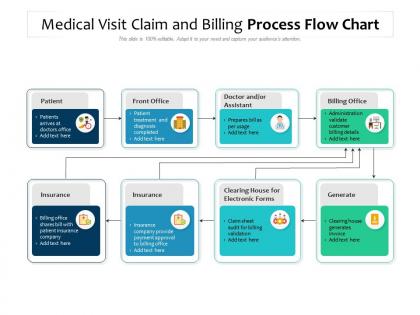
Medical visit claim and billing process flow chart




Try Before you Buy Download Free Sample Product
 Impress Your
 Audience
 100%
100% Editable
 Save Hours
 of Time


Our Medical Visit Claim And Billing Process Flow Chart are topically designed to provide an attractive backdrop to any subject. Use them to look like a presentation pro.
People who downloaded this PowerPoint presentation also viewed the following :
Medical visit claim and billing process flow chart with all 2 slides:
Use our Medical Visit Claim And Billing Process Flow Chart to effectively help you save your valuable time. They are readymade to fit into any presentation structure.

FAQs for Medical visit claim and billing
So there's basically five steps to medical billing. Registration comes first - you grab patient info and insurance details. Coding is next, and honestly? This part sucks because it's where everything goes wrong if you're not careful. You use CPT and ICD-10 codes for services. Then submit claims electronically to insurance companies. Following up is step four - tracking claim status and dealing with rejections (ugh). Last step is collecting what patients owe for copays and stuff insurance won't cover. Focus on getting really good at coding first since it affects literally everything else down the line.
Dude, coding accuracy literally makes or breaks your revenue cycle. Get it right and claims sail through - you get paid fast and in full. Mess it up? Welcome to denial hell. Your cash flow tanks because claims get rejected left and right, staff wastes time fixing everything, and you might end up writing off money you should've gotten. The worst part is when bad coding triggers an audit - been there, not fun. Short sentences here but honestly the whole thing snowballs pretty quick. One coding mistake leads to another headache. Definitely worth investing in good training upfront.
Ugh, claim denials are the absolute worst - they'll reject stuff for the dumbest reasons. Prior auths take forever too. Half your day gets eaten up hunting down patient info that's missing or fixing tiny coding mistakes. Insurance verification is such a pain since people's coverage changes all the time and they have no clue what plan they're even on. Don't get me started on keeping up with new billing codes every five seconds. Oh, and definitely get cozy with your insurance reps - makes life way easier. Double-check everything though because one small error means starting over.
Ugh, healthcare regulations are such a headache but you can't ignore them. They mess with everything - your coding, how you document stuff, even what you get paid. New CPT codes mean retraining everyone, plus you'll probably need to update your billing software again. Documentation requirements always seem to get pickier too. I swear they change things just to keep us on our toes. Non-compliance isn't worth the risk though - audits and payment denials will ruin your day fast. Your best bet is staying connected with your software vendor and joining some professional groups. That way you won't be scrambling when the next round hits.
Honestly, upgrading your billing software is a game changer if you're still doing everything manually. Your EHR can auto-fill patient details and shoot claims straight to insurers. The scheduling and eligibility checks happen automatically too - no more calling to verify coverage every time. Those claim scrubbing features are clutch because they catch mistakes before you submit, which saves you from that annoying back-and-forth with insurance companies. Electronic payments post themselves now, so you're not waiting around forever. I swear the time you'll save makes the investment totally worth it. Revenue tracking happens in real-time too, which is pretty sweet.
Honestly, pre-auth is where most people mess up - get that sorted first because it'll save you tons of headaches later. Always verify patient eligibility before they even sit down. Your coding has to be perfect too (ICD-10, CPT, all those modifiers), and don't miss those payer deadlines or you're screwed. Train your team on why claims get denied in the first place. Oh, and audit your current denials to see what's costing you the most money - might surprise you where the biggest leaks are. Set up a decent workflow for appeals so you're not scrambling when stuff gets rejected.
Dude, you gotta verify everything upfront or you'll be drowning in rejected claims later. Wrong birthdates, expired insurance cards - the smallest mistakes will come back to bite you. I learned this the hard way when I first started. Double-checking demographics and coverage before you submit saves SO much time down the road. Otherwise you're stuck doing resubmissions and chasing corrections, which honestly sucks. It's way easier to catch problems at the beginning than deal with payment delays later. Quality control at the front end is everything.
Honestly, it depends on what specialty you're dealing with. Radiology's pretty chill - just standard imaging codes mostly. Surgery though? That's where things get messy with all the detailed documentation and modifiers you need. Mental health has its own weird session rules that are super strict. And don't even get me started on cardiology - those bundled procedures will make your head spin trying to figure out what goes where. Oh, and payment timing varies like crazy depending on the specialty and which insurance you're dealing with. I'd say just focus on learning the CPT codes for whatever area you're in first.
Okay so first thing - keep up with coding updates religiously and document everything. Double-check patient info before submitting anything because one wrong code will absolutely wreck your day with audits. Train your staff constantly since codes change all the time. Always verify insurance eligibility and get prior auths before doing procedures. Honestly, I'd rather be paranoid than sorry. Do internal audits monthly to catch mistakes before insurance companies do. Pick random claims and look for denial patterns or coding errors - way better to find problems yourself than have someone else point them out.
Dude, it's honestly all about nailing the details from the start. When your doctors actually document everything properly - diagnoses, procedures, patient stuff - your billing team can send out clean claims that get paid right away. No annoying back-and-forth trying to decode what procedure happened or scrambling for missing auth numbers. Set up regular meetings between your clinical and billing people. Trust me, the sooner you catch coding issues or missing documentation, the faster that money lands in your account. It's way less stressful than playing catch-up later.
Honestly, timing is everything - hit them with that first follow-up within 30 days max. After that it's like pulling teeth. Mix up your approach too: calls, emails, letters, whatever works. Stay professional but don't be a pushover about it. Payment plans are your friend when people are struggling financially, and sometimes you gotta take what you can get with settlements. Oh, and this should be obvious but verify insurance stuff beforehand! Saves so much headache later. Automated reminders are clutch though - seriously, set those up so nothing gets forgotten.
Oh man, value-based care is such a pain at first! Instead of just billing for procedures, now you're tracking whether patients actually got better. Readmission rates, satisfaction scores, health outcomes - all that stuff affects your payment now. Your current billing software probably can't handle it either since you're dealing with bundled payments instead of the usual fee-for-service thing. I'd start by figuring out which contracts your practice signed up for. Then make sure everyone knows what metrics you're being judged on - trust me, that part's crucial.
So you'll definitely need to get certified through AAPC or AHIMA - that's like the golden ticket. Medical coding is huge (ICD-10, CPT codes) and you gotta know insurance stuff inside and out. HIPAA regulations too, obviously. Honestly, attention to detail is everything because one tiny mistake can royally screw up a claim. Communication skills matter more than you'd think - dealing with insurance reps and angry patients about bills gets... fun. Oh, and learn billing software like Epic or Cerner. I'd start with an online cert program, then hunt for entry-level jobs. Medical terminology helps but you'll pick that up as you go.
So EHRs pull all your patient data straight into billing - no more hunting down charts or squinting at messy handwriting. Saves tons of time on manual entry since everything flows automatically from clinical to billing. Your coding gets way more accurate because the docs are right there, and you catch mistakes before sending claims out. Honestly, the fewer denials alone make it worth it. Just make sure your clinical team actually documents well in the system (we had issues with that at first). Claims go out faster too since all the backup info is already linked up.
Honestly, AI is changing everything in medical billing right now. Claims are getting processed automatically - coding, submissions, even handling denials. Patients want that Amazon-style experience too, so you're seeing more transparent pricing and flexible payment options. The real game-changer? Real-time eligibility checks and automated prior auths. No more waiting around for approvals that kill your workflow. Predictive analytics can catch revenue issues before they spiral (which is huge). My advice - start with your most repetitive, high-volume stuff first. That's where you'll actually see the money back quickly.
-
Excellent products for quick understanding.
-
Great experience, I would definitely use your services further.
-
I discovered this website through a google search, the services matched my needs perfectly and the pricing was very reasonable. I was thrilled with the product and the customer service. I will definitely use their slides again for my presentations and recommend them to other colleagues.
-
The content is very helpful from business point of view.