


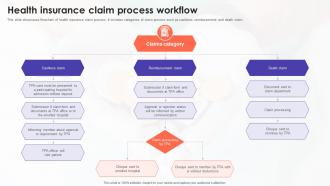
Health Insurance Claim Process Workflow





Try Before you Buy Download Free Sample Product
 Impress Your
 Audience
 100%
100% Editable
 Save Hours
 of Time


This slide showcases flowchart of health insurance claim process. It includes categories of claim process such as cashless, reimbursement and death claim.
People who downloaded this PowerPoint presentation also viewed the following :
Health Insurance Claim Process Workflow with all 6 slides:
Use our Health Insurance Claim Process Workflow to effectively help you save your valuable time. They are readymade to fit into any presentation structure.





FAQs for Health Insurance
Ugh, insurance denials are the worst. Pre-auth issues are probably the biggest problem - like when your doctor's office forgets to get approval first. Coverage exclusions happen when something just isn't covered by your plan. Billing errors from incorrect coding mess things up constantly too. Missing paperwork is huge - and honestly, some of these documentation requirements are totally insane. Out-of-network stuff gets denied all the time, plus going over your yearly limits. I always double-check coverage before appointments now and save every email/call record. Learned that the hard way!
Dude, save EVERYTHING - receipts, medical stuff, emails with your insurance people. I learned this the hard way lol. Write down who you talked to and when, because you'll totally blank on names later. Submit claims fast since they're super picky about deadlines. Photos help too if there's damage to show. Honestly, insurance companies love asking for more paperwork right when you think you're done. Make a folder (or just dump everything in one spot) so you're not digging through your whole house when they want something else. Being organized upfront saves you so much stress later.
Ugh, this happened to me last year - don't freak out though, it's super common. Read through that denial letter first to see what their actual issue is. Your doctor's office might've just used the wrong billing codes or something stupid like that, so give them a call. Then get on the phone with insurance directly - honestly half the time it's just missing paperwork they can sort out right there. If they're being difficult, you'll need to file a written appeal. Just make sure you do it within 60 days or whatever their deadline is. Save copies of everything and write down who you talked to each time.
Good news - they can't deny your claims for pre-existing stuff anymore because of the ACA. Your diabetes, heart issues, whatever you've got, they have to cover treatment for it. There might be some waiting periods though where you're technically covered but can't get certain treatments right away. Which is annoying but whatever. The main thing is being totally honest when you apply - don't leave anything out or they'll find ways to make your life difficult later. I learned that one the hard way with my cousin's situation last year.
So a claims adjuster is basically the insurance company's detective who decides if your claim gets paid and for how much. They'll dig through your medical records, make sure your treatment was actually covered, and cross-check everything with what your doctor sent in. Sometimes they're pretty chill about it, other times... not so much. If something looks weird or they need more info, they'll hit you up for extra paperwork. Oh, and you can totally call them directly if you're wondering what's taking so long or if they need anything else from you.
Always double-check your provider is in-network first - that's honestly where you'll save the most cash. Submit claims fast with all the paperwork they want. Don't throw away those EOB things! Actually read them because insurance companies mess up more than you'd think. Save receipts for everything medical since some stuff might be tax deductible later. Learn your deductible and co-pay limits so you can time big procedures smart. Oh, and just call them when you're confused - they'd rather walk you through it than deal with rejected claims.
Dude, stay in-network if you can. Those providers have deals worked out with your insurance, so you'll only pay your copay or deductible, then they cover like 80-90% of whatever's left. Out-of-network though? Total nightmare. Coverage drops to maybe 60-70%, plus you get stuck paying the gap between what your doctor charges and what insurance thinks is "fair." I learned this the hard way with a specialist last year. Definitely worth calling ahead to double-check before any big appointments. Trust me on this one.
Honestly, learning your insurance terms will save you so much hassle later. I used to just submit claims randomly and they'd get rejected all the time - super annoying. Now I actually check if stuff needs pre-approval first, make sure my doctor's in-network, and know what my deductible is before appointments. Trust me, understanding basics like "copay" and "prior authorization" means way fewer headaches when you're trying to get reimbursed. Those back-and-forth calls with insurance people are the worst. Just spend like 20 minutes reading through your plan's key terms and you'll be golden.
Most insurers give you 90 days to file, but I've seen some that allow up to a year - definitely worth checking your policy. Once you submit everything, expect around 30-45 days for payment. Complete paperwork is huge here - any missing docs will just slow things down. Some companies are surprisingly quick, others milk that full 45 days (honestly feels intentional sometimes). If you haven't heard anything by day 30, I'd call them. Don't feel bad about it - you're just making sure they didn't lose your stuff in some pile somewhere.
Okay so your insurance type basically dictates everything. HMOs are annoying because you need referrals for specialists and have to go through your primary doc first, but at least costs stay predictable. PPOs give you freedom to see whoever, just expect to pay more for out-of-network people. EPOs don't need referrals which is nice, but go outside the network and you're totally on your own. HDHPs with HSAs? You're covering everything until that crazy high deductible kicks in - honestly those can be rough. Definitely look up your specific plan before any big procedures though, nobody wants surprise medical bills.
Definitely check your policy before you need it - trust me on this one. I got burned once thinking I was covered for something that was totally excluded. Your policy shows your deductibles, what procedures need pre-approval, and which providers are in-network. Without knowing this stuff, you might end up at some fancy specialist thinking insurance will cover it, then boom - massive bill. Also helps you plan for out-of-pocket costs so you're not blindsided. Honestly, just spend like 10 minutes skimming the important parts now instead of panicking later when you actually need care.
Oh man, EHR systems are a total lifesaver for claims processing. They automatically grab all the patient info, diagnoses, and procedures from medical records and fill out your claim forms - no more typing everything manually. What I love most is they spot coding mistakes and missing stuff before you submit anything, so you don't get those annoying rejections back. They hook up with clearinghouses too for instant electronic submissions. Seriously, if your office is still doing paper claims (ugh), you've gotta convince them to upgrade. The time you'll save is insane.
So basically your out-of-pocket max is the most you'll pay for covered stuff in a year - after that, insurance covers everything. Hit that number through deductibles and copays? You're done paying. But here's the annoying part: premiums don't count toward it, and neither does out-of-network stuff if you decide to go somewhere random. I'd definitely track your spending though. Most people have no clue how close they are to hitting it. Check your insurance portal once in a while and save those explanation of benefits papers.
Ugh, this happened to my sister last year. You file claims thinking you're covered, then BAM - denied and you're stuck with the bill. Network stuff is the worst - like going to a doctor who seems in-network but isn't for your specific procedure. Prior authorizations are sneaky too. Don't assume your new plan works like your old one either. Honestly? Just call them if you're confused about anything. I know reading insurance docs sucks, but spending a few minutes now beats getting a surprise $800 bill later. Trust me on this one.
Hey! So first thing - have them file an internal appeal with their insurance company. Every insurer has to offer this by law. Your state insurance commissioner's office is actually super helpful too, they usually have people who really know how to work the system. There are also nonprofit patient advocacy groups that are honestly way better at this stuff than you'd expect. Healthcare.gov has some solid guides for walking through appeals step by step. Just make sure they don't wait around - most companies only give you like 60-180 days to appeal, which feels short but it's doable.
-
Understandable and informative presentation.
-
SlideTeam is very efficient when it comes to saving time. I am happy that I chose them for my presentation.