


Medical billing insurance claims follow up process




Try Before you Buy Download Free Sample Product
 Impress Your
 Audience
 100%
100% Editable
 Save Hours
 of Time


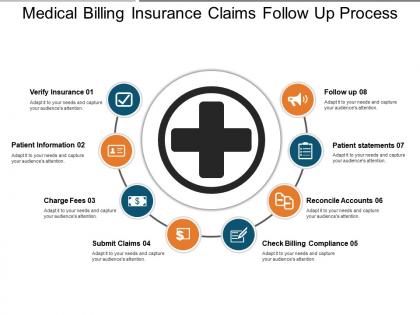
Showcase the billing process by employing this Medical Billing Insurance Claims Follow Up Process template. Utilize this healthcare PPT slide to highlight the steps in medical billing that make it smooth and easy. Mention how you can improve your billing process in order to increase the revenue. Take advantage of our readily available medical care PowerPoint layout and include three main types of billing systems. Mention the working of a medical billing process using this PPT slideshow. Highlight the tips to improve the billing insurance claim in this medical billing workflow and ensure that physician practices are maximizing their income. You can make your presentation informative and reliable by incorporating high-quality icons that are present in the slide. Employ this revenue cycle management PPT infographic and explain the entire procedure of claims, payment, and billing. Thus, download this ready to use medical billing services PowerPoint slide and make an impactful presentation.
People who downloaded this PowerPoint presentation also viewed the following :
Medical billing insurance claims follow up process with all 5 slides:
Achieve a higher degree of influence with our Medical Billing Insurance Claims Follow Up Process. It will add to your clout.




FAQs for Medical billing insurance claims
Ugh, coding errors are the worst - happens constantly. Missing patient info and auth issues come up a lot too. Watch out for duplicate claims, stuff not covered under their plan, or forgetting to get pre-auth. Honestly, typos in patient ID numbers drive me crazy but they're everywhere. Timely filing deadlines will bite you if your team falls behind (we learned that the hard way). I'd make a checklist of the usual suspects and have everyone run through it before hitting submit. Saves so much headache later.
Honestly, automation is your best friend here - get your practice management system flagging denials and spitting out follow-up reports without you lifting a finger. Don't let your team scatter across different systems because that's just chaos waiting to happen. Hit the big-dollar claims first, obviously. Templates for common denials will save you tons of time on appeals. Oh, and assign one person to own this stuff consistently instead of everyone half-doing it. The whole "everyone pitches in" thing never works. Pick one automation tool this week and actually set it up - you'll thank yourself later.
Honestly, documentation saves your ass when insurance companies start playing games with your claims. Keep detailed records of every call, email, whatever - dates, reference numbers, names, the whole thing. They'll definitely remember everything on their end, so you better too. Track patterns in denials and watch those aging claims before they turn into write-offs. I learned this the hard way once. Without that paper trail, you're screwed when appeal time comes. Yeah, it's tedious, but future you will be grateful when you're fighting some BS denial with actual proof in hand.
Automated denial tracking is a game-changer - it'll flag unpaid claims and fire off follow-ups without you doing anything. Real-time eligibility checks catch problems before claims go out the door. I'm obsessed with analytics dashboards because you can finally see which insurers are dragging their feet (looking at you, Medicaid). Automated calls handle basic status stuff too. The patterns become super obvious once you start tracking everything, which honestly makes me feel like I'm solving puzzles all day. Don't try to automate everything at once though - pick one tool first.
Start with a good spreadsheet or whatever system your practice uses to track everything - submission dates, claim status, when to follow up. I always check at 14, 30, and 60 days. Those 60-day ones are honestly the worst but you can't skip them. Color-coding helps me stay sane with urgent stuff. Document every single call with payers too - claim numbers, who you talked to, what they said. Trust me on this one. Pick certain days each week for calls and actually stick to it, otherwise you'll fall behind fast.
Honestly? Start following up around day 15-20, especially for big claims. After that, hit them every 30 days until you get paid or denied. Insurance companies respond way better when you're persistent - learned that the hard way. Your AR reports will show you which ones need immediate attention. Short claims can wait a bit longer, but don't let anything sit past 90 days without multiple calls. That's when you're basically throwing money away. I know it's annoying to track all this, but it really makes a difference in your collections.
Days in A/R is huge - definitely start there. Your first-pass resolution rate matters too, along with denial overturn percentage. I'm weirdly obsessed with clean-up rates though, like how many claims get resolved each follow-up cycle? Shows who's actually getting stuff done. Collection rates on followed-up claims vs initial submissions will surprise you sometimes. Track average time from denial to resolution and don't sleep on staff productivity - claims per person per day. Pull these monthly and you'll spot the gaps fast.
Honestly, calling your insurance company regularly makes such a huge difference. Don't let them just sit on your claim - I've watched people wait months because they assumed someone was handling it. Always get reference numbers and write down who you talked to. If they deny something in writing, call them right after to figure out what's actually going on. The phone reps sometimes give you way more info than the letters do. Set up some kind of system to track everything - even just notes in your phone work. Stay on them but don't be a jerk about it.
Honestly, patient engagement is everything for claims follow-up. When people actually respond to your calls about missing info and understand their own benefits, claims fly through the system. Night and day difference vs chasing someone for three weeks straight - which is exhausting btw. They'll also spot billing mistakes early and help sort out insurance drama before it gets messy. The trick? Tell them upfront exactly what you need and when. Most patients want to help, they just don't know what their part is in getting everything paid smoothly.
Your team needs the basics first - medical coding, insurance verification, and how to handle denials. CPT/ICD codes are essential, plus reading EOBs and navigating payer portals (which honestly get more confusing every year). Communication skills matter too since they'll be writing appeals and talking to patients about claims. Oh, and don't skip HIPAA compliance training - super important when discussing sensitive stuff over the phone. I'd do a comprehensive foundation course first. Then maybe quarterly updates? Regulations change constantly so you'll want regular refreshers to keep everyone sharp.
Oh man, regulatory changes are the worst - they can completely mess up your follow-up processes without warning. New coding rules, prior auth updates, payer policy switches... it's exhausting honestly. You've gotta adjust your tracking, update denial protocols, retrain everyone on submissions, and tweak appeals timelines to match. ICD-10 was a nightmare when it hit - total chaos for months. My advice? Sign up for alerts from your big payers and CMS so you're not blindsided. Also budget way more time for follow-ups during transitions because everything moves slower when people are figuring out new rules.
Honestly, it's been a game changer for most practices I know. Your collection rates usually go up because these specialists actually know how to deal with insurance company BS - like they memorize all the weird denial codes and payer rules. Plus they're not distracted by patients walking in every five minutes, so claims don't just sit there aging out. Your staff gets to focus on actual patient care instead of being on hold with Anthem for an hour. Payments come in faster too. I'd get quotes from maybe 3-4 companies and ask what their average A/R days look like.
Look, data analytics is a game-changer for claims follow-up. Pull your denial data from the last six months first - check for the most common rejection codes. You'll start seeing weird patterns, like certain payers rejecting specific procedure codes on particular days (I know, makes no sense but it's real). Analytics help you prioritize which denials to chase based on dollar amounts and success rates. Your team can track what follow-up tactics actually move the needle. The cool part? You can predict which claims will probably get rejected before submitting them. Start there and work backwards.
Look at the denial code first - seriously, don't guess what happened. Could be a dumb coding mistake, missing paperwork, or they need authorization. Fix whatever's wrong and gather any missing stuff before you resubmit. I swear, most of the time it's something ridiculous that'll take you like 5 minutes to sort out. More complicated denials? You'll probably need to file an appeal with backup documentation. Just move quickly on it since insurance companies are super picky about deadlines for resubmissions and appeals.
Honestly, most people wait way too long to follow up - like 30+ days when you should start after 2-3 weeks max. Cold trails are the worst. Also keep detailed notes of everything: rep names, reference numbers, what they said they'd do. Trust me, you'll forget otherwise. Don't call once and then give up either (insurance companies probably love when we do that lol). Have your claim info ready before calling so you're not scrambling around. Oh, and get confirmation numbers for any resubmissions! Set up some kind of tracking system so stuff doesn't slip through the cracks.
-
Great designs, really helpful.
-
Designs have enough space to add content.