


Dashboard For Managing Patient Capacity And Beds Healthcare Inventory Management System




Try Before you Buy Download Free Sample Product
 Impress Your
 Audience
 100%
100% Editable
 Save Hours
 of Time


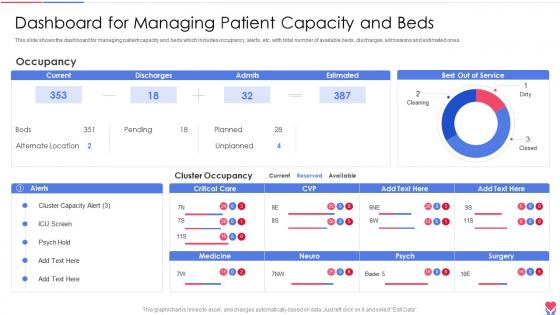
This slide shows the dashboard for managing patient capacity and beds which includes occupancy, alerts, etc, with total number of available beds, discharges, admissions and estimated ones.
People who downloaded this PowerPoint presentation also viewed the following :
Dashboard For Managing Patient Capacity And Beds Healthcare Inventory Management System with all 7 slides:
Use our Dashboard For Managing Patient Capacity And Beds Healthcare Inventory Management System to effectively help you save your valuable time. They are readymade to fit into any presentation structure.





FAQs for Dashboard For Managing Patient Capacity And Beds Healthcare
Honestly, demand forecasting is brutal - seasonal stuff plus random emergency spikes will mess with your head. Then you're juggling medication expiration dates while trying not to tie up all your cash in inventory. Supply chain issues pop up constantly too, which is super fun. Stock levels are tricky because you need enough without going overboard. Oh, and regulatory compliance is a whole other headache I didn't even mention. Get decent inventory software with real-time alerts for low stock and expirations. Trust me, you'll need the automated help. It really is like playing Tetris with people's lives.
Honestly, getting automated systems will save you so much headache. RFID tags and barcode scanners cut out all those counting mistakes - you'll get real-time data on stock levels and expiration dates. The AI stuff is pretty cool too, predicts what you'll need so you're not panicking about running out. Cloud platforms mean everyone can check inventory from their phone or whatever. Way better than those stupid spreadsheets we used to deal with. Just make sure whatever system you pick actually works with how your team already does things, because nobody wants to learn some overly complicated setup.
So basically, data analytics stops you from just guessing what supplies you need. It looks at your usage patterns and predicts demand spikes - super helpful for seasonal stuff. You'll spot which items you're hoarding (those expired supplies nobody wants to talk about) and which ones always run out at the worst times. Plus it catches weird consumption patterns that might mean theft or waste. The real win? You avoid both stockouts that mess up patient care AND buying way too much inventory. Honestly, finding that balance between enough and too much is like 90% of good inventory management.
Oh man, expiration dates will totally make or break your pharma inventory game. You've gotta do FEFO - first expire, first out - religiously or you'll hate yourself later. Set up alerts for stuff that's about to expire because honestly, those write-offs add up fast. Your procurement people need to actually talk to the clinical team about usage patterns (shocking concept, I know). It's this weird balancing act where you need enough stock so patients don't suffer, but not so much that half of it expires. Sometimes feels like expensive Tetris honestly.
Honestly, just-in-time ordering based on what you actually use (not wild guesses) cuts so much waste. Rotate your stock properly - first in, first out. I can't tell you how many places I've seen with expired stuff buried in back while new inventory sits up front. Track expiration dates like your life depends on it. Set up automatic reorder points so you're not scrambling. For expensive items you rarely use, look into consignment programs where vendors own it until you actually need it. Regular audits help spot patterns too. Start by figuring out where most of your waste comes from first.
Honestly, you can't just slap compliance on at the end - build it right into your daily stuff from the start. Get automated tracking going for everything: receiving, dispensing, when things expire, all of it. Do monthly spot checks instead of waiting for those yearly audits (trust me on this one). Your team needs to actually get WHY this matters, not just follow rules blindly. Document literally everything because auditors act like it never happened if you didn't write it down. Set up alerts for expiring inventory and nail down your chain-of-custody processes. Make it so routine that nobody even thinks about it anymore.
So JIT in healthcare is pretty smart - cuts down on carrying costs and you won't have as much waste from meds and supplies expiring. Frees up storage space too, which hospitals always need more of. Cash flow gets better since you're not buying tons of stuff upfront. The catch? Your suppliers better be rock solid reliable because running out of critical supplies during a night shift would be a nightmare. I'd honestly start with basic stuff like bandages or office supplies first - test how dependable your vendors actually are. Once that's working smoothly, then move to the important equipment and medications.
Dude, seasonal stuff will totally catch you off guard if you don't plan ahead. Fall and winter? You're gonna get slammed with flu vaccine orders and respiratory gear. Summer's all about trauma supplies since people actually go outside and hurt themselves more. Look at your last 2-3 years of data to figure out the patterns. Most places I know start ordering extra stock like 6-8 weeks early. Build those adjustments right into your system - trust me, you don't want to be panicking when demand hits. Way less stressful that way.
Honestly, staff training isn't optional in healthcare - mess up inventory and someone could literally die. Make sure everyone knows storage rules, how to track expiration dates, and proper record keeping. I've watched places fall apart because someone left temperature-sensitive meds out or didn't catch stock shortages until it was too late. Controlled substances have their own crazy compliance rules your team has to follow. Skip training and you're risking patient safety, regulatory headaches, and tons of money lost on expired stuff. Do thorough onboarding, then quarterly refreshers to keep everyone sharp.
Dude, automation is honestly where it's at for inventory stuff. Real-time tracking means you'll never be scrambling for supplies again - the system just reorders automatically when you hit whatever threshold you set. Barcode scanners, RFID, all that connects straight to suppliers. Way less human error too since it catches expired stuff and flags problems without you doing manual counts every week (which is mind-numbing anyway). I'd say start with whatever supplies you burn through fastest, see how much time it saves. Once you're hooked, expand it. Trust me, dealing with stockouts is way worse than the setup headache.
Honestly, focus on inventory turnover first - that's your cash flow lifeline right there. Stock-outs are huge too, especially with critical stuff where patients actually need it. Carrying costs will eat you alive if you're not watching (learned that one the hard way). Days of inventory and order accuracy matter, but here's the thing - don't try tracking everything at once or you'll go nuts. Pick maybe 3 metrics that fix your worst headaches and check them monthly. Fill rates are good for seeing how smoothly things run. Start simple though.
Ugh, supply chain issues will totally flip your inventory game upside down. Just-in-time ordering becomes a joke when your PPE vendor ghosts you for three weeks straight. Suddenly you're dealing with random delays, critical shortages, and prices that make zero sense. Build up bigger safety stock now - I can't stress this enough. Map out backup suppliers before you actually need them. Better demand forecasting helps too, though honestly it's still half guesswork sometimes. The stuff you absolutely can't run out of? Figure out those contingency plans today, not when you're already scrambling.
Honestly, AI for inventory is a game changer. It predicts demand way better than old-school methods, so you won't run out of stuff or order too much. The system learns your facility's patterns and automates reordering based on actual usage. You get real-time expiration tracking and alerts when you're running low on critical items. It'll even tell you how to optimize storage and move inventory between departments - which is actually pretty neat. My advice? Don't try to fix everything at once. Figure out what's driving you crazy first, then find AI tools that tackle those specific problems.
Honestly, working closely with your suppliers is a game-changer for inventory headaches. They've got way better forecasting tools and can set up automatic restocking for you. Plus they know about shortages or delays weeks before you'd figure it out yourself - saves you from those panic moments we've all been there for. Set up monthly calls with your top 3 suppliers to go over demand patterns and upcoming issues. Some will even let you give them access to your system so they can monitor stock levels directly. I learned this the hard way after running out of our best-seller right before Black Friday last year.
Honestly, start by digging into your usage data - patterns, seasonal stuff, how fast you burn through each item. ABC analysis is a game changer for figuring out which items deserve your attention first. Set up automatic reorder points based on lead times and how unpredictable your demand gets. Your forecasts need constant tweaking though - medical stuff shifts constantly with new treatments and supplier drama. Oh, and definitely loop in your clinical teams early. They're usually the first to know when something big is coming that'll mess with your normal ordering patterns.
-
Top Quality presentations that are easily editable.
-
Use of different colors is good. It's simple and attractive.