

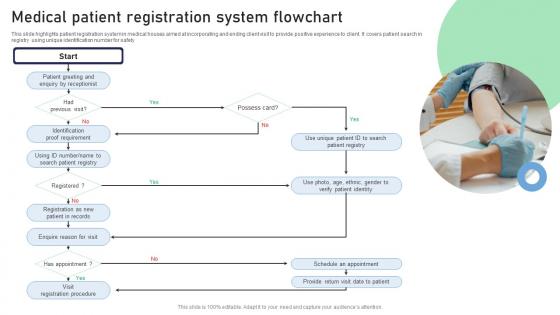
Medical Patient Registration System Flowchart




Try Before you Buy Download Free Sample Product
 Impress Your
 Audience
 100%
100% Editable
 Save Hours
 of Time


This slide highlights patient registration system in medical houses aimed at incorporating and ending client visit to provide positive experience to client. It covers patient search in registry using unique identification number for safety
People who downloaded this PowerPoint presentation also viewed the following :
Medical Patient Registration System Flowchart with all 6 slides:
Use our Medical Patient Registration System Flowchart to effectively help you save your valuable time. They are readymade to fit into any presentation structure.





FAQs for Medical Patient
Start with the basics - name, birthday, address, phone, email. Insurance details are crucial too, so grab policy numbers and group IDs. Emergency contacts with their relationship to the patient and phone numbers. Medical stuff is where it gets tricky - allergies, current meds, past surgeries or major conditions. Honestly, people hate filling out long forms, so organize it well or they'll just skip half of it. Don't forget consent forms and privacy notices since those are legally required. Keep it thorough but not like a novel.
Dude, online pre-registration is your best bet - patients fill everything out at home instead of clogging up your waiting room. Tablet check-ins work great too. You can set up systems that automatically pull existing patient info, plus those OCR scanners for insurance cards (way better than watching someone hunt-and-peck those long member numbers). Electronic signature pads cut down on printing costs, which adds up faster than you'd think. Real-time insurance verification catches problems early rather than discovering them during billing. Honestly, start with the pre-registration portal first since it'll save you the most time without breaking the bank.
Honestly, just collect what you actually need on those forms - people overshare way too much info. Make sure any online forms use encrypted connections, and train your team on basic HIPAA stuff. Physical paperwork? Don't leave it sitting around where random people can peek. I can't tell you how many times I've seen patient info just chilling on reception desks. Set up access controls so only the right people can see patient data. Oh, and definitely walk through your whole registration process to spot weak points. Short sentences help too.
Honestly, registration is where you either win or lose patients right off the bat. Smooth process? They trust you already. Total disaster? Good luck recovering from that - people remember being annoyed way more than being helped. When it works well, you're not wasting time hunting down insurance cards or fixing typos in their chart later. Staff can actually focus on patient care instead of paperwork drama. Quick wait times don't hurt either. Just make sure whatever system you're using isn't confusing and train your front desk team to solve the usual problems fast.
Honestly, online registration is a total lifesaver for patient flow. Your patients can knock out all the paperwork from their couch, which means way less waiting around in your lobby. The data goes straight into your EHR too - no more squinting at someone's terrible handwriting or chasing people down for their insurance info. Your front desk team actually gets to help patients instead of being stuck doing data entry all day. I'd say start with routine appointments first, then build from there once you get the hang of it.
Oh man, where do I start? Incomplete patient info is the worst - people show up with half their paperwork missing. Insurance verification takes forever, and don't even get me started on system crashes during rush hour. Staff who don't know the workflows make everything slower. Duplicate records are annoying too, especially from repeat patients. Long waits make everyone cranky, which honestly I get. Train your staff well and always have backup processes ready. The whole day goes smoother when registration isn't a disaster from the start.
Honestly, online pre-registration forms are a game changer - let people fill stuff out at home before they even show up. Self-service kiosks work great too, though some older patients still need help with those. Mobile check-in is clutch because people can literally sit in their car and update insurance info instead of standing in line. Make sure you're actually staffed properly during busy times (seems obvious but you'd be surprised). The whole point is getting routine data entry off your front desk so they can deal with the messier situations that actually need a human touch.
Okay so first things first - get that patient consent locked down and make sure you're HIPAA compliant from day one. Identity verification is huge too. Walk them through their privacy rights and explain exactly how you'll use their info. Insurance verification might seem boring but trust me, billing screwups turn into legal headaches fast. Document everything in your system - like, everything. If they've got advance directives, grab those too. Honestly, the paperwork feels excessive but it saves your butt later when compliance questions pop up.
Oh man, language barriers are the obvious headache - patients can't fill out forms or get what you're asking. But cultural stuff is way trickier honestly. Some people won't share personal details with certain staff members, or they have totally different privacy expectations. The worst part? Names and addresses from other cultures never fit your boring registration boxes. It's annoying for everyone. You'll definitely need interpreter services ready. Also train your front desk people to spot when they need to be more culturally aware - saves drama later.
Practice with your actual registration software constantly - that's where people mess up most. Have your team role-play tricky situations like angry patients or weird insurance stuff. HIPAA training needs to go way deeper than the basic overview everyone gets. Honestly, I've watched too many places get burned because staff thought they knew the rules but missed important details. Put together cheat sheets for insurance verification and stick them by every computer. Oh, and pair new hires with your best people for their first week of real patient work.
Keep forms super short and ditch the medical jargon - patients shouldn't need a dictionary. Big text and high contrast colors help, especially for older folks. I swear some forms are deliberately confusing! Most people use phones now, so make sure it works on mobile. Put asterisks on required fields so it's obvious what they need to fill out. Clear instructions for each section are clutch. Oh, and definitely test it with real patients first - they'll spot problems you totally missed. Trust me on that one.
Demographic data matters because it helps match patients to the right person, figures out insurance stuff, and makes sure care fits their background. Age, gender, race - all that gets used for medication doses and which screenings they need. Regulatory people are obsessed with this data too for their reports. Here's the thing though - you gotta keep it current and collect it the same way every time. Old demographics will screw up everything from booking appointments to actual treatment. Oh, and always check it matches their insurance card or you'll have billing headaches later.
Dude, seriously - just ask your patients what's bugging them about check-in. They'll tell you stuff you'd never think of, like forms being confusing or parking being a nightmare. We're not the ones dealing with paperwork when we're already stressed about appointments, you know? Last week I heard three people complain about the same form section. That's real data right there! Use what they say to fix your forms, maybe add staff during busy times, or rearrange your waiting room. Honestly, most places don't bother asking and then wonder why people seem cranky at the front desk.
So there's a bunch of stuff that's actually making registration way less painful. Self-service kiosks are pretty sweet - patients just check themselves in and update their own info. Mobile apps are probably the biggest game changer though. People can pre-register from their couch and upload insurance cards right from their phone. Some places are testing facial recognition systems, which feels very futuristic. Digital signature pads for consent forms are basically everywhere now. Honestly, if you haven't tried mobile pre-registration yet, that's where I'd start. It cuts wait times like crazy and patients seem to love it.
Oh man, EHRs totally changed everything with patient registration. Real-time insurance verification, online pre-registration through patient portals - no more paper forms everywhere. The speed improvement is incredible, honestly. But here's what nobody warns you about: mistakes spread through the whole system instantly now. Train your staff hard on accuracy because one typo can mess up everything downstream. We learned that the hard way last year. Your process gets way faster but you need people who actually pay attention to details. Regular data entry audits are a must.
-
Awesome use of colors and designs in product templates.
-
I took a chance with SlideTeam. I never looked back. Great products and great service.