

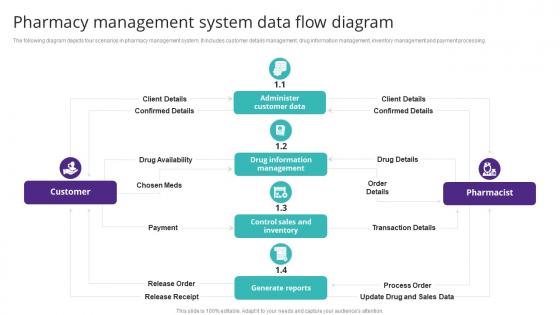
Pharmacy Management System Data Flow Diagram




Try Before you Buy Download Free Sample Product
 Impress Your
 Audience
 100%
100% Editable
 Save Hours
 of Time


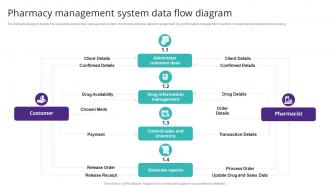
The following diagram depicts four scenarios in pharmacy management system. It includes customer details management, drug information management, inventory management and payment processing.
People who downloaded this PowerPoint presentation also viewed the following :
Pharmacy Management System Data Flow Diagram with all 6 slides:
Use our Pharmacy Management System Data Flow Diagram to effectively help you save your valuable time. They are readymade to fit into any presentation structure.





FAQs for Pharmacy Management System
Honestly, you can't skimp on inventory management, prescription processing, and patient records integration - those are must-haves. Insurance claims and drug interaction alerts will save you major headaches later. Don't forget reporting for compliance (auditors are obsessed with documentation). Barcode scanning is a game-changer for speed. Most systems throw in automated refills and basic POS now anyway. The interface needs to be dead simple - nobody wants to train staff on some overly complex system. I'd go cloud-based with mobile access so you can peek at things from home if needed.
So a good pharmacy system basically tracks everything in real-time - you'll always know what's sitting on shelves and what's getting low. The expiration alerts are honestly a game changer, saves tons on disposal costs. You can set automatic reorder points based on how fast stuff actually moves instead of just winging it. No more overstocking random things that sit forever. Plus it shows you which medications are slow movers so you can buy smarter next time. Oh, and start with the expiration alerts first - that's where you'll see money back immediately. Way better than sticky notes everywhere.
Drug interaction checks and allergy alerts are absolutely critical - you can't mess around with that stuff. Build in dosage validation too, plus automatic flagging for duplicate prescriptions. Manual checking just doesn't cut it when pharmacists are juggling hundreds of scripts daily. The interface design is huge here - confusing layouts cause mistakes, and honestly, some pharmacy systems I've seen are terrible. Test all your safety features extensively before going live. Also make sure patient info verification runs automatically. Short version: catch errors before they hit patients, because that's literally the whole point.
Honestly, EHR integration is a total game-changer for pharmacies. You get the whole patient picture - meds, allergies, lab work, everything - right there in one spot. No more playing phone tag with doctor offices (seriously, such a time suck). The automated prescription stuff is pretty sweet too, everything syncs in real-time between systems. My cousin's pharmacy switched last year and she said it cut their workload by hours daily. Definitely look for a PMS with solid EHR connectivity. Better clinical decisions, way fewer drug interaction scares, and your staff will actually thank you for once.
Ugh, compliance is such a mess depending on where you're launching. US hits you with DEA rules for controlled meds, HIPAA for patient stuff, plus every state has different licensing that's always changing. Europe's got GDPR obviously, then each country adds their own pharmacy laws on top. Canada does their own privacy thing too. What really gets you is needing different prescription formats and reporting for each place - the audit trails alone will make your head spin. Honestly though? Just build your compliance stuff to be flexible from the start. Way easier than trying to patch it all together later when you're scrambling.
Your PMS analytics can show you which meds are flying off the shelves and which ones are just sitting there collecting dust. Pretty neat stuff, honestly. You'll catch seasonal trends early and avoid getting stuck with expired inventory - which I learned the hard way at my old job. The system flags slow movers automatically and helps predict when you'll need to reorder. Short bursts work better than long sentences sometimes. Pull those reports every month and actually look at them. Your cash flow will thank you, plus you won't be throwing money away on waste.
Okay so you'll want encryption on everything - data sitting around and data moving between systems. Set up role-based access so people can only see what they actually need for their job. Multi-factor authentication is a must, no exceptions there. I'd also do quarterly security audits and pen testing to find weak spots before hackers do. Log everything and make sure your backups include offline storage (learned that one the hard way). Oh, and definitely train staff on phishing - honestly, that's where most breaches start anyway. Your IT team will thank you later.
Dude, get a PMS that handles the boring stuff automatically - insurance checks, drug interactions, dosage flags. Electronic prescriptions come straight from doctors too, so no more squinting at handwriting wondering if that's supposed to be a "6" or whatever. The good ones pull up patient history and print labels while updating your inventory at the same time. Honestly way better than doing it all by hand - I don't know how pharmacies survived before this stuff. Map out how you currently do things first, then see what the system can take over for you.
So these systems are basically like having a direct line between your pharmacy and doctors. No more endless phone calls trying to reach someone! You can flag drug interactions instantly and send clinical notes straight to physicians. The automated alerts are pretty neat too - they'll ping doctors when patients skip picking up meds or need dosage tweaks. All your communications get documented in one place, which honestly makes tracking patient care way less of a headache. I'd start with setting up direct messaging for your biggest prescribers first. Trust me, it'll make your life so much easier once you get the hang of it.
Honestly, the biggest savings come from cutting down on medication errors - those are ridiculously expensive when they happen. Better inventory control means way less expired meds sitting around too. Your staff won't be drowning in paperwork anymore, which frees them up for actual patient care. Insurance claims get processed automatically instead of manually (thank god). Most places break even in about a year, maybe 18 months max. Oh, and you'll dodge compliance penalties which can really add up. I'd track what you're spending on this stuff now so you can actually see the difference later.
Look, mobile access basically lets your team do everything from their phones - inventory checks, prescription processing, patient records. It's pretty clutch. Your pharmacists can approve refills remotely, techs can update stock right there on the floor. No more running back to the desktop every five minutes, which honestly sounds exhausting. Customers get way faster service too since staff aren't tied down. I'd start with mobile inventory management if I were you - that's where you'll notice the biggest difference right away. The workflow improvements are actually kind of crazy once everyone gets used to it.
Honestly, the biggest thing right now is AI for catching medication errors - that stuff's getting really good. Cloud systems are everywhere now for obvious reasons, and telepharmacy blew up after COVID hit. Mobile apps went from nice-to-have to absolutely essential for everyone. Real-time inventory tracking that doesn't suck? Finally happening. EHR integration is tighter than ever, which thank god because we've dealt with enough headaches there. Oh and data analytics for predicting patient behavior is huge - like actually useful insights, not just fancy dashboards. When you're shopping around, definitely prioritize vendors with solid APIs. Trust me, you don't want another siloed mess.
Honestly, pharmacy management systems are game-changers for MTM stuff. They'll auto-flag patients who need med reviews based on their history and clinical data. Super helpful for tracking adherence and catching drug interactions - all in one spot. The documentation part is clutch too since it generates your med lists and tracks interventions automatically. Most systems have built-in clinical guidelines that'll catch optimization chances you'd probably miss when you're swamped. I'd start with setting up alerts for your highest-risk patients first - that's where you'll see the biggest difference right off the bat.
Don't just go with the cheapest option - trust me, you'll hate yourself when everything crashes on your busiest day. Test how it works with your current systems first because fixing compatibility issues later is absolute hell. Customer support response times are huge too. When your POS dies, waiting 2 days for help isn't realistic. Staff training time matters - if it takes forever to get people up to speed, that's money down the drain. Oh, and definitely call other pharmacies using the same system. Ask them how it actually performs day-to-day, not just what the sales pitch promised.
Hey! So the key is customizing training for each role - pharmacists need different stuff than cashiers, you know? Interactive demos work way better than boring generic tutorials. Make quick reference cards for the daily tasks people actually do. Set up a buddy system where your confident users help the newbies. Honestly, having department "super-users" as go-to people is a game changer - I've seen this work really well. Don't just dump training on everyone once and call it done though. Regular check-ins and refresher sessions will catch problems before people give up on the whole system.
-
It is my first time working with them and that too on a friend's recommendation. I would say, I am not expecting such a worldly service at this low price.
-
“Easy to use. I always wanted to have a quick search for products and SlideTeam has helped me have it.”