

Pharma Drugs Supply Chain Distribution Flowchart




Try Before you Buy Download Free Sample Product
 Impress Your
 Audience
 100%
100% Editable
 Save Hours
 of Time


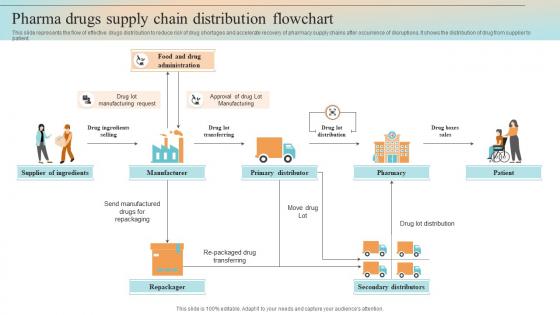
This slide represents the flow of effective drugs distribution to reduce risk of drug shortages and accelerate recovery of pharmacy supply chains after occurrence of disruptions. It shows the distribution of drug from supplier to patient.
People who downloaded this PowerPoint presentation also viewed the following :
Pharma Drugs Supply Chain Distribution Flowchart with all 6 slides:
Use our Pharma Drugs Supply Chain Distribution Flowchart to effectively help you save your valuable time. They are readymade to fit into any presentation structure.






FAQs for Pharma Drugs Supply
Honestly, the main headaches you're facing are supply chain mess-ups, keeping things cold enough, and dealing with crazy different regulations everywhere. COVID showed how one factory going down in India can screw up global supply for months - it's wild how connected everything is. Counterfeit meds are getting worse too with all the online buying. The cold chain stuff is brutal since biologics need perfect temps the whole way through. Every country wants different paperwork and compliance requirements, which is exhausting. My take? Start building backup suppliers for your critical stuff. Having multiple sources ready can be a lifesaver when the next disruption hits.
Honestly, tech has totally changed how pharma supply chains work. Real-time tracking with blockchain and IoT sensors means you can follow meds from factory to patient - cuts down on fake drugs and waste big time. AI predicts demand so you don't end up with tons of expired stuff sitting around (seriously, that's expensive). Robotic warehouses speed things up and reduce mistakes way better than manual systems. Cloud platforms let everyone see the same info instantly, which is huge for coordination. Oh, and start with track-and-trace first - you'll see results fast.
Look, regulatory stuff and quality control are literally what keep drug distribution from being a total disaster. The FDA makes everyone document everything - and I mean *everything* - from factory to pharmacy counter. Super tedious but whatever, it works. These rules stop fake meds, contaminated batches, and wrong doses from slipping through. Otherwise you'd have no clue if what you're giving patients is legit or some sketchy knockoff. Cold chain docs are annoying but crucial. Always double-check your suppliers have the right certifications though - saves headaches later.
So blockchain basically makes this permanent record of everywhere your drugs go - from the factory all the way to patients. Pretty neat stuff honestly. Temperature data, who handled what, all that gets locked in with crypto links so you can spot fakes right away. Way better than those old tracking systems that barely tell you anything. Regulators are obsessed with the audit trails too, which I guess makes sense. Oh and don't try to do everything at once - just pick your sketchy products first, the ones that get counterfeited a lot. You'll see results faster that way.
Most companies aren't putting all their eggs in one basket anymore - they're spreading suppliers around and stockpiling inventory like crazy. Regional manufacturing is huge now, way less risky than depending on one country. Better forecasting systems help too, though some companies are literally air-freighting stuff that used to come by boat (expensive but whatever works, right?). Smart move is partnering with backup suppliers and getting visibility tech so you can catch problems early. Oh, and definitely map out your critical suppliers - you want at least two alternatives for each key component.
Yeah, so most pharma companies basically outsource everything to India and China now because it's way cheaper. Like, probably 80% of our drug ingredients come from those regions - kinda scary when you think about it. One factory goes down and suddenly there's shortages everywhere. COVID really showed how fragile this whole system is. Companies are finally starting to spread things out more or move some production back, but it takes forever to actually happen. You should probably check where your critical stuff is actually manufactured... might be eye-opening.
Honestly, counterfeit drugs are a nightmare for supply chains. They mess with compliance, create liability headaches, and put patients at serious risk. The financial damage is brutal too - recalls, investigations, reputation hits, all of it. What's really scary is how good these fakes are getting at looking legit, so they can sneak past decent verification systems. Track-and-trace with serialization helps a ton. Only work with verified suppliers and audit your distribution partners regularly. Oh, and the regulatory scrutiny afterward? That's a whole other level of stress you don't want.
So predictive analytics is honestly a game changer for forecasting demand - way better than the old school methods. You can dodge stockouts and avoid sitting on too much inventory at the same time. It looks at your sales history, seasonal patterns, even weird stuff like disease outbreaks or new regulations that might shake things up. The algorithms get smarter as they process more data, which is pretty neat. Oh, and they can actually predict when competitors might run into supply problems that send customers your way! I'd start with your priciest or most unpredictable products first. Saves money on storage costs too.
Get real-time temp sensors that ping you instantly when something's wrong. Cold chain providers need proper certs and validated gear - don't cheap out here. Everyone skips pre-conditioning but honestly it'll save your ass later. Document temps, transfer times, every little hiccup. Have backup routes ready because trucks die and flights get canceled constantly. Oh, and run qualification studies on your shipping lanes regularly. What worked last year might be total garbage now. I'd start by figuring out where your monitoring is weakest right now.
So telehealth is basically forcing pharma companies to go direct-to-consumer now. Instead of shipping bulk orders to CVS or whatever, they're delivering straight to people's houses - which is honestly way more complicated than it sounds. COVID totally accelerated this shift. Now you need solid last-mile delivery and proper cold storage for the fancy medications. Distribution went from simple bulk drops to tons of individual deliveries scattered everywhere. Pretty messy logistics-wise. If you're in this space, you'll probably want to figure out how your current setup handles all these smaller, frequent shipments before you get overwhelmed.
Look, pharma supplier partnerships are make-or-break because you're literally dealing with life-saving stuff. Can't have disruptions when people's lives depend on it. Your suppliers need to get the crazy regulatory requirements and keep quality consistent - no flaking out when things get tough. Drug development is already a nightmare timeline-wise, so reliable partners save you from those disaster scenarios where one supplier screwup kills your entire launch. Honestly, the best relationships go way beyond just ordering materials. These suppliers basically become part of your quality system. Build long-term relationships with people who actually have their compliance together and solid backup plans.
Pharma's going hard on sustainability right now - green chemistry, eco packaging, the whole thing. Your supply costs will probably jump at first, but waste reduction saves money down the road. Regulators are even weighing environmental stuff in approvals now, which is kinda wild if you think about it. Companies are basically forcing suppliers to go green or get dropped. I'd start with auditing your current suppliers' practices. Look for easy wins in packaging and shipping first - that's usually where you can move fastest without totally overhauling everything.
Drone delivery's getting real now, especially for prescriptions. Amazon's really going after the pharmacy market which is freaking out the traditional players. Same-day partnerships with existing chains are everywhere too. Cold-chain delivery exploded after COVID - someone's gotta handle all those vaccines and biologics properly. Those temperature-controlled lockers are actually pretty smart for solving the whole "I'm never home" thing. Real-time tracking's basically expected now since people want to know exactly when their meds show up. Honestly, I think the locker networks have the most potential - way more practical than waiting around all day for a delivery guy.
Honestly, you've gotta make your supply chain way more flexible. Map out where your biggest bottlenecks are first - that's your starting point. The whole "predict and produce" thing is basically dead now with how crazy demand gets. Real-time data analytics will help you actually see what's happening instead of guessing. And don't just have contracts with suppliers, build actual relationships so they'll scale with you when things get nuts. Oh, and if you can swing it, set up manufacturing that can pivot between different products quickly. Trust me, we've all been burned by rigid systems at this point.
Dude, data sharing totally changes the game for supply chains. Instead of everyone working blind, you've got real visibility into inventory, forecasts, and production schedules. Makes such a difference when partners can actually see what's happening instead of guessing. Companies still operating in silos are honestly missing out big time. You'll see way better demand planning, fewer stockouts, less waste. Response times improve too when stuff goes sideways. My advice? Pick your most important data points first, then test with one partner you trust. Don't go crazy trying to share everything with everyone right away - that's a recipe for chaos.
-
The customer care of SlideTeam is very responsive. I was having a payment issue and they fixed it for me in no time.
-
They had the topic I was looking for in a readymade presentation…helped me meet my deadline.