


Digital Health IT Powerpoint Presentation Slides




Try Before you Buy Download Free Sample Product
 Impress Your
 Audience
 100%
100% Editable
 Save Hours
 of Time


Grab our insightfully designed template on Digital Health IT that briefly explains digital biomarkers, their outlook, importance, market, regulatory validation processes, etc. We have incorporated an overview of digital biomarkers, including their stance, the principle of behavioral analysis, their importance, and much more. In addition, this biomarker classification deck showcases the global market size and factors affecting the market and market segmentation for them. It also includes their regulatory validation process. Also, the Digital health PPT portrays how healthcare has transformed with a digital transformation, including its benefits, impact, and application areas. It also encompasses digital biomarkers categorization and users. Furthermore, our Biomedical Informatics template caters to enhanced sensing technologies and devices used in digital biomarkers, including swear detection, insole sensing, apps predicting disease onset, portable intelligent devices, etc. Moreover, this Wearable Sensors deck contains potential use cases of digital biomarkers, various challenges, and solutions to their adoption. It also includes a comparison between traditional and digital biomarkers characteristics. Lastly, this Health Information Management PPT contains a roadmap, a timeline to develop digital biomarkers solutions, and a performance tracking dashboard. Get access now.
People who downloaded this PowerPoint presentation also viewed the following :
Content of this Powerpoint Presentation
Slide 1: This slide displays the title Digital Health(IT).
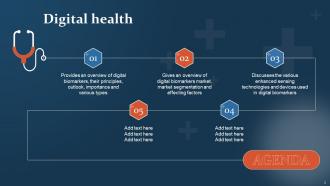
Slide 2: This slide displays the title AGENDA.
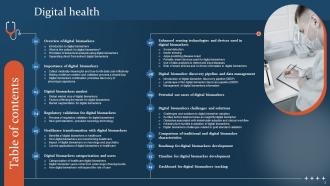
Slide 3: This slide exhibit table of content.
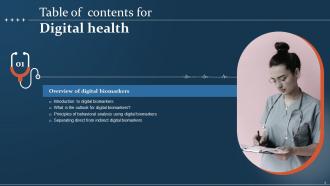
Slide 4: This slide showcase table of content that is to be discuss further.
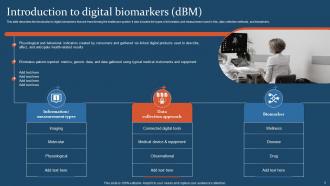
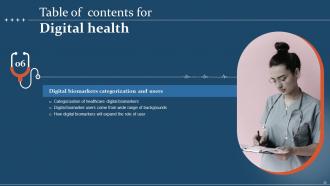
Slide 5: This slide describes the introduction to digital biomarkers that are transforming the healthcare system.
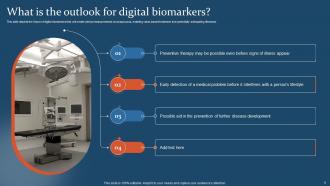
Slide 6: This slide depicts the future of digital biomarkers that will create clinical measurements inconspicuous, enabling value-based treatment.
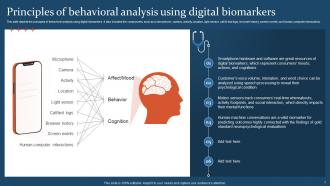
Slide 7: This slide depicts the principles of behavioral analysis using digital biomarkers.
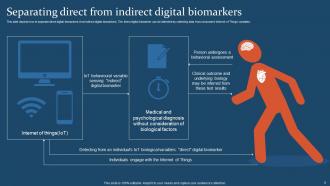
Slide 8: This slide depicts how to separate direct digital biomarkers from indirect digital biomarkers.
Slide 9: This slide showcase table of content that is to be discuss further.
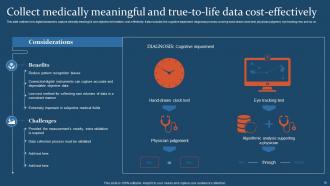
Slide 10: This slide outlines how digital biomarkers capture clinically meaningful and objective information cost-effectively.
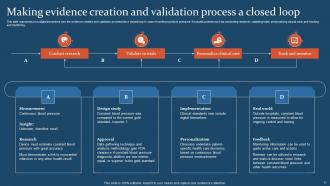
Slide 11: This slide represents how digital biomarkers turn the evidence creation and validation process into a closed loop in case of continuous blood pressure.
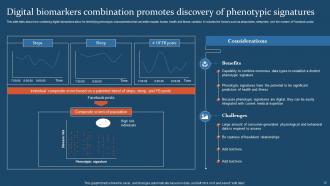
Slide 12: This slide talks about how combining digital biomarkers allow for identifying phenotypic characteristics that can better explain human health and illness variation.
Slide 13: This slide showcase table of content that is to be discuss further.
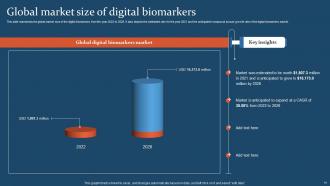
Slide 14: This slide represents the global market size of the digital biomarkers from the year 2022 to 2028.
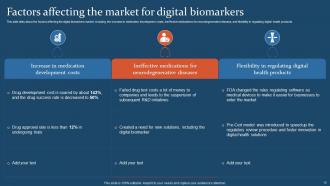
Slide 15: This slide talks about the factors affecting the digital biomarkers market.
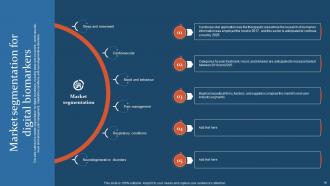
Slide 16: This slide outlines the market segmentation for digital biomarkers, including sleep and movement, cardiovascular, mood and behavior, pain management.
Slide 17: This slide showcase table of content that is to be discuss further.
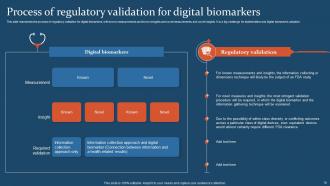
Slide 18: This slide represents the process of regulatory validation for digital biomarkers with known measurements and known insights and novel measurements and novel insights.
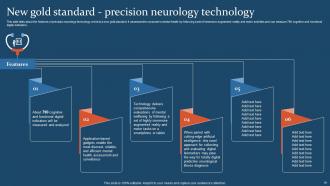
Slide 19: This slide talks about the features of precision neurology technology which is a new gold standard.
Slide 20: This slide showcase table of content that is to be discuss further.
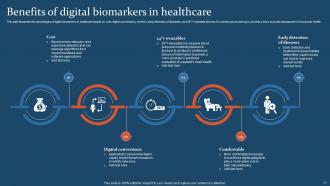
Slide 21: This slide illustrates the advantages of digital biomarkers in healthcare based on cost, digital conversions, comfort, early detection of diseases.
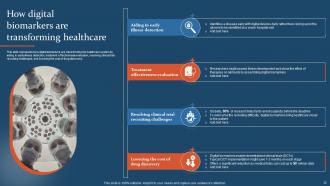
Slide 22: This slide represents how digital biomarkers are transforming the healthcare system by aiding in early illness detection, treatment effectiveness evaluation.
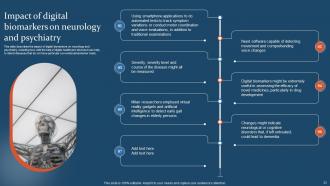
Slide 23: This slide describes the impact of digital biomarkers on neurology and psychiatry.
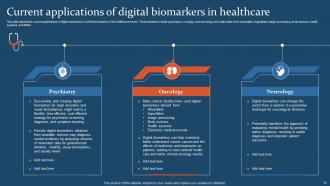
Slide 24: This slide depicts the current applications of digital biomarkers in different domains of the healthcare sector.
Slide 25: This slide showcase table of content that is to be discuss further.
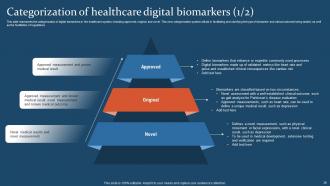
Slide 26: This slide represents the categorization of digital biomarkers in the healthcare system, including approved, original, and novel.
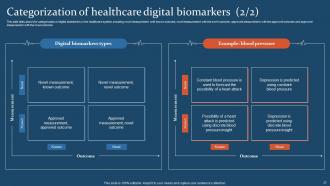
Slide 27: This slide talks about the categorization of digital biomarkers in the healthcare system.
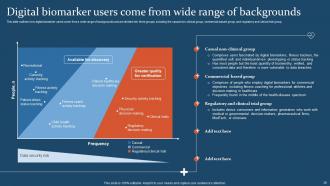
Slide 28: This slide outlines how digital biomarker users come from a wide range of backgrounds and are divided into three groups.
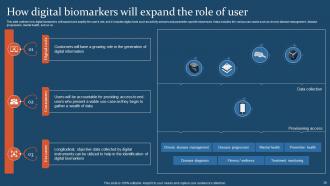
Slide 29: This slide outlines how digital biomarkers will expand and amplify the user's role, and it includes digital tools.
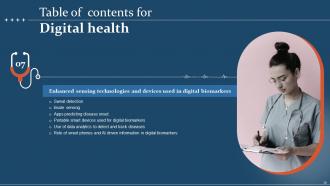
Slide 30: This slide showcase table of content that is to be discuss further.
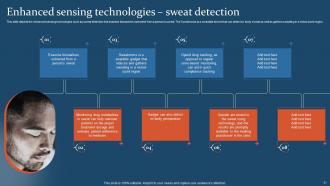
Slide 31: This slide depicts the enhanced sensing technologies such as sweat detection that examine biomarkers extracted from a person’s sweat.
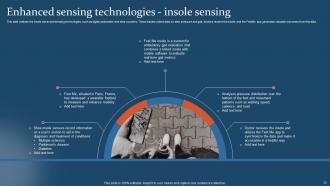
Slide 32: This slide outlines the insole advanced sensing technologies, such as digital pedometer and step counters.
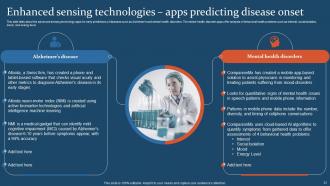
Slide 33: This slide talks about the advanced sensing technology apps for early predictions of diseases such as Alzheimer’s and mental health disorders.
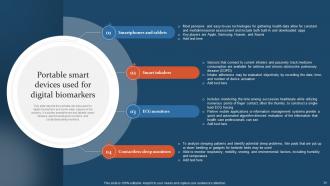
Slide 34: This slide depicts the portable devices used for digital biomarkers and some major players in the industry.
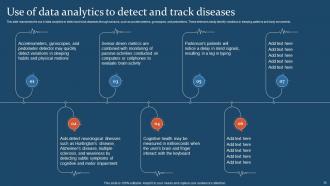
Slide 35: This slide represents the use of data analytics to detect and track diseases through sensors, such as accelerometers, gyroscopes, and pedometers.
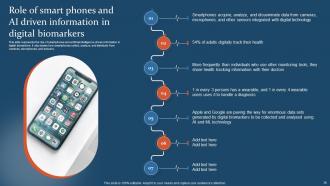
Slide 36: This slide represents the role of smartphones and artificial intelligence-driven information in digital biomarkers.
Slide 37: This slide showcase table of content that is to be discuss further.
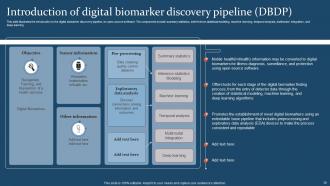
Slide 38: This slide illustrates the introduction to the digital biomarker discovery pipeline, an open-source software.
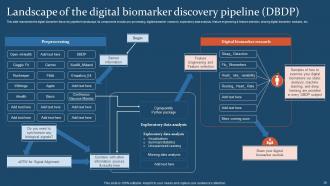
Slide 39: This slide represents the digital biomarker discovery pipeline's landscape.
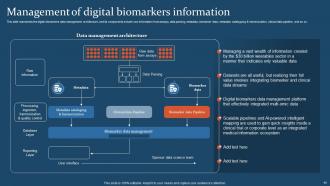
Slide 40: This slide represents the digital biomarkers data management architecture, and its components.
Slide 41: This slide showcase table of content that is to be discuss further.
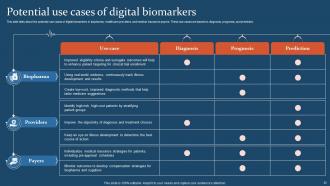
Slide 42: This slide talks about the potential use cases of digital biomarkers in biopharma, healthcare providers, and medical insurance payers.
Slide 43: This slide showcase table of content that is to be discuss further.
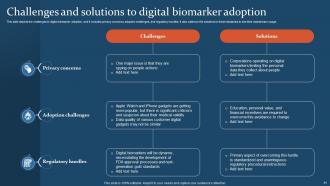
Slide 44: This slide depicts the challenges to digital biomarker adoption, and it includes privacy concerns, adoption challenges, and regulatory hurdles.
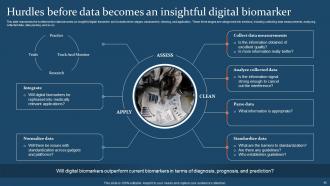
Slide 45: This slide represents the hurdles before data becomes an insightful digital biomarker and includes three stages: assessment, cleaning, and application.
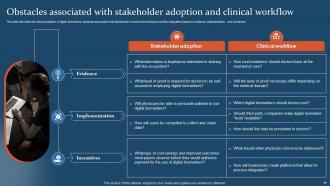
Slide 46: This slide describes the clinical adoption of digital biomarkers obstacles associated with stakeholder incentives and clinical workflow integration.
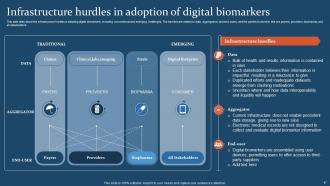
Slide 47: This slide talks about the infrastructure hurdles in adopting digital biomarkers, including conventional and emerging challenges.
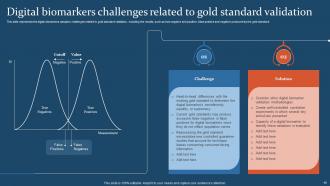
Slide 48: This slide represents the digital biomarkers adoption challenges related to gold standard validation.
Slide 49: This slide showcase table of content that is to be discuss further.
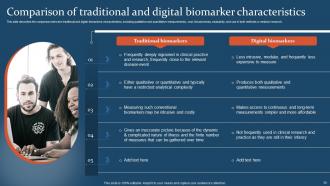
Slide 50: This slide describes the comparison between traditional and digital biomarkers characteristics.
Slide 51: This slide showcase table of content that is to be discuss further.
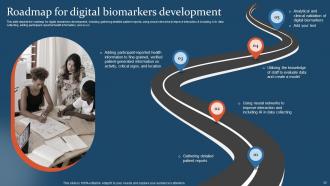
Slide 52: This slide depicts the roadmap for digital biomarkers development.
Slide 53: This slide showcase table of content that is to be discuss further.
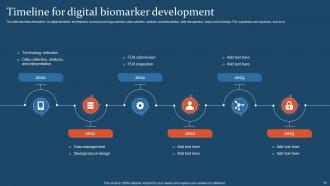
Slide 54: This slide describes the timeline for digital biomarker development, covering technology selection, data collection, analysis, and interpretation.
Slide 55: This slide showcase table of content that is to be discuss further.
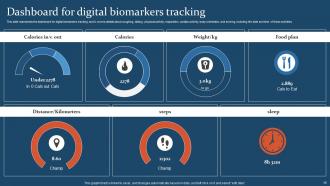
Slide 56: This slide represents the dashboard for digital biomarkers tracking, and it covers details about coughing, talking, physical activity, respiration.
Slide 57: This is the icons slide.
Slide 58: This slide presents title for additional slides.
Slide 59: This slide is 100% editable. Adapt it to your needs and capture your audience's attention.
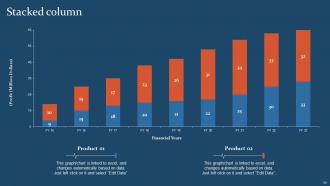
Slide 60: This slide showcase Stacked column fordifferent products.
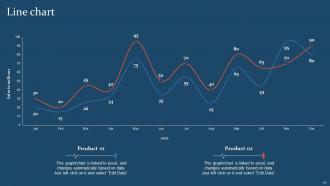
Slide 61: This slide exhibits yearly profits stacked line charts for different products.
Slide 62: This slide exhibit Timeline.
Slide 63: This slide shows puzzle for displaying elements of company.
Slide 64: This slide depicts posts for past experiences of clients.
Slide 65: This slide depicts 30-60-90 days plan for projects.
Slide 66: This slide display Venn.
Slide 67: This is thank you slide & contains contact details of company like office address, phone no., etc.
Digital Health IT Powerpoint Presentation Slides with all 72 slides:
Use our Digital Health IT Powerpoint Presentation Slides to effectively help you save your valuable time. They are readymade to fit into any presentation structure.










FAQs for Digital Health IT
You need solid data governance and cybersecurity first - that's non-negotiable. Make sure your tech stack actually connects (seriously, I've seen million-dollar systems that can't even share basic patient info). User buy-in is everything though. If doctors hate the interface, you're toast. Map out what you've got now, then go for quick wins while building toward bigger integration stuff. Don't forget patient engagement tools and analytics - oh, and workflows that won't make clinicians lose their minds. Start with the end users from day one or you'll be fixing adoption issues forever.
So basically when health systems can actually talk to each other, your patient's records follow them around - no more repeating the same tests or missing important stuff because everything's trapped in different databases. Doctors make way better calls when they have the full picture. Honestly, the amount of time we waste on paperwork when systems don't connect is just ridiculous! Fewer mistakes happen, diagnoses are quicker, and patients aren't lugging around those massive binders anymore (thank god). It's a pain to set up initially but push for anything that'll integrate with your current EHR. Trust me on this one.
Dude, data security is make-or-break stuff here. Healthcare places won't even look at new tech if there's any chance of a data breach - and honestly, I don't blame them. One screwup and you're looking at millions in fines plus your reputation is toast. We're talking about people's most private medical info, so encryption and access controls aren't negotiable. Here's the thing though - if you can prove your security is bulletproof right from the start, adoption actually speeds up. Removes their biggest excuse for saying no.
Look, most telemedicine apps are trash - they're built by tech people who've never actually used healthcare. Start with mobile since everyone's on their phones anyway. Make navigation dead simple, like grandma-could-use-it simple. Automated reminders are huge - texts work better than emails in my experience. Build in some educational stuff patients can actually find and use. Oh, and try gamification if your budget allows - people love seeing progress bars and badges, even for boring health stuff. Bottom line: if someone can't figure out your platform in 30 seconds, you've lost them.
Oof, EHR implementations are rough. Cost is insane - millions upfront plus endless maintenance fees. Your doctors will absolutely lose their minds during the transition, productivity tanks while everyone learns new workflows. Honestly, the staff resistance is probably worse than the technical stuff. Data migration from old systems? Total headache. Plus you'll constantly fight interoperability issues when other hospitals can't read your records. Training drags on forever too. Oh, and change management - get your clinical champions bought in early or you're screwed. That's like half the battle right there.
So basically, all that health tech stuff - your Fitbit, medical records, genetic tests - they're feeding data into systems that figure out what treatments will actually work for YOU specifically. Pretty crazy how much info we generate without thinking about it! Instead of doctors giving everyone the same cookie-cutter treatment, they can look at your genes, family history, all that personal stuff to customize everything. Even drug doses get tailored to you. Honestly, I think it's one of the cooler medical advances we've seen. Start noticing what health data you're creating - it's literally building your personal treatment blueprint.
Look at three main areas: patient outcomes (health improvements, readmission rates), how much people actually use your app (not just downloads - those numbers are pretty meaningless), and whether you're saving healthcare workers time or money. Honestly, most startups get obsessed with download counts when what really matters is if patients are getting better and doctors aren't pulling their hair out. Pick 2-3 solid metrics from each category that match what you're trying to do. Then track them for at least 6 months - you won't see real patterns before that.
Hey! So AI can analyze your medical images and lab results way faster than doing it manually - the accuracy is honestly pretty impressive now, especially for catching early cancers or eye diseases. What's cool is it flags potential issues for you to review and helps prioritize the urgent stuff in your queue. Reduces missed diagnoses too. But it's not replacing your judgment, just making you more efficient. I'd say look at where you're getting the biggest bottlenecks first - that's usually where you'll see the biggest wins for patients.
So honestly, governments need to tackle three main things. First, make health systems actually share data - I'm so tired of hospitals that can't even talk to each other because of proprietary BS. Privacy rules like GDPR help too since people won't share health info if they don't trust the system. Tax breaks and grants are clutch for startups dealing with brutal regulatory costs. The FDA needs faster approval tracks for low-risk digital stuff. But here's the thing - doing this piecemeal won't work. You need comprehensive digital health policies that hit all these points at once or you're just spinning your wheels.
Honestly, privacy concerns are running the whole show in health app development now. HIPAA requirements mean devs have to bake in encryption and secure storage right from the start - no shortcuts. Plus users want control over their data after all that Cambridge Analytica mess (which, fair enough). Companies are going hard on privacy-by-design too. Data minimization, granular consent, transparency about who sees what. It's smart because if you mess up privacy, you're basically dead in the water. Users won't touch your app and regulators will absolutely destroy you.
Dude, COVID basically fast-forwarded digital health by like a decade. Telehealth went up 38x in some places - crazy numbers. My mom, who could barely use email, was suddenly doing video calls with her doctor. Healthcare systems that were super slow to change? They had to figure it out real quick or die. The cool thing is it's actually sticking around. Patients aren't going back to the old ways - hybrid care is here to stay. If you're looking at implementing any health tech stuff now, people are way more open to it than before 2020. Honestly couldn't have picked a better time for this kind of rollout.
Look, your staff is drowning in paperwork, right? Digital health IT handles the boring stuff automatically - scheduling, billing, insurance checks, all that. EHRs are a game changer because nobody's entering the same patient info three times anymore. Patients can fill out forms at home before appointments, which is honestly genius. Automated reminders cut down no-shows too. The trick is getting systems that actually work together instead of buying random software that makes everything worse. Integration is everything - otherwise you'll just create new headaches.
Honestly, the big stuff right now is AI symptom checkers and all those wearables doing remote monitoring. Mental health apps are finally connecting with actual clinical systems too, which is about time. Telehealth's still everywhere obviously, but chronic disease management apps that sync with EHRs are where the real action is. Those random wellness influencer app recommendations? Yeah, that whole thing is basically over - people want clinical-grade tools now that actually help patients and cut down readmissions. If you're looking at vendors, I'd go for ones with solid interoperability and ROI data you can actually see.
So basically you want to hit three main things: making it affordable, easy to use, and actually accessible. Not everyone's got the latest iPhone, you know? Your digital stuff needs to work on older phones and be available in different languages. Health literacy matters too - some people just aren't comfortable with techy interfaces. Transportation's a huge barrier, which is why telehealth is clutch. I'd definitely partner with community groups and maybe do device lending programs. Oh, and audit what you're currently offering. Like, who's getting left out and why? Start there.
Honestly, AI integration is the big one to watch - it'll handle more diagnostics and cut through admin BS. Systems are finally starting to talk to each other better (about time). Remote monitoring and digital therapeutics are exploding right now. Personalized medicine is getting crazy advanced with all the genomics stuff. Cybersecurity's becoming massive too since hackers love healthcare data. Oh, and regulations keep changing, especially around privacy and AI rules. You should probably audit your tech stack soon and figure out where you'll need to invest in the next couple years.
-
Illustrative design with editable content. Exceptional value for money. Highly pleased with the product.
-
Great designs, really helpful.