


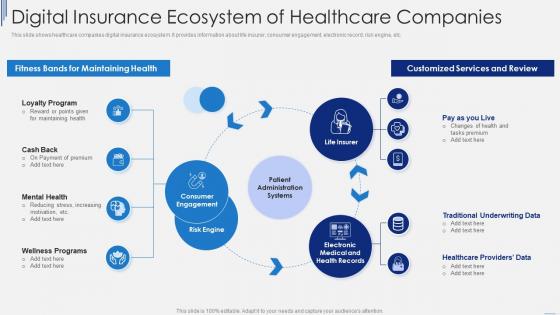
Digital Insurance Ecosystem Of Healthcare Companies




Try Before you Buy Download Free Sample Product
 Impress Your
 Audience
 100%
100% Editable
 Save Hours
 of Time


This slide shows healthcare companies digital insurance ecosystem. It provides information about life insurer, consumer engagement, electronic record, risk engine, etc.
People who downloaded this PowerPoint presentation also viewed the following :
Digital Insurance Ecosystem Of Healthcare Companies with all 6 slides:
Use our Digital Insurance Ecosystem Of Healthcare Companies to effectively help you save your valuable time. They are readymade to fit into any presentation structure.





FAQs for Digital Insurance Ecosystem
So basically digital health insurance uses apps and online stuff for everything - claims, managing your policy, customer service. Way faster than traditional insurance where you're still dealing with paperwork and calling people constantly. Digital plans usually cover telehealth better too, which honestly saved my butt during COVID. You get quicker claim approvals and can see policy updates right away. Some even have health tracking built in, though I never use that feature. Traditional insurance feels so outdated now. If you're comfortable with tech, definitely check out digital options when you renew.
So basically your insurance app lets you text your doctor directly instead of calling and waiting forever. You can see test results right away, book appointments, get med reminders - the usual stuff. What's cool is your doctor sees everything in one place since it's all connected to your insurance info. Honestly, most people don't even download their insurer's app which is kinda dumb because you're missing out on a lot. Oh and there's health tracking tools too, plus articles about whatever condition you have. Way better than the old system where you'd play phone tag for days just to ask one question.
So digital health insurance is basically built around telemedicine now. Your video calls with doctors get covered just like regular office visits - consultations, prescriptions, all of it. Game changer if you live somewhere rural or just can't deal with sitting in waiting rooms for an hour. Claims go through way faster since everything's already online. Plus insurers are all about it because virtual visits are cheaper than the real thing. Oh, and when you're looking at plans, definitely check which telemedicine apps they work with. Some are way better than others.
Honestly, the scariest part is how much they can track you compared to regular insurance. They're pulling data from your fitness tracker, health apps, all that stuff - sometimes without you even realizing it. Creates this super detailed picture of everything you do. And if there's a data breach? Yikes, that's way worse when it's all stored digitally in one place. The real problem though is this could mess with your future coverage or what you pay. I'd definitely read those privacy policies before signing anything - I know they're boring but worth it.
Yeah so digital health insurance usually saves money for everyone involved. You'll pay less in premiums since telehealth visits are way cheaper than going to the doctor's office. Insurance companies love it too because they don't have to deal with as much paperwork and admin stuff. Plus all those health apps and remote monitoring gadgets actually catch problems early, which is honestly pretty smart from a cost perspective. My coworker switched to one of those digital-first plans last year and seems happy with it. Definitely worth checking if your job offers anything like that.
So AI and machine learning are totally changing the game - they're automating claims and doing personalized risk stuff. Telemedicine is massive too, insurers can offer virtual visits right in their apps now. Your Fitbit and other wearables? They're feeding real-time health data back to insurance companies who can tweak your rates or spot problems early. Blockchain's creeping in for secure data sharing, though honestly that feels overhyped still. Bottom line - figure out which of these could actually speed up what you're already doing or maybe open up some new ways to make money. The wearables thing is kinda creepy but super useful.
So basically your insurance app probably has tons of preventive stuff you're not even using - telehealth visits, free screenings, wellness programs. I love that you can do virtual check-ups without leaving work. Some plans will bug you with health reminders (kinda annoying but helpful) or give you money back for using fitness trackers. There's even AI stuff now that spots problems early, which is pretty cool. My cousin discovered she had access to like 5 different wellness apps through her plan. Just poke around your insurance app and see what free preventive care you're missing out on.
Data security is probably your biggest headache - HIPAA compliance alone will make you want to pull your hair out. Legacy systems are a nightmare to integrate too, since most weren't designed for real-time health monitoring. The upfront costs are brutal. You'll need serious investment plus staff who actually get both insurance AND digital health tech, which isn't easy to find. Integration with existing infrastructure? Good luck with that mess. I'd honestly suggest starting with small pilot programs first. Don't try to transform everything overnight - that's how companies crash and burn.
Honestly, it's night and day. With digital insurance you can file claims just by taking photos - no more waiting on hold forever or filling out tons of paperwork. Everything happens through the app instantly. You'll actually know what's going on too since they show you exactly where your claim stands. Traditional insurance companies? Good luck getting a straight answer half the time. The whole thing feels like using Netflix instead of, I dunno, calling Blockbuster or something. Way more intuitive. If you're looking around definitely try a digital one first - once you do you won't want to go back to the old way.
Dude, the regulatory stuff is honestly a nightmare right now. HIPAA's your main headache - all that patient data encryption and secure transmission crap. State insurance rules are different everywhere your users are, which is super fun to track. FDA gets involved if you're connecting to medical devices too. My cousin went through this mess last year and said get a healthcare lawyer ASAP. Build your privacy stuff first before you even think about launching. It's basically the Wild West out there with digital health regs.
Honestly, digital health insurance is a game changer for people who've been left out. Mobile apps can reach folks in rural areas or people juggling three jobs who can't sit in some insurance office for hours. Telehealth benefits are huge too - no more driving 2 hours to see a doctor. The pricing gets more personalized, and AI can spot when someone's missing coverage they actually need. Though half the time these apps are designed for the latest iPhone when people really need them to work on whatever cheap Android they've got. The whole thing only works if it's actually simple to use.
So the big thing happening now is real-time risk stuff using wearable data - like your Fitbit tracking everything. Companies aren't just waiting for claims anymore. They're doing predictive modeling to catch problems early, which honestly blows my mind when you see it work. AI can spot patterns that predict expensive conditions before they even happen. Oh, and they're pulling in telehealth data, social factors, all that. The shift is basically from reacting to claims to managing health proactively. You should check out how they're using NLP on clinical notes and pharmacy data - that's where the gold is.
So AI basically crunches through tons of health data - medical records, fitness tracker stuff, even social factors - way quicker than doing it manually. It catches patterns we'd totally miss and handles messy data like doctor notes and scans, which is pretty cool actually. Your customers get approved faster and you can price things more accurately. Just make sure you're following all the healthcare rules first - honestly that's probably the trickiest part. I'd start by figuring out what data you can actually use legally, then build from there.
So blockchain basically makes a permanent record that nobody can mess with - pretty smart for insurance stuff. Your claims get encrypted and spread across tons of computers, so hackers can't just hit one target and steal everything. You'll actually be able to track your whole claim process too, which is nice since insurance companies love being sketchy about that. No single company controls all your info either. Honestly, I'd start bugging my insurance about whether they use it yet. My cousin works in tech and says it's gonna be huge soon.
Look, most people zone out the second you mention insurance stuff, so you gotta meet them where they hang out. Social media, their workplace benefits - that's where they'll actually listen. I'd honestly start with those employee pilot programs since people trust their HR teams way more than random ads. Show them real numbers with cost calculators instead of just talking about savings. Partner with telehealth apps too - catch people when they're already thinking about healthcare costs. Interactive demos work way better than brochures. Break everything down super simple, no jargon.
-
Like always a great experience with you guys. Always there on the drop of hat to help.
-
The designs by SlideTeam are honestly the best I have seen so far. Will be definitely coming back for more.