

Digital healthcare planning and strategy powerpoint presentation slides




Try Before you Buy Download Free Sample Product
 Impress Your
 Audience
 100%
100% Editable
 Save Hours
 of Time


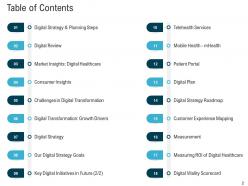
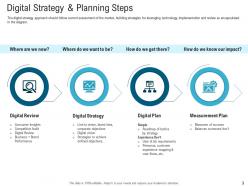
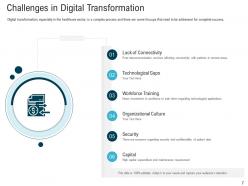
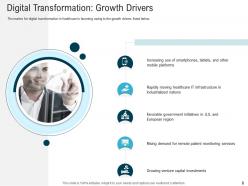
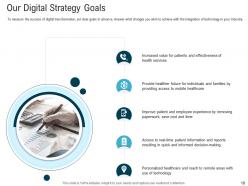
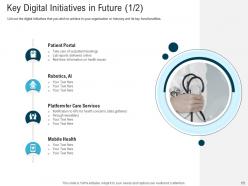
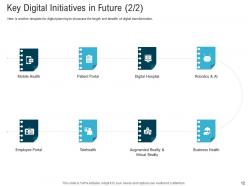
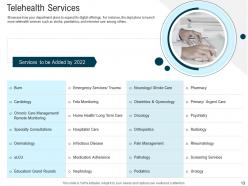
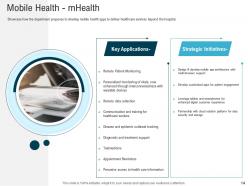
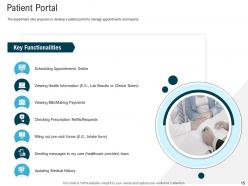
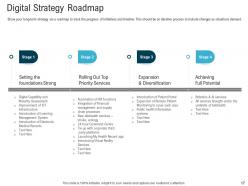
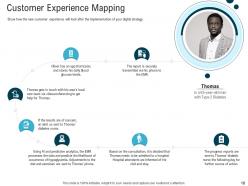
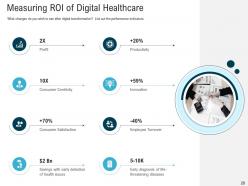
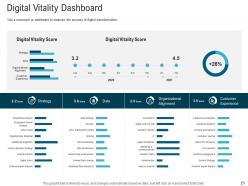
Showcase telehealth services by employing Digital Healthcare Planning And Strategy PowerPoint Presentation Slides. Depict the current assessment of the market, building strategy for leveraging technology, implementation, and review with the help of these PPT visuals. Present market and customer insights of digital healthcare with these attention-grabbing PPT templates. Take advantage of our content-ready PPT themes to highlight the challenges in digital transformation, such as lack of connectivity, technological gaps, workforce training, and organizational culture. You can also depict growth drivers of digital healthcare and initiatives that your organization wishes to adopt in the future. Further, present digital strategy roadmap, customer experience mapping by utilizing health technology PowerPoint infographics. Effectively measure the ROI of digital healthcare with the help of ready-to-use PPT layouts. The presentation also depicts a dashboard to measure the success of the digital transformation. Download and create an appealing presentation on the digital healthcare industry.
People who downloaded this PowerPoint presentation also viewed the following :
Digital healthcare planning and strategy powerpoint presentation slides with all 35 slides:
Use our Digital Healthcare Planning And Strategy Powerpoint Presentation Slides to effectively help you save your valuable time. They are readymade to fit into any presentation structure.
FAQs for Digital healthcare planning and strategy
So you'll want patient-focused stuff first - telehealth platforms, mobile apps, that kind of thing. Data analytics are huge for getting actual insights (not just pretty dashboards). Integration's where most places screw up though - everything needs to talk to each other or you're just creating more headaches. Cybersecurity's non-negotiable obviously. Oh, and don't underestimate how much your staff will resist new systems. I'd map out what tech you already have, then figure out where patients are getting frustrated or where you're wasting time operationally.
Start with the easy stuff - routine check-ups, mental health appointments, follow-ups. Those convert to virtual pretty smoothly. Make sure your telemedicine platform talks to your current EHR system (trust me, you don't want data living in silos). Training your staff is actually way more critical than most people think. Run a pilot in one department first, work out the bugs, then expand. Oh, and nail down protocols for when virtual patients need to come in physically. Honestly, if the patient experience sucks, nobody's gonna use it regardless of how good your tech is.
So patient engagement tools are basically how you connect your healthcare system to what patients do every day. Apps, portals, wearables, messaging - all that stuff. They handle medication reminders, scheduling, symptom tracking, telehealth visits. The list honestly never stops growing. Here's the thing though - when patients actually use these tools, they stick to treatment plans way better and spot problems sooner. Your admin workload drops too since routine stuff gets automated. My advice? Figure out where your patients are struggling most with staying engaged first, then grab tools that fix exactly those problems. Don't overthink it.
Honestly, don't even think about adding security later - build it in from the start. End-to-end encryption for everything, strict access controls, the whole nine yards. Yeah, multi-factor authentication is a pain but trust me, dealing with a breach is infinitely worse. You'll want regular audits and make sure your team actually knows what they're doing security-wise. HIPAA compliance is obvious but go beyond that bare minimum. Oh and set up automated monitoring - catches the sketchy stuff early. Basically treat data protection like it's the foundation, not some add-on feature you slap on when you remember.
HIPAA-compliant video conferencing is your starting point - can't mess around with that. Get solid EHR integration so you're not juggling windows during appointments. Remote monitoring stuff like glucose meters and fitness trackers help tons with ongoing care. Honestly, those AI chatbots for initial screening work way better than I thought they would. Secure messaging platforms are clutch too. But seriously, nail the video quality first. Patients might tolerate other glitches, but a frozen screen mid-consultation? That's relationship-ending territory right there.
Honestly, you need to look at both the clinical stuff and the behind-the-scenes operations. Patient satisfaction, readmission rates, how fast people get treated - that's where you'll see if the tech actually helps patients. Then track adoption rates and uptime because broken systems help nobody. ROI is annoying to calculate early on but gets easier with time. One thing people forget - keep an eye on staff happiness. Grumpy nurses will kill your project faster than any technical glitch. I learned that one the hard way at my last job. Start with maybe 3-4 metrics that match your actual goals instead of drowning in data.
So these platforms basically let all your doctors see the same patient info at once - no more waiting around for records to transfer. Your primary care doc and specialists can check updated charts and test results instantly, which honestly should've happened years ago. The system also pings providers when someone needs follow-up care or if there's a gap in treatment. Fewer duplicate tests, better handoffs between doctors, and patients don't get forgotten about. I'd start by looking at how your referrals currently work and finding where info gets lost in the shuffle.
Honestly, the biggest pain points are gonna be money, pushback from your team, and tech integration nightmares. New systems cost a fortune upfront - brutal when budgets are already tight. Your staff will probably resist it hard since they're used to how things work now. Getting everything to actually connect without breaking? That's where things get messy. Oh, and don't forget privacy compliance on top of all that. My advice? Start with small pilot programs first. Test what works, then expand from there. Way better than trying to overhaul everything at once and watching it all crash.
So AI can really help with patient outcomes in a few key ways. Predictive analytics lets you spot high-risk patients before things go south - honestly feels like magic sometimes. Then there's personalized treatment matching, where it looks at someone's genetics and history to find what'll work best for them. Early detection is huge too since AI catches diseases way sooner than we used to. Oh, and the diagnostic accuracy is just way better overall. My advice? Figure out what your biggest patient challenges are first, then find AI tools that tackle those specific problems. Don't try to fix everything at once.
Make it stupid simple from the start. Like, actually show patients how it helps them immediately - working appointment reminders, test results they can grab anytime. Most health apps are genuinely awful at this. Have your staff demo the tools during actual visits instead of just handing out random flyers. Support needs to be everywhere since some people are tech wizards and others... aren't. Oh, and start with patients who already love trying new stuff - they'll spread the word and catch problems before you roll it out to everyone. Way less headache that way.
Ugh, regulatory stuff is such a pain but you can't avoid it. FDA approvals, HIPAA, data protection - all that has to happen before you launch anything. Takes forever and kills your momentum when you just want to ship something. But honestly? It's worth doing right from the start. Users actually trust you more when they know you're compliant, and you won't get sued into oblivion later. I learned this the hard way on my last project - we treated compliance like an afterthought and had to rebuild half our system. Just bake it into your dev process day one.
Honestly, the real-time insights are what sold me on healthcare analytics. You can actually predict when patients might crash before it happens - way better than just reacting after the fact. It helps optimize your staffing too, which is huge right now with all the shortages. The workflow stuff is probably my favorite part though - finally catching those stupid bottlenecks that drive everyone crazy. Plus you'll know which treatments actually work for different patient groups instead of just guessing. I'd start with something concrete like readmission rates and expand from there.
Connect wearables straight to your EHR - pulls in heart rate, sleep, activity levels automatically. Really helpful for spotting trends between appointments that you'd totally miss otherwise. Works great for chronic stuff like diabetes and hypertension. Just make sure you set up alert parameters first or you'll get buried in notifications (learned that one the hard way). I'd start with a pilot group - pick patients who are already comfortable with tech. Then see what actually improves outcomes before rolling it out wider.
Honestly, three things will make or break your app. First - keep the interface dead simple and stick to patterns people already know from other apps. Nobody wants to figure out weird navigation. Also build in accessibility stuff like voice commands and high contrast from the start, not as an afterthought. But here's what really matters: get real patients and doctors testing it constantly, not just at the very end. I can't stress this enough - what makes perfect sense to you will confuse the hell out of actual users. Test with different age groups too because a 70-year-old navigates way differently than someone in their 20s.
Honestly, digital health stuff can really help close those gaps if you do it right. Telehealth is huge for rural areas - like, game changer huge. Build apps that actually make sense for different cultures and languages, not just generic wellness nonsense. Data can show you where the real problems are hiding. Partner with local community groups because they know what's up. Oh, and don't forget about making sure people can actually afford the devices they need. Map out your worst disparities first, then create tools that hit those specific issues instead of some blanket solution that helps nobody.
-
Very well designed and informative templates.
-
Visually stunning presentation, love the content.
-
Professional and unique presentations.
-
Unique and attractive product design.
-
Graphics are very appealing to eyes.
-
Awesome presentation, really professional and easy to edit.
-
It saves your time and decrease your efforts in half.
-
Professional and unique presentations.
-
Presentation Design is very nice, good work with the content as well.
-
Content of slide is easy to understand and edit.